
The demand for natural, plant-based, and sustainably sourced ingredients continues to rise across international markets. Consumers are increasingly looking for products that contain clean-label ingredients, while manufacturers are searching for reliable raw materials that meet strict quality and regulatory requirements. Among the many natural products experiencing strong global demand, virgin coconut oil has emerged as one of the most versatile and valuable ingredients. Today, virgin coconut oil is used in food manufacturing, dietary supplements, cosmetics, personal care products, pharmaceuticals, and wellness formulations. However, not all virgin coconut oil is produced to the same standard. International buyers, distributors, and manufacturers often require a higher level of quality assurance, consistency, and certification. This is where export grade virgin coconut oil plays a crucial role.
Export-grade products are specifically manufactured to comply with international market requirements. They undergo strict quality control procedures, laboratory testing, and certification processes to ensure they meet buyer expectations and import regulations. For companies seeking long-term sourcing partnerships, choosing export-grade virgin coconut oil is essential for maintaining product quality, customer satisfaction, and regulatory compliance.
In this guide, we will explore what export-grade virgin coconut oil is, how it is produced, its advantages, certification requirements, packaging options, and why Indonesia has become one of the world’s leading sources of premium-quality virgin coconut oil.
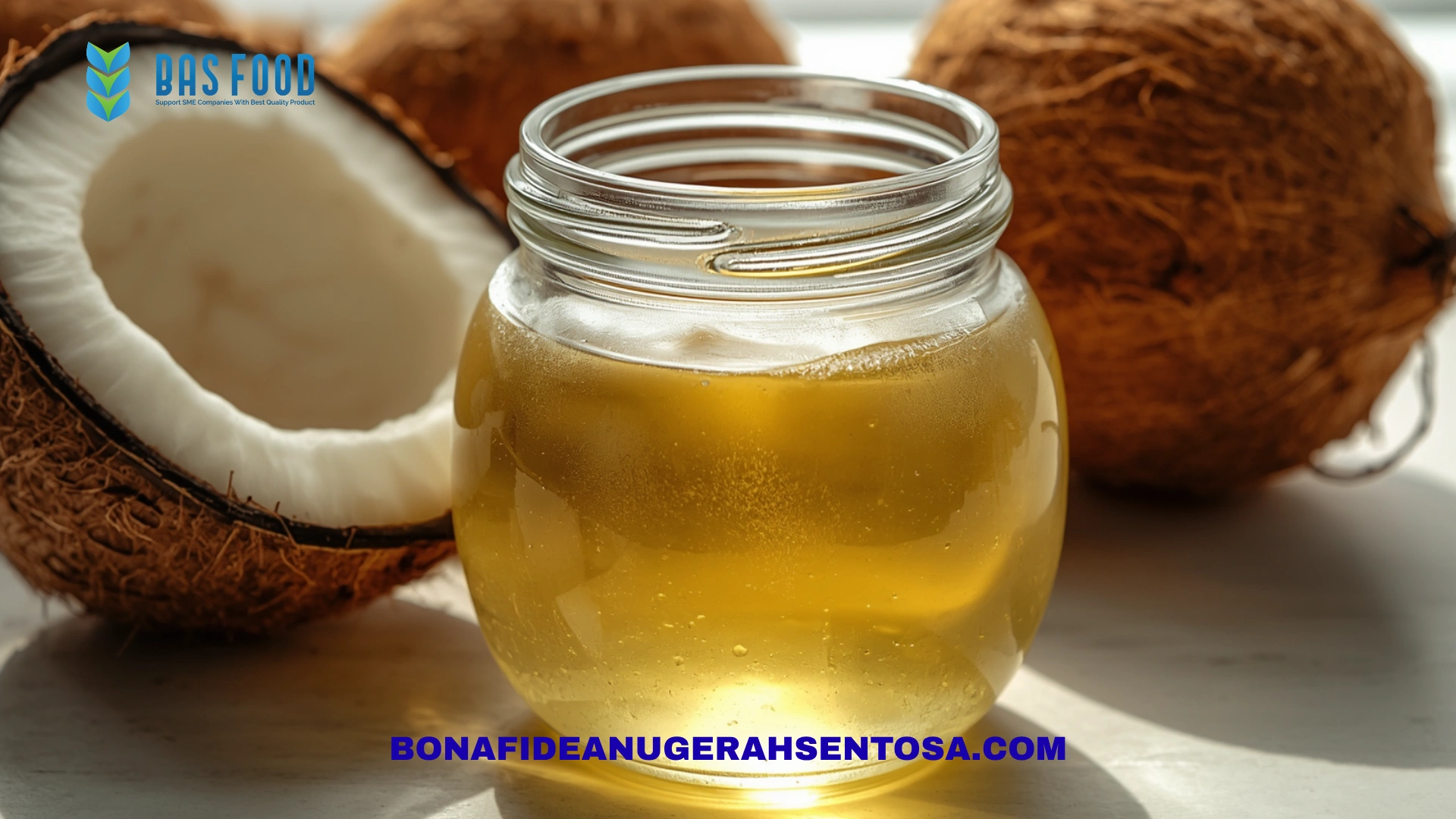
What Is Export Grade Virgin Coconut Oil?
Export grade virgin coconut oil refers to virgin coconut oil that is produced according to internationally recognized quality standards and is suitable for export to global markets.
Unlike conventional coconut oil, export-grade VCO is manufactured under controlled conditions with comprehensive quality assurance systems. Producers monitor every stage of production, from raw material selection to packaging and shipment.
The primary objective is to ensure consistency, purity, and compliance with buyer specifications. Export-grade VCO typically undergoes rigorous testing to verify critical quality parameters such as moisture content, free fatty acid levels, microbiological safety, and product stability.
As a result, international buyers can source products with confidence, knowing they meet the standards required by food manufacturers, cosmetic brands, wellness companies, and retail distributors.
For businesses that serve demanding international markets, export-grade VCO is often the preferred choice because it reduces quality risks and supports long-term brand reputation.
Understanding the Production Process Behind Premium Virgin Coconut Oil
The quality of virgin coconut oil begins with the selection of raw materials.
Producers typically use mature coconuts harvested from healthy coconut plantations. These coconuts contain high oil content and provide an excellent foundation for premium-quality VCO production.
After harvesting, the coconuts are cleaned, dehusked, and processed to extract fresh coconut meat. The coconut meat is then converted into coconut milk, which serves as the source material for oil extraction.
Several extraction methods are commonly used in the industry.
Cold Press Extraction
Cold pressing is widely regarded as one of the most desirable extraction methods because it minimizes heat exposure.
This process helps preserve the natural characteristics of the oil while maintaining product quality.
Centrifuge Extraction
Modern facilities frequently use centrifuge technology to separate oil efficiently and consistently.
This method supports large-scale production while maintaining strict quality standards.
Fermentation Method
Some manufacturers utilize traditional fermentation techniques to separate oil naturally from coconut milk.
Although this method can produce high-quality oil, it requires careful monitoring and quality control.
Regardless of the extraction method used, export-grade production requires strict adherence to quality management procedures throughout the process.
Key Characteristics of Export Grade Virgin Coconut Oil
International buyers often evaluate VCO based on several important quality indicators.
Clear and Transparent Appearance
High-quality virgin coconut oil should appear clear and transparent when maintained above its melting point.
Cloudiness or visible impurities may indicate inadequate processing or contamination.
Fresh Coconut Aroma
Premium VCO should have a pleasant and natural coconut fragrance.
Unpleasant odors can suggest oxidation, poor storage conditions, or quality issues.
Low Moisture Content
Moisture control is essential because excess water can reduce product stability and shelf life.
Export-grade manufacturers conduct routine testing to ensure moisture levels remain within acceptable limits.
Free From Chemical Processing
Authentic virgin coconut oil is produced without chemical refining, bleaching, or deodorization.
This natural processing approach is one of the reasons why VCO remains highly valued in international markets.
Consistent Quality
Consistency is a major requirement for export-grade products.
Buyers expect every shipment to match agreed specifications and quality standards.
Why International Buyers Prefer Export Grade Virgin Coconut Oil
Global buyers face increasing pressure to maintain product quality while complying with regulatory requirements.
Using export-grade VCO helps minimize risks associated with inconsistent raw materials and supply chain disruptions.
One of the primary benefits is product reliability. Manufacturers can develop formulations with confidence because the raw material meets predetermined quality specifications.
Export-grade VCO also supports smoother regulatory compliance. Many countries require detailed documentation and testing reports before allowing imported products to enter their markets.
By sourcing export-grade products, importers can simplify regulatory processes and reduce the likelihood of shipment delays.
Furthermore, premium-quality ingredients contribute to stronger customer satisfaction and long-term brand trust.
The Importance of HACCP Certification in Virgin Coconut Oil Production
Food safety remains one of the most important concerns in international trade.
For this reason, many buyers prefer working with a HACCP VCO supplier.
HACCP stands for Hazard Analysis and Critical Control Points. It is a globally recognized food safety management system designed to identify, evaluate, and control potential hazards throughout the production process.
A HACCP VCO supplier implements systematic procedures to ensure product safety and consistency.
These procedures may include:
- Raw material inspection
- Production monitoring
- Sanitation controls
- Traceability systems
- Product testing
- Documentation management
For food manufacturers and importers, sourcing from a HACCP-certified supplier provides additional confidence in product safety and quality.
Many international buyers now consider HACCP certification a basic requirement rather than an optional qualification.
Why Halal Coconut Oil Is Important for Global Markets
Another important consideration for international buyers is religious and cultural compliance.
Demand for halal coconut oil continues to increase worldwide, particularly in regions with large Muslim populations.
Halal certification confirms that products are manufactured according to recognized halal standards and do not contain prohibited ingredients or contaminants.
For food manufacturers, cosmetic companies, and wellness brands, halal certification can significantly expand market access.
Products containing halal coconut oil can be marketed more effectively in regions such as:
- Southeast Asia
- The Middle East
- North Africa
- South Asia
- Muslim communities in Europe and North America
As global halal markets continue to grow, sourcing certified halal coconut oil has become an important strategic advantage.
Packaging Solutions for Export Grade Virgin Coconut Oil
Packaging plays a critical role in maintaining product quality during transportation and storage.
Export-grade VCO is available in a variety of packaging formats designed to meet different market requirements.
Retail Packaging
Common retail formats include:
- Glass bottles
- PET bottles
- HDPE containers
These options are suitable for supermarkets, health stores, pharmacies, and e-commerce businesses.
Industrial Packaging
Manufacturers often require larger packaging formats such as:
- Jerry cans
- Plastic drums
- Steel drums
- Intermediate Bulk Containers (IBC)
Bulk packaging helps improve logistics efficiency and reduce handling costs.
Many exporters also provide private label and custom packaging services to support brand development initiatives.
Industries That Depend on Export Grade Virgin Coconut Oil
The versatility of virgin coconut oil has created demand across numerous industries.
Food Industry
Food manufacturers use VCO in:
- Cooking oils
- Functional foods
- Organic food products
- Nutritional supplements
- Cosmetic Industry
Beauty brands incorporate VCO into:
- Skin creams
- Hair treatments
- Lip balms
- Body lotions
- Massage oils
- Wellness Industry
The wellness sector continues to embrace natural ingredients, making VCO a popular component in various product categories.
Pharmaceutical Applications
Some pharmaceutical and nutraceutical manufacturers also utilize premium coconut oil in specialized formulations.
This broad range of applications contributes to strong and sustained global demand.
Why Indonesia Is a Leading Source of Export Grade Virgin Coconut Oil
Indonesia is one of the largest coconut-producing countries in the world.
Its tropical climate supports year-round coconut cultivation, ensuring a stable supply of raw materials for virgin coconut oil production.
In addition to abundant coconut resources, Indonesian producers combine traditional agricultural knowledge with modern manufacturing technologies.
Many facilities have invested heavily in international certifications, food safety systems, and export-oriented production capabilities.
As a result, Indonesia has earned a strong reputation as a reliable source of premium-quality export-grade virgin coconut oil.
The country’s well-developed export infrastructure further supports efficient shipping to markets across Europe, North America, Asia, Australia, Africa, and the Middle East.
Partner with a Trusted Indonesian Exporter
For global buyers seeking reliable supplies of export-grade virgin coconut oil, selecting the right supplier is essential.
CV Bonafide Anugerah Sentosa is a trusted Indonesian exporter supplying premium coconut products to international markets. The company works closely with producers committed to quality, consistency, and sustainable sourcing practices.
In addition to virgin coconut oil, CV Bonafide Anugerah Sentosa supplies coconut sugar, organic coconut sugar, coconut nectar, coconut milk products, spices, coffee products, and fishery products.
By partnering with experienced Indonesian exporters, businesses can secure dependable access to high-quality products while supporting long-term growth and customer satisfaction.
Conclusion
The growing demand for natural, clean-label, and sustainable ingredients has positioned export grade virgin coconut oil as one of the most valuable products in global trade. Its versatility, quality, and broad application range make it a preferred ingredient across food, cosmetic, wellness, and pharmaceutical industries.
For international buyers, sourcing from a reliable HACCP VCO supplier and obtaining certified halal coconut oil can help ensure regulatory compliance, product consistency, and stronger market access.
As global demand continues to expand, partnering with an experienced Indonesian exporter offers a strategic advantage for companies seeking premium-quality virgin coconut oil and dependable long-term supply solutions.