
Palm sugar products have become increasingly popular among food manufacturers, distributors, wholesalers, and international buyers looking for distinctive natural sweeteners. However, the growing number of product names can create confusion during sourcing. In particular, many people wonder about the differences between gula melaka blok vs coconut sugar. Two terms that often appear in discussions about traditional palm sugar are gula melaka blok and coconut sugar.
Are they the same product? Can buyers use them interchangeably? And which one is more suitable for food manufacturing, retail distribution, or wholesale supply?
Understanding gula melaka blok vs coconut sugar starts with looking beyond the product name. Both products can come from palm sap, but their regional names, raw materials, production methods, physical forms, and market expectations may differ. In particular, the term Gula Melaka has a strong association with Malaysian palm sugar traditions, while coconut sugar is a broader product name used in international markets.
This guide explores the differences, similarities, applications, and sourcing considerations to help importers make informed purchasing decisions. It also explains how to evaluate a coconut palm sugar block and work with a reliable coconut sugar exporter supplier.
What Is Gula Melaka Blok?
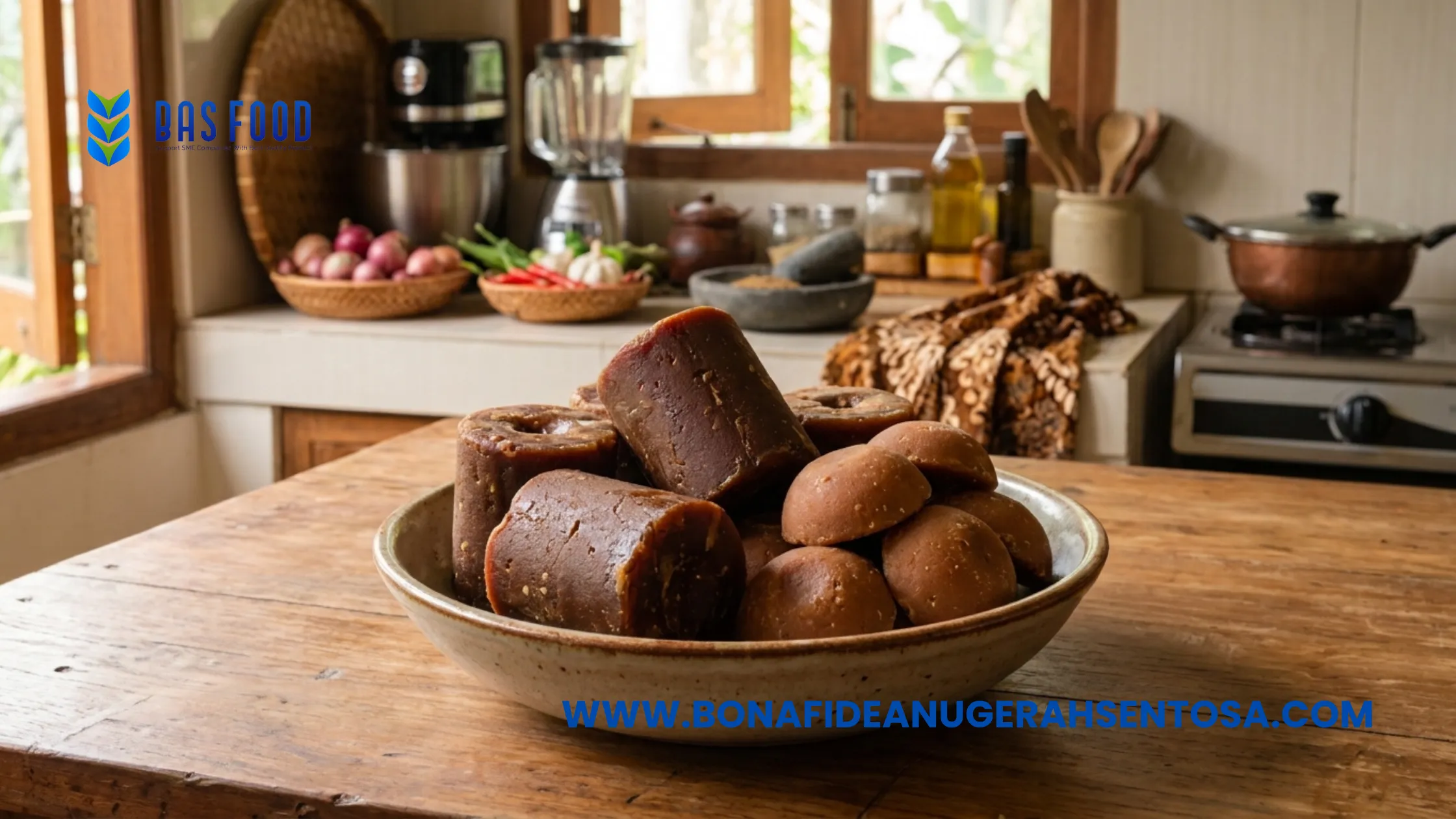
Gula Melaka is a traditional palm sugar commonly associated with Malaysia. Producers traditionally make it by collecting palm sap and heating it until the liquid becomes concentrated. They then pour the thickened mixture into moulds and allow it to cool and solidify.
The name Gula Melaka is widely recognized in Southeast Asian food culture. It is particularly familiar in traditional desserts, beverages, sauces, and sweet dishes. Its color often ranges from golden brown to dark brown, while its flavor can have caramel-like, roasted, or molasses-like notes depending on the raw material and production process.
However, one important detail deserves attention: Gula Melaka does not always identify one specific palm species. Depending on the producer and regional tradition, palm sugar may come from different palm sources. Therefore, buyers should not automatically assume that every product labelled Gula Melaka is made exclusively from coconut palm sap.
The word blok simply refers to the block or moulded form of the sugar. Gula Melaka blok is generally sold as a solid product that buyers can grate, chop, slice, or dissolve before use. Its size, hardness, color, and texture may vary between manufacturers.
What Is Coconut Sugar?
Coconut sugar is a sweetener produced from the sap of coconut palm flower buds. Farmers collect the sap and send it for processing, where producers heat and concentrate it until it reaches the desired form. Depending on the manufacturing process, the final product can be granulated, powdered, moulded into blocks, or processed into syrup.
International buyers often use the term coconut sugar because it clearly identifies the raw material as coconut palm sap. This can be useful when importers need to communicate product specifications to food manufacturers, distributors, and retail customers.
Coconut sugar has a characteristic brown color and a sweet flavor with caramel-like notes. However, the exact color, aroma, and taste can vary depending on sap quality, processing temperature, concentration, and handling practices.
One important distinction is that coconut sugar describes the raw material and product category, not just one physical shape. For example, granulated coconut sugar and a coconut palm sugar block can belong to the same product family even though they have different textures and uses.
For B2B buyers, this distinction matters. When ordering coconut sugar, importers should specify whether they need granules, powder, blocks, or syrup. A general product name may not provide enough information for accurate purchasing and production planning.
Gula Melaka Blok vs Coconut Sugar: Are They the Same?
The comparison between gula melaka blok vs coconut sugar can be confusing because the products may look and taste similar. Both can have a brown color, caramel-like aroma, and sweet flavor. They may also be used in traditional desserts, beverages, and food manufacturing.
However, the two terms are not automatically interchangeable. Gula Melaka is a regional product name associated with Malaysian palm sugar traditions, while coconut sugar specifically identifies sugar made from coconut palm sap. The distinction becomes especially important when the Gula Melaka product uses a different palm species.
A Gula Melaka block made from coconut palm sap may be closely related to a coconut sugar block. In that case, the main differences may involve regional naming, production style, product specifications, and market positioning rather than the basic raw material.
On the other hand, if the Gula Melaka block comes from another palm species, it should not be described as coconut sugar. Buyers need to confirm the botanical source before treating the products as equivalent.
Here is a simple comparison:
| Comparison factor | Gula Melaka Blok | Coconut Sugar |
|---|---|---|
| Product identity | Regional palm sugar name | Sugar made from coconut palm sap |
| Raw material | Depends on producer and tradition | Coconut palm sap |
| Common form | Usually moulded blocks | Granules, powder, blocks, or syrup |
| Color | Golden brown to dark brown | Light brown to dark brown |
| Flavor | Often caramel-like, with variation by source | Sweet, commonly with caramel-like notes |
| Typical applications | Traditional desserts, drinks, sauces | Beverages, baking, desserts, sauces, and food manufacturing |
| Key sourcing check | Confirm palm species and origin | Confirm product form and specifications |
The table highlights why buyers should compare product specifications instead of relying only on names. A clear raw-material declaration is the best starting point for a reliable gula melaka comparison.
Understanding the Raw Materials Behind Palm Sugar Varieties
Palm sugar is not a single product made from one universal raw material. Different palm species can provide sap that producers process into traditional sweeteners. As a result, the global market includes several palm sugar varieties with different regional names, production traditions, and characteristics.
Coconut palm is one important source. Producers collect sap from coconut flower buds and concentrate it through heating. The resulting sugar can be shaped into blocks or processed into granules and syrup.
Other palm species are also used in traditional sugar production. Depending on the region, buyers may encounter products associated with the sugar palm or other local palms. These products may have different names and characteristics, even when they share a similar brown color and solid form.
For importers, identifying the raw material is more useful than assuming products are identical because they look alike. A product’s botanical source can influence its flavor profile, composition, and market description.
When comparing palm sugar varieties, buyers should ask suppliers for the following information:
- Botanical or common name of the palm source.
- Country and region of origin.
- Ingredient declaration.
- Production and concentration methods.
- Product form and dimensions.
- Moisture content and relevant quality specifications.
- Available laboratory analysis, where applicable.
This information helps importers choose the right product for their target market and avoid confusion in product descriptions, packaging, and customs documentation.
Differences in Appearance, Texture, and Flavor
Appearance is often the first factor buyers notice when comparing Gula Melaka blocks with coconut sugar blocks. Both can range from light golden brown to deep brown. However, color alone does not establish product quality or identify the palm species used.
The final color depends on several factors, including sap characteristics, concentration, heating conditions, and processing time. A darker product is not automatically more authentic or higher in quality. Similarly, a lighter product is not necessarily inferior.
Texture is another important consideration. Moulded palm sugar blocks can be firm, dense, slightly crumbly, or easier to cut, depending on their moisture content and production conditions. Buyers may prefer a harder block for certain packaging and storage requirements, while food manufacturers may value a block that dissolves easily during preparation.
Flavor can also differ between products. Many palm sugars have caramel-like notes, but the intensity and character may vary. The raw material, heating process, and concentration method all contribute to the final flavor profile.
For commercial purchasing, sensory evaluation should be combined with measurable quality checks. Buyers can request samples and assess color, aroma, taste, hardness, and solubility. They should also request relevant product specifications because appearance and taste cannot confirm moisture levels, water activity, or microbiological safety.
How Gula Melaka Blocks and Coconut Sugar Are Used in Food Manufacturing
Both products can serve as sweetening ingredients in a range of food applications. However, their physical form affects how manufacturers handle and incorporate them into recipes.
Gula Melaka blocks are commonly used in traditional Southeast Asian food preparation. Cooks may grate, chop, or dissolve the blocks before adding them to recipes. They work well in applications such as traditional cakes, dessert sauces, sweet fillings, and beverages where a rich palm sugar flavor is desirable.
A coconut palm sugar block can serve similar purposes when it has the required characteristics. Food manufacturers may grate or dissolve it into liquid formulations, depending on its hardness and solubility. This makes the product useful for businesses that prefer solid sweeteners over granulated sugar.
Coconut sugar is also available in granulated and powdered forms. These formats can be more convenient for dry blending, baking mixes, beverage preparations, and other industrial applications. Coconut sugar syrup, meanwhile, offers a liquid format for sauces, dressings, confectionery, and beverages.
The best format depends on the manufacturing process. For example, a bakery may prefer granulated coconut sugar for dry ingredient mixing, while a traditional dessert producer may prefer moulded blocks for grating and dissolving.
Before replacing one product with another, manufacturers should conduct formulation trials. Differences in moisture, particle size, hardness, flavor, and dissolution behavior can affect the final product. A direct one-to-one substitution should not be assumed without testing.
Which Product Is Better for Importers and Distributors?
There is no universal winner in the gula melaka comparison. The right choice depends on the buyer’s target market, product requirements, and intended application.
Gula Melaka blocks may be a suitable option for distributors serving customers who specifically recognize and request the traditional regional product. They can also appeal to businesses producing Southeast Asian desserts and beverages that depend on a particular flavor profile or traditional ingredient identity.
Coconut sugar may be more suitable for buyers who need a clearly identified coconut-derived sweetener. Its international product category can make communication easier when sourcing granules, blocks, or syrup for different food applications.
For importers, the target market should guide the purchasing decision. A distributor supplying Asian grocery stores may prioritize traditional Gula Melaka naming, while a food ingredient distributor may focus on botanical source, ingredient declaration, product specifications, and manufacturing performance.
Buyers should also consider packaging and logistics. Solid blocks may require protection against moisture and physical damage, while granulated products need packaging that helps prevent moisture absorption. Liquid syrup requires suitable sealed containers and handling procedures designed for liquid food ingredients.
Instead of choosing based only on product names, importers should compare samples, technical specifications, packaging options, and supplier capabilities.
What Should Buyers Check Before Purchasing Coconut Palm Sugar Blocks?
A coconut palm sugar block is a practical option for buyers who want coconut-derived sugar in a solid form. However, product specifications can vary between suppliers. Therefore, importers should establish clear requirements before confirming an order.
Start by checking the raw material. Ask the supplier to confirm that the product is made from coconut palm sap. This is especially important when the product is marketed using regional names such as Gula Melaka.
Next, review the physical specifications. These may include block dimensions, weight per piece, color, texture, and packaging format. If the blocks need to fit into a retail package or manufacturing process, consistent dimensions can make handling and inventory planning easier.
Quality parameters should also be part of the discussion. Depending on the buyer’s needs, these may include moisture content, water activity, soluble sugars, microbiological criteria, and other relevant laboratory results. Not every parameter will apply to every purchasing arrangement, so buyers should agree on the specification in advance.
Finally, ask for a product sample. Testing a sample allows the buyer to assess flavor, aroma, hardness, solubility, and performance in the intended application. It also helps prevent misunderstandings before a larger shipment.
Finding a Reliable Coconut Sugar Supplier in Indonesia
Indonesia is an important source of coconut-based agricultural products. Its coconut-growing regions support the production and supply of coconut sugar and other coconut derivatives for domestic and international markets.
For importers, sourcing from Indonesia can provide access to products for wholesale distribution, retail packaging, and food manufacturing. However, buyers should evaluate suppliers based on product consistency, communication, documentation, and their ability to understand export requirements.
CV Bonafide Anugerah Sentosa is an Indonesian exporter of coconut sugar and other coconut-derived products. International buyers looking for a coconut sugar exporter supplier can contact the company to discuss product requirements and sourcing opportunities.
When discussing an order, buyers should provide clear information about the required product form, raw material, target market, packaging preferences, and estimated volume. For example, a buyer looking for a coconut palm sugar block should specify the required dimensions, weight, and packaging arrangement.
It is also helpful to discuss samples and quality documentation before confirming a larger order. These steps allow both parties to align expectations and establish a clearer basis for long-term cooperation.
For businesses searching for a coconut sugar supplier, a transparent discussion about product specifications is more valuable than relying on a general product name. It helps ensure that the product received matches the buyer’s intended use and market requirements.
Conclusion: Choose the Right Palm Sugar by Understanding Its Origin
The comparison of gula melaka blok vs coconut sugar shows that similar-looking palm sugar products do not always have the same identity. Gula Melaka is a regional product name, while coconut sugar identifies a sweetener made from coconut palm sap. A Gula Melaka block made from coconut sap may be similar to a coconut sugar block, but buyers should never assume that every Gula Melaka product has the same origin.
For importers, distributors, and food manufacturers, the best purchasing decision starts with clear product information. Confirm the palm species, country of origin, product form, physical specifications, and quality requirements before placing an order.
Whether your business needs traditional palm sugar blocks or coconut-derived sweeteners, working with a reliable supplier can make sourcing more straightforward. CV Bonafide Anugerah Sentosa welcomes discussions with international buyers interested in coconut sugar and other Indonesian coconut products.