
Gula Melaka is a traditional palm sugar known for its rich sweetness, warm caramel-like flavor, and distinctive aroma. It has an important place in Southeast Asian food culture, especially in traditional desserts, beverages, sauces, and bakery products. Today, it also attracts interest from international food manufacturers looking for ingredients with a recognizable origin and a unique flavor profile. But what exactly goes into this traditional sweetener? Understanding gula melaka ingredients helps buyers, importers, and food manufacturers evaluate the product more carefully. Although Gula Melaka may look like an ordinary brown sugar block, its main raw material and production process give it characteristics that differ from refined cane sugar and other sweeteners.
In its traditional form, Gula Melaka is made primarily from palm sap. Producers collect the sap, filter it, heat it to concentrate the natural sugars, and allow the thick liquid to solidify in moulds. However, the exact raw material can vary by region and producer, so buyers should always confirm the palm species and product origin.
This article explores the main ingredients, the production process, the factors that influence its composition, and what international buyers should know before sourcing Gula Melaka for commercial use.
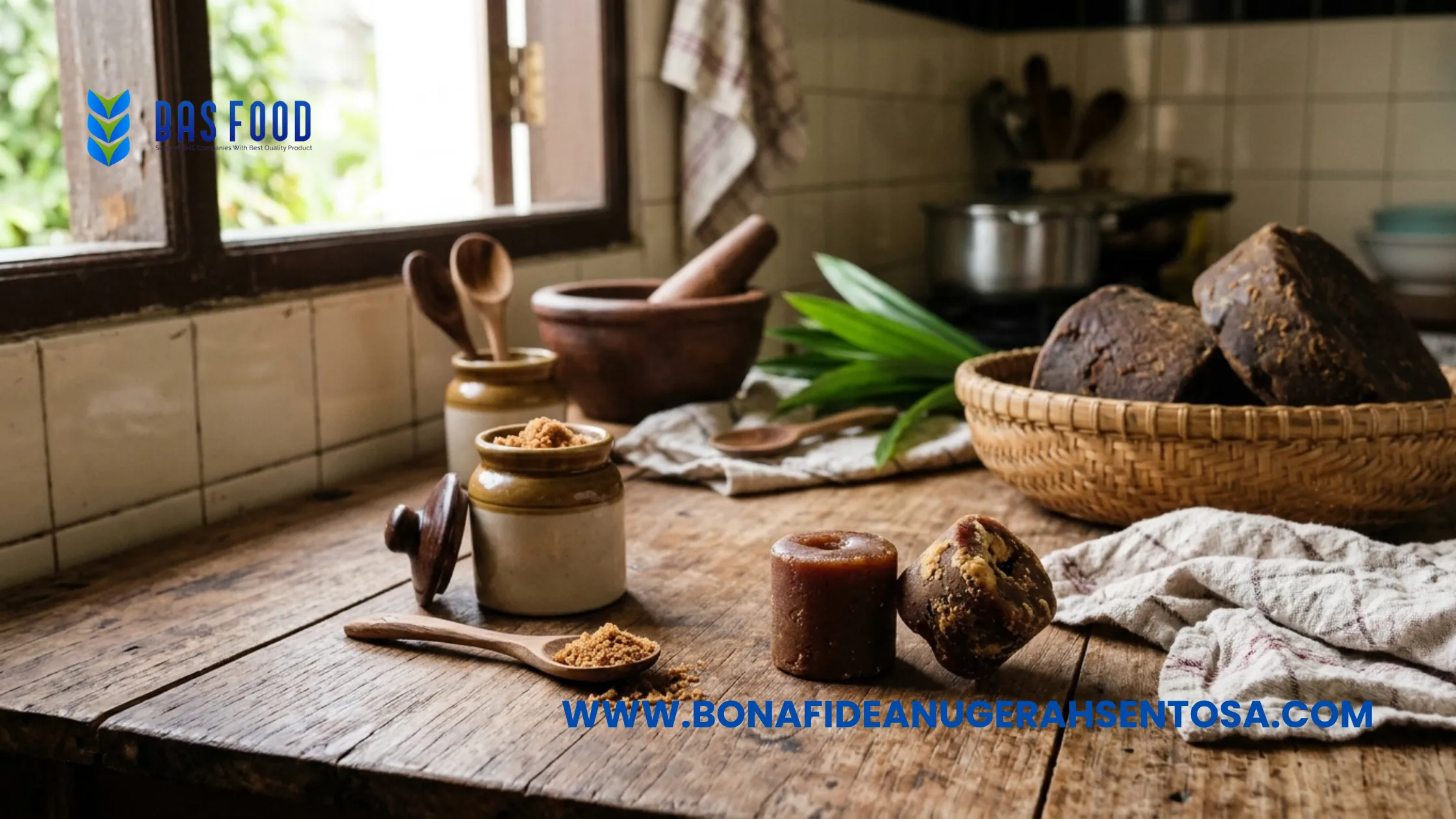
What Is Gula Melaka?
Gula Melaka is a traditional palm sugar commonly associated with Malaysia and other parts of Southeast Asia. It is often sold in solid blocks, cylinders, discs, or smaller pieces. Its color can range from golden brown to dark brown, while its flavor usually has caramel-like, toffee-like, or cooked-sugar notes.
The name Gula Melaka is strongly associated with Malaysian palm sugar traditions. However, palm sugar products across Southeast Asia can come from different palm species. Some are made from coconut palm sap, while others use sap from different sugar-producing palms. Therefore, the product name alone does not always tell buyers the exact botanical source.
For food manufacturers, this distinction matters. Coconut palm sugar and other palm sugars may share similar uses, but their flavor, composition, and physical characteristics can differ. Importers should confirm the raw material, country of origin, and product specifications before placing an order.
In general, traditional Gula Melaka is valued for its relatively simple raw material and characteristic flavor. Its appeal comes from the transformation of palm sap into a concentrated sweetener through heating and cooling.
The Main Ingredient: Coconut Palm Sap
One of the most important raw materials used in coconut-based palm sugar is coconut palm sap. This liquid is collected from the flower stalk of the coconut palm, rather than from the coconut flesh or coconut water inside the fruit.
Farmers carefully prepare the flower stalk so that sap can flow into a collection container. The fresh liquid contains water and naturally occurring sugars, along with smaller amounts of other soluble compounds. Its exact composition depends on factors such as palm variety, growing conditions, maturity, weather, and collection practices.
Fresh sap is highly perishable. If producers do not handle it properly, natural fermentation can begin and change its smell, acidity, and flavor. For this reason, collection hygiene and timely processing are important steps in producing good-quality palm sugar.
Once collected, the sap is filtered to remove visible particles and unwanted materials. Producers then heat it to reduce its water content. As the liquid becomes more concentrated, it develops the thicker consistency needed for moulding.
It is important to clarify that not every product sold as Gula Melaka is necessarily made from coconut palm sap. Some regional varieties use other palm species. Buyers who specifically require coconut-based sugar should request confirmation of the botanical source from their supplier.
Gula Melaka Ingredients: What Is Actually Inside?
The simplest traditional gula melaka ingredients list usually begins with concentrated palm sap. In many traditional production methods, the sap is the primary ingredient, and heating transforms it into a solid sweetener without requiring a long list of additional ingredients.
During concentration, water evaporates and the naturally occurring sugars become more concentrated. These sugars provide the sweetness and contribute to the solid structure after the syrup cools. The sap also contains small quantities of other naturally occurring compounds that can influence flavor, aroma, and color.
The exact gula melaka composition varies according to the palm species, sap quality, processing conditions, and final moisture level. Therefore, it is not accurate to assume that every block has an identical nutritional or chemical profile.
Some producers may use processing aids or additional ingredients depending on their production method and product specification. For example, a manufacturer may use an ingredient to help control crystallization or achieve a particular texture. However, this should never be assumed. Buyers should check the ingredient declaration and technical documentation for the exact product they intend to purchase.
For commercial sourcing, the most useful approach is to request a product specification sheet. This document can help buyers understand the declared ingredients, physical characteristics, available nutritional information, and relevant quality parameters.
Understanding the Natural Sugar Composition
Palm sap contains several types of naturally occurring sugars. Sucrose is generally the main sugar in many palm sap products, while glucose and fructose may also be present in smaller amounts. The proportions vary with raw material and processing conditions.
During heating, water evaporates and the concentration of these sugars increases. Heat also encourages browning reactions that contribute to the characteristic color and flavor of the finished product. These changes help explain why palm sugar has a more complex taste than a simple solution of refined white sugar.
The sugar composition affects more than sweetness. It can influence crystallization, moisture behavior, texture, and the way the ingredient performs in recipes. For example, a manufacturer using palm sugar in a beverage may focus on how quickly it dissolves, while a bakery may be more interested in its flavor and effect on the finished product’s color.
However, buyers should avoid assuming that natural palm sugar has a fixed sugar profile. Differences in sap collection, processing temperature, concentration, and storage can affect the final composition.
For manufacturers that need specific nutritional values or sugar ratios, laboratory analysis is more reliable than general descriptions. A supplier’s specification sheet or certificate of analysis can provide product-specific information when available.
How Traditional Processing Transforms the Ingredients
The production of Gula Melaka begins with sap collection. Farmers collect liquid from the palm flower stalk and transfer it for processing. Because fresh sap can ferment quickly, good handling practices are important from the beginning.
After collection, producers filter the sap to remove unwanted particles. They then place it in a cooking vessel and heat it over a controlled fire or other suitable heat source. As the water evaporates, the sap becomes thicker and more concentrated.
During this stage, the flavor and color begin to develop. The heat encourages natural browning reactions, creating the caramel-like notes associated with palm sugar. Producers must monitor the cooking process carefully because excessive heating may create a burnt flavor or an overly dark appearance.
When the syrup reaches the required concentration, producers allow it to cool slightly before pouring it into moulds. The concentrated liquid gradually becomes solid as it cools. Once the blocks have set, they can be removed from the moulds, inspected, and prepared for packaging.
Although the basic process sounds simple, consistency requires experience and process control. Differences in sap freshness, heating time, temperature, and final concentration can produce blocks with different colors, textures, and flavors.
Why Gula Melaka Has Its Distinctive Color and Aroma
The characteristic color of Gula Melaka comes mainly from changes that take place during sap concentration and heating. Depending on the raw material and cooking conditions, the finished product may appear golden brown, medium brown, or dark brown.
Browning reactions contribute to both color and flavor. Heat can transform some of the natural compounds in the sap, producing the rich cooked-sugar notes that make palm sugar popular in desserts and beverages.
Its aroma often includes caramel-like, toffee-like, or molasses-like characteristics. However, the intensity varies between products. Some blocks have a mild sweetness, while others offer a deeper cooked-sugar profile.
A pleasant aroma and balanced flavor are generally desirable. In contrast, a strongly burnt, sour, or musty smell may indicate problems with processing or storage. Buyers should evaluate these sensory characteristics together rather than judging quality from color alone.
For food manufacturers, consistency is important. A bakery or beverage producer may need a stable flavor profile to maintain the same taste across production batches. Therefore, requesting samples and comparing them with an agreed specification is a practical step before bulk purchasing.
Is Gula Melaka a Natural Palm Sugar?
Gula Melaka is commonly described as a natural palm sugar because traditional production starts with palm sap and uses heating to concentrate it. This distinguishes it from refined sugar, which undergoes a different industrial processing process.
However, the word natural should be used carefully in product descriptions. It does not automatically mean that a product is organic, additive-free, unprocessed, or healthier than other sugars. These claims depend on the actual ingredients, production methods, and supporting documentation.
For importers, the ingredient declaration is especially important. A product made entirely from palm sap may have a different ingredient statement from one that includes additional ingredients. Buyers should verify the details rather than relying only on marketing descriptions.
The nutritional profile also deserves attention. Palm sugar contains sugars and contributes energy to the diet. Although it may contain small amounts of naturally occurring minerals, it should still be treated as an added sugar or sweetening ingredient in food formulation.
Therefore, manufacturers should make accurate product claims and follow the labeling rules of their target markets. Clear documentation helps prevent confusion and supports responsible marketing.
Gula Melaka as a Traditional Sweetener in Food Manufacturing
Gula Melaka has long been used as a traditional sweetener in Southeast Asian cooking. Its rich flavor makes it suitable for many recipes that require more than basic sweetness.
In desserts, manufacturers can use it in puddings, cakes, traditional rice-based sweets, sauces, and fillings. Its cooked-sugar notes can complement coconut milk, pandan, ginger, spices, and other ingredients commonly used in regional recipes.
Beverage producers may also use palm sugar in coffee, tea, milk-based drinks, and traditional refreshments. Depending on the form supplied, manufacturers can dissolve the blocks in hot water or prepare a concentrated syrup before adding it to a recipe.
For sauces and bakery products, Gula Melaka can contribute both sweetness and color. It may work well in glazes, marinades, baked goods, and dessert toppings. However, its flavor and color can influence the final product, so recipe adjustments may be necessary.
The solid form also gives manufacturers flexibility. Blocks can be broken, grated, melted, or dissolved according to the production process. Nevertheless, the ease of handling depends on block size, hardness, and moisture content.
Quality Factors Buyers Should Check Before Purchasing
Understanding the ingredients is only the first step. B2B buyers also need to evaluate the physical and technical quality of the finished product. A good-looking block does not automatically meet every food manufacturing requirement.
Start with the product’s appearance. Check whether the color is reasonably consistent and whether the blocks have the expected shape and size. Large differences between pieces may indicate variations in processing or moulding.
Next, assess aroma, flavor, and texture. A suitable product should have a pleasant cooked-sugar profile without unexpected sour, musty, or burnt notes. The blocks should also have a structure that fits the buyer’s handling and processing needs.
Moisture content is another important factor. Excessive moisture may make the blocks soft or sticky, while a very dry product may become hard and difficult to process. Buyers should request the supplier’s moisture specification rather than relying on touch alone.
For professional procurement, consider checking:
- Raw material: Confirm whether the product comes from coconut palm sap or another palm species.
- Ingredient declaration: Verify whether the product contains only palm sugar or includes other ingredients.
- Color and appearance: Agree on an acceptable appearance for the intended application.
- Aroma and flavor: Check for a clean, characteristic cooked-sugar profile.
- Texture: Evaluate firmness, structure, and ease of processing.
- Moisture content: Request product-specific data.
- Food safety: Ask for relevant microbiological information and supporting documents where required.
- Packaging: Confirm that the packaging protects the product during storage and transport.
- Traceability: Check batch identification and origin information.
These checks help importers establish clear purchasing standards and compare products from different suppliers.
How to Choose a Reliable Coconut Sugar Supplier
Choosing a dependable coconut sugar supplier is important for food manufacturers and importers. Consistent ingredients help businesses maintain production quality, meet customer expectations, and manage supply schedules.
First, confirm the supplier’s product identity. If your business requires coconut-based Gula Melaka, ask the supplier to verify that the raw material comes from coconut palm sap. Do not assume that all products carrying the Gula Melaka name have the same botanical source.
Next, request a product specification sheet. It should provide available information about ingredients, appearance, moisture, packaging, and other relevant quality parameters. If your production process requires specific technical values, communicate those requirements before purchasing.
Samples are also useful. Testing a sample in your own recipe helps you evaluate flavor, dissolving behavior, texture, and suitability for production. It also gives your team a reference point when discussing future orders.
Finally, consider the supplier’s export experience and communication. International buyers may need support with product documentation, commercial invoices, packing lists, certificates of origin, and shipping arrangements. Requirements vary by destination, so buyers should confirm the necessary documents with their customs broker and relevant authorities.
A reliable coconut sugar exporter supplier should be able to explain the product clearly and provide realistic information about specifications, packaging, and order arrangements.
Sourcing Indonesian Palm Sugar with CV Bonafide Anugerah Sentosa
Indonesia has a long history of producing palm-based sweeteners. Local farmers and producers use traditional knowledge to collect and process palm sap into different forms of sugar for domestic and international markets.
For international buyers, it is important to identify the exact product they need. Coconut palm sugar, other palm sugars, and Gula Melaka may share similar uses, but their raw materials and product characteristics are not necessarily identical. Clear product descriptions help avoid confusion during purchasing and import documentation.
CV Bonafide Anugerah Sentosa is an Indonesian exporter and supplier of coconut sugar and other coconut-derived products. The company works with international buyers seeking Indonesian agricultural and food ingredients.
Businesses interested in Gula Melaka or coconut palm sugar can discuss their requirements with CV Bonafide Anugerah Sentosa. Buyers should communicate the preferred raw material, product form, color, flavor profile, packaging, and target application.
For commercial purchasing, request samples and available product specifications before confirming a bulk order. This gives both parties an opportunity to establish clear quality expectations and determine whether the product fits the buyer’s market and production needs.
Conclusion: Understanding the Ingredients Behind Traditional Sweetness
The story of Gula Melaka begins with palm sap. Through collection, filtration, heating, concentration, and moulding, producers transform this liquid raw material into a traditional sweetener with a distinctive color, aroma, and flavor.
Understanding gula melaka ingredients helps buyers make better sourcing decisions. The palm species, sap quality, processing method, and final product composition all influence the characteristics of the finished sugar. Therefore, importers should verify the raw material and request product specifications instead of relying only on the product name.
For food manufacturers, Gula Melaka offers a traditional flavor that can support a wide range of applications, from beverages and desserts to bakery products and sauces. With proper quality checks and a reliable supplier, it can become a useful ingredient in commercial food production.
If your business is looking for an Indonesian coconut sugar supplier or coconut sugar exporter supplier, contact CV Bonafide Anugerah Sentosa to discuss product requirements, samples, and sourcing possibilities.