
Gula Melaka is more than a traditional palm sugar. It brings a rich, caramel-like sweetness to desserts, beverages, sauces, and many Southeast Asian dishes. If you’re wondering how to store gula melaka to keep its distinctive flavor fresh, you’re not alone—its unique taste makes it a popular ingredient among home cooks, restaurants, food manufacturers, and international buyers.
However, like other natural sweeteners, Gula Melaka needs proper handling and storage. Exposure to moisture, heat, air, and unsuitable packaging can change its texture, cause it to become sticky, or affect its overall quality. For businesses that purchase palm sugar in bulk, poor storage can also lead to unnecessary product waste.
So, how to store gula melaka correctly? The answer depends on its form, packaging, storage environment, and expected period of use. This guide explains practical methods for gula melaka storage, factors that affect palm sugar shelf life, and useful steps for storing palm sugar blocks in commercial and household settings.
Whether you are a retailer, importer, distributor, or food manufacturer, understanding proper gula melaka preservation can help you maintain product quality from delivery to final use.
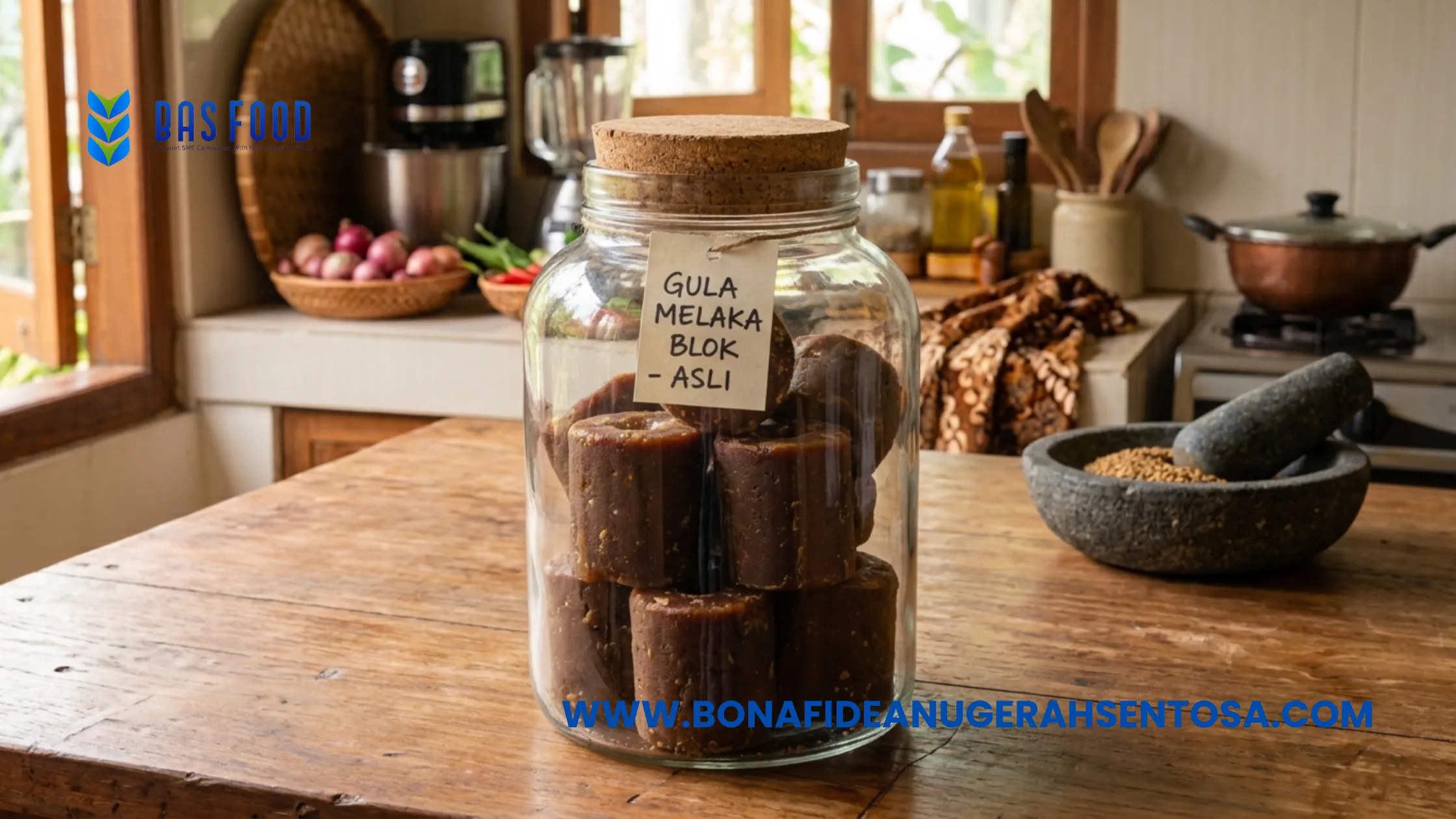
Why Proper Gula Melaka Storage Matters
Gula Melaka is traditionally made by concentrating palm sap through heating until it becomes thick enough to solidify. Producers then pour the concentrated mixture into moulds and allow it to cool. The finished product commonly has a golden-brown to dark-brown color, a firm or slightly soft texture, and a sweet aroma with caramel-like notes.
Although concentrated sugar products can have good keeping qualities, they are not immune to environmental conditions. Moisture is one of the main concerns because palm sugar can absorb water from humid surroundings. As a result, a firm block may become soft, sticky, or difficult to handle.
Temperature and packaging also matter. Warm storage conditions can affect texture, while exposure to air and unsuitable handling environments can introduce unwanted contamination. In addition, damaged packaging may allow moisture, dust, or insects to reach the product.
For food manufacturers and distributors, these changes can create practical problems. Sticky blocks may be harder to separate, weigh, cut, or package. Changes in appearance or aroma may also affect customer acceptance. Therefore, proper storage is an important part of quality management, not simply a way to keep products organized.
Understand the Different Forms of Gula Melaka Before Storing Them
Before choosing a storage method, identify the product form. Gula Melaka is commonly available as blocks or moulded pieces, but palm sugar products may also be sold in granulated, powdered, or liquid forms. Each format has different handling requirements.
Gula Melaka blocks are solid pieces that may vary in size, hardness, and moisture content. Their storage requirements depend on the product specification and packaging. Keeping blocks dry and protected from humidity helps maintain their texture and makes them easier to handle.
Granulated or powdered palm sugar has a larger exposed surface area than solid blocks. Therefore, moisture can affect it more quickly if the packaging is left open or not properly sealed. Airtight packaging is especially useful after opening.
Liquid palm sugar syrup requires a different approach. It should remain in suitable sealed containers and follow the manufacturer’s storage instructions. Buyers should not apply storage recommendations for solid blocks to syrup because its composition, processing, and microbiological characteristics may differ.
One more point is important for international buyers: Gula Melaka is a regional product name strongly associated with Malaysian palm sugar traditions. The raw material can vary by producer and region. If the product is made from coconut palm sap, it may also be described as coconut palm sugar. Always check the ingredient declaration and product specification before making assumptions about its origin.
How to Store Gula Melaka Blocks Correctly
If you want to know how to store gula melaka blocks, start by keeping them in a clean, dry place away from direct sunlight. A cool, stable storage environment helps reduce unnecessary changes in texture and protects the product from excessive heat.
The most important rule is to prevent unwanted moisture exposure. Avoid placing palm sugar blocks near sinks, open windows, damp floors, or areas where water may splash. In warehouses, store the products on suitable pallets or shelves rather than directly on the floor. This also makes cleaning and stock inspection easier.
Packaging should remain closed whenever possible. If you open a bulk package, transfer the remaining blocks into a clean, dry, food-suitable container or reseal the original packaging securely. The goal is to limit exposure to humid air, dust, and other contaminants.
For household use, a clean airtight container can be practical. For commercial storage, the packaging should be suitable for food contact and appropriate for the product’s weight, handling, and storage conditions.
Follow these simple steps:
- Check that the blocks are dry and the packaging is intact before storage.
- Keep the product away from direct sunlight and heat sources.
- Use clean, dry storage containers.
- Close opened packages promptly after taking out the required quantity.
- Avoid mixing new stock with old stock without checking batch information.
- Inspect the product regularly for changes in appearance, aroma, or packaging condition.
These steps support better gula melaka preservation and make everyday stock handling more manageable.
The Best Temperature and Humidity for Gula Melaka Storage
Temperature and humidity are two important environmental factors in palm sugar storage. However, there is no single temperature range that applies to every Gula Melaka product. The correct storage conditions depend on the product’s moisture content, formulation, packaging, and supplier recommendations.
As a general practice, keep solid Gula Melaka in a cool, dry, and well-maintained storage area. Avoid locations that experience large temperature changes or receive direct sunlight for long periods. Stable conditions help reduce the risk of unwanted texture changes.
Humidity deserves particular attention, especially in tropical regions. When the surrounding air contains a lot of moisture, exposed palm sugar may absorb water. This can make blocks softer or stickier and may increase the risk of quality deterioration.
For warehouses, consider the following practices:
- Monitor temperature and relative humidity where practical.
- Keep storage areas clean, dry, and well ventilated.
- Prevent water leaks from roofs, pipes, or nearby equipment.
- Avoid placing products against damp walls.
- Keep packages away from direct contact with floors.
- Use suitable pallets and maintain enough space for inspection and cleaning.
For exporters and importers, it is useful to agree on storage recommendations before shipment. A supplier’s product specification should provide the most relevant guidance for the actual product being purchased.
Choosing the Right Packaging for Storing Palm Sugar Blocks
Packaging is one of the first lines of protection against moisture, dust, and physical damage. Even when Gula Melaka has been produced and packed carefully, unsuitable packaging can reduce its quality during storage and transportation.
For retail products, sealed food-grade bags or other suitable consumer packaging can help protect individual blocks. These packages should provide an appropriate barrier against moisture and remain securely closed until the product reaches the customer.
For wholesale and export orders, buyers may use larger food-suitable bags, inner liners, cartons, or other secondary packaging arrangements. The best combination depends on block size, total shipment weight, handling conditions, and destination requirements.
When storing palm sugar blocks, buyers should pay attention to the packaging’s ability to protect the product throughout its expected storage period. A strong outer carton can help prevent physical damage, but it does not automatically provide a moisture barrier. Similarly, a sealed inner bag can help protect the product, but the packaging must be suitable for food contact and compatible with the product.
Before choosing a packaging format, consider:
- The size and weight of each block.
- The number of blocks per package.
- The expected storage duration.
- Humidity conditions in the warehouse.
- Transportation and stacking requirements.
- Food-contact suitability of the packaging materials.
- Whether the package can be securely resealed after opening.
Importers should also confirm that packaging details match the product specification and shipping documents. Consistent packaging makes receiving, stock counting, and distribution easier.
Understanding Palm Sugar Shelf Life
Palm sugar shelf life refers to the period during which a product is expected to remain suitable for its intended use when stored under specified conditions. However, shelf life is not determined by the product name alone.
The raw material, production process, moisture content, water activity, packaging, and storage environment can all influence how long Gula Melaka maintains its expected quality. Two products that look similar may have different shelf-life specifications if their processing and composition differ.
Moisture content and water activity are particularly important, but they are not the same measurement. Moisture content describes how much water is present in a product, while water activity indicates how available that water is for chemical reactions and microbial growth. Both can provide useful information when assessing product stability.
A concentrated sugar product may have reduced water activity, but this does not guarantee that it is free from spoilage risks. Certain microorganisms, including some yeasts and molds, can tolerate high-sugar environments. Therefore, buyers should not assume that Gula Melaka can be stored indefinitely.
For commercial purchasing, always check the manufacturer’s declared shelf life and storage instructions. If a supplier provides a best-before date, follow the stated conditions associated with that date. Do not create a shelf-life claim based only on appearance or traditional storage practices.
Common Storage Problems and How to Prevent Them
Even when businesses understand basic gula melaka storage, problems can occur if warehouse procedures are inconsistent. Recognizing common warning signs helps staff respond before a small issue affects a larger quantity of stock.
Sticky or soft blocks may indicate moisture absorption or changes in storage conditions. Check whether the package has been opened, damaged, or exposed to humid air. Move affected stock to an appropriate storage area and consult the supplier if the texture change is unusual.
Hard or excessively dry blocks may be difficult to cut or dissolve. This can be related to the product’s original characteristics, processing, or storage conditions. Hardness alone does not prove that a product is unsafe, but it may affect how the ingredient performs in a recipe.
Unusual odors, visible mold, or signs of contamination should receive more serious attention. Do not simply remove the visible affected area and assume the rest is suitable for use. Isolate the affected package or batch and contact the supplier for advice. Where necessary, follow the business’s food-safety procedures and arrange appropriate testing.
Damaged or wet packaging also requires inspection. If moisture has entered the package, assess the affected stock rather than returning it to normal inventory without checking.
A regular inspection routine can help prevent these problems. Warehouse staff should check package condition, storage cleanliness, batch identification, and any visible changes in the product.
Gula Melaka Preservation for Bulk Storage and Export
Bulk storage requires more planning than keeping a few blocks in a kitchen cupboard. Importers and distributors may hold significant quantities of palm sugar before supplying retailers, restaurants, or food manufacturers. As a result, warehouse management becomes an important part of product quality control.
Start by organizing inventory according to batch number, production date, and declared shelf life. Use a first-in, first-out system where appropriate, while always following the manufacturer’s date information. This helps reduce the chance of older stock remaining in storage after newer shipments arrive.
Next, make sure the warehouse can protect the product from moisture and physical damage. Keep cartons on suitable pallets, avoid overstacking, and maintain clear access for inspection. Do not place heavy goods on top of cartons unless the packaging has been designed to withstand the load.
Export shipments also need protection during transportation. Gula Melaka blocks should be packed securely to reduce movement and damage. The container or transport vehicle should be clean, dry, and suitable for food cargo. Before loading, inspect the packaging and check that the shipping arrangement follows the agreed requirements.
For international shipments, exporters and importers should discuss the expected transit time and destination storage conditions. A product that travels through a humid tropical port may face different environmental conditions from one shipped through a cooler climate. Clear handling instructions help both parties manage these differences.
Practical Storage Tips for Retailers, Restaurants, and Food Manufacturers
Different businesses use Gula Melaka in different ways. Therefore, their storage routines should reflect how often they open packages, how much stock they hold, and how quickly they use the product.
For retailers, keep consumer packages sealed and display them away from direct sunlight, heat, and moisture. Inspect the packaging regularly and rotate stock according to its declared shelf life. Avoid placing products near areas where water or cleaning chemicals may reach them.
Restaurants and cafés often open packages frequently. Staff should use clean, dry utensils when handling palm sugar and close the packaging immediately after use. If the original package is difficult to reseal, transfer the remaining product into a suitable clean container with a secure lid.
Food manufacturers may need more formal stock control. Keep raw materials identified by batch and record their receiving dates. Establish procedures for opening bulk packages, transferring ingredients, and returning unused material to storage. These steps help maintain traceability and reduce the risk of cross-contamination.
For all business types, staff training is useful. Everyone who handles the product should understand the basic rules: keep it dry, protect it from contamination, follow supplier instructions, and report unusual changes.
Working with a Reliable Coconut Sugar Supplier
Proper storage begins with good product information. A reliable supplier should be able to explain the product’s raw material, form, packaging, and recommended storage conditions. This information helps buyers prepare suitable warehouses and avoid preventable handling problems.
For importers sourcing traditional palm sugar, it is especially important to confirm the palm species. Gula Melaka is a regional name, and buyers should not assume every product sold under that name is made from coconut palm sap. If the product is coconut-derived, the supplier should confirm this in the ingredient declaration or product specification.
CV Bonafide Anugerah Sentosa is an Indonesian exporter of coconut sugar and other coconut-derived products. International buyers looking for a coconut sugar exporter supplier can contact the company to discuss product requirements and potential sourcing arrangements.
When evaluating a coconut sugar supplier, buyers should request relevant information such as:
- Product name and raw material.
- Country and region of origin.
- Product form and available dimensions.
- Ingredient declaration.
- Packaging specifications.
- Declared shelf life and storage recommendations.
- Relevant quality documentation and laboratory results, where available.
Buyers should also consider requesting samples before placing a large order. A sample allows them to assess flavor, color, aroma, texture, and performance in their intended application.
Clear communication at the beginning of a business relationship can prevent confusion later. By agreeing on product specifications, packaging, and storage requirements, both parties can establish a stronger foundation for consistent supply.
Conclusion: Good Storage Protects Quality from Warehouse to Kitchen
Knowing how to store gula melaka is essential for maintaining its expected flavor, texture, appearance, and usability. Although palm sugar is a concentrated sweetener, it still needs protection from moisture, unsuitable temperatures, contamination, and packaging damage.
For households, a clean, dry, sealed container is a practical starting point. For retailers, restaurants, importers, and manufacturers, effective gula melaka storage also requires proper warehouse conditions, batch identification, stock rotation, and regular inspections.
The key to successful gula melaka preservation is to follow product-specific storage instructions rather than assume every palm sugar product behaves in the same way. By combining suitable packaging with clear supplier information and careful handling, businesses can manage palm sugar shelf life more effectively.
Whether you are purchasing traditional Gula Melaka blocks or coconut-derived palm sugar, working with a reliable supplier such as CV Bonafide Anugerah Sentosa can help you obtain the product information needed for better storage and sourcing decisions.