
Buyers often say they want “tuna fillet,” but in practice, that single term can mean very different products. In reality, there are several types of tuna fillet cuts that are requested across the industry. Some buyers expect long, rectangular loins. Others want steak cuts or portion-controlled pieces ready for packing. When expectations are not aligned, confusion appears during RFQs, pricing discussions, and quality claims.
This article explains the most common tuna fillet cuts used in seafood processing and export. It breaks down tuna loins, tuna steaks, and tuna portions in clear, technical terms. The goal is to help food manufacturers and wholesalers specify exactly what they need, reduce back-and-forth during sourcing, and avoid costly misunderstandings.
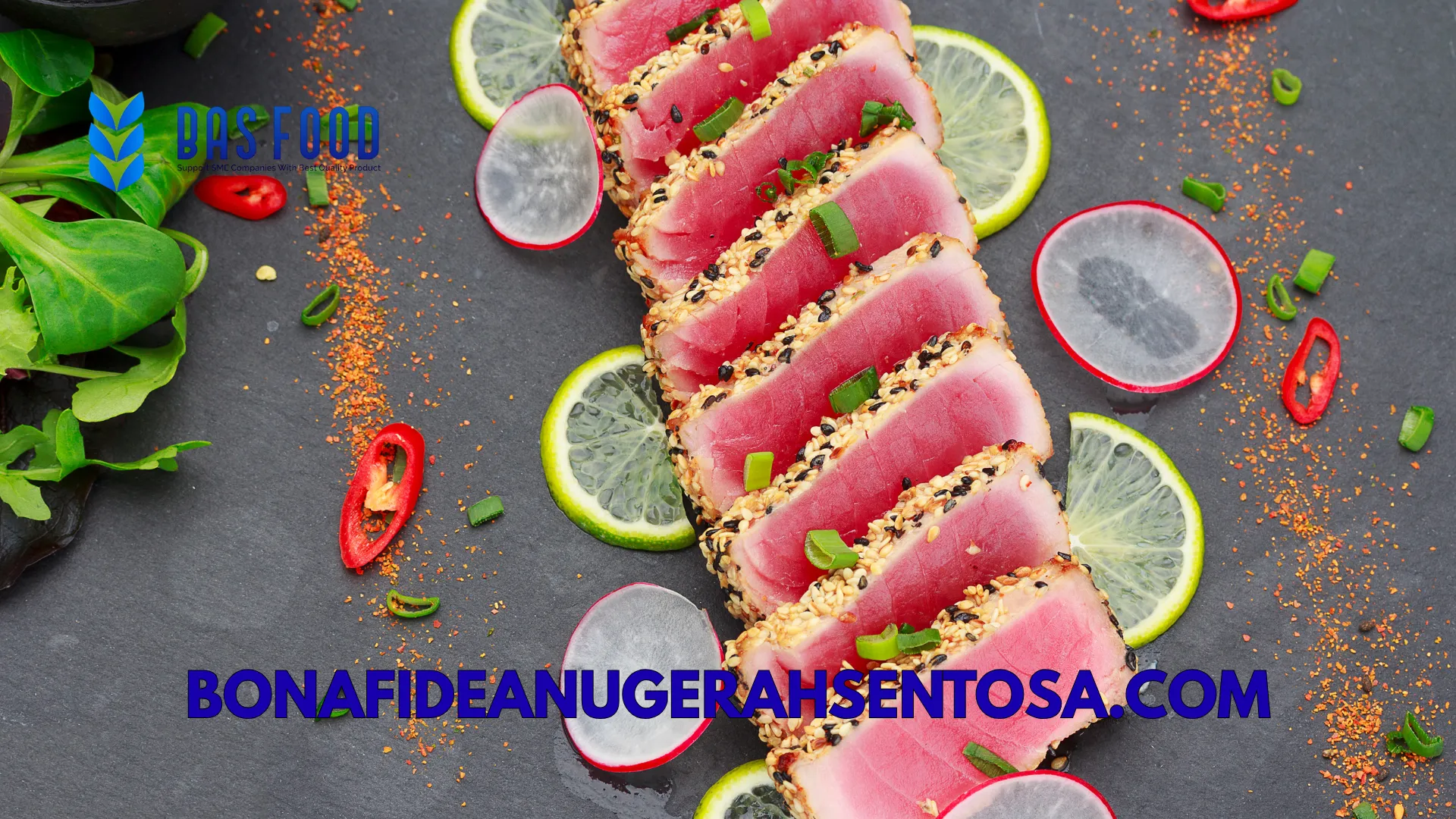
Understanding Tuna Fillet Cuts in Seafood Processing
Tuna fillet cuts refer to how tuna meat is separated, trimmed, and portioned after the fish is processed. These cuts are not random. Each cut serves a specific purpose in processing, foodservice, or retail distribution.
In global trade, exporters usually classify tuna fillet cuts into three main categories:
- Tuna loins
- Tuna steaks
- Tuna portions
Although they all come from the same fish, their size, shape, trimming level, and use cases differ significantly.
Where Tuna Fillet Cuts Come From on the Fish
Before comparing cuts, it helps to understand tuna anatomy.
After removing the head, skin, and bones, processors divide the tuna body into large muscle sections. These sections become the base material for further cutting. The dorsal and ventral muscles produce most export-grade fillet products.
First, processors create loins from these muscles. Then, they produce steaks and portions later, depending on buyer requirements.
As a result, this processing sequence explains why loins are considered a primary cut. In contrast, steaks and portions are classified as secondary or value-added cuts.
Tuna Loin Explained
What Is a Tuna Loin
A tuna loin is a long, thick section of boneless tuna meat cut parallel to the backbone. It is usually rectangular or cylindrical in shape and maintains the natural grain of the muscle.
Exporters often supply tuna loins as skinless, trimmed products, either fresh or frozen.
Typical Characteristics of Tuna Loins
- Length: long and uniform
- Thickness: consistent across the cut
- Trim level: varies by market
- Weight range: usually larger than other cuts
Because loins preserve muscle integrity, they are ideal for further slicing or portioning.
Common Uses of Tuna Loins
Food manufacturers and wholesalers prefer loins when they need flexibility. From a single loin, they can produce steaks, sashimi slices, or custom portions.
Tuna loins are commonly used for:
- Further processing
- Sushi and sashimi slicing
- Controlled portion production
For buyers with in-house processing capability, loins often provide the best cost control.
Tuna Steak Explained
What Is a Tuna Steak
A tuna steak is a cross-sectional slice cut perpendicular to the loin. It resembles a beef steak in appearance and thickness.
Processors usually cut steaks after loins are prepared, based on buyer specifications.
Typical Characteristics of Tuna Steaks
- Shape: round or oval
- Thickness: usually 2–4 cm
- Visible muscle grain
- Often sold skinless and trimmed
Tuna steaks are designed for immediate cooking or retail display.
Common Uses of Tuna Steaks
Tuna steaks work best for foodservice and retail markets where presentation matters. Restaurants value their consistent thickness and cooking performance.
Typical applications include:
- Grilled tuna dishes
- Pan-seared tuna
- Retail frozen seafood packs
Because steaks require precise cutting, pricing is usually higher than raw loins.
Tuna Portions Explained
What Are Tuna Portions
Tuna portions are smaller, pre-cut pieces taken from loins or steaks. They are trimmed to exact weight and size specifications.
Portions are the most processed form among tuna fillet cuts.
Typical Characteristics of Tuna Portions
- Fixed weight per piece
- Uniform size and shape
- High trim level
- Minimal preparation required
Portions prioritize convenience and consistency over flexibility.
Common Uses of Tuna Portions
Food manufacturers and wholesalers choose portions when speed and portion control matter more than yield.
They are widely used for:
- Ready-to-cook products
- Airline and catering meals
- Retail private-label programs
Although portions cost more per kilogram, they reduce labor and waste at the buyer’s facility.
Comparing Tuna Loin, Steak, and Portion Cuts
Understanding differences helps buyers select the right product for their operation.
Processing Flexibility
- Loins offer the highest flexibility
- Steaks offer moderate flexibility
- Portions offer minimal flexibility
Labor Requirements
- Loins require skilled cutting
- Steaks require limited preparation
- Portions require almost no labor
Cost Structure
- Loins usually have the lowest unit cost
- Steaks sit in the middle
- Portions have the highest unit cost
However, buyers should consider total cost, not just price per kilogram. Labor, waste, and yield matter.
How Tuna Species Affect Fillet Cuts
Species choice influences cut performance.
Yellowfin tuna produces firm loins with stable color, making it suitable for loins and steaks. Bigeye tuna offers higher fat content, which works well for sashimi-grade loins and premium portions. Skipjack tuna, which has a smaller size and darker meat, is often used for portions and cooked dishes rather than thick steaks.
Buyers should always match species to cut type and final use.
Trim Levels and Buyer Specifications
Trim level refers to how much bloodline, fat, and connective tissue is removed.
Common trim options include:
- Standard trim
- Deep trim
- Sashimi trim
Higher trim levels improve appearance and consistency but reduce yield. Clear trim specifications in RFQs prevent disputes and rejections.
Frozen vs Fresh Tuna Fillet Cuts
Most export tuna fillet cuts are frozen due to logistics and shelf life.
Frozen loins, steaks, and portions maintain quality when frozen quickly and stored at stable temperatures. Fresh cuts serve niche markets and require fast delivery.
From a supply chain perspective, frozen cuts offer better consistency and lower risk for wholesalers.
Common Buyer Mistakes When Specifying Tuna Fillet Cuts
Many sourcing issues come from unclear communication.
Common mistakes include:
- Using “tuna fillet” without defining the cut
- Ignoring trim level details
- Overlooking thickness or weight tolerances
- Mixing species and cut expectations
Clear specifications save time and reduce pricing disputes.
How to Specify Tuna Fillet Cuts in an RFQ
Buyers should include:
- Cut type (loin, steak, or portion)
- Species
- Weight or thickness range
- Trim level
- Frozen or fresh requirement
Detailed RFQs lead to faster quotations and more accurate pricing.
FAQ: Tuna Fillet Cuts
- What is the difference between tuna loin and tuna fillet?
>In general, a tuna loin is a primary cut. Meanwhile, people use the term tuna fillet more broadly, as it can include loins, steaks, or smaller portions. - Are tuna steaks cut from loins?
Yes, they are. In fact, processors typically slice tuna steaks directly from loins. - Which tuna cut is best for food manufacturing?
It depends on your needs. For example, loins work best when flexibility is important. On the other hand, portions are more suitable for fixed-weight production. - Do tuna portions cost more than loins?
Yes, they do. Specifically, portions usually cost more per kilogram because they require extra processing and result in lower yield. - Can one tuna species be used for all cuts?
Technically, yes. However, performance can vary depending on the species and the intended application.
Contact CV Bonafide Anugerah Sentosa how we can provide the best solutions for you. WhatsApp: +62 8213 4505 737, Email: info@bonafideanugerahsentosa.com / bas.mdir@gmail.com.