
Palm sugar has become an interesting ingredient for food and beverage businesses around the world. Manufacturers use it in bakery products, beverages, sauces, desserts, confectionery, and other applications where its distinctive flavor and natural character can add value. However, producing palm sugar at a consistent commercial scale is not always simple. Behind every bag of palm sugar is an agricultural supply chain that depends on palm trees, farmers, weather, sap collection, processing, storage, and logistics. These factors create several palm sugar production challenges that both suppliers and international buyers need to understand.
For B2B buyers, knowing these challenges can make sourcing decisions easier. It helps importers understand why quality may vary, why supply planning matters, and why choosing the right supplier is more important than simply finding the lowest price.
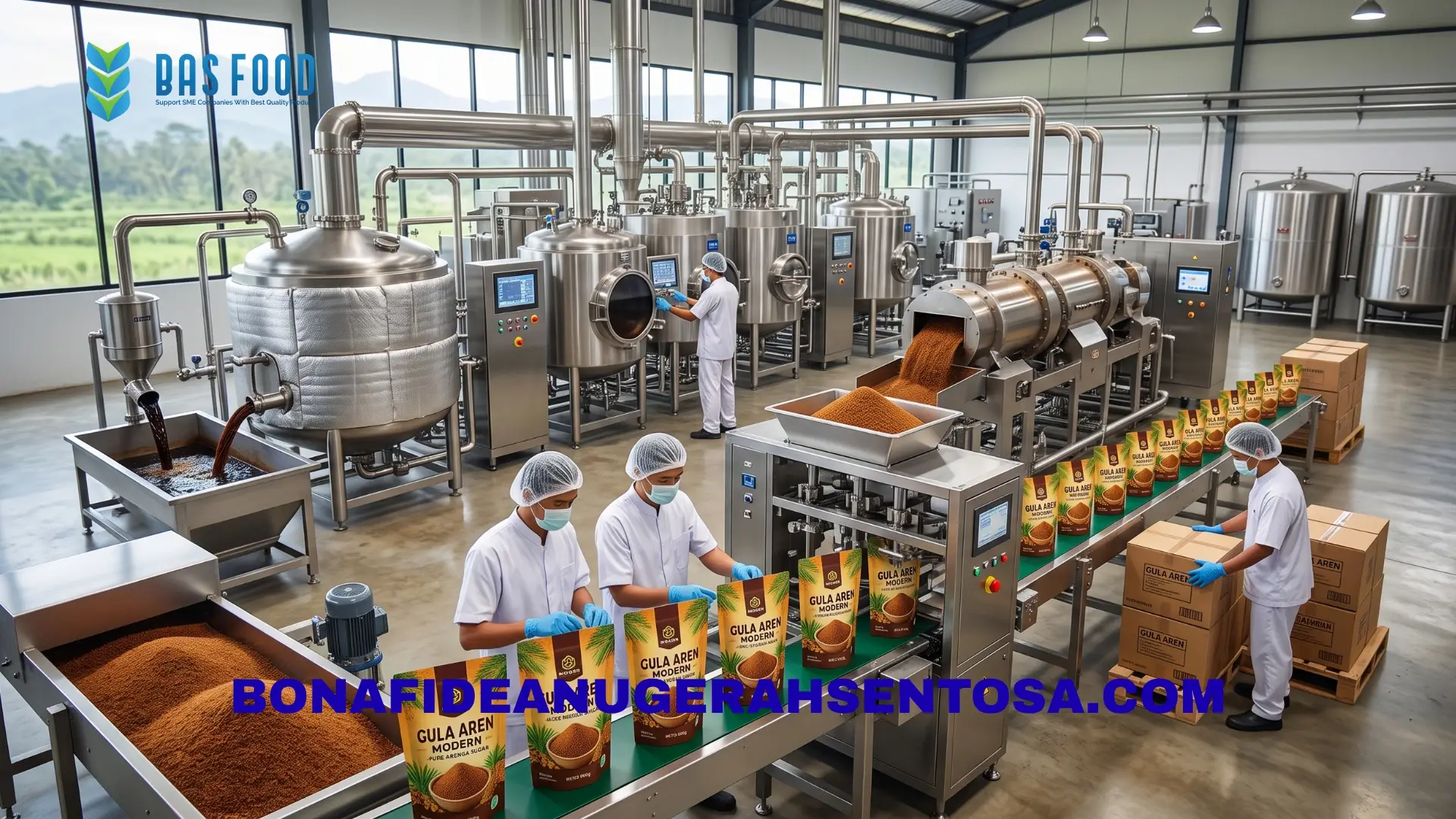
Why Palm Sugar Production Is Different From Industrial Sugar
Palm sugar starts with a natural agricultural raw material: sap collected from palm trees. Farmers carefully manage the flower stalks and collect the sap before processing it into palm sugar.
Unlike highly standardized industrial sweeteners, the raw material can naturally vary. Sap flow may change between trees, locations, seasons, and weather conditions. As a result, producers need strong control at several points in the supply chain.
This natural variation does not mean palm sugar cannot meet B2B quality requirements. Instead, it means suppliers need effective sourcing, processing, testing, and quality-control systems.
For international buyers, this distinction is important. A reliable palm sugar supplier should understand how agricultural variation affects the finished product and have practical methods to manage it.
Climate Impact on Palm Sugar Production
One of the major palm sugar production challenges is the climate impact on raw material availability. Temperature, rainfall, humidity, and other environmental conditions can influence palm trees and sap collection.
Heavy rainfall can make harvesting more difficult and may create challenges during transportation and processing. Meanwhile, prolonged dry conditions can affect agricultural conditions and potentially influence sap availability.
The exact effect depends on the production region. Indonesia has many palm-growing areas, and each area can have different weather patterns. Therefore, buyers should avoid assuming that a change in production in one region automatically represents the entire Indonesian supply.
For B2B procurement teams, regular communication with suppliers is useful. Asking about current production conditions and expected supply can provide more practical information than relying only on a fixed seasonal calendar.
Maintaining Quality Consistency
Quality consistency is another major challenge. Palm sugar can naturally differ in color, aroma, flavor, moisture, texture, and particle size.
For a consumer buying a small package, minor variation may not always be significant. For a food manufacturer, however, even a small change can affect a recipe or production process.
For example, a beverage manufacturer may need predictable dissolution and flavor. A bakery may require a stable moisture level and color. A confectionery producer may need a consistent sweetness and texture.
Therefore, suppliers need clear product specifications. These specifications can cover moisture, particle size, appearance, aroma, flavor, microbiological parameters, and other requirements relevant to the buyer’s application.
The Challenge of Raw Material Collection
Palm sugar production often involves many farmers. Each farmer may manage palm trees under slightly different conditions and follow local harvesting practices.
Collecting sap requires experience. Farmers need to prepare the palm flower stalk properly, collect the sap regularly, and transport it for processing. Fresh sap can change quickly, so timing matters.
This creates a supply-chain challenge. A processor or exporter may need to coordinate raw materials from multiple producers while maintaining consistent quality.
Strong relationships with farmers can help. When suppliers communicate clear quality expectations and provide guidance to their sourcing network, they can improve the consistency of the raw material entering the processing stage.
Processing and Moisture Control
After collection, palm sap needs to be processed. Heating reduces water content and transforms the liquid raw material into concentrated palm sugar.
The processing stage requires careful control. Excessive moisture can affect shelf stability, texture, and storage performance. At the same time, processing conditions can influence color and flavor.
For granulated or powdered palm sugar, additional processing may be needed to achieve the required particle size. Buyers may specify particular mesh sizes depending on their production equipment and final application.
This is why moisture control and processing consistency are important parts of B2B quality management. A supplier should be able to define its product specifications and monitor the relevant parameters.
Supply Stability and Agricultural Uncertainty
Supply stability can be challenging because palm sugar depends on agricultural production. A supplier may have strong processing capacity but still need to manage changes in raw material availability.
Demand can also create pressure. If international demand rises quickly, suppliers need enough raw material, processing capacity, packaging materials, labor, and logistics support to respond.
For buyers, the solution is better planning. Providing forecasts and expected purchasing volumes can help suppliers prepare for future demand.
Long-term relationships can also support supply stability. A buyer who communicates regularly with a supplier can often plan more effectively than a buyer who places unexpected orders only when inventory is almost empty.
Labor and Traditional Production Knowledge
Palm sugar production depends heavily on human skills. Farmers need experience to manage palm trees and collect sap correctly.
This traditional knowledge is valuable, but it can also create challenges when production needs to scale. Training new workers and maintaining consistent practices across many producers takes time.
Suppliers that work with multiple farmers need effective communication and quality guidelines. They may also need systems for monitoring raw materials and identifying problems early.
For international buyers, this highlights an important point: supplier capability is not only about factory size. The strength of the sourcing network can also influence the consistency and reliability of the final product.
Quality Control Across the Supply Chain
Quality control should begin before the palm sap reaches the processing facility. If raw materials vary significantly, the processor may have difficulty producing a consistent finished product.
A practical quality system can include raw material checks, controlled processing, moisture testing, microbiological testing where applicable, finished-product inspection, batch identification, and proper storage.
The exact testing program should depend on the product specification and intended market. Food manufacturers may require more detailed laboratory information than buyers purchasing palm sugar for a simple food-service application.
A good palm sugar supplier should be able to discuss these controls clearly. Buyers can also request product specifications, samples, and relevant quality documents before placing larger orders.
Packaging and Storage Challenges
Palm sugar needs suitable packaging to protect it during storage and transportation. Moisture exposure can be particularly important because sugar products can absorb moisture under unsuitable conditions.
Packaging requirements depend on the product form. Bulk granulated sugar, powdered sugar, and molded palm sugar may need different packaging approaches.
For export shipments, packaging must also withstand handling, container transportation, loading, unloading, and warehouse storage.
Buyers should discuss packaging specifications before placing an order. Important details can include bag material, inner liners, net weight, outer packaging, palletization, labeling, and storage conditions.
Logistics Can Affect Supply Reliability
Production does not end when palm sugar leaves the processing facility. The product still needs to reach the buyer.
For international shipments, logistics can involve inland transportation, container loading, port handling, ocean freight, customs procedures, and destination delivery.
Delays at any stage can affect the buyer’s inventory. This is particularly important for manufacturers that operate on fixed production schedules.
An experienced palm sugar exporter can help coordinate the export process. However, buyers should still plan realistic lead times and maintain appropriate inventory based on their business requirements.
Managing Seasonal Supply
Palm sugar can often be produced throughout the year, but production conditions can change. This makes seasonal supply an important consideration for procurement teams.
Weather conditions, local agricultural cycles, farmer availability, and raw material demand can all influence supply. Therefore, buyers should avoid assuming that the same volume will always be available immediately.
A practical approach is to provide suppliers with demand forecasts. If a buyer expects a significant increase in consumption, early communication gives the supplier more time to prepare.
Maintaining safety stock can also reduce the impact of unexpected supply changes. The right inventory level depends on consumption, lead time, storage capacity, and business risk.
Sustainability and Farmer Relationships
Sustainability is becoming increasingly important in global food sourcing. Buyers want to know more about where ingredients come from and how agricultural communities participate in the supply chain.
Palm sugar production can involve smallholder farmers and traditional agricultural practices. Building stable relationships with farmers can support long-term sourcing.
For exporters, sustainable supply management means looking beyond short-term purchasing. Reliable farmer relationships can help improve raw material availability and preserve production knowledge.
For buyers, asking suppliers about sourcing practices can provide a better understanding of the supply chain. However, sustainability claims should always be supported by accurate information rather than broad marketing statements.
How a Palm Sugar Supplier Can Reduce Production Risks
A capable palm sugar supplier can reduce many production risks through better planning and quality management.
First, the supplier can maintain a reliable network of raw material sources. Second, it can establish clear product specifications. Third, it can monitor processing and finished-product quality. Finally, it can maintain suitable inventory and packaging systems.
Communication is equally important. Buyers should tell suppliers about their expected volumes, technical specifications, packaging needs, and delivery schedules.
When both parties share information early, they can respond to agricultural and logistical changes more effectively.
The Role of CV Bonafide Anugerah Sentosa
For international buyers exploring Indonesian palm sugar, CV Bonafide Anugerah Sentosa can be evaluated as part of the supplier selection process.
As with any potential supplier, buyers should review product specifications, samples, packaging options, production capacity, quality documents, export experience, and commercial terms before placing an order.
The goal is not simply to find a company that can supply palm sugar once. B2B buyers usually need a partner that can support consistent quality and supply over multiple shipments.
This is particularly important for food manufacturers that cannot easily change ingredients once a product formula has been approved.
Palm Sugar Supplier vs. Coconut Sugar Supplier
Businesses that source natural sweeteners may also compare a coconut sugar supplier with a palm sugar supplier. Although both products come from palm-related agricultural systems, they are not identical ingredients.
Their raw materials, flavor profiles, production methods, physical characteristics, and product specifications can differ. Therefore, buyers should evaluate each ingredient according to its intended application.
A supplier that offers both products may be useful for procurement teams looking to consolidate sourcing. However, each product should still have its own specification, sample approval, and quality requirements.
How Buyers Can Manage Palm Sugar Production Challenges
Buyers cannot control the weather or agricultural conditions, but they can manage their sourcing strategy.
Start by defining a clear product specification. Then evaluate suppliers based on quality, production capability, communication, export experience, and supply capacity.
Next, test samples before placing large orders. Once a product is approved, maintain the approved specification as a reference for future shipments.
Finally, plan purchases ahead of time. Forecasting, safety stock, regular communication, and realistic lead times can reduce the impact of unexpected supply changes.
This approach turns palm sugar production challenges into manageable procurement risks rather than last-minute problems.
Final Thoughts
The biggest palm sugar production challenges come from the natural and human elements of the supply chain. Climate conditions can affect raw materials. Farmer practices can influence sap quality. Processing conditions can affect the finished product. Logistics can influence delivery times.
However, these challenges do not prevent palm sugar from becoming a reliable B2B ingredient. Strong sourcing networks, quality systems, good supplier management, and clear communication can significantly improve supply performance.
For international buyers, the key is to work with suppliers that understand agricultural variation and have practical systems to manage it. A reliable palm sugar exporter should be transparent about specifications, production capacity, lead times, and potential supply issues.
By understanding climate impact, quality consistency, and supply stability, buyers can make better sourcing decisions and build stronger long-term relationships with Indonesian palm sugar suppliers.