
When buyers source palm sugar from Indonesia, one question often comes up: when is the palm sugar harvest season? The answer is not as simple as choosing one month on a calendar. Palm sugar production depends on palm trees, sap flow, weather, farmer practices, and local growing conditions. For importers and food manufacturers, understanding the palm sugar harvest season can make purchasing much easier. It helps buyers plan orders, manage inventory, understand seasonal supply, and communicate better with suppliers. Instead of treating palm sugar as a product that appears in unlimited quantities all year, buyers can understand how the raw material moves from palm trees to processed sugar.
Indonesia has a long tradition of producing palm-based sweeteners. Farmers collect sap from palm flowers and process it into different forms of palm sugar. Because this process depends on natural conditions, production can change throughout the year. In this article, we will look at the production cycle, seasonal supply, harvesting conditions, and what international buyers should know when working with a palm sugar supplier.
What Is the Palm Sugar Harvest Season?
The palm sugar harvest season refers to the periods when palm sap can be collected and processed into palm sugar. However, palm sugar production is different from many seasonal crops that have one clearly defined harvest period each year.
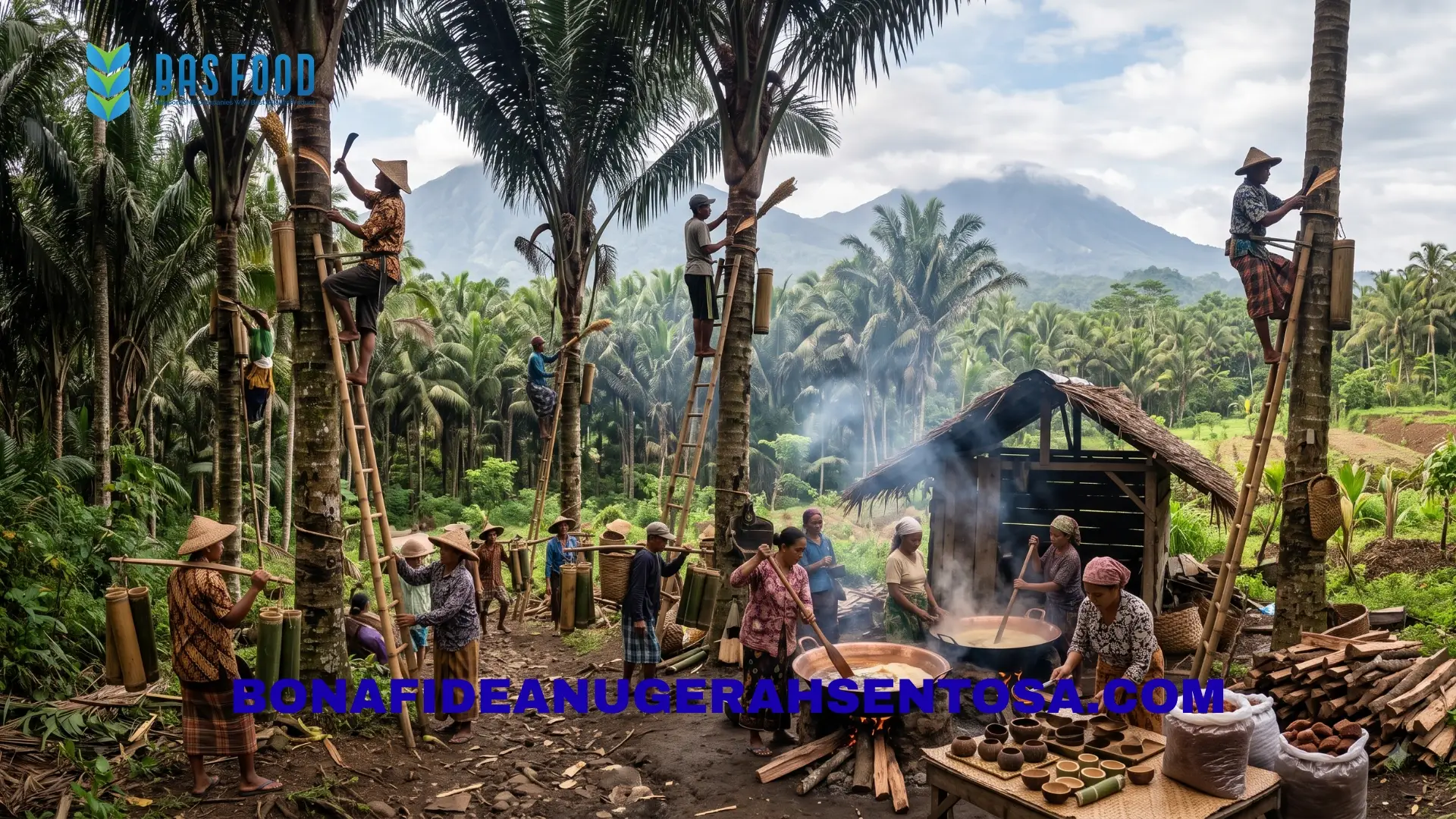
Palm trees can produce sap over extended periods when environmental and biological conditions are suitable. Farmers usually collect sap from the flower stalk or inflorescence. They carefully manage the stalk so that sap continues to flow. The collected sap is then transported for processing, where farmers heat it to reduce water content and develop the characteristic flavor, aroma, and color associated with palm sugar.
Because sap collection can continue across many months, palm sugar may be available throughout the year in producing regions. Nevertheless, production volume and sap flow can change because of rainfall, temperature, tree condition, and local farming practices.
This means international buyers should think in terms of seasonal supply rather than a simple “harvest month.” The exact production pattern can differ from one region to another.
Understanding the Palm Sugar Production Cycle
To understand the palm sugar harvest season, it helps to understand the complete production cycle. Palm sugar production begins with palm trees that are mature enough to produce suitable flower stalks. Farmers prepare and manage these stalks before collecting the sap.
Sap collection requires regular attention. Farmers may collect sap more than once a day, depending on the local production system and the condition of the palm. The fresh sap is highly perishable, so farmers need to process it relatively quickly to maintain the desired quality.
After collection, the sap is filtered and heated. The cooking process reduces its water content and concentrates the natural sugars. Depending on the desired product, the concentrated syrup can then be processed into molded, granulated, or powdered palm sugar.
This traditional production cycle explains why palm sugar supply depends heavily on farmer activity. It also explains why quality management at the farm and processing level is important for exporters serving international buyers.
How Weather Influences Palm Sugar Production
Weather plays an important role in palm sugar production. Rainfall, temperature, humidity, and overall environmental conditions can affect sap collection and processing.
During periods of heavy rain, farmers may face more difficult working conditions. Excessive moisture can also create challenges during drying, storage, and transportation. On the other hand, weather that is too dry can influence the condition of palm trees and may affect sap availability in some production areas.
However, the impact of weather is not identical everywhere. Indonesia has many palm-growing regions, and local conditions vary significantly. A production area in Central Java may experience different rainfall patterns from an area in West Java, Sumatra, or other Indonesian regions.
For buyers, this means that asking a supplier about current supply conditions can be more useful than relying only on a generic global calendar. A professional palm sugar supplier should be able to explain the expected production situation for the specific product and sourcing region.
Palm Sugar and Indonesian Agriculture
Palm sugar is closely connected with Indonesian agriculture and traditional rural livelihoods. Many small-scale farmers participate in the production process, often working with palm trees that grow around agricultural land, villages, or mixed farming areas.
Unlike some large-scale industrial crops, palm sugar production can involve a network of farmers and local processors. Farmers collect sap, while processing activities may take place close to the production area. This creates a supply chain that connects rural producers with local traders, processors, suppliers, exporters, and international buyers.
This agricultural structure can create both opportunities and challenges. On one hand, it supports rural communities and preserves traditional knowledge. On the other hand, supply consistency can require careful coordination because production is spread across many small producers.
For B2B buyers, understanding this structure is valuable. A supplier’s ability to coordinate farmers and maintain quality control can be just as important as the size of its warehouse or processing facility.
Is Palm Sugar Available All Year Round?
One of the most common questions from international buyers is whether palm sugar is available throughout the year. In many Indonesian producing areas, palm sugar can be produced year-round because palm trees do not follow the same single annual harvest pattern as crops such as rice or certain fruits.
However, year-round availability does not mean that supply is always identical. Sap flow can change depending on weather, tree condition, location, farmer practices, and other natural factors.
Therefore, buyers should distinguish between availability and maximum production capacity. A supplier may be able to offer palm sugar throughout the year while still experiencing periods when raw material availability is lower or production schedules require more planning.
This is especially important for importers purchasing large volumes. Instead of waiting until inventory becomes low, buyers can communicate their forecast and purchasing schedule with the supplier in advance.
Peak Supply and Seasonal Supply Planning
Although palm sugar does not necessarily have one universal harvest month, certain periods may provide more favorable production conditions in particular regions. This can result in changes in seasonal supply.
For manufacturers, these fluctuations can affect purchasing decisions. If a buyer expects to use a large volume of palm sugar during a specific period, early communication with the supplier can help secure production capacity.
Seasonal planning is also useful for inventory management. Buyers can evaluate historical consumption and determine how much stock they need to maintain. This approach can reduce the risk of emergency purchases when supply conditions change.
A good procurement plan may include monthly demand forecasts, expected shipment dates, safety stock levels, and communication schedules with the supplier. This creates a more predictable relationship between buyer and supplier.
How Farmers Harvest Palm Sap
Palm sugar production begins with a skilled agricultural process. Farmers carefully prepare the flower stalk and manage it to encourage sap flow. This work requires experience because the condition of the stalk can influence the amount and quality of sap collected.
Farmers typically collect the sap using containers attached to the prepared stalk. The fresh sap is then transported for processing. Because natural sap can ferment relatively quickly, timing is important.
The traditional process demonstrates why palm sugar is more than a simple processed sweetener. Its characteristics are influenced by agricultural conditions and human skill. The farmer’s knowledge can affect the quality of the raw material before it reaches the processing stage.
For exporters, maintaining strong relationships with farmers and local production partners can therefore contribute to more consistent supply.
Why Harvest Timing Matters to International Buyers
For international buyers, understanding the palm sugar harvest season is useful for several reasons. First, it supports better purchasing forecasts. Second, it helps buyers understand why raw material supply can change. Third, it encourages better communication with suppliers.
Suppose a food manufacturer plans to import several containers of palm sugar every quarter. Rather than simply placing an order whenever inventory becomes low, the purchasing team can discuss production conditions with the supplier several months ahead.
This approach can be especially useful for businesses with fixed production schedules. If a factory cannot easily change its ingredient specification, maintaining a stable supply becomes an important part of business planning.
It also helps buyers avoid unrealistic expectations. Palm sugar comes from an agricultural supply chain, so natural factors can influence production. A supplier can manage many aspects of the process, but no supplier can completely control weather or biological conditions.
Working With an Indonesian Palm Sugar Exporter
International buyers may prefer to work directly with a palm sugar exporter because exporters are familiar with international transactions, documentation, packaging, and shipment coordination.
An exporter can also help buyers understand the practical side of Indonesian palm sugar production. For example, buyers may receive information about current supply conditions, expected production schedules, available product specifications, and estimated lead times.
CV Bonafide Anugerah Sentosa is an Indonesian business that can be evaluated by buyers looking for palm sugar and other coconut-derived products. When considering any exporter, buyers should still review samples, specifications, documentation, production capacity, and commercial terms before placing an order.
The strongest supplier relationships are based on clear communication. Buyers should explain their requirements, expected volume, destination market, and application. In return, suppliers should communicate realistic production and delivery expectations.
Palm Sugar Harvest Season vs. Coconut Sugar Supply
Palm sugar and coconut sugar are sometimes discussed together, but their raw materials come from different palm species and production systems. Understanding this distinction can help buyers select the right ingredient.
A buyer who is already sourcing palm sugar may also consider working with a coconut sugar supplier. However, the procurement process should still begin with the product specification and final application rather than simply treating the two products as interchangeable.
Flavor, aroma, color, texture, processing characteristics, and customer expectations can differ. Therefore, manufacturers should test the actual ingredient before replacing one sweetener with another.
For businesses that use several natural sweeteners, maintaining multiple qualified suppliers can provide additional sourcing flexibility. However, each product should have its own approved specification and quality reference.
How Buyers Can Plan Around Seasonal Supply
The best way to manage seasonal supply is to plan before the need becomes urgent. Buyers can start by reviewing historical consumption and identifying periods when demand increases.
For example, if a beverage manufacturer experiences higher sales before the holiday season, the procurement team can discuss additional requirements with the supplier well in advance. This gives the supplier more time to plan production and logistics.
Another useful strategy is maintaining safety stock. The appropriate stock level depends on consumption, lead time, shipment frequency, storage capacity, and supply risk.
Regular communication also matters. A monthly supply update can provide valuable information about production conditions, upcoming orders, and potential delays.
Quality Can Change With Production Conditions
Natural agricultural products can show some variation. Palm sugar may differ slightly in color, aroma, flavor, moisture, or texture depending on raw material and processing conditions.
That does not automatically mean that variation indicates poor quality. What matters for B2B buyers is whether the product stays within the agreed specification and performs consistently in the intended application.
For this reason, buyers should establish clear specifications with their supplier. An approved sample can also serve as a useful reference.
Laboratory testing may be appropriate for specific requirements. Buyers should determine which parameters matter most for their product and destination market rather than testing without a clear purpose.
The Future of Palm Sugar Sourcing
As global interest in natural sweeteners continues to develop, buyers are paying more attention to traceability, consistency, food safety, sustainability, and supply reliability.
This trend makes knowledge of the agricultural supply chain increasingly important. Buyers want to understand not only what is inside the package but also how the raw material is produced and how the supplier manages its sourcing network.
For Indonesian palm sugar, this creates opportunities for exporters and suppliers that can connect traditional production with modern B2B quality systems. Strong documentation, consistent specifications, responsible sourcing, and clear communication can help Indonesian suppliers serve international markets more effectively.
Ultimately, successful sourcing depends on cooperation between farmers, processors, suppliers, exporters, and buyers. Each part of the chain contributes to the final product.
Final Thoughts on Palm Sugar Harvest Season
The palm sugar harvest season is best understood as part of a continuous agricultural and production cycle rather than a single fixed month. Palm sap collection can occur across extended periods, but weather, tree conditions, location, and farmer practices can influence the level of supply.
For international buyers, this knowledge can improve purchasing decisions. Instead of asking only, “When is palm sugar harvested?” buyers should also ask, “How does production change throughout the year, and how can we plan our supply?”
By understanding the production cycle, monitoring seasonal supply, and maintaining communication with a reliable palm sugar supplier, businesses can build a more predictable sourcing strategy. This is particularly important for importers, distributors, food manufacturers, beverage companies, bakeries, and other B2B buyers.
Indonesia’s agricultural tradition provides an important foundation for palm sugar production. With careful sourcing, proper quality control, and realistic supply planning, Indonesian palm sugar can become a reliable ingredient for international food and beverage businesses.