
The global sweetener market is changing. Consumers are paying more attention to ingredients, food manufacturers are exploring natural alternatives, and importers are looking for products that combine familiar taste with a clear origin story. These changes are creating new opportunities for palm sugar, especially for suppliers and exporters from Indonesia. This article will explore palm sugar market trends and their impact on the industry. Recent market research estimates that the global palm sugar market was worth about USD 1.87 billion in 2025 and could reach around USD 2.92 billion by 2034. The same research identifies natural sweetener demand as one of the factors supporting market growth. While individual market forecasts can vary by methodology, the broader direction is clear: natural and recognizable sweetening ingredients continue to attract attention.
For importers, however, following palm sugar market trends is about more than watching market size. Buyers need to understand what food manufacturers want, which product formats are gaining attention, how clean-label expectations are changing, and what different international markets may require.
Indonesia is well positioned in this market because it has established palm sugar production traditions and an expanding export supply chain. For companies looking for a palm sugar supplier, palm sugar exporter, or complementary coconut sugar supplier, understanding these trends can make purchasing decisions more strategic.
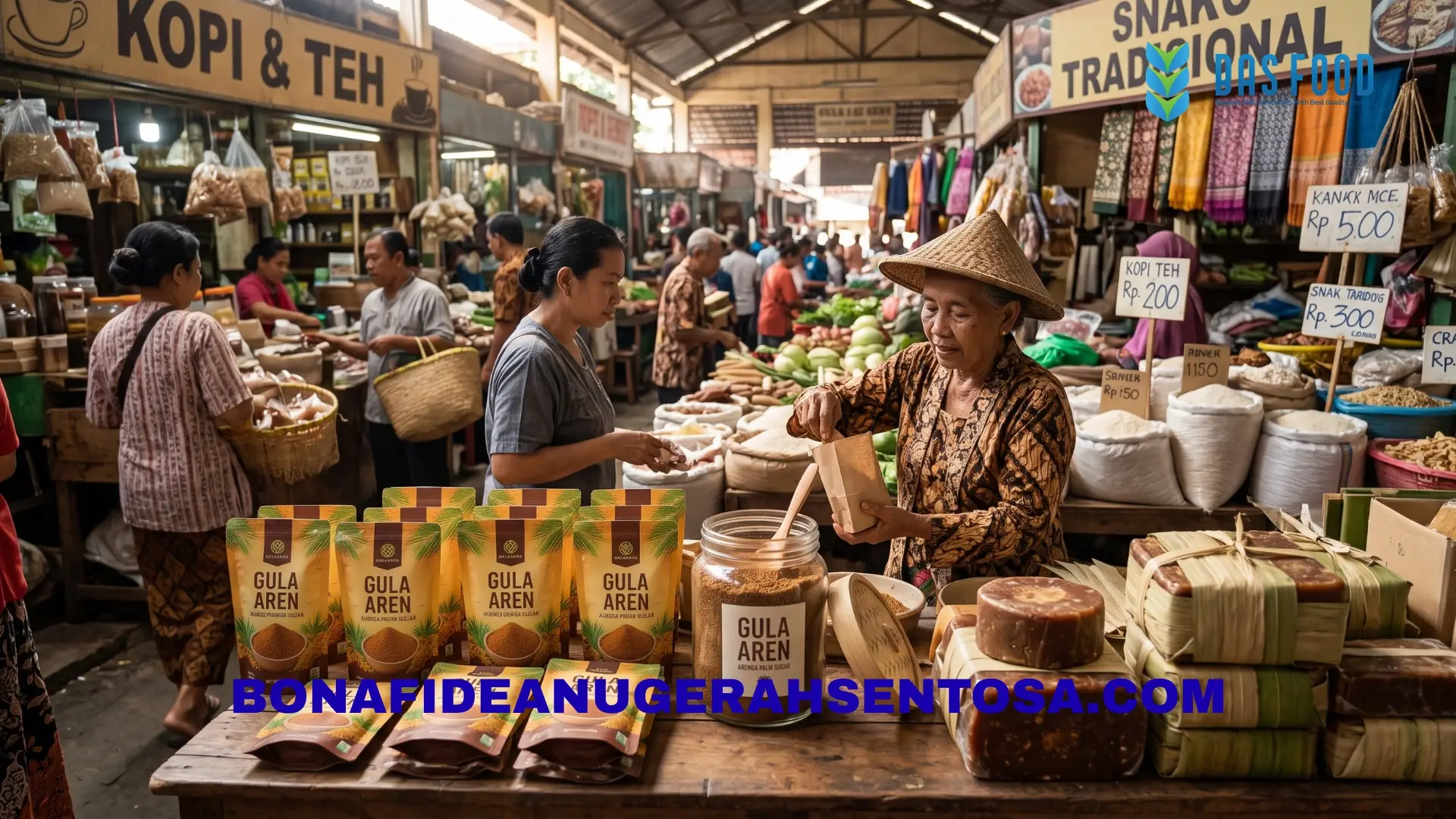
Natural Sweeteners Are Moving Into the Mainstream
One of the strongest palm sugar market trends is the growing interest in natural and recognizable ingredients. Consumers increasingly want to know what is inside their food. They are also paying more attention to artificial ingredients, processing, and ingredient transparency.
In Europe, clean-label demand continues to focus on natural ingredients, transparency, and simpler formulations. Recent research from Innova Market Insights found that about half of European consumers prefer a natural or clean-label approach to healthy eating, while consumers are also limiting artificial ingredients.
This creates an opportunity for palm sugar because it has a recognizable agricultural origin. Instead of being presented only as a commodity, palm sugar can be positioned as an ingredient with a connection to tropical agriculture and traditional food production.
However, suppliers should be careful with marketing claims. Natural does not automatically mean low-calorie, low-sugar, or suitable for a particular medical condition. Buyers and brands should use claims that can be supported by product data and comply with the regulations of their target market.
For example, European food businesses must follow specific rules when making nutrition claims. The European Commission states that permitted nutrition claims must meet the conditions established under EU legislation. Therefore, exporters should provide accurate specifications instead of relying on broad health claims.
Clean Label Is Changing How Buyers Evaluate Palm Sugar
Clean label has moved beyond simply removing artificial additives. Today, consumers are increasingly interested in transparency, recognizable ingredients, sourcing, and how products are made.
In Europe, clean-label expectations increasingly include questions about ingredient quality, safety, sourcing, and environmental impact. Innova’s more recent European research notes that consumers are looking not only at the ingredient itself but also at the path it has taken and its wider environmental impact.
This trend affects B2B purchasing decisions. A food manufacturer may not simply ask, “What is your price per kilogram?” Instead, the buyer may also ask where the palm sugar comes from, how it is processed, what specifications are available, and which documents can support the product.
As a result, a competitive palm sugar supplier needs to provide more than a product catalogue. Buyers increasingly need product specifications, samples, packaging information, production details, and appropriate export documentation.
This is especially important for private-label brands. If a brand wants to communicate a clear ingredient story to consumers, it needs reliable information from the upstream supplier.
Palm Sugar Is Finding More Applications in Food and Beverage
Palm sugar has traditionally been used in Asian cooking, desserts, sauces, beverages, and traditional foods. However, modern food manufacturers can use it in a much wider range of applications.
Bakery products are one example. Palm sugar can contribute sweetness, color, and a distinctive caramel-like flavor profile. Manufacturers may use it in cookies, cakes, breads, snack products, and dessert formulations.
Beverages are another potential area. Palm sugar can be used in traditional drinks as well as modern beverage concepts where manufacturers want a recognizable sweetening ingredient. Its flavor profile can work particularly well in products that already contain coffee, chocolate, spices, coconut, or other ingredients with strong sensory characteristics.
The trend toward recognizable ingredients also creates opportunities in snacks and specialty foods. Global clean-label research shows that consumers are actively looking for natural ingredients and limiting artificial additives.
For suppliers, this means the conversation should move beyond “palm sugar for traditional food.” A modern palm sugar exporter can also target food manufacturers developing bakery products, beverages, sauces, confectionery, snacks, and other packaged foods.
Granulated Palm Sugar Is Becoming More Important for Industrial Buyers
Product format is another important part of current palm sugar market trends. Industrial buyers often prefer ingredients that are easy to measure, transport, blend, and incorporate into production.
This is where palm sugar granule can offer practical advantages. Granulated products are easier to handle than some molded formats, particularly when manufacturers need to weigh the ingredient accurately or combine it with other dry ingredients.
Granule size can also influence the product’s performance. A bakery manufacturer, beverage producer, or food processor may have different requirements depending on its production equipment and recipe.
The same principle applies to coconut sugar granule. Although coconut sugar and palm sugar are different products, both can serve manufacturers that want a dry, convenient sweetening ingredient. For buyers sourcing both products, consistent particle size and clear specifications can simplify production planning.
Therefore, exporters should be prepared to discuss more than the product name. They should be able to explain available formats, particle size, moisture specification, packaging, storage conditions, and intended applications.
European Buyers Are Looking for Transparency and Compliance
The European market remains an important destination for natural food ingredients, but entering Europe requires careful attention to compliance.
For European buyers, product quality is only one part of the purchasing decision. Buyers also need confidence that the ingredient can be supported by suitable documentation and accurate labeling information.
European clean-label trends show strong interest in natural, recognizable ingredients, but that interest exists alongside strict food rules. This means exporters should avoid treating “natural” as a substitute for regulatory compliance.
For example, if a product label contains a nutrition or health claim, the claim must meet applicable rules. Similarly, ingredients and food additives must follow the relevant labeling requirements for the market in which the product is sold.
For a palm sugar exporter, the practical lesson is simple: provide clear product information and avoid unsupported claims. Buyers appreciate suppliers that make compliance easier rather than more complicated.
USA Importers Are Watching Both Sugar and Ingredient Labels
The United States presents another interesting opportunity. American consumers continue to pay attention to sugar and sweeteners, although they still enjoy sweet foods and beverages.
The 2025 IFIC Food & Health Survey found that 63% of Americans remained concerned about how much sugar they consume. The survey also showed that consumers pay attention to ingredient lists and Nutrition Facts labels when identifying added sugars.
For USA importers, this creates an interesting challenge. Palm sugar can offer a distinctive ingredient story, but it is still a sugar-containing ingredient. Suppliers should therefore avoid positioning palm sugar as a magic solution to sugar reduction.
Instead, the stronger B2B opportunity is product differentiation. Food manufacturers can explore palm sugar when they want a distinctive flavor, an alternative sweetening ingredient, or an ingredient with a clear plant-based origin.
Clean-label demand in North America also supports interest in recognizable ingredients. Innova’s research identifies natural, organic, non-GMO, and no-additive claims among the concepts associated with clean-label products in the US and Canada.
That makes transparency important for exporters. A USA importer will likely want consistent specifications, reliable packaging, clear documentation, and a supplier that understands international food trade.
Taiwan Food Industry Can Offer Opportunities for Specialty Ingredients
Taiwan has a strong food and beverage culture, with demand across bakery, beverages, confectionery, sauces, desserts, and processed foods. This creates potential opportunities for palm sugar as an ingredient with a distinctive flavor profile.
For the Taiwan food industry, sensory characteristics can be just as important as price. Palm sugar can bring a deeper caramel-like character that may complement coffee, tea, coconut, chocolate, spices, and traditional Asian-inspired food products.
At the same time, Taiwanese importers and manufacturers need consistent ingredients. A product that changes significantly in color, moisture, flavor, or particle size from one shipment to another can create problems during production.
Therefore, suppliers targeting Taiwan should focus on consistency and communication. Providing samples and agreed specifications before commercial production can help both sides establish a reliable reference point.
This is also an opportunity for suppliers to offer multiple formats. A food manufacturer may require granules for dry formulations, while another customer may prefer molded or powdered products. Flexible supply can help exporters reach different segments of the market.
Saudi Arabia Food Market: Flavor, Convenience, and Reliable Supply
The Saudi Arabia food market presents another potential destination for Indonesian palm sugar. Saudi consumers have a strong interest in bakery, desserts, beverages, confectionery, and foodservice products, creating several possible applications for sweetening ingredients.
Palm sugar can fit into product concepts that emphasize distinctive flavor and natural ingredient stories. It can also work well in products that combine regional flavors with international food trends.
However, buyers in the Middle East also need dependable international supply. Shipping schedules, packaging, shelf life, documentation, and product stability can have a direct effect on the success of an import program.
For this reason, an Indonesian palm sugar exporter should discuss the entire supply chain with Saudi buyers. This includes product specifications, packaging, loading plans, shipping terms, and required import documents.
Rather than treating the Saudi market as simply another destination, suppliers should understand the buyer’s application and distribution model. A retail distributor, food manufacturer, restaurant supplier, and ingredient importer can have very different purchasing requirements.
Sustainability and Traceability Are Becoming More Important
Another major development in palm sugar market trends is the growing interest in where ingredients come from. Consumers and food companies increasingly want more transparency around sourcing.
This does not mean every buyer will require the same sustainability certification. Requirements depend on the market, customer, product positioning, and end use. Nevertheless, buyers increasingly want suppliers that can explain their sourcing structure.
For Indonesian palm sugar, the agricultural supply chain can involve smallholder farmers, sap collection, processing, and consolidation before export. Understanding this chain helps buyers evaluate supply stability and quality control.
Traceability can also help exporters build stronger relationships. When buyers understand how raw materials move through the supply chain, they can better assess risks related to seasonal production, weather, quality variation, and supply availability.
Climate is an especially important consideration for agricultural commodities. A recent Reuters report highlighted how strong El Niño conditions can create risks for tropical agricultural commodities by increasing heat, drought, excessive rainfall, and production volatility in different regions.
For palm sugar buyers, this reinforces the value of working with suppliers that have a structured sourcing network rather than depending on a single raw material source.
Supply Stability Will Matter More to B2B Buyers
Price will always matter in commodity purchasing, but supply stability can be just as important. A manufacturer cannot easily plan production if an ingredient becomes unavailable without warning.
This is why B2B buyers should evaluate a supplier’s production and sourcing capabilities. Ask about available capacity, normal lead times, seasonal factors, and how the supplier manages changes in raw material availability.
A good palm sugar supplier should be able to discuss these issues openly. Buyers do not necessarily expect a supplier to eliminate every agricultural risk. Instead, they want realistic information that helps them plan.
Long-term purchasing relationships can help both sides. Buyers can provide forecasts, while suppliers can plan production and sourcing. Over time, this can create a more predictable supply chain.
The same approach applies when sourcing coconut sugar. A coconut sugar supplier that understands demand planning, product specifications, packaging, and export logistics can become a valuable partner for manufacturers that purchase repeatedly.
Quality Consistency Will Separate Strong Exporters From Weak Ones
As the market becomes more competitive, quality consistency will become increasingly important. A buyer may accept a small difference between samples during early evaluation, but commercial production requires a stable specification.
Important quality points can include color, aroma, taste, moisture, particle size, cleanliness, packaging integrity, and shelf life. The exact limits should be agreed between buyer and supplier based on the intended application.
For palm sugar granule, particle size and moisture can be especially relevant. Inconsistent granulation can affect mixing and dosing, while excessive moisture may contribute to clumping or handling problems.
The same applies to coconut sugar granule. Buyers should define specifications before production rather than attempting to negotiate quality after the shipment arrives.
A professional supplier should welcome this discussion. Clear specifications protect both parties because they create an objective reference for quality inspection.
The Role of CV Bonafide Anugerah Sentosa in the Indonesian Supply Chain
For companies exploring Indonesian sources, CV Bonafide Anugerah Sentosa can be considered as an Indonesian supplier and exporter associated with coconut sugar, palm sugar, and other agricultural commodities.
For B2B buyers, the key is to communicate the exact purchasing requirement. Instead of simply asking for “palm sugar price,” provide the desired format, quantity, packaging, destination, and application. This gives the supplier enough information to prepare a more relevant offer.
The company can also be relevant for buyers looking at several Indonesian ingredients. In addition to palm sugar and coconut sugar, its broader commodity context includes spices, fishery products, and coffee. This can be useful for importers that want to explore multiple Indonesian food ingredients through one supply relationship.
However, buyers should always confirm current product availability, specifications, MOQ, certifications, packaging, and export terms directly with the supplier before placing an order.
What These Palm Sugar Market Trends Mean for Exporters
The market is becoming more demanding, but that also creates opportunities. Exporters that focus only on price may find it harder to stand out as buyers increasingly evaluate quality, traceability, documentation, and supply reliability.
A stronger strategy is to build a clear product proposition. Explain the origin, format, specifications, applications, packaging, and export capabilities. Provide useful technical information and make it easy for buyers to compare the product with alternatives.
Exporters should also understand that different markets have different priorities. European buyers may focus strongly on transparency and compliance. USA importers may pay close attention to sugar labeling and ingredient information. The Taiwan food industry may value sensory characteristics and consistency, while buyers in the Saudi Arabia food market may place strong importance on reliable supply, suitable documentation, and applications in food and beverage products.
Therefore, one marketing message may not work equally well everywhere.
The best exporters will adapt their communication while keeping the core product information consistent. This approach can help Indonesian suppliers build trust with importers and develop long-term B2B relationships.
Conclusion: Where the Palm Sugar Market Is Heading
The latest palm sugar market trends point toward a market that is becoming more global, more quality-conscious, and more focused on ingredient transparency. Natural sweeteners continue to attract attention, while food manufacturers are looking for ingredients that can support clean-label product concepts and distinctive flavors.
For Indonesian exporters, this creates a valuable opportunity. Indonesia has agricultural resources, traditional palm sugar production knowledge, and an established commodity export ecosystem. But success will depend on more than having access to raw materials.
Exporters need to understand what international buyers actually require. That means consistent specifications, suitable product formats, reliable packaging, clear documentation, responsive communication, and stable supply.
For European buyers, USA importers, Taiwan food industry companies, and Saudi Arabia food market distributors, the purchasing priorities may differ. Yet one need remains consistent: buyers want suppliers they can trust.
Whether the requirement is palm sugar granule, molded palm sugar, coconut sugar granule, or another format, the sourcing process should begin with a clear specification and a careful supplier evaluation.
For companies searching for a reliable palm sugar supplier, palm sugar exporter, or coconut sugar supplier from Indonesia, following market trends can help turn short-term purchasing into a stronger long-term sourcing strategy.