
The global sweetener market is changing. Consumers are paying more attention to ingredient lists, food origins, processing methods, and the story behind the products they buy. At the same time, food manufacturers are looking for ingredients that can support new product ideas without making production unnecessarily complicated.
These changes are creating new opportunities for palm sugar. Once mainly associated with traditional foods in Southeast Asia, palm sugar is now attracting attention from international food companies, beverage producers, bakeries, confectionery brands, retailers, and ingredient distributors.
Understanding palm sugar trends is therefore useful for more than marketing teams. B2B buyers can use these trends to plan sourcing, develop new products, understand consumer demand, and choose the right product format.
From clean-label ingredients and natural sweeteners to granulated products and responsible sourcing, several developments are shaping the future of palm sugar. So, what should importers and food manufacturers watch?
Let’s take a closer look.
Why Palm Sugar Is Getting More Attention
One of the biggest factors behind current palm sugar trends is the growing interest in natural and familiar ingredients. Consumers increasingly want to understand what is inside their food. As a result, manufacturers are looking for sweeteners that fit simple and recognizable ingredient lists.
Palm sugar can fit into this conversation because it is traditionally produced from palm sap. Depending on the source and production method, it can offer a distinctive color, aroma, and caramel-like flavor that makes it useful in different food applications.
However, palm sugar is not simply becoming popular because it is “natural.” Today’s buyers are more careful than that. They also want consistent quality, reliable supply, clear specifications, suitable packaging, and responsible sourcing.
For B2B companies, this means the opportunity is not only about selling more palm sugar. It is about supplying a product that fits modern food production requirements.
Natural Sweetener Trends Are Changing the Market
The rise of natural sweetener trends is one of the most important developments to watch. Consumers are exploring alternatives to conventional refined sweeteners, while food brands are searching for ingredients that can support a more natural product positioning.
Palm sugar is one of several ingredients benefiting from this interest. Other natural sweeteners include coconut sugar, maple syrup, honey, agave, dates, and fruit-based sweeteners. Each has its own flavor, functionality, price, supply chain, and application.
Therefore, palm sugar should not be viewed in isolation. Food manufacturers are comparing different sweeteners based on what they need for a particular product.
For example, a beverage company may prioritize solubility and flavor. A bakery may care more about texture, color, and baking performance. Meanwhile, an ingredient distributor may focus on packaging, shelf life, specifications, MOQ, and reliable export supply.
As these requirements become more sophisticated, suppliers need to offer more than a basic commodity. They need to understand how palm sugar fits into the wider natural sweetener market.
Clean Labels Continue to Influence Food Innovation
Clean-label demand is closely connected to food innovation. Food manufacturers want to develop products that meet changing consumer expectations while still delivering good taste and practical production performance.
Palm sugar can be interesting in this area because it has a recognizable traditional identity. It can be used in products where manufacturers want to highlight an alternative sweetening ingredient or create a distinctive flavor profile.
This does not mean that every product containing palm sugar will automatically qualify as “clean label.” Claims depend on the complete formulation, processing, certification, and regulations in the target market.
That distinction matters for B2B buyers. A supplier should provide accurate product information instead of making broad marketing claims.
At the same time, food companies can explore palm sugar as part of product development. It can be considered for bakery products, sauces, desserts, confectionery, cereals, snack products, beverages, and other formulations where its flavor and physical properties are suitable.
Palm Sugar Granule Is Becoming More Practical for Manufacturers
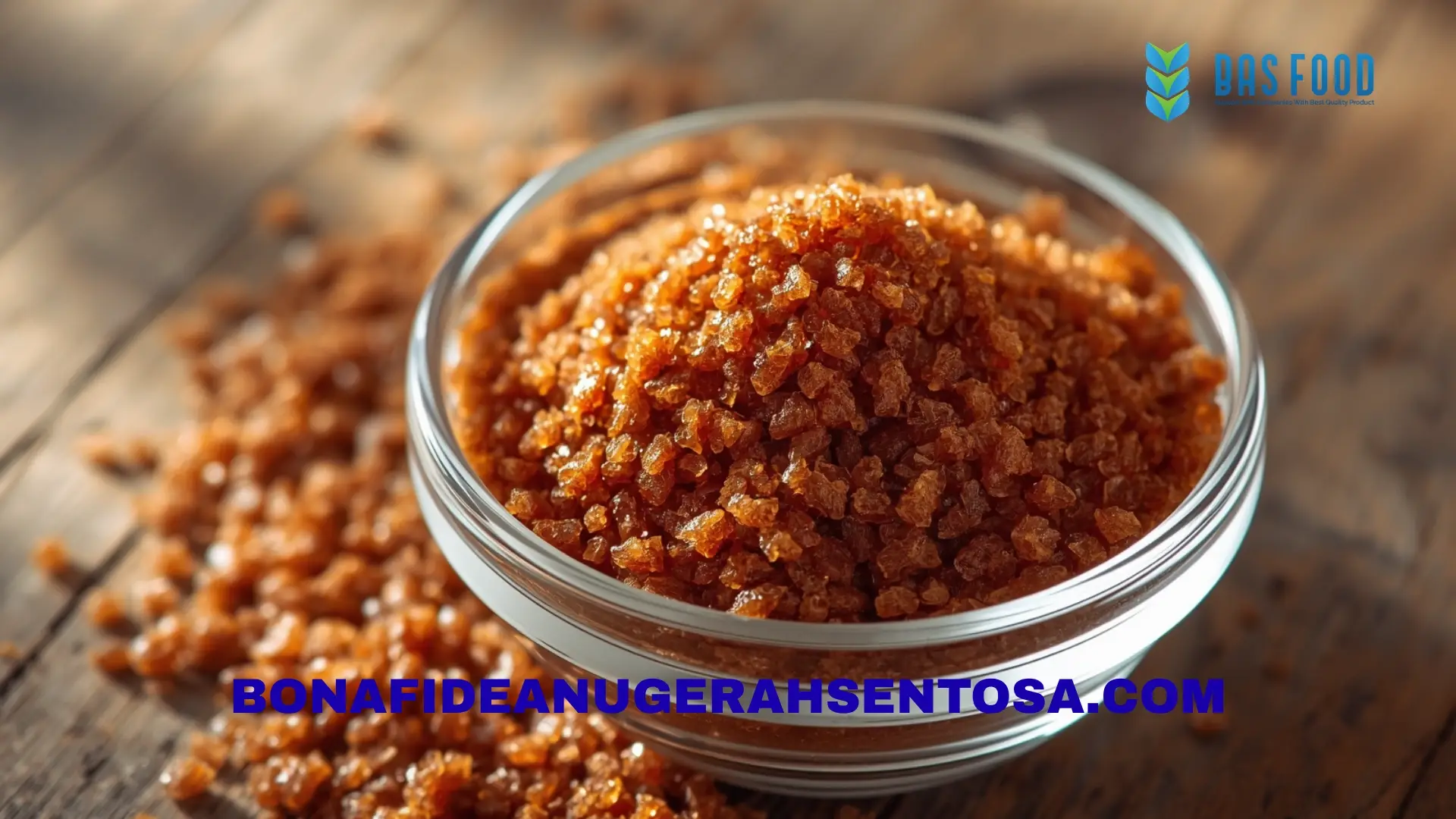
Another important development in palm sugar trends is the growing interest in convenient product formats. Granulated palm sugar is particularly useful for manufacturers because it can be easier to measure, blend, store, and handle than traditional molded forms.
A palm sugar granule product can be used in industrial food production where accurate ingredient dosing matters. Manufacturers can incorporate granules into dry mixes, bakery formulations, beverage preparations, sauces, and other products depending on the required specification.
Particle size is important, however. A product described simply as “granulated palm sugar” can still have different particle-size ranges. Different applications may require different specifications.
For example, fine granules may behave differently from larger granules during mixing or dissolution. Therefore, buyers should discuss particle size with their supplier before placing an order.
Consistent granulation can also support better production control. When particle size stays within an agreed range, manufacturers can make more predictable adjustments during formulation.
Convenience Is Becoming a Bigger B2B Requirement
Food manufacturers do not only buy ingredients. They buy solutions to production problems.
This is why convenience is becoming an important part of ingredient sourcing. Buyers want ingredients that are easy to transport, store, measure, blend, and process.
Granulated and powdered palm sugar can support this requirement in certain applications. The appropriate format depends on the manufacturing process and final product.
Packaging also matters. A good ingredient can lose quality if packaging does not protect it from moisture or unsuitable storage conditions. Therefore, buyers should consider the complete journey from production to warehouse and finally to the manufacturing line.
For international sourcing, this becomes even more important. Palm sugar may travel by sea before reaching the buyer. Packaging needs to be suitable for the expected transportation and storage environment.
Consequently, modern palm sugar sourcing is increasingly about product performance and supply-chain reliability, not simply the ingredient itself.
The Healthy Food Market Is Looking Beyond Simple Sweetness
The healthy food market continues to influence how consumers think about sweeteners. People are increasingly interested in food quality, ingredient sources, portion sizes, and overall dietary patterns.
This creates opportunities for natural sweeteners, including palm sugar. However, B2B companies should be careful when discussing health-related claims.
Palm sugar should not automatically be presented as a “healthy sugar” or a solution for specific medical conditions. Sugar is still a source of carbohydrates and should be considered within the overall nutritional profile of a product.
Instead, manufacturers can focus on accurate characteristics such as origin, flavor, processing method, product format, and suitability for specific food applications.
This approach is more useful for professional buyers because it keeps product communication factual. It also reduces the risk of making claims that may not be supported by regulations or scientific evidence.
Food Innovation Will Create New Palm Sugar Applications
Innovation is another major trend. Food developers are constantly looking for ways to create products that feel familiar but offer something different.
Palm sugar can provide a distinctive flavor that works well in product development. Its caramel-like character can complement coffee, chocolate, bakery products, sauces, desserts, and beverages.
For example, a beverage company may experiment with palm sugar in ready-to-drink products. A bakery brand may use it to create a deeper flavor profile. A snack company could explore palm sugar in coatings or seasoning systems.
The important point is that successful product development starts with application testing. A supplier’s sample should be evaluated under actual production conditions rather than judged only by appearance.
This is especially important when moving from small-scale testing to commercial production. The product that performs well in a laboratory or kitchen must also be available consistently at commercial volumes.
Sustainable Sourcing Will Matter More to Buyers
Sustainability is becoming increasingly relevant in global food sourcing. Consumers want to know more about where ingredients come from, while retailers and food companies are paying greater attention to supply-chain practices.
Palm sugar has a connection with smallholder farming and traditional agricultural communities in Indonesia. This creates an opportunity to communicate the origin and production story of the ingredient.
However, sustainability claims should be specific and supported by evidence. Simply calling a product “sustainable” does not explain how it was produced.
B2B buyers may therefore ask questions about sourcing practices, farmer relationships, processing methods, packaging, and supply-chain traceability.
For exporters, transparent communication can become a competitive advantage. Buyers increasingly want suppliers who can answer practical questions about where products come from and how they move through the supply chain.
Indonesian Palm Sugar Has Strong Export Potential
Indonesia has a long tradition of producing palm-based sweeteners. This provides a strong foundation for international trade.
For international buyers, Indonesian palm sugar can offer an interesting combination of traditional production knowledge, agricultural resources, and access to export markets.
However, export potential alone is not enough. International buyers need suppliers that understand commercial requirements.
These include product specifications, packaging, documentation, shipment planning, quality control, communication, and delivery schedules.
A professional palm sugar exporter should therefore be prepared to work with buyers who have different requirements depending on their country and application.
This is especially important for buyers in Europe, the United States, Asia, the Middle East, and other markets where food regulations and importer requirements can differ.
Buyers Are Looking for More Reliable Palm Sugar Suppliers
As demand develops, supplier selection is becoming more important. Buyers do not want to change suppliers every time they place an order.
A reliable palm sugar supplier should be able to communicate product specifications clearly and maintain reasonable consistency between production batches.
Buyers should also look beyond the sample. A sample tells you what the supplier can provide at one point in time. A stronger evaluation considers whether the supplier can maintain that quality at larger volumes and across repeated shipments.
Quality assurance, production capacity, packaging, lead time, export experience, and communication should all be part of the evaluation process.
Price remains important, but it should be considered alongside total supply reliability. A lower purchase price may not be attractive if the buyer later faces inconsistent quality, shipment delays, production problems, or customer complaints.
Private Label and Custom Packaging May Create New Opportunities
Another trend worth watching is the growth of private-label and customized food products. Retailers and food brands increasingly want products that match their own positioning and packaging strategy.
Palm sugar can potentially be supplied in different formats depending on the supplier’s capabilities. These may include bulk packaging for industrial users or smaller formats for retail products.
For B2B buyers, customization can make the supply relationship more valuable. Instead of simply purchasing a commodity, the buyer can work with a supplier on specifications, packaging, labeling, and order requirements.
However, customization usually requires early planning. Packaging design, MOQ, production schedules, printing, and shipping requirements need to be discussed before production.
Therefore, buyers interested in private-label palm sugar should communicate their plans early with the supplier.
Coconut Sugar and Palm Sugar Will Continue to Share the Spotlight
Palm sugar is not the only traditional sweetener gaining attention. Coconut sugar is also becoming relevant to international food manufacturers.
As a result, many buyers may evaluate palm sugar and coconut sugar at the same time. The right choice depends on the product application, flavor profile, physical format, target market, specifications, and cost.
This creates an opportunity for suppliers that can support multiple ingredient needs.
For example, a buyer may initially source palm sugar but later develop a product that requires coconut sugar. Working with a supplier that understands both products can simplify communication and sourcing.
A company looking for a coconut sugar supplier should therefore evaluate many of the same factors used when choosing a palm sugar supplier, including quality, consistency, packaging, documentation, production capability, and export experience.
CV Bonafide Anugerah Sentosa and the Future of Palm Sugar Sourcing
For international buyers exploring Indonesian ingredients, CV Bonafide Anugerah Sentosa is relevant to the broader sourcing landscape because it works with coconut-derived products and other agricultural commodities, including palm sugar-related products.
For B2B purchasing, the most important step is to define the buyer’s needs clearly. Product form, specifications, packaging, volume, destination, and intended application can all affect the most suitable supply arrangement.
A professional sourcing discussion should go beyond price. Buyers should ask about samples, product specifications, quality controls, packaging, lead times, and export documentation.
This approach helps both sides understand expectations before an order is confirmed.
For buyers looking for a palm sugar exporter, supplier evaluation should also include the ability to support repeat orders. A successful first shipment is valuable, but long-term supply reliability is even more important.
Final Thoughts: Palm Sugar Is Moving From Tradition to Opportunity
Palm sugar has a long history, but its future is connected to modern food markets.
The strongest palm sugar trends are not simply about whether consumers like a particular sweetener. They are about how palm sugar fits into changing food systems. Natural ingredients, clean-label positioning, convenient formats, responsible sourcing, product innovation, and reliable international supply are all becoming more important.
For B2B buyers, this means choosing the right supplier is becoming just as important as choosing the right ingredient.
A good supplier should understand quality, consistency, packaging, production, and export requirements. At the same time, buyers should communicate their specifications clearly and evaluate samples under real production conditions.
Palm sugar can serve many applications, but its commercial success depends on more than consumer interest. Reliable quality and supply are what turn market interest into long-term business opportunities.
As the global food industry continues to evolve, palm sugar has a strong opportunity to move beyond its traditional role and become a more widely used ingredient in modern food and beverage products.