
When people talk about octopus in global seafood markets, they often focus on size, freshness, or price. However, behind all of that lies one crucial factor: where the octopus comes from. Understanding Octopus Vulgaris habitat helps buyers, processors, and fisheries professionals assess quality, seasonality, and long-term supply reliability.
Octopus Vulgaris, commonly known as the common octopus, is one of the most widely traded octopus species in the world. Its broad distribution across different marine environments makes it an important resource in global fisheries. At the same time, that wide distribution creates differences in behavior, size, and availability that buyers should understand.
This article explores the natural habitat and global distribution of Octopus Vulgaris, and explains why this knowledge matters for sustainable fisheries and international trade.
Getting to Know Octopus Vulgaris as a Species
Octopus Vulgaris belongs to the cephalopod family and is known for its intelligence, adaptability, and fast growth cycle. These traits allow it to survive in a wide range of marine environments.
Because of this adaptability, Octopus Vulgaris habitat spans multiple oceans and climate zones. From temperate waters to warmer seas, this species adjusts its behavior based on local conditions.
For fisheries, this adaptability is both an advantage and a challenge. It allows for broad harvesting opportunities, but also requires region-specific management practices.
Natural Coastal Habitats of Octopus Vulgaris
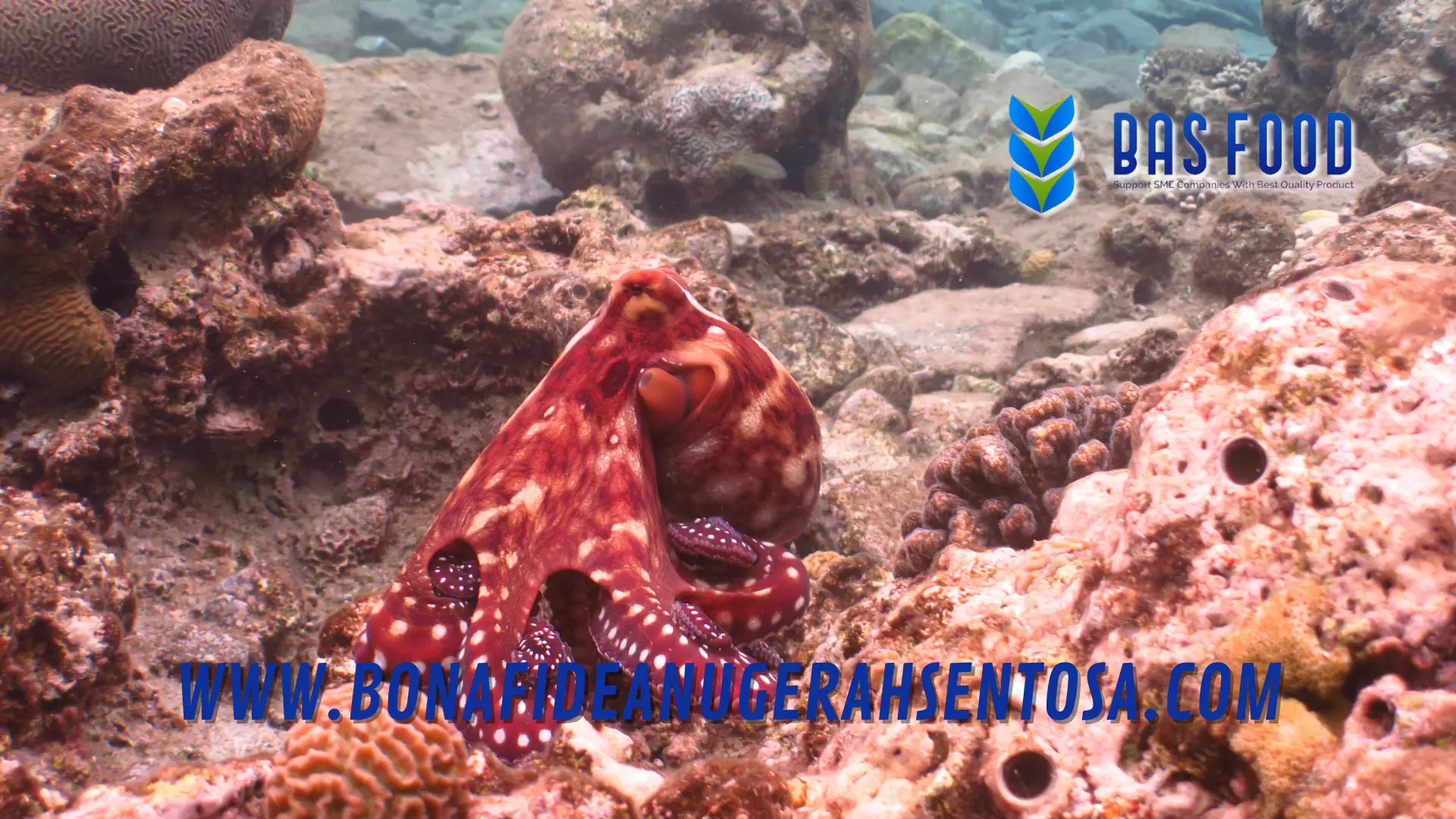
Most Octopus Vulgaris live in coastal waters rather than the open ocean. They prefer shallow to mid-depth zones where shelter and food are abundant.
Rocky seabeds, coral reefs, and areas with natural crevices form the ideal Octopus Vulgaris habitat. These environments provide protection from predators and suitable locations for hunting.
Because coastal habitats are also heavily affected by human activity, changes in water quality and coastal development directly influence octopus populations.
Depth Range and Seabed Preferences
Octopus Vulgaris usually inhabits depths ranging from a few meters to around 200 meters. However, the majority of commercial catches come from shallower zones.
Sandy bottoms mixed with rocks are especially attractive as Octopus Vulgaris habitat. These areas allow octopus to dig burrows while still accessing hunting grounds.
Depth preference can vary by region, which explains why octopus sizes and textures may differ between origins.
Temperature and Climate Influence
Water temperature plays a key role in determining Octopus Vulgaris distribution. The species thrives in moderate temperatures, usually between 10°C and 25°C.
In warmer waters, octopus tend to grow faster but may have shorter lifespans. In cooler climates, growth is slower, but individuals may reach larger sizes. This link between temperature and Octopus Vulgaris habitat directly affects fisheries planning.
Seasonal temperature changes also influence migration and breeding cycles, impacting catch availability throughout the year.
Global Distribution Across Major Oceans
Octopus Vulgaris is found in the Atlantic Ocean, the Mediterranean Sea, parts of the Indian Ocean, and selected Pacific regions. This wide range supports global fisheries across Europe, Africa, Asia, and the Americas.
Each region offers a unique Octopus Vulgaris habitat, shaped by local currents, seabed structures, and ecological conditions. These differences affect meat texture, color, and yield.
For buyers, understanding origin-specific traits helps in selecting the right product for their market.
The Mediterranean as a Key Habitat Zone
The Mediterranean Sea is one of the most studied regions for Octopus Vulgaris. Its rocky coastlines and stable temperatures create an ideal habitat.
Here, Octopus Vulgaris habitat supports small-scale fisheries that rely on traps and pots rather than large industrial methods. This often results in consistent quality and controlled harvesting.
Mediterranean octopus is highly valued in European markets due to its balanced texture and flavor.
Atlantic Coast Fisheries and Distribution
Along the Atlantic coasts of Europe, Africa, and South America, Octopus Vulgaris supports large commercial fisheries. These areas combine favorable seabed conditions with nutrient-rich waters.
In West Africa, for example, Octopus Vulgaris habitat is closely linked to upwelling systems that boost food availability. This leads to strong population density during certain seasons.
Such regions are important sources for bulk export markets worldwide.
Indo-Pacific Presence and Regional Variations
While Octopus Vulgaris is less dominant in the Pacific compared to other octopus species, it still appears in selected Indo-Pacific zones.
In Southeast Asia, coastal ecosystems provide suitable Octopus Vulgaris habitat, though populations may overlap with similar species. This requires careful species identification in fisheries.
Understanding these regional overlaps is important for buyers focused on accurate labeling and traceability.
Breeding Grounds and Life Cycle Connection
Octopus Vulgaris has a relatively short life cycle, usually around one to two years. Breeding typically occurs in sheltered habitats where eggs can be protected.
Female octopus select dens within their natural Octopus Vulgaris habitat and remain there until the eggs hatch. This behavior limits movement during breeding seasons.
Fisheries management often considers these breeding patterns to avoid overharvesting during sensitive periods.
Human Impact on Octopus Vulgaris Habitat
Coastal pollution, overfishing, and climate change all affect Octopus Vulgaris habitat. Changes in water temperature and seabed conditions can disrupt population balance.
In some regions, habitat degradation has reduced octopus availability, forcing fisheries to adapt or relocate.
Sustainable fishing practices and habitat protection are now central topics in global octopus trade discussions.
Sustainability and Responsible Fisheries
Sustainable management starts with understanding habitat. Fisheries that respect natural Octopus Vulgaris habitat tend to maintain healthier populations.
Measures such as seasonal closures, size limits, and gear restrictions help protect breeding grounds and juvenile octopus.
For importers, sourcing from responsible fisheries reduces long-term supply risks and supports ethical trade.
Why Habitat Knowledge Matters for Importers
Buyers who understand Octopus Vulgaris habitat can better interpret differences in size, texture, and seasonality across origins.
This knowledge supports smarter purchasing decisions and clearer communication with suppliers.
It also helps importers anticipate supply fluctuations and plan inventory more effectively.
The Role of Trusted Suppliers in Global Fisheries
Navigating global octopus sourcing requires experience and transparency. CV Bonafide Anugerah Sentosa operates as a trusted supplier and producer of fishery products, alongside spices, cocoa, and coconut products from Indonesia.
By working with responsible fisheries and understanding habitat-based sourcing, the company supports consistent quality and reliable supply chains.
This approach benefits importers seeking stable long-term partnerships in the seafood industry.
Conclusion: Habitat as the Foundation of the Octopus Market
The global trade of octopus does not begin at the port or processing plant. It begins underwater, within the natural Octopus Vulgaris habitat.
Understanding where and how Octopus Vulgaris lives helps buyers, exporters, and fisheries align quality expectations with ecological reality.
As global demand grows, habitat awareness will remain a key factor in building sustainable and successful octopus supply chains.
Contact CV Bonafide Anugerah Sentosa how we can provide the best solutions for you. WhatsApp: +62 8213 4505 737, Email: info@bonafideanugerahsentosa.com / bas.mdir@gmail.com.