
Natural sweeteners are in high demand. As consumers shift toward cleaner labels and more sustainable products, food and beverage manufacturers are turning to options like Arenga sugar and coconut sugar to meet market expectations. Both come from palm trees, offer a rich flavor profile, and are hailed for being less processed than refined sugar.
However, Arenga sugar vs coconut sugar is a common debate among manufacturers. They may look similar, but they differ significantly in terms of origin, taste, application, and cost. Choosing the right one can affect your product quality, pricing, and even brand identity.
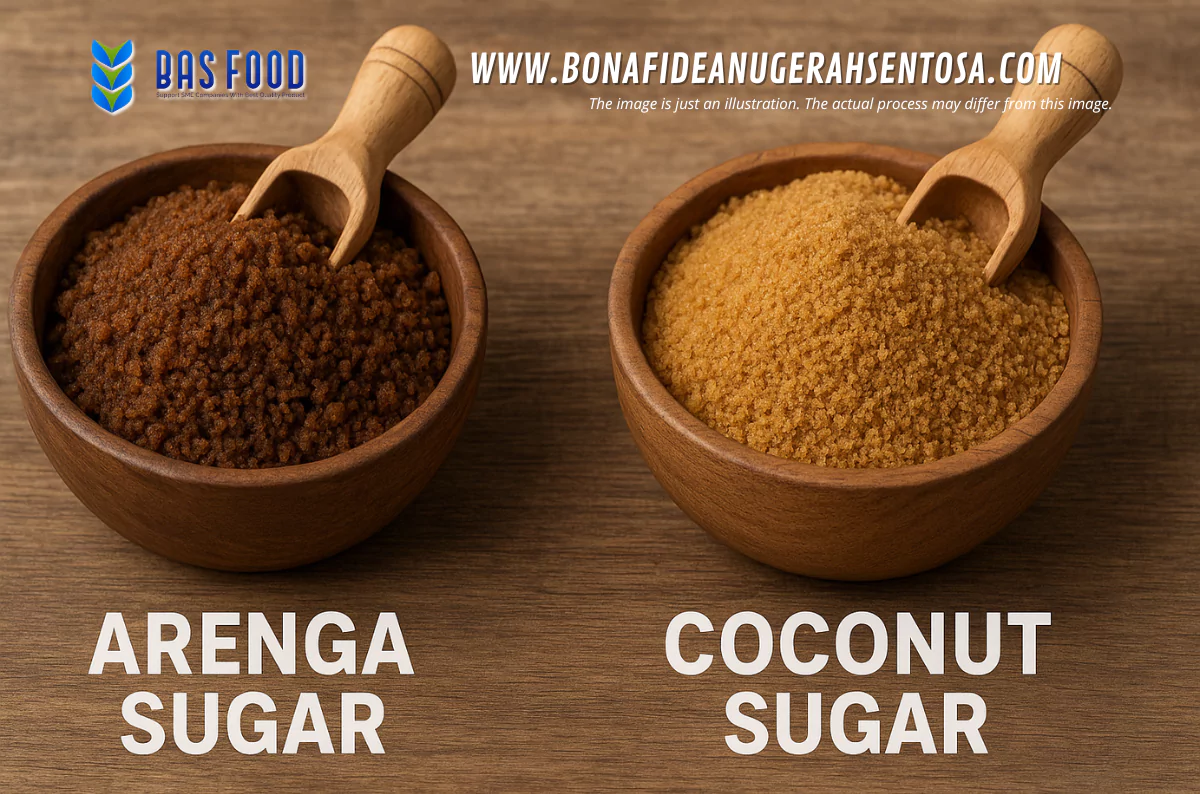
Understanding the Basics: What Are Arenga and Coconut Sugars?
Arenga sugar is made from the sap of the Arenga pinnata palm tree, also known as the sugar palm. This tree grows in tropical regions, especially in Southeast Asia, including Indonesia and the Philippines. Farmers tap the tree’s flowering stalks to collect sweet sap, which is then boiled down into syrup or granules.
Coconut sugar, on the other hand, comes from the sap of the coconut palm (Cocos nucifera). It’s also collected from the flowering stems, but the trees are usually found in coastal areas. The sap is similarly heated to create a thick syrup and then dried into sugar crystals.
While the processes may seem similar, the two sugars have different chemical compositions, flavors, and moisture levels that can affect your final product.
Taste and Texture: Subtle Differences That Matter
When it comes to flavor, Arenga sugar typically has a more complex profile. It delivers earthy, smoky, and slightly bitter notes, which can enhance baked goods, sauces, and beverages with depth. Its color is usually darker than coconut sugar, and its texture is coarser, making it ideal for products where a richer sweetness is needed.
Coconut sugar, in contrast, has a milder, more caramel-like flavor. It blends easily into recipes without overpowering the other ingredients. Its fine granules dissolve well in both hot and cold liquids, making it a favorite for beverages, confectionery, and smoothies.
For manufacturers, the choice often depends on the target flavor profile. If you’re creating something with a bold, rustic flavor—like a barbecue glaze or chocolate brownie—Arenga sugar might be your pick. But if you need a lighter sweetness that doesn’t steal the show, coconut sugar is probably better suited.
Nutritional Profile: Slightly Sweet with a Health Halo
Both Arenga sugar and coconut sugar are marketed as healthier alternatives to refined sugar. They contain small amounts of minerals like potassium, magnesium, and zinc, and they have a lower glycemic index than table sugar. This makes them appealing to health-conscious consumers.
That said, the difference in their actual nutrient content is minimal. Most of the nutritional “halo” comes from the fact that they’re less processed and retain trace minerals. Arenga sugar might edge out slightly in terms of antioxidant content, thanks to its darker color and richer molasses-like consistency.
Still, both should be used in moderation. From a manufacturing perspective, they offer a chance to promote clean-label claims without drastically changing the product’s nutritional panel.
Sourcing and Sustainability: A Key Concern for Brands
Sustainability plays a big role in choosing between Arenga sugar vs coconut sugar. Both are considered eco-friendly, but there are some distinctions worth noting.
The Arenga palm grows in forested areas and doesn’t require clearing large tracts of land for monoculture. Harvesting its sap does not harm the tree, and it can continue producing for decades. In fact, Arenga cultivation supports biodiversity and traditional farming communities.
The coconut palm is also a sustainable crop, but its high global demand can sometimes lead to intensive farming practices, especially in export-heavy regions. Nonetheless, coconut farming supports millions of smallholder farmers, especially in Indonesia and the Philippines.
Manufacturers looking to boost their environmental credentials might find Arenga sugar a slightly more forest-friendly choice, particularly when sourced from ethical suppliers.
Processing and Applications in Manufacturing
In terms of processing, both sugars are relatively straightforward. They’re produced without the use of chemicals, preservatives, or extensive refining. That makes them compliant with many organic and clean-label standards.
However, Arenga sugar has a higher moisture content and tends to clump, which can affect shelf stability and packaging. It may need anti-caking agents or vacuum-sealed bags to stay fresh. It also caramelizes more quickly, which can be a benefit or a drawback depending on your product.
Coconut sugar, being drier and more stable, is often easier to store and integrate into large-scale production. It can be used in everything from energy bars to sauces and can handle automated production lines without much adjustment.
If your production line favors ease of handling, coconut sugar might win. But if you want a unique, artisanal edge, Arenga sugar could offer that point of difference.
Price and Availability: How It Impacts Manufacturers
Cost is always a major consideration for manufacturers. Coconut sugar is generally more widely available and, due to its global demand, tends to be more competitively priced. Its production is more commercialized, and there are larger suppliers worldwide.
Arenga sugar, on the other hand, is still considered a niche product. It may cost slightly more due to limited supply and less mechanized processing. However, the exclusivity of Arenga sugar can work to your advantage if you’re developing a premium or specialty product.
For bulk buyers, sourcing from trusted exporters is key. That’s where companies like CV Bonafide Anugerah Sentosa come in. Based in Indonesia, this supplier specializes in high-quality spices, fishery products, and coconut derivatives, including Arenga sugar and coconut sugar. With reliable export experience and ethical sourcing practices, they make it easier for manufacturers to access consistent supply without compromising quality.
Final Thoughts: Which Sugar Should You Choose?
So, Arenga sugar vs coconut sugar—which is better for manufacturers? There’s no one-size-fits-all answer. Each has its strengths:
- Choose Arenga sugar if your product benefits from bold, smoky flavors, supports artisanal branding, or targets a niche health-conscious audience.
- Go for coconut sugar if you need a versatile, easy-to-process sweetener that blends well with many applications and appeals to the clean-label market.
Ultimately, it comes down to your product goals, budget, and supply chain priorities.
Why Partner with CV Bonafide Anugerah Sentosa?
If you’re looking for a dependable partner for sourcing natural sweeteners, look no further than CV Bonafide Anugerah Sentosa. As a trusted Indonesian supplier of spices, fishery, and coconut products, they offer premium-grade Arenga sugar and coconut sugar to manufacturers across the globe.
Their products are sustainably harvested, quality-tested, and backed by solid logistics support. Whether you’re scaling up a food brand or launching a new product line, partnering with CV Bonafide ensures you get reliable ingredients with full traceability. Contact CV Bonafide Anugerah Sentosa how we can provide the best solutions for you. WhatsApp: +62 8213 4505 737, Email: info@bonafideanugerahsentosa.com / bas.mdir@gmail.com.