
Virgin coconut oil has become an interesting ingredient for food manufacturers, cosmetic brands, wellness businesses, and international distributors. Its natural coconut aroma, mild flavor, and wide range of potential applications make it a valuable product in the global coconut industry. However, producing good-quality virgin coconut oil requires more than simply extracting oil from coconuts. It starts with fresh raw materials and continues through careful processing, hygiene controls, packaging, and storage. Understanding virgin coconut oil production helps buyers evaluate suppliers, compare manufacturing methods, and make better purchasing decisions. It also helps manufacturers understand why processing conditions can influence the oil’s aroma, appearance, quality, and shelf life.
Unlike refined coconut oil, virgin coconut oil is generally produced without the refining, bleaching, and deodorizing steps used to make RBD coconut oil. Instead, producers use methods designed to obtain oil from fresh coconut meat while preserving its characteristic qualities.
In this guide, we explore the VCO manufacturing process, explain the main production methods, discuss quality factors, and highlight what B2B buyers should consider when sourcing virgin coconut oil from Indonesia.
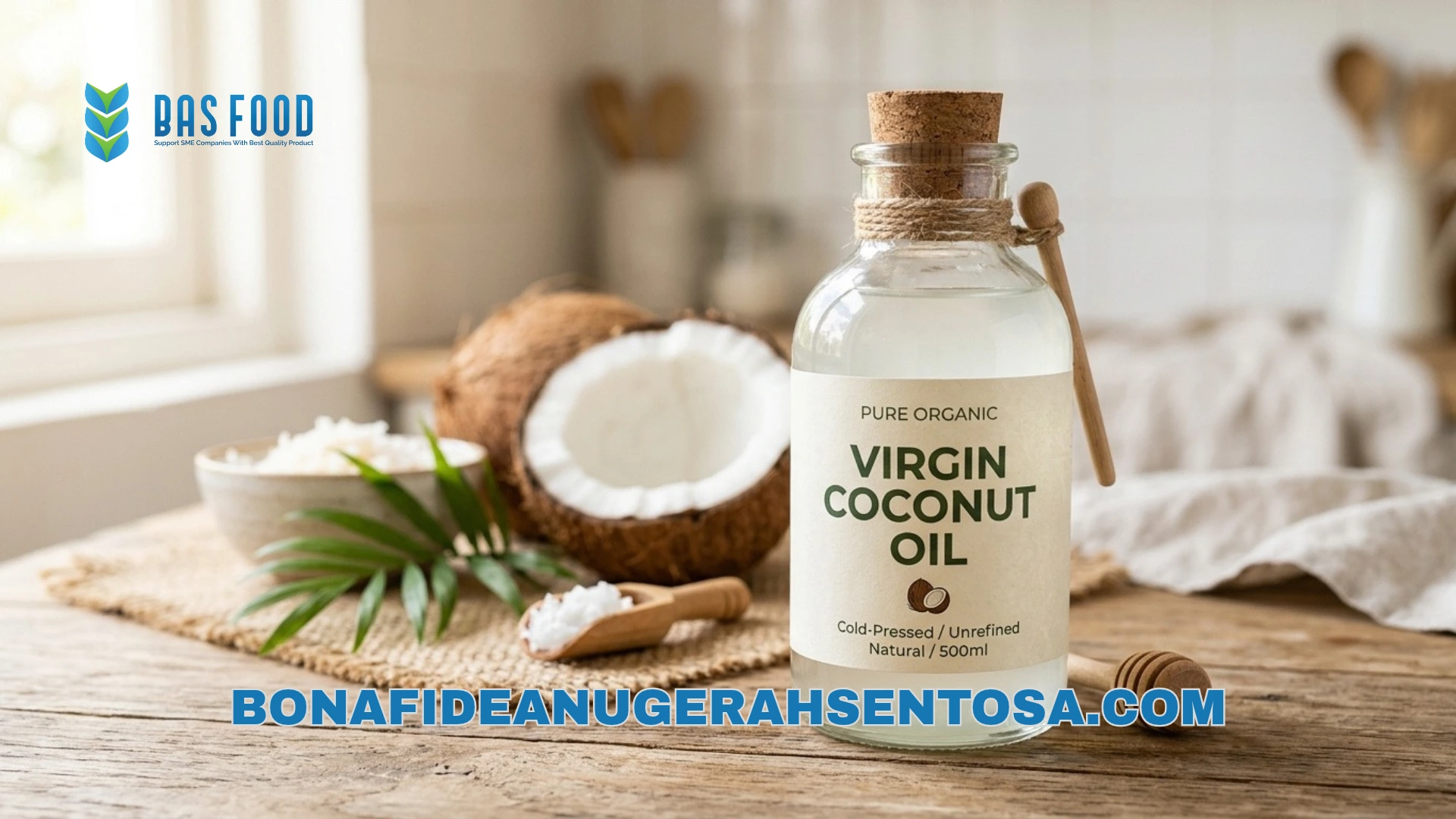
What Is Virgin Coconut Oil?
Virgin coconut oil, commonly known as VCO, is oil obtained from fresh coconut meat or fresh coconut milk through mechanical or natural processing methods. The production process aims to preserve the oil’s natural characteristics without conventional chemical refining, bleaching, or deodorization.
High-quality VCO often has a clear appearance and a fresh coconut aroma. However, its exact characteristics depend on the coconut variety, maturity, processing method, filtration, and storage conditions. Buyers should therefore evaluate each product against its documented specifications rather than assume that every VCO product has the same quality.
Virgin Coconut Oil vs RBD Coconut Oil
Virgin coconut oil and refined, bleached, and deodorized (RBD) coconut oil come from coconuts, but their production methods differ.
VCO is generally made from fresh coconut meat or milk using methods that avoid conventional refining and deodorization. As a result, it can retain a natural coconut aroma and flavor. RBD coconut oil undergoes additional processing to reduce color, odor, and certain impurities, creating a more neutral oil for applications that require those characteristics.
Neither type is automatically better for every business. VCO may suit brands that want a coconut aroma, while RBD coconut oil may be more appropriate for manufacturers that need a neutral-tasting ingredient. The right choice depends on the product formulation, customer expectations, and technical requirements.
Selecting Fresh Coconuts: The First Step in VCO Manufacturing
Good virgin coconut oil starts with suitable raw materials. Even an advanced production system cannot fully compensate for poor-quality coconuts. Therefore, selecting and handling fresh coconuts is one of the most important stages in the VCO manufacturing process.
Producers generally look for mature, healthy coconuts with sound shells and fresh white meat. They should reject coconuts showing signs of spoilage, mold, unpleasant odors, or physical damage that could affect the quality of the raw material.
Why Fresh Coconut Processing Matters
The quality of the coconut meat can influence the flavor, aroma, and overall characteristics of the finished oil. Fresh coconut meat provides the raw material needed to produce coconut milk or another suitable intermediate product for extraction.
During fresh coconut processing, workers remove the husk and shell, separate the white meat, and clean it before further processing. Depending on the production system, they may also remove the brown skin from the coconut meat.
Clean equipment and careful handling are essential. Contamination during preparation can affect the final product, so producers should maintain hygienic work areas and use food-grade equipment.
Preparing Coconut Meat for Extraction
After cleaning, producers may grate or shred the coconut meat into smaller pieces. This step helps release the coconut’s natural fat during subsequent processing.
The prepared coconut meat can then be pressed or mixed with water to produce coconut milk, depending on the chosen extraction method. The quality of this intermediate material matters because it influences how effectively the oil can be separated.
Raw material handling should also minimize unnecessary delays. Fresh coconut meat is perishable, so producers need a suitable processing schedule and appropriate controls to reduce spoilage risks.
The Main Virgin Coconut Oil Production Methods
There is more than one way to produce virgin coconut oil. Different producers use different equipment and processing conditions, but the main objective remains the same: separate the oil from fresh coconut material while maintaining the desired product characteristics.
The selected method can influence production efficiency, oil yield, aroma, appearance, and processing costs. Buyers should understand the method used by their supplier because the term VCO alone does not describe every detail of the manufacturing process.
A. Wet Processing Method
Wet processing is one of the common approaches to VCO production. Producers first prepare coconut milk from fresh coconut meat. They then separate the oil from the water and other components of the milk.
Depending on the system, separation may involve controlled fermentation, heating, centrifugation, or other mechanical techniques. Each method has different operating conditions and quality-control needs.
For example, controlled fermentation allows the coconut milk components to separate over time. Producers then collect the oil layer and filter it as needed. This approach requires careful control of hygiene, time, and processing conditions because uncontrolled microbial activity can affect product quality.
B. Centrifugal Separation
Centrifugal separation uses equipment that spins coconut milk at high speed. The centrifugal force helps separate components with different densities, allowing the producer to collect the oil.
This method can support a more controlled production process and may reduce the time needed for separation compared with methods that rely on natural settling. However, equipment settings and raw material quality still influence the result.
Manufacturers need to maintain and clean the equipment properly. They should also monitor processing conditions to ensure that the final oil meets the required product specification.
C. Direct or Mechanical Extraction
Some production systems use mechanical methods to extract oil from prepared fresh coconut meat. Depending on the technology, producers may use pressing equipment to release the oil.
The exact process varies, and not every mechanical extraction system produces the same type of VCO. Buyers should ask the supplier to explain the method, temperature conditions, filtration steps, and any additional processing used.
This is particularly important when the buyer has specific requirements for aroma, moisture, appearance, or other product characteristics.
Coconut Oil Extraction: From Coconut Milk to Finished Oil
The coconut oil extraction stage is where producers separate the oil from the other components of the prepared coconut material. The method depends on the production system, but the process needs to be controlled to protect the quality of the final product.
In wet processing, coconut milk contains oil, water, proteins, and other solids. Producers use a suitable separation method to isolate the oil. After separation, they may need to remove remaining moisture and fine particles through appropriate processing and filtration.
Separating and Collecting the Oil
Once the oil separates, producers carefully collect it without introducing unwanted material from other layers. The oil may still contain small amounts of water or suspended particles, so further treatment may be necessary.
The goal is to obtain a clean product that meets the agreed specification. Producers should avoid unnecessary exposure to contaminants and maintain hygienic handling throughout the process.
Filtration and Moisture Control
Filtration helps remove fine particles that remain after extraction. The filtration method depends on the equipment and the intended product quality.
Moisture control is equally important. Excess water can affect product stability and may increase the risk of quality problems during storage. Producers therefore need suitable methods to reduce residual moisture and verify the result through appropriate testing.
However, filtration alone does not guarantee product safety or stability. Manufacturers need a complete quality-control system that includes raw material checks, hygienic processing, suitable packaging, and finished-product testing.
Why Temperature Control Matters in Virgin Coconut Oil Production
Temperature can influence the quality and characteristics of virgin coconut oil. Different extraction methods use different temperature conditions, so buyers should understand how their supplier manages heat during processing.
Some VCO methods aim to minimize heat exposure, while others use controlled heating as part of the separation or moisture-removal process. It is important not to assume that every product described as VCO is completely unheated.
Excessive or poorly controlled heat may affect aroma, flavor, and other quality characteristics. For this reason, producers should establish suitable operating conditions and monitor them during production.
Cold-Processed and Heated Methods
Cold-processed VCO is generally associated with methods that avoid significant external heating during extraction. However, the exact meaning of terms such as “cold-pressed” or “cold-processed” can vary between suppliers and markets.
Some VCO production methods use controlled heat to support oil separation or remove moisture. This does not automatically make a product unsuitable, but buyers should understand the process before deciding whether it meets their requirements.
If your business requires a specific processing method, state that requirement clearly in the purchasing specification. Ask the supplier to explain the process and provide supporting information rather than relying on a marketing label alone.
Quality Control: What Makes Good Virgin Coconut Oil?
A good VCO product should meet the technical and sensory requirements agreed between the supplier and buyer. Quality control starts with raw materials and continues through extraction, filtration, packaging, and storage.
For B2B buyers, a product specification sheet is an important starting point. It should identify the product and provide relevant quality parameters with applicable limits and test methods.
Important Quality Parameters
The exact parameters depend on the buyer’s intended application and the applicable product standards. Common characteristics to review include:
- Free fatty acid content: Helps assess an important quality characteristic related to oil condition.
- Moisture and volatile matter: Helps determine whether residual water and volatile components remain within the agreed limits.
- Impurities: Indicates the amount of unwanted insoluble material in the oil.
- Color and clarity: Helps assess the product’s appearance.
- Odor and flavor: VCO generally has a characteristic fresh coconut aroma, although intensity can vary.
- Fatty acid composition: Helps confirm product identity and suitability for specific applications.
- Microbiological quality: May be relevant depending on the product, process, packaging, and buyer’s requirements.
A certificate of analysis (COA) can provide batch-specific test results. Buyers should review the actual values and compare them with their own specification rather than rely only on general claims such as “premium quality.”
The Importance of Hygiene
Food safety depends on more than the final oil test. Producers need to control contamination throughout the manufacturing process.
This includes clean raw material handling, hygienic equipment, suitable water quality where water is used, trained workers, and proper cleaning procedures. Packaging areas also need appropriate controls to protect the finished product.
For larger or recurring orders, buyers may request information about the manufacturer’s quality-management system and relevant food-safety controls. Any certification claims should be verified through valid documentation.
Packaging and Storage: Protecting VCO After Production
After extraction and quality checks, producers prepare the VCO for packaging. Packaging plays an important role because it protects the oil from contamination and helps maintain its quality during storage and transportation.
The right packaging depends on order volume, destination market, handling facilities, and the buyer’s intended use. Smaller containers may suit retail or specialty products, while larger food-grade containers may be more practical for industrial buyers.
Choosing Suitable Packaging
Buyers should consider packaging material, container strength, closure quality, product compatibility, and protection during shipment. The packaging must be suitable for edible oil and should prevent leakage or contamination.
For bulk orders, also confirm the net weight, gross weight, labeling, batch identification, and packaging arrangement. These details help the buyer plan warehouse handling and product traceability.
Storage and Shelf Life
Virgin coconut oil should be stored according to the supplier’s instructions. Suitable conditions generally include clean, dry storage and protection from excessive heat, direct sunlight, moisture, and contamination.
Shelf life is not identical for every VCO product. It depends on raw material quality, processing, residual moisture, packaging, storage conditions, and the manufacturer’s validation data.
Buyers should request the stated shelf life, storage instructions, production date, and batch information. For commercial use, follow the documented conditions and establish suitable stock rotation procedures.
Applications of Virgin Coconut Oil in Different Industries
Virgin coconut oil has several potential applications because of its characteristic coconut aroma and its physical and chemical properties. However, the suitability of a particular product depends on its specification and the requirements of the finished application.
Food and Beverage Manufacturing
Food manufacturers may use VCO in selected products where coconut flavor is desirable. Potential applications include specialty baked goods, confectionery, spreads, and other food formulations.
Its aroma can contribute to the sensory profile of the finished product. However, manufacturers should test the oil in their actual recipe because heat, other ingredients, and processing conditions can influence the final flavor.
Personal Care and Cosmetic Products
Some personal care and cosmetic businesses use coconut oil in product formulations. Its texture and oil characteristics may make it suitable for selected creams, balms, soaps, and other products.
However, cosmetic applications may have different requirements from food applications. Buyers should confirm the intended grade, relevant documentation, and suitability with the supplier before purchasing.
Specialty and Retail Products
VCO is also sold in consumer packaging for customers who value coconut-derived products. In this market, product information, packaging quality, traceability, and accurate labeling can influence purchasing decisions.
Brands should ensure that all product descriptions and claims are supported by reliable evidence and comply with the rules in their target markets.
Sourcing Virgin Coconut Oil from Indonesia
Indonesia is an important coconut-producing country, making it a market worth exploring for international buyers seeking coconut-derived ingredients. However, choosing an Indonesian supplier requires the same careful evaluation as sourcing from any other origin.
A suitable supplier should provide clear product information, realistic commercial terms, and relevant export documentation. Buyers should also confirm where the oil is produced, how it is processed, and who is responsible for quality control.
CV Bonafide Anugerah Sentosa: Exploring Indonesian Coconut Products
For businesses exploring coconut-derived products from Indonesia, CV Bonafide Anugerah Sentosa is a potential business contact. The company operates in the Indonesian commodity supply and export sector, including coconut-derived products.
Buyers interested in virgin coconut oil can contact the company to ask about current product availability, sourcing arrangements, specifications, packaging, and export requirements. When making an inquiry, provide your intended application, estimated order quantity, destination market, and technical requirements.
The company is also associated with the wider coconut sugar supply category. However, buyers should evaluate each product separately. Experience with coconut sugar does not automatically establish the availability or technical suitability of a particular VCO grade.
Building a Clear Supplier Relationship
A good sourcing relationship begins with clear expectations. Ask for a product specification sheet and, where practical, a representative sample. Compare the sample with your own requirements and document the approved characteristics before confirming a commercial order.
For repeat purchases, agree on how the supplier will communicate specification changes, batch information, shipment schedules, and quality concerns. These steps can help reduce misunderstandings and support more consistent procurement.
Conclusion: Quality Begins with the Coconut
Successful virgin coconut oil production starts with fresh, suitable coconuts and continues through careful preparation, controlled extraction, filtration, moisture management, quality testing, and proper packaging. Each stage can influence the final oil’s appearance, aroma, stability, and suitability for different applications.
Understanding the VCO manufacturing process, fresh coconut processing, and coconut oil extraction helps importers and manufacturers evaluate products more confidently. It also makes supplier discussions more productive because buyers can ask specific questions about processing methods and quality requirements.
For businesses exploring Indonesian coconut-derived ingredients, CV Bonafide Anugerah Sentosa can be contacted to discuss current product availability and sourcing needs. Before placing an order, confirm the product specification, processing details, packaging, documentation, and commercial terms directly.
With careful evaluation and clear communication, buyers can make better sourcing decisions and build supply relationships that support their long-term business goals.