
Choosing the right RBD coconut oil exporter is an important decision for food manufacturers, ingredient distributors, wholesalers, and international importers. The right supplier does more than offer a competitive price. They help buyers understand product specifications, prepare export documentation, manage shipment requirements, and maintain consistent communication throughout the sourcing process.
RBD coconut oil is widely used in food manufacturing because refining helps create an oil with a more neutral flavor, a lighter appearance, and properties suited to various industrial applications. However, not every supplier offers the same specifications, documentation, or level of export support. Therefore, buyers need to evaluate suppliers carefully before placing a bulk order.
Indonesia is an important source of coconut-based products, making it a market worth exploring for international buyers. By understanding the product, comparing suppliers, and asking the right questions, businesses can build a reliable sourcing strategy.
In this guide, we explain what RBD coconut oil is, what to look for in an exporter, how to evaluate quality, and how to prepare for international purchasing. We also introduce CV Bonafide Anugerah Sentosa as a potential business contact for buyers exploring Indonesian coconut-derived products.
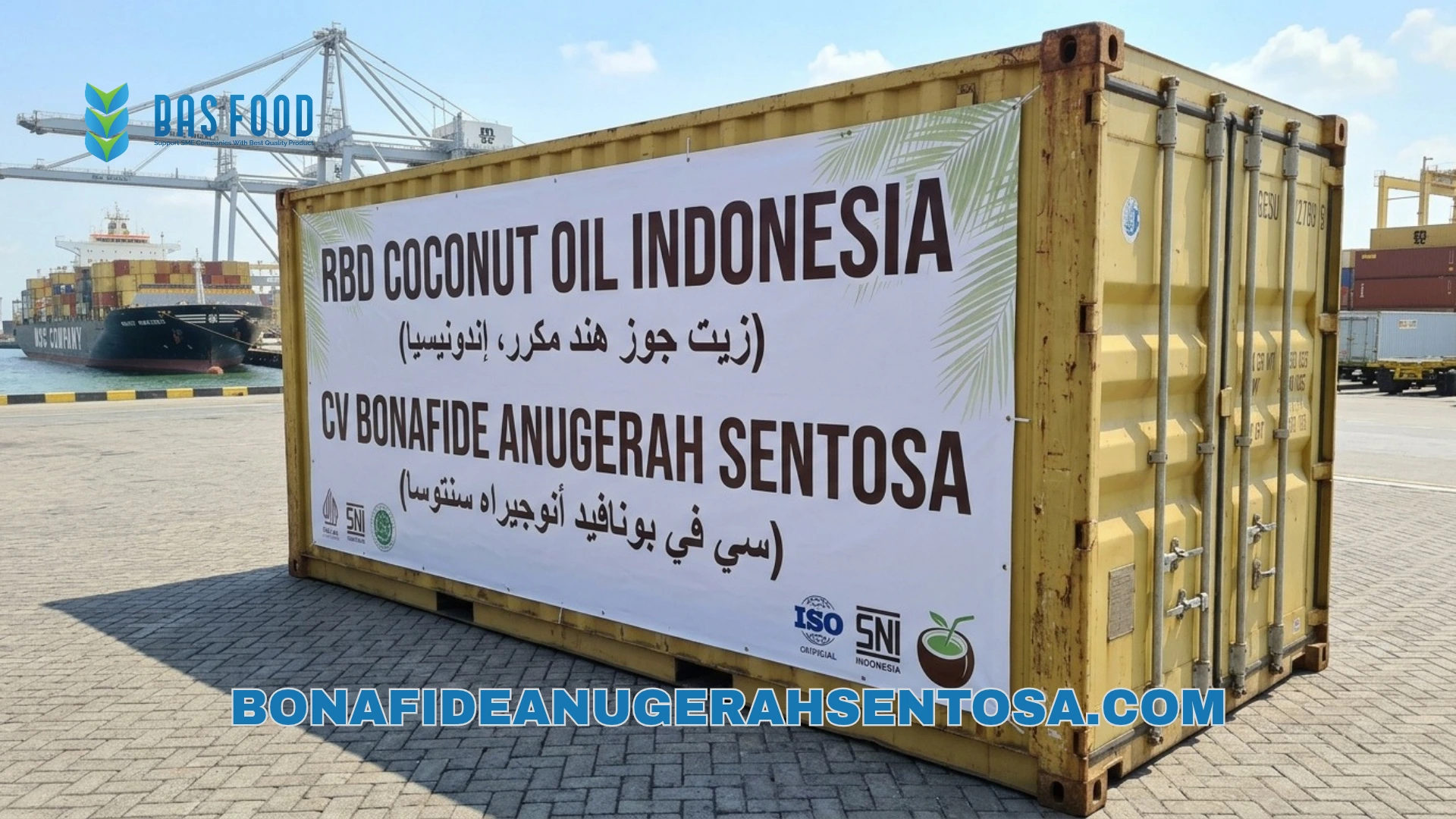
Why Work with an Indonesian Coconut Oil Supplier?
Indonesia has an established coconut industry and a broad network of coconut-growing regions and processing businesses. This creates opportunities for importers looking for coconut-derived ingredients for food production, distribution, and other commercial applications.
Working with an Indonesian coconut oil supplier may offer buyers access to a source market for coconut products. However, the country of origin alone does not guarantee product quality, competitive pricing, or dependable delivery. Buyers should evaluate each supplier based on documented capabilities and the specific requirements of their business.
For example, a food manufacturer may need oil with a defined fatty acid profile, melting characteristics, and sensory properties. A distributor may place greater emphasis on packaging, shipment size, product documentation, and the ability to coordinate repeat orders. A suitable exporter should be able to discuss these requirements clearly.
Indonesia as a Source for Coconut-Derived Ingredients
International buyers may explore Indonesian suppliers for several coconut-based products, including coconut sugar, coconut oil, and other derivatives. Nevertheless, the availability of each product varies by supplier, production arrangement, and commercial conditions.
If your business plans to source multiple ingredients, consider whether a supplier can support your wider procurement needs. Consolidating discussions with an established business contact may simplify communication, although buyers should still evaluate each product separately.
Before making a commitment, ask about the actual manufacturing location, product origin, available specifications, lead times, and export experience. These details help establish whether the supplier fits your purchasing strategy.
What Does a Reliable RBD Coconut Oil Exporter Offer?
A reliable RBD coconut oil exporter should provide clear information about the product and the commercial process. Buyers need more than a quotation. They need enough information to assess technical suitability, calculate costs, and understand the risks involved in importing the oil.
Start by reviewing the exporter’s product specification sheet. It should identify the product and list relevant quality parameters, such as free fatty acid content, moisture and volatile matter, impurities, color, odor, and other properties agreed upon by the buyer and supplier. The applicable limits should be stated explicitly rather than assumed.
Depending on the destination market and intended use, buyers may also need supporting documents, such as a certificate of analysis, safety or handling information where applicable, origin documentation, and food-related compliance records. Not every document applies to every shipment, so confirm the requirements with the exporter, customs broker, and relevant authorities.
Important Questions to Ask Before Ordering
Before requesting a formal quotation, prepare a list of questions about the product and the supplier’s operating process. This makes supplier comparisons more meaningful and reduces the risk of misunderstandings.
Consider asking:
- What product specifications and grades are available?
- Can the supplier provide a recent certificate of analysis for the relevant product batch?
- What packaging formats and shipment sizes can they arrange?
- What is the estimated production and dispatch lead time?
- Which export documents can they provide?
- What are the payment terms and applicable Incoterms?
- How does the supplier handle complaints, discrepancies, or damaged shipments?
- Can the supplier provide a representative sample for evaluation?
The answers should be specific and consistent with the supplier’s formal quotation and contract. If an important detail remains unclear, resolve it before confirming the order.
How to Evaluate RBD Coconut Oil Quality
Product quality should be one of the first considerations when choosing an exporter. Even if two suppliers offer oil under the same product name, their specifications, processing controls, and documentation may differ.
A useful starting point is the certificate of analysis, commonly called a COA. This document reports selected test results for a product or batch. Buyers should compare those results with their own technical requirements rather than rely on general statements such as “premium quality” or “food grade.”
Key Parameters Buyers Should Review
The appropriate parameters depend on the intended application and the agreed product specification. Common points to review include:
Free fatty acid content: This measurement helps buyers assess an important quality characteristic of the oil. The acceptable limit should match the product specification and intended use.
Moisture and volatile matter: Excess moisture can affect oil quality and storage stability. Buyers should confirm the relevant limit and test method.
Impurities: The specification should define the acceptable level of insoluble impurities or other relevant material.
Color and odor: Refined coconut oil generally has a relatively neutral sensory profile. Buyers should confirm the expected appearance and odor with a sample or agreed specification.
Fatty acid composition: This can help confirm the oil’s identity and suitability for a particular formulation.
Melting behavior: Coconut oil can become cloudy or solidify at cooler temperatures. Buyers should understand this natural behavior when planning storage, handling, and transportation.
The certificate of analysis should identify the relevant test results and, where needed, the test methods. For larger or recurring orders, buyers may also consider independent laboratory testing, especially when the ingredient is critical to product performance or regulatory compliance.
Why Samples Matter
A sample gives the buyer an opportunity to evaluate the oil before committing to a larger quantity. It can help the technical team assess sensory characteristics, handling behavior, and performance in the intended application.
For manufacturers, testing the oil in the actual formulation is particularly valuable. An oil that meets a supplier’s general specification may still behave differently under a specific production process. For this reason, sample approval should use agreed evaluation criteria.
Once the buyer approves the sample and specification, both parties should document the accepted requirements in the purchase order or contract. This creates a clearer reference for later shipments and quality discussions.
Choosing a Coconut Oil Manufacturer for Long-Term Supply
A coconut oil manufacturer processes coconut raw materials into oil, while an exporter may manufacture the product directly or coordinate supply through another production business. Some companies perform both roles, so buyers should confirm the actual arrangement.
This distinction matters because direct manufacturers and trading exporters may have different capabilities. A manufacturer may offer closer visibility into processing and production controls. An exporter may provide broader sourcing coordination, documentation support, and shipment arrangements. Neither model is automatically superior; the right choice depends on the buyer’s needs and the supplier’s demonstrated performance.
Ask the supplier to clarify where the oil is produced, who is responsible for quality control, and which company appears on the relevant commercial and product documents. These details help buyers understand the supply chain and identify the party responsible for addressing quality issues.
Assessing Supply Consistency
For a business that depends on recurring deliveries, consistent specifications are just as important as the first shipment’s quality. Differences between batches can affect production efficiency, product taste, texture, and final product performance.
Discuss expected order frequency, forecast volumes, lead times, and procedures for handling changes in availability. If the supplier cannot guarantee a particular quantity or schedule, the agreement should state realistic expectations instead of relying on verbal assurances.
It is also helpful to establish a process for approving specification changes. Any change in raw materials, processing, or product characteristics should be communicated when it could affect the agreed requirements. Clear communication supports a more stable long-term relationship.
Bulk Oil Supplier: Pricing, Packaging, and Shipping
When sourcing from a bulk oil supplier, buyers should evaluate the total landed cost rather than focus only on the quoted price per kilogram or metric ton. The final cost may include the product, packaging, inland transportation, export handling, freight, insurance, customs duties, taxes, and destination charges.
The division of responsibilities depends on the agreed Incoterms. For example, the quotation should clearly identify the named place or port and the applicable Incoterm version. Buyers should also confirm which party handles export clearance, freight arrangements, insurance, and import formalities.
A lower unit price may not deliver the best commercial outcome if it comes with unsuitable packaging, inconsistent documentation, unexpected charges, or delays. Comparing quotations on the same commercial basis makes the decision more reliable.
Packaging and Shipment Planning
Packaging should protect the oil during handling, storage, and transportation. The appropriate format depends on the order size, destination facilities, handling equipment, and buyer’s production requirements. Available options may vary by exporter and should be confirmed before ordering.
Buyers should also consider temperature conditions. Coconut oil may become cloudy or solid at cooler temperatures, which is a natural physical characteristic rather than automatic evidence of spoilage. The handling and storage plan should account for the product’s expected behavior and any supplier instructions.
Before dispatch, confirm the packaging details, net and gross weights, labeling, batch identification, shipping marks, and documentation. For container shipments, the parties should also agree on loading arrangements and any relevant transport requirements.
Export Documents and International Compliance
International shipments require accurate documentation. The exact documents depend on the destination country, product classification, transaction structure, and buyer’s requirements. Therefore, importers should confirm requirements before the shipment leaves the origin country.
Common commercial and shipping documents may include a commercial invoice, packing list, bill of lading or other transport document, and certificate of origin where applicable. Buyers may also require a certificate of analysis, product specification, and other documents related to food safety or import clearance.
Do not assume that every document is mandatory for every destination. Instead, ask the importer, customs broker, and relevant authorities to identify the applicable requirements. Product classification should also be checked carefully because customs duties and other measures can depend on the correct tariff code and destination rules.
Prepare for the Destination Market
Import requirements differ across markets. A shipment entering the European Union may face different rules from one entering the United States, Saudi Arabia, or another destination. Requirements can also change over time.
Before placing an order, verify the current rules on food safety, labeling where relevant, contaminants, traceability, customs classification, and importer responsibilities. The supplier can provide supporting product information, but the importer remains responsible for understanding its obligations in the destination market.
A practical approach is to prepare a document checklist during the quotation stage. This gives both parties time to identify gaps, confirm responsibilities, and reduce the risk of clearance delays.
Meet CV Bonafide Anugerah Sentosa: An Indonesian Export Contact
For buyers exploring Indonesian coconut-derived products, CV Bonafide Anugerah Sentosa is a potential business contact to consider. The company operates in Indonesia’s commodity supply and export sector, including coconut-derived products. Buyers interested in RBD coconut oil can contact the company to ask about current availability, sourcing arrangements, and applicable product specifications.
When approaching any exporter, explain your intended application and purchasing requirements clearly. For example, a food manufacturer may need a particular quality profile, while a distributor may prioritize packaging, order volume, and shipping schedules. Providing these details helps the supplier determine whether it can support the request.
The company also works in the wider coconut sugar supply category. However, buyers should not assume that every coconut oil grade, packaging format, or supply volume is available at all times. Confirm the current product range directly before making purchasing decisions.
Coconut Sugar Exporter Supplier: Can One Partner Support Multiple Needs?
Some importers source both coconut oil and coconut sugar as part of a broader ingredient portfolio. In this case, a coconut sugar exporter supplier or coconut sugar supplier may be relevant to the same procurement discussion, especially when a buyer wants to explore multiple Indonesian coconut-derived products.
However, coconut oil and coconut sugar are different products with different production processes, specifications, storage needs, and quality requirements. A supplier’s experience with coconut sugar does not, by itself, prove that it can supply RBD coconut oil. Buyers should evaluate each product independently and request product-specific documentation.
For example, a coconut sugar buyer may focus on color, moisture, granulation, flavor, and packaging. An RBD coconut oil buyer may instead prioritize fatty acid composition, free fatty acid content, moisture, impurities, and melting characteristics. Separate technical reviews help ensure that each ingredient meets its intended use.
Build a Procurement Strategy Around Evidence
If a supplier can support several products, coordinated purchasing may simplify communication and planning. Still, consolidation should only be considered after confirming product availability, quality systems, shipment arrangements, and commercial terms for every item.
It is also wise to maintain clear specifications and approval procedures for each product. This allows procurement teams to compare offers fairly, manage supplier performance, and identify problems before they affect production.
In other words, a broad product range can be useful, but documented capability and consistent performance should guide the final decision.
Conclusion: Source with Confidence, Not Guesswork
Choosing the right RBD coconut oil exporter requires more than comparing quotations. Buyers should understand the refining process, confirm product specifications, review relevant documentation, assess samples, and calculate the total landed cost. They should also make sure the supplier can communicate clearly and support the practical requirements of international trade.
Indonesia offers opportunities for businesses seeking coconut-derived ingredients, but each supplier must be assessed on its own capabilities. A supplier’s location or product range is only a starting point; technical suitability, documentation, transparent commercial terms, and reliable coordination matter just as much.
CV Bonafide Anugerah Sentosa can be contacted by buyers exploring Indonesian coconut-derived products, including inquiries about RBD coconut oil. Before committing to an order, ask for current product details and confirm all specifications, availability, and export arrangements directly.
With careful supplier evaluation and a clear purchasing process, importers and manufacturers can make more informed sourcing decisions and build supply relationships that support their business goals.