
The global food industry is changing quickly. Today, consumers want natural ingredients, clean-label products, and healthier alternatives to refined sugar. Because of this growing demand, palm sugar has become one of the most attractive natural sweeteners for food brands, retailers, and distributors worldwide. However, launching a new sweetener brand from scratch can be expensive and time-consuming. Building a production facility, sourcing raw materials, maintaining quality standards, and managing exports require significant investment. Fortunately, there is a smarter solution: palm sugar OEM.
A reliable OEM partner allows businesses to introduce high-quality palm sugar products under their own brand without owning a manufacturing facility. Instead, companies can focus on marketing, sales, and business growth while experienced manufacturers handle production, quality control, and packaging.
Whether you are an importer, wholesaler, supermarket chain, online retailer, or food manufacturer, understanding how palm sugar OEM works can help you expand your product portfolio while reducing operational risks.
In this guide, we’ll explain everything you need to know about OEM palm sugar services, including contract manufacturing, OEM sweetener solutions, custom packaging, and private manufacturing for international markets.
Why Palm Sugar OEM Is Becoming More Popular Worldwide
Consumer preferences have shifted toward natural food ingredients. As a result, retailers are expanding their shelves with products that contain recognizable and minimally processed ingredients. Palm sugar fits perfectly into this trend because it is made from the sap of palm trees and offers a rich caramel-like flavor.
At the same time, businesses are looking for faster ways to enter the market. Building a factory requires large investments, specialized equipment, experienced workers, and compliance with food safety regulations. These challenges often slow down product launches.
This is where palm sugar OEM creates real value. Instead of manufacturing products internally, companies partner with experienced producers who already have the facilities, equipment, and expertise needed for commercial production.
The OEM model reduces costs while allowing businesses to launch products much faster. It also provides flexibility because companies can adjust production volumes as market demand changes.
As international demand for natural sweeteners continues to grow, OEM manufacturing has become a practical solution for brands that want to compete in global markets.
What Does Palm Sugar OEM Mean?
OEM stands for Original Equipment Manufacturer. In the food industry, OEM refers to a manufacturer that produces products according to another company’s branding and specifications.
With palm sugar OEM, the manufacturer produces palm sugar while the buyer sells it under their own brand name. Consumers recognize the retailer’s brand, even though production is handled by an experienced supplier.
This business model benefits both parties. Manufacturers maximize production capacity, while customers gain access to high-quality products without investing in expensive manufacturing equipment.
An OEM partner may also provide product development support, packaging consultation, labeling assistance, and export documentation. As a result, businesses receive a complete production solution from a single supplier.
Many successful food brands around the world rely on OEM production because it allows them to focus on customer relationships, branding, and market expansion.
How Contract Manufacturing Supports Business Growth
One of the biggest advantages of contract manufacturing is efficiency.
Instead of spending years developing production facilities, companies can begin selling products much sooner. This shorter time-to-market helps businesses respond quickly to changing consumer trends.
An experienced manufacturer already understands food processing, quality management, export requirements, and international logistics. This expertise reduces production risks and improves overall efficiency.
Another advantage is scalability. As customer demand increases, production can expand without requiring additional investments from the brand owner.
Contract manufacturing also simplifies supply chain management. Rather than coordinating multiple suppliers, businesses often work with one manufacturer that manages production, quality inspections, packaging, and shipping.
This integrated approach saves time while improving consistency across every production batch.
Why OEM Sweetener Solutions Are Ideal for Modern Food Brands
Launching a new sweetener brand involves much more than producing sugar.
Today’s customers expect attractive packaging, consistent quality, excellent taste, and reliable product availability. Meeting these expectations requires experience and careful planning.
An OEM sweetener manufacturer helps businesses achieve these goals by providing complete production services from raw material sourcing to final packaging.
This allows food brands to introduce premium products without managing complicated manufacturing operations.
OEM sweetener services are particularly valuable for companies entering new international markets. Instead of learning every aspect of food production, they can partner with manufacturers who already understand export regulations and customer requirements.
As consumer demand grows, businesses can expand their product lines while maintaining consistent quality.
The Importance of Custom Packaging in Palm Sugar OEM
Packaging plays a major role in product success.
Even high-quality palm sugar may struggle in the marketplace if the packaging fails to attract customers or protect the product during transportation.
Fortunately, custom packaging allows businesses to create packaging that reflects their brand identity while meeting customer expectations.
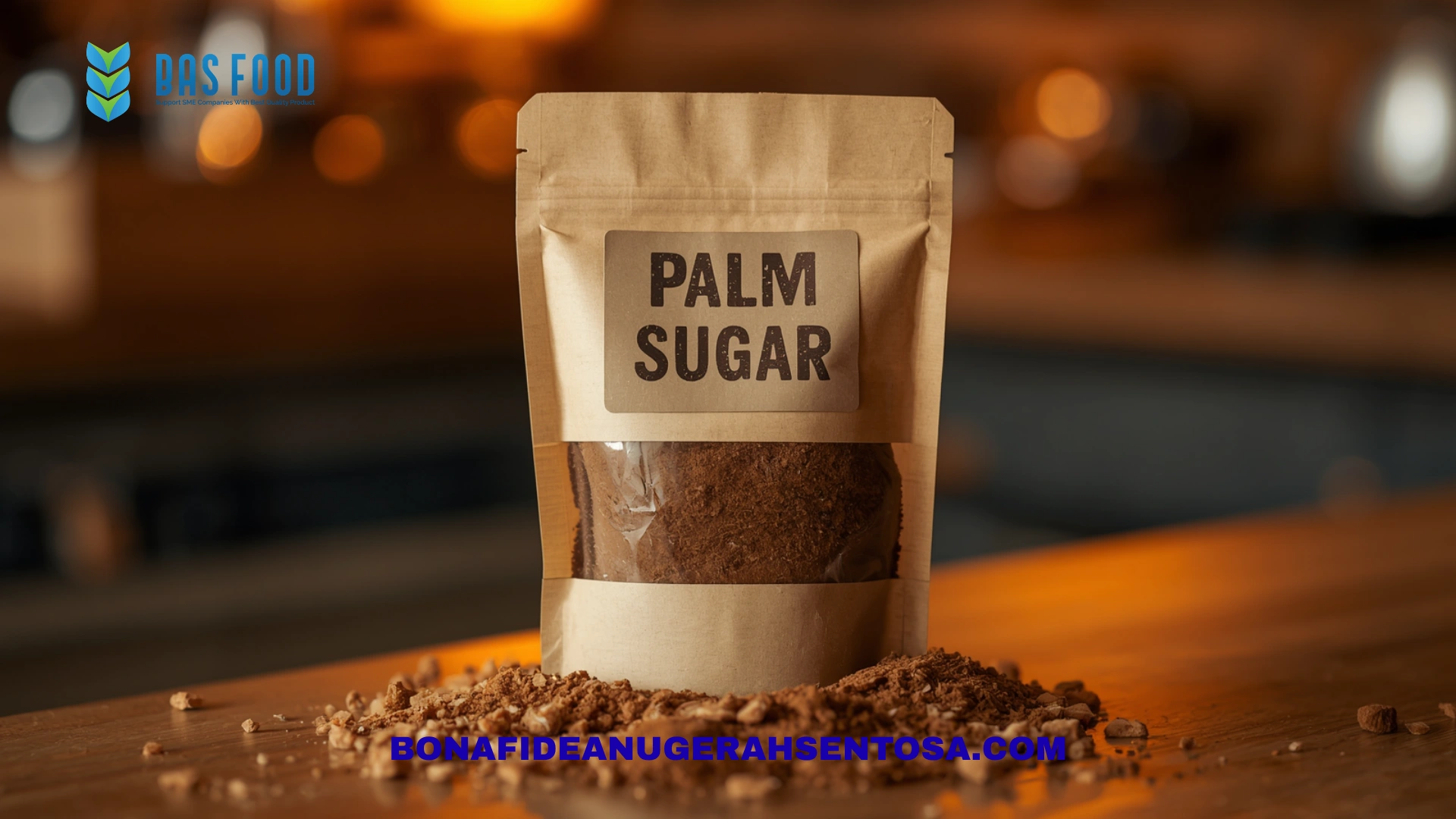
OEM suppliers usually offer various packaging options, including retail pouches, stand-up bags, jars, bottles, kraft paper bags, bulk sacks, and food-service packaging.
Businesses can also customize package sizes to match different market segments.
For example, supermarkets may require 250-gram or 500-gram retail packs, while food manufacturers often purchase 20 kg or 25 kg bulk packaging.
Professional packaging also improves product presentation while protecting palm sugar from moisture and contamination during international shipping.
Private Manufacturing Creates Stronger Brand Identity
Brand recognition has become increasingly important in today’s competitive food industry.
Consumers often return to brands they trust rather than simply purchasing generic products.
This is one reason why private manufacturing continues to grow worldwide.
Instead of selling products under the manufacturer’s name, companies build their own identity through customized branding, labels, packaging, and marketing.
Private manufacturing allows businesses to control how customers perceive their products while benefiting from professional production behind the scenes.
As the brand becomes more established, customer loyalty increases, helping companies expand into new regions and retail channels.
Palm Sugar Products Available Through OEM Services
OEM manufacturers often produce several types of palm sugar to meet different customer needs.
Popular options include:
- Granulated palm sugar
- Palm sugar powder
- Palm sugar blocks
- Palm sugar cubes
- Palm sugar syrup
- Organic palm sugar
- Conventional palm sugar
Many manufacturers also offer customized specifications.
Customers may request different colors, moisture levels, granule sizes, packaging formats, or labeling requirements depending on their target market.
This flexibility helps businesses create products that match consumer preferences in Europe, North America, the Middle East, Asia, and other international markets.
Quality Standards Every Importer Should Expect
Quality should always remain the highest priority when selecting a palm sugar OEM partner.
Professional manufacturers implement quality control throughout every production stage, from raw material collection to final packaging.
Buyers should ask suppliers about production procedures, inspection systems, traceability, and food safety programs.
Reliable OEM manufacturers typically monitor:
- Raw material quality
- Moisture content
- Color consistency
- Taste profile
- Particle size
- Cleanliness
- Packaging quality
Many international buyers also request certifications based on destination market requirements.
Working with an experienced exporter helps ensure products comply with customer expectations while simplifying international trade.
How to Choose the Right Palm Sugar OEM Partner
Selecting the right supplier is one of the most important business decisions you can make.
A reliable manufacturer offers more than production capacity. They become a long-term business partner that supports your growth.
Before making a decision, evaluate several important factors.
First, examine manufacturing experience. Companies with years of production expertise often provide more consistent quality and better technical support.
Second, review production capacity. Your supplier should be able to grow with your business without sacrificing product consistency.
Third, evaluate communication. Fast responses, transparent information, and proactive customer service create smoother business relationships.
Finally, ask about customization options. The best OEM suppliers provide flexible packaging, branding support, customized formulations when applicable, and efficient export services.
Strong partnerships create stronger brands.
Why Indonesia Is a Trusted Source for Palm Sugar OEM
Indonesia has earned a strong reputation as one of the world’s leading producers of palm sugar.
Its favorable climate, abundant natural resources, and generations of skilled producers contribute to the country’s consistent supply of high-quality palm sugar.
Many Indonesian manufacturers combine traditional palm sap harvesting with modern food processing technology. This combination helps preserve authentic flavor while achieving the consistency required by international buyers.
Export-oriented manufacturers also understand global food safety expectations and international shipping requirements.
For businesses looking to develop their own sweetener brand, Indonesia offers reliable manufacturing expertise, competitive production capacity, flexible packaging solutions, and dependable export support.
Conclusion
The growing demand for natural sweeteners creates exciting opportunities for food businesses around the world. Choosing palm sugar OEM allows companies to introduce premium products under their own brand while avoiding the high costs of building manufacturing facilities.
Through professional contract manufacturing, businesses gain access to experienced production teams, consistent quality control, and efficient export services. At the same time, OEM sweetener solutions help companies respond quickly to changing consumer preferences without sacrificing quality.
By combining custom packaging with private manufacturing, brands can build a unique identity, strengthen customer trust, and expand into new international markets.
For importers, wholesalers, distributors, retailers, and food manufacturers, partnering with an experienced Indonesian OEM supplier is a practical strategy for long-term business growth and global success.