
Gula Melaka is more than a traditional sweetener. It is an important part of Southeast Asian food culture, known for its rich aroma, brown color, and caramel-like flavor. From traditional desserts and beverages to modern food products, this palm sugar has earned a place in kitchens and food manufacturing businesses across the region. As international demand for natural and traditional food ingredients grows, more importers, distributors, and food manufacturers want to understand where Gula Melaka comes from and how producers make it. In particular, understanding the gula melaka production process is key to making informed decisions. Knowing the production process helps buyers evaluate product quality, understand differences between suppliers, and choose the right ingredient for their needs.
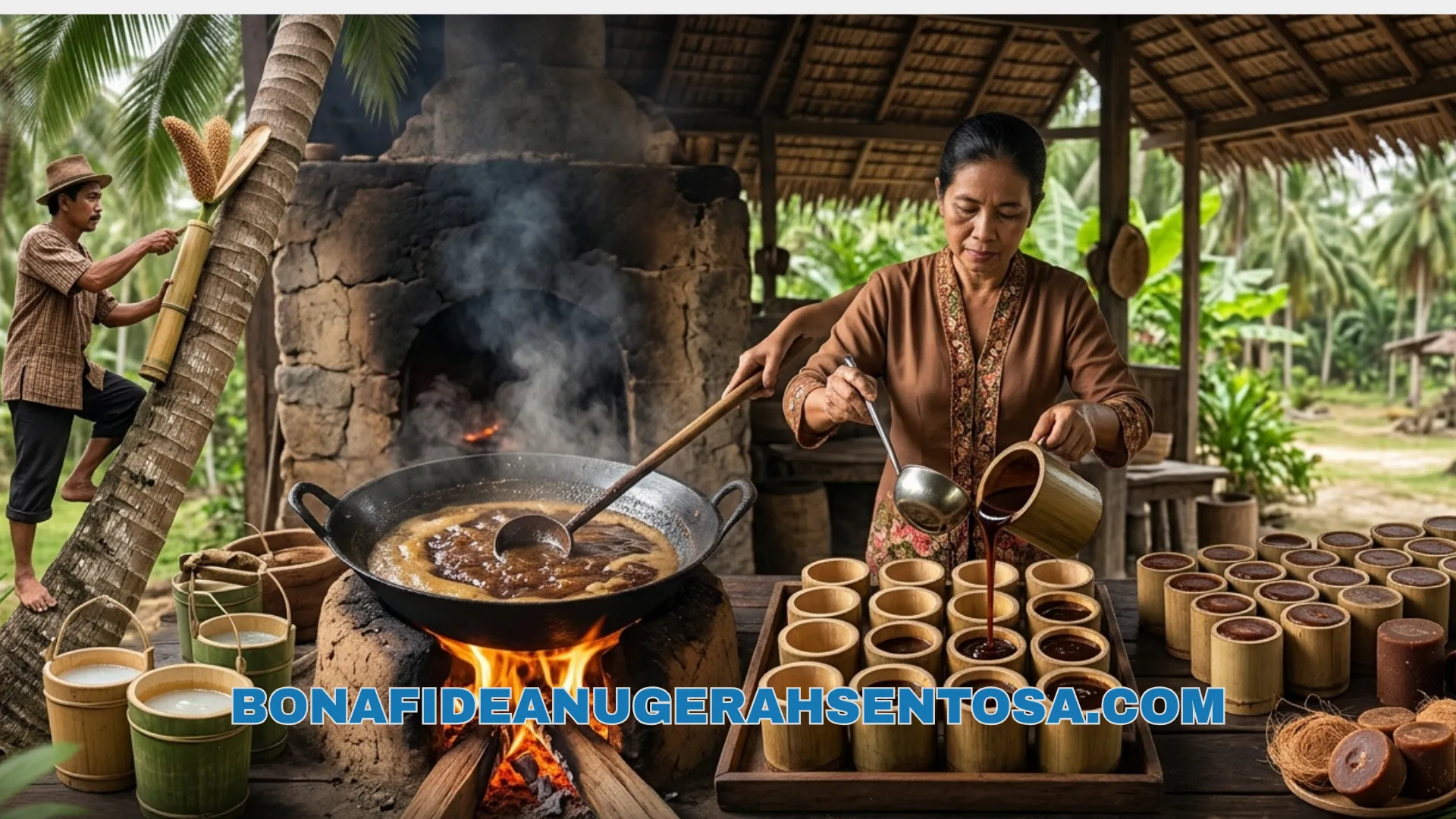
The gula melaka production process starts with collecting fresh palm sap and continues through filtering, heating, concentration, moulding, cooling, and packaging. Although traditional methods remain common, production practices can vary depending on the palm species, equipment, and product specifications.
In this guide, we explore how gula melaka is made, the role of coconut sap, the stages of palm sugar production, and the quality factors that matter to international buyers.
What Is Gula Melaka and Where Does It Come From?
Gula Melaka is a traditional palm sugar commonly associated with Malaysia and Southeast Asian cuisine. Producers make it by concentrating sap collected from palm flower stalks until the liquid becomes thick enough to form a solid sugar or syrup. Its color can range from golden brown to dark brown, while its flavor often has caramel-like, toffee, and molasses-style notes.
The name Gula Melaka is strongly linked to Malaysian food traditions. However, palm sugar products with similar characteristics are also made in Indonesia and other countries in the region. The exact raw material matters because producers may use coconut palms or other types of sugar-producing palms.
When a product is made from coconut palm sap, it can be described as coconut sap sugar or coconut palm sugar. The sap contains naturally occurring sugars and other soluble compounds. During heating, water evaporates and the remaining liquid becomes more concentrated.
For B2B buyers, it is important to understand that Gula Melaka is a product name associated with a particular culinary tradition, not a guarantee of one universal production method. Raw material, origin, processing conditions, and final product specifications should always be confirmed with the supplier.
Step One: Collecting Fresh Palm Sap
Every batch of Gula Melaka begins with fresh palm sap. Farmers collect this liquid from the flower stalk of a suitable palm tree. Depending on the product and local production tradition, the palm may be a coconut palm or another sugar-producing palm.
Sap collection requires experience and regular attention. Farmers prepare the flower stalk and collect the flowing liquid in suitable containers. The collection method and frequency can vary according to local practices, weather, palm condition, and the amount of sap produced.
Fresh sap is an important factor in the final quality of palm sugar. Its composition can change after collection because natural microorganisms may begin fermenting the sugars. Fermentation can affect the sap’s acidity, aroma, and suitability for producing the expected sugar profile.
For this reason, producers generally aim to handle and process fresh sap promptly. Clean collection containers and careful handling also help reduce unwanted contamination.
In commercial palm sugar production, raw material management is an essential starting point. Even well-controlled heating cannot always correct problems caused by poor-quality or heavily fermented sap. Therefore, the production team needs to pay attention to the quality of the sap before processing begins.
Step Two: Filtering the Sap Before Cooking
After collection, producers transfer the sap to the processing area. Before heating, they filter it to remove visible impurities such as small pieces of plant material, insects, or other particles that may enter during collection.
Filtering helps create a cleaner starting material for the cooking stage. Producers may use suitable food-grade filters or other filtering equipment depending on the scale of production. The important point is to remove unwanted physical particles without introducing new contamination.
The condition of the filtering equipment also matters. Containers, filters, cooking pans, and other surfaces should be kept clean and suitable for food processing. Poor hygiene can affect product quality even when the raw sap is fresh.
For buyers, this stage is worth discussing when evaluating a supplier. Ask how the producer handles incoming sap, what filtering method is used, and how the processing area is maintained. These questions help importers understand the supplier’s approach to basic production hygiene.
Step Three: Cooking and Concentrating the Palm Sap
Cooking is one of the most important stages in the gula melaka production process. Producers heat the filtered sap in a suitable pan or cooking vessel. As the temperature rises, water gradually evaporates and the liquid becomes more concentrated.
During this stage, producers monitor the mixture and stir it as needed. The aim is to achieve the right concentration and consistency for the intended product. Cooking time depends on several factors, including the starting volume, water content, heating method, pan size, and desired final texture.
As the sap becomes thicker, its color and aroma may also change. Heat-driven reactions contribute to the characteristic brown color and cooked, caramel-like flavor associated with palm sugar. However, excessive heating can produce unwanted darkening or burnt flavors.
Traditional producers often rely on experience to judge the cooking stage. In more controlled operations, producers may also use temperature measurements or other process checks to improve repeatability.
The correct endpoint depends on the product format. A producer making syrup needs a different final consistency from one preparing solid moulded sugar. Therefore, the cooking stage must match the intended product specification.
Step Four: Reaching the Right Consistency for Moulding
Once the sap has concentrated sufficiently, producers prepare it for moulding. This stage requires attention because the mixture must be thick enough to set into a solid block after cooling.
If the mixture remains too thin, the finished product may not hold its intended shape. On the other hand, excessive concentration or unsuitable heating conditions can make the product difficult to handle and may affect its texture.
Producers use experience and process checks to determine when the concentrated sap is ready. Depending on the production method, they may observe its thickness, bubbling behavior, or other physical characteristics. Some operations use additional measurements to support process consistency.
The required consistency also depends on the mould design and final product size. Small moulds, large blocks, and other shapes may require adjustments to the handling process.
For international buyers, this stage can help explain why palm sugar products from different suppliers may vary in hardness, texture, and appearance. Differences do not automatically indicate poor quality, but they should match the agreed product specification.
Step Five: Pouring the Concentrated Sap into Moulds
After reaching the required consistency, producers transfer the hot concentrated sap into moulds. The moulds determine the final shape and size of the solid Gula Melaka. Depending on the market and customer requirements, the product may be formed into small discs, coins, cylinders, or larger blocks.
Moulds should be clean and suitable for food contact. Producers also need to handle the hot mixture carefully to reduce the risk of spills and uneven filling. Consistent filling helps create products with more uniform dimensions and weight.
The moulding method can influence the final appearance. Some traditional producers use simple moulds that create familiar regional shapes, while other operations may use moulds designed for specific commercial packaging formats.
For B2B customers, shape and dimensions are practical purchasing considerations. A food manufacturer may prefer a larger block that can be broken down before use. A retail distributor may prefer smaller portions that are easier to pack and sell.
Buyers should confirm the product’s dimensions, unit weight, shape, and acceptable tolerances before placing an order. If a particular format is important for production or retail presentation, sample approval is a useful step.
Step Six: Cooling, Setting, and Removing the Sugar
After moulding, the concentrated sap needs time to cool and solidify. As the temperature decreases, the mixture becomes firm and takes the shape of the mould. The time required depends on the block size, formulation, concentration, and surrounding conditions.
Producers should allow the product to set properly before removing it from the moulds. Removing blocks too early may cause deformation or damage. Careful handling at this stage helps maintain the intended shape and appearance.
Once the sugar has solidified, workers remove the blocks and inspect them. They may check for cracks, unusual discoloration, damaged edges, or other visible defects. Products that do not meet the agreed requirements should be handled according to the producer’s quality procedures.
Cooling and setting are important because buyers often judge moulded palm sugar by its appearance and texture. Consistent block formation makes the product easier to pack, store, transport, and use in food manufacturing.
Step Seven: Quality Inspection and Product Specifications
Quality inspection helps producers confirm that the finished product matches the intended requirements. For commercial buyers, visual inspection is useful, but it should be supported by clear specifications and suitable testing where necessary.
Several characteristics deserve attention:
- Color: The product may range from golden brown to dark brown, depending on raw material and processing conditions.
- Aroma: It should have a characteristic palm sugar aroma without unexpected or unpleasant odors.
- Flavor: Buyers may look for a balanced sweetness and the expected caramel-like notes.
- Texture: The block should have a suitable firmness for handling and its intended application.
- Dimensions and weight: Units should meet the agreed size and weight requirements.
- Ingredients: The product description should clearly identify the raw material and any additional ingredients.
- Food safety: Relevant hygiene controls, testing, and documentation should meet the buyer’s and destination market’s requirements.
For manufacturers, consistency between batches is particularly important. A change in flavor, color, or texture may affect the taste and appearance of finished products. Therefore, buyers should request product specifications and discuss how the supplier manages variations.
It is also important to avoid treating color or hardness as the only measure of quality. The right characteristics depend on the intended application. A product suitable for a traditional dessert shop may not have the exact specifications required by a large food manufacturer.
Traditional Gula Melaka Production vs. Modern Processing
Traditional gula melaka production often uses methods passed down through local communities. Farmers and producers may collect sap manually, cook it in open pans, and pour it into simple moulds. These practices help maintain familiar product characteristics and preserve traditional production knowledge.
Modern processing may introduce improved equipment, more controlled heating, better process monitoring, and standardized packaging. These improvements can help producers manage larger volumes and achieve more consistent results. However, the actual equipment and methods vary from one operation to another.
Traditional and modern approaches are not necessarily opposites. A producer can preserve familiar methods while improving hygiene, documentation, and quality control. The most suitable approach depends on the target market and the buyer’s product requirements.
For importers, the important question is not simply whether the sugar is made traditionally or with modern equipment. Instead, buyers should evaluate whether the production method delivers a safe, consistent product that meets the agreed specifications.
When assessing a supplier, ask about the raw material, processing stages, hygiene practices, batch controls, and available quality documents. These details provide a clearer picture of the product than a general description alone.
Packaging and Storage After Production
Once producers inspect and approve the finished blocks, they prepare them for packaging. Packaging protects the product from physical damage, contamination, and moisture exposure during handling and transportation.
The right packaging format depends on the intended market. Small retail packs may suit supermarkets and specialty food stores, while bulk packaging may be more practical for food manufacturers, wholesalers, and distributors.
Buyers should discuss packaging material, unit weight, inner packaging, outer cartons, labeling, and pallet requirements where applicable. They should also confirm that the packaging is suitable for food contact and the planned shipping conditions.
Storage is another important consideration. Palm sugar blocks should be kept according to the supplier’s product-specific instructions and protected from excessive moisture, contamination, and unsuitable temperatures. Exposure to moisture may affect the product’s texture and quality.
Importers should request storage recommendations and shelf-life information supported by the supplier’s product data. They should not assume that every Gula Melaka product has the same shelf life because raw materials, processing conditions, packaging, and storage environments can differ.
What International Buyers Should Know Before Sourcing Gula Melaka
Understanding the production process helps importers ask better questions when sourcing palm sugar. However, buyers should also consider the product’s origin and exact identity. A product sold under the name Gula Melaka may be made from different palm materials depending on the producer and country.
If your business specifically requires coconut sap sugar, confirm that the supplier uses coconut palm sap. This is especially important for manufacturers that need to declare the raw material on product labels or maintain a particular ingredient profile.
Before ordering, consider requesting:
- Product specifications and ingredient details.
- Country and region of origin.
- Production and processing information.
- Available block sizes, dimensions, and weights.
- Product samples for quality evaluation.
- Packaging details and storage recommendations.
- Relevant food safety and laboratory documentation.
- Export documents required for your destination market.
You should also explain your intended application and estimated purchasing volume. A supplier can then assess whether its product format and supply arrangements are suitable for your business.
For international procurement, clear communication is essential. Confirm the product description, specifications, quantity, packaging, shipment schedule, and documentation before finalizing the order.
Sourcing Palm Sugar from Indonesia with CV Bonafide Anugerah Sentosa
Indonesia has a long history of producing coconut-based food ingredients, including coconut sugar in several forms. These products serve local food businesses and international markets looking for ingredients from Southeast Asia.
For importers interested in coconut sap sugar, it is important to identify suppliers that can explain their product origin and specifications clearly. A reliable coconut sugar supplier should be able to discuss the product’s raw material, processing, packaging, and export requirements.
CV Bonafide Anugerah Sentosa is an Indonesian exporter and supplier of coconut sugar and other coconut-derived products. The company works with buyers interested in Indonesian commodities and can discuss sourcing requirements for coconut sugar products.
If you are comparing suppliers for Gula Melaka-style products or coconut palm sugar, clarify whether you need a specific palm species, block format, or other product characteristics. Do not assume that every coconut sugar block is identical to Malaysian Gula Melaka. Confirm the product description and origin before making a purchasing decision.
As a coconut sugar exporter supplier, CV Bonafide Anugerah Sentosa can discuss buyer requirements, available product information, samples, and export arrangements. Importers should share their target specifications and destination-market needs to help determine product suitability.
Conclusion: Understanding the Process Behind Every Block
The gula melaka production process transforms fresh palm sap into a traditional sweetener used across Southeast Asian cuisine. From sap collection and filtering to cooking, concentration, moulding, cooling, and packaging, every stage contributes to the product’s final characteristics.
For international buyers, understanding these stages makes it easier to evaluate suppliers and compare products. Raw material, production methods, dimensions, texture, flavor, packaging, and quality documentation should all form part of the purchasing decision.
If your business is looking for coconut sap sugar or other Indonesian coconut sugar products, CV Bonafide Anugerah Sentosa can discuss your sourcing requirements. Request product details and samples to evaluate whether the product meets your specifications and market needs.