
Palm sugar has been part of Southeast Asian cooking for generations. It adds sweetness, but that is only part of its appeal. Depending on the type and production method, palm sugar can also contribute a warm aroma, deeper color, and caramel-like notes that make food taste more rounded. Today, these characteristics are attracting attention beyond traditional kitchens. Chefs, food manufacturers, bakeries, beverage companies, and specialty-food brands are exploring new palm sugar culinary uses in both traditional and modern products.
For B2B food businesses, this creates an interesting opportunity. Palm sugar can be supplied in several formats, including molded forms, powder, and palm sugar granule. Each format can work better for certain applications, from sauces and desserts to beverages and industrial food production.
Indonesia is also an important source of palm-based sweeteners. Its long history of palm sap processing gives exporters access to traditional production knowledge and agricultural supply networks. However, buyers still need to select suppliers carefully and define the right specification for their intended application.
This article explores the most useful palm sugar culinary uses, explains why chefs and manufacturers choose it, and shows how different product formats can fit modern food production.
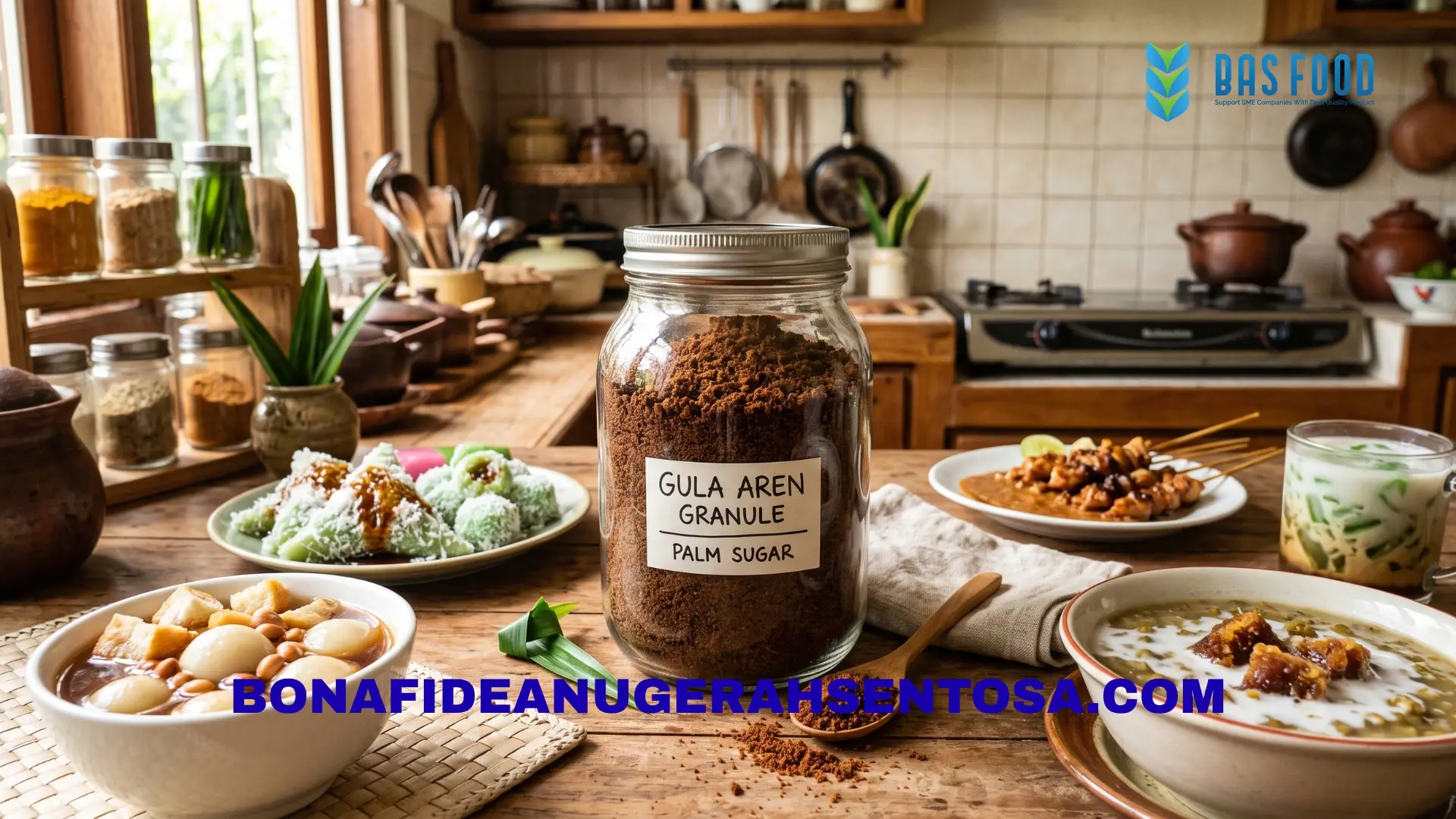
Why Palm Sugar Has a Special Place in Cooking
Palm sugar differs from ordinary white sugar in several ways. Its flavor can be more complex, often with caramel-like, earthy, or lightly smoky notes depending on the palm species and processing method.
Because of this flavor profile, cooks often use palm sugar when they want more than simple sweetness. It can add depth to sauces, desserts, drinks, marinades, and traditional dishes.
This is particularly noticeable in Asian cuisine, where palm sugar is used in many savory and sweet recipes. It can balance salty, spicy, sour, and bitter flavors while adding a rounded sweetness.
For chefs, that makes palm sugar a useful culinary ingredient rather than simply a substitute for refined sugar. It can help create a particular flavor profile that would be difficult to reproduce with plain white sugar alone.
At the same time, food manufacturers can use palm sugar to develop products with a distinctive taste. This opens opportunities for modern packaged foods that want to connect traditional ingredients with contemporary product concepts.
Palm Sugar in Traditional Asian Cuisine
Many of the most familiar palm sugar culinary uses come from Southeast Asian cooking. Palm sugar appears in sauces, desserts, snacks, drinks, and savory dishes across the region.
In Indonesia, palm sugar is commonly used in traditional sweets and cakes. It can also appear in sauces and dishes where sweetness helps balance spicy, salty, or sour ingredients.
In Thailand, palm sugar is widely associated with dishes and desserts that combine sweet, salty, sour, and spicy flavors. It can contribute to the balance that makes many Thai dishes distinctive.
Other parts of Southeast Asia also use palm sugar in local cooking. The exact ingredient and preparation can vary, but the broader idea remains similar: palm sugar provides sweetness with additional flavor.
These traditional applications continue to inspire modern food development. Chefs and manufacturers can take familiar flavor combinations and adapt them to new products.
Palm Sugar in Sauces, Marinades, and Dressings
One of the most practical culinary applications for palm sugar is in sauces. Its flavor works well with ingredients such as soy sauce, chili, garlic, ginger, tamarind, vinegar, coconut milk, and spices.
In savory sauces, sweetness can balance acidity and heat. Palm sugar can therefore be used in marinades, dipping sauces, glazes, and cooking sauces.
For example, a food manufacturer may use palm sugar in a sauce designed for grilled foods. The sugar can contribute sweetness and help create a rich color during cooking.
Palm sugar can also work in salad dressings and dipping sauces. Its deeper flavor can make a simple sweet-and-sour dressing more interesting.
For industrial applications, consistency becomes important. A manufacturer needs the same sweetness and flavor profile from batch to batch. That is why choosing a reliable palm sugar supplier and establishing clear specifications can be essential.
Palm Sugar in Desserts and Traditional Recipes
Desserts are another major category for palm sugar. Its warm flavor pairs naturally with coconut, rice, flour, chocolate, spices, and tropical fruits.
Traditional recipes across Southeast Asia often use palm sugar as a filling, syrup, topping, or sweetening ingredient. In some desserts, the sugar provides a contrasting center or sauce rather than being mixed throughout the recipe.
This makes palm sugar particularly interesting for traditional recipes. It allows chefs to preserve familiar flavors while adapting recipes for modern kitchens.
Modern pastry chefs can also use palm sugar creatively. It can be incorporated into cakes, cookies, puddings, ice cream, caramel sauces, and dessert toppings.
For premium food brands, this creates an opportunity to position palm sugar as one of their gourmet ingredients. However, the final positioning should focus on verified product characteristics rather than unsupported health claims.
Palm Sugar in Coffee and Tea
The growth of specialty beverages has created another area for palm sugar culinary uses. Coffee and tea drinks can benefit from sweeteners that contribute their own flavor.
Palm sugar can pair well with coffee because its caramel-like notes can complement roasted flavors. This can work particularly well in iced coffee, traditional coffee drinks, specialty lattes, and dessert-style beverages.
Tea is another possibility. Palm sugar can be combined with spices, coconut, milk, or other ingredients to create warm and aromatic drinks.
For foodservice operators, the format of the sugar matters. Granulated products can be easier to measure, while liquid or syrup forms may be more convenient for some beverage applications.
When selecting palm sugar granule, beverage companies should consider particle size and dissolution requirements. The appropriate specification depends on the formulation and preparation method.
Palm Sugar in Bakery Products
Bakeries are increasingly interested in ingredients that can create distinctive flavors. Palm sugar can be useful in cookies, cakes, breads, muffins, pastries, and other baked products.
Its flavor can complement ingredients such as cinnamon, ginger, chocolate, coconut, banana, nuts, and coffee.
Palm sugar can also contribute color. This can be useful when developing products with a deeper golden or brown appearance.
However, bakers should remember that replacing refined sugar with palm sugar may change more than sweetness. Sugar affects texture, moisture, browning, and other properties of baked goods.
Therefore, food manufacturers should conduct recipe trials rather than assuming that palm sugar can always be substituted at a one-to-one ratio.
For commercial production, the supplier should provide consistent product specifications so the formulation team can achieve repeatable results.
Palm Sugar in Beverages and Modern Food Products
Beyond traditional drinks, palm sugar can be used in modern beverage concepts. Food companies may explore it in ready-to-drink beverages, flavored milk products, smoothies, dessert drinks, and specialty coffee products.
The ingredient can work particularly well with flavor combinations such as coconut, chocolate, coffee, vanilla, ginger, cinnamon, and tropical fruits.
Modern food manufacturers can also use palm sugar in snack bars, sauces, breakfast products, desserts, and other processed foods.
This wider range of applications is one reason palm sugar has potential beyond traditional markets. It can connect familiar Asian ingredients with new international food concepts.
For manufacturers, however, product development should start with technical requirements. They need to know how the palm sugar behaves during mixing, heating, storage, and packaging.
Palm Sugar Granule vs. Molded Palm Sugar
Product format can significantly affect culinary applications. Molded palm sugar has long been used in traditional cooking, where cooks break or grate the sugar as needed.
It can work well for household cooking, traditional desserts, and foodservice applications where the user wants to control the amount manually.
Palm sugar granule, on the other hand, offers greater convenience for weighing and blending. This can make it particularly useful for industrial food manufacturers and bakeries.
Granules can also simplify portion control and formulation. A production team can measure a specific weight more easily than when working with large blocks.
The best format therefore depends on the application. Traditional kitchens may prefer molded sugar, while industrial food manufacturers may prefer granules or powder.
Coconut Sugar Granule and Palm Sugar: Similar Applications, Different Ingredients
Food businesses sometimes compare palm sugar with coconut sugar because both are used as natural sweetening ingredients.
However, they are not the same product. Coconut sugar is made from coconut palm sap, while palm sugar can be produced from sap from other palm species.
Their flavor, color, aroma, and production characteristics can differ.
Coconut sugar granule can be used in many of the same broad applications as palm sugar, including baking, beverages, sauces, desserts, and food manufacturing.
For brands that sell natural sweeteners, offering both products can create a broader product range. However, each product should have its own specifications and clear labeling.
A reliable coconut sugar supplier should be able to provide product information that allows buyers to evaluate the ingredient for their intended use.
Palm Sugar as a Gourmet Ingredient
The growing interest in global flavors has created opportunities for palm sugar as a specialty or gourmet ingredient.
Chefs can use it to add depth to sauces, desserts, glazes, and specialty beverages. Its distinctive flavor can help a dish stand apart from recipes made with standard refined sugar.
For premium food products, origin can also be part of the product story. Indonesian palm sugar has a connection to traditional agriculture and local food culture.
However, brands should communicate this story accurately. Buyers should be able to trace product information back to their supplier and use claims that can be supported.
This approach is particularly useful for specialty-food companies that want to introduce consumers to ingredients from different culinary traditions.
Palm Sugar in Sauces, Glazes, and Caramelized Foods
Palm sugar can be particularly useful in recipes that involve heating. When combined with other ingredients, it can contribute sweetness, color, and a deeper flavor.
It can be used in glazes for grilled vegetables, meat, poultry, and other foods. It can also work in sauces where a balance between sweet, salty, spicy, and acidic flavors is needed.
Because the sugar has its own flavor, recipe developers should test it carefully. A strong palm sugar profile may be desirable in one product but too dominant in another.
For food manufacturers, this is why product samples and application trials are valuable.
Instead of simply asking whether a supplier can provide palm sugar, buyers should test the ingredient in their actual recipe and evaluate the final product.
Palm Sugar in Snacks and Food Manufacturing
The snack industry provides another potential application. Palm sugar can be used in snack bars, granola, roasted nuts, sweet coatings, and other products.
Its flavor can work well with oats, nuts, seeds, coconut, chocolate, and dried fruit.
For manufacturers, granulated palm sugar can also simplify dry blending. The production team can combine it with other ingredients according to a defined recipe.
However, the required granulation and moisture level should be specified carefully. Different production systems can require different physical properties.
This is where an experienced palm sugar exporter can provide useful technical information. The supplier should understand the buyer’s intended application and provide a specification suitable for evaluation.
How Food Manufacturers Should Select Palm Sugar
Choosing the right palm sugar is not only about taste. Manufacturers should consider several technical and commercial factors.
First, evaluate the physical properties. Check color, aroma, flavor, moisture, texture, and granulation.
Next, consider food safety and documentation requirements. Depending on the destination market and application, buyers may require specifications, laboratory reports, certificates, and other documents.
Packaging also matters. Industrial customers need packaging that protects the product during storage and transportation.
Finally, consider supply reliability. A recipe may work perfectly with a sample, but manufacturers need consistent supply for commercial production.
This is why a reliable palm sugar supplier should be evaluated on both product quality and supply-chain capability.
Working With an Indonesian Palm Sugar Supplier
Indonesia is an important source of palm sugar, supported by traditional production knowledge and agricultural supply networks.
For international buyers, working directly with an Indonesian supplier can provide access to products at their source. However, buyers should still conduct proper supplier verification.
Ask for product samples, specifications, packaging information, MOQ, lead times, and export documentation.
It is also useful to explain the intended application. A supplier that knows the product will be used in beverages may recommend a different format from one intended for traditional desserts.
Clear communication at the beginning can reduce problems later.
CV Bonafide Anugerah Sentosa and Indonesian Palm Sugar
For businesses exploring Indonesian palm sugar sourcing, CV Bonafide Anugerah Sentosa is an Indonesian exporter associated with palm sugar, coconut sugar, and other agricultural commodities.
For B2B buyers, the most useful approach is to provide clear requirements. Explain the desired product format, quantity, packaging, destination country, application, and documentation needs.
This allows the supplier to discuss the available product specifications and supply arrangements more accurately.
Buyers should confirm current product availability, MOQ, packaging, specifications, certifications, lead time, and export terms directly before placing a commercial order.
For businesses that want to develop a wider natural sweetener portfolio, discussing both palm sugar and coconut sugar with an experienced coconut sugar supplier can also be useful.
How Chefs and Manufacturers Can Experiment With Palm Sugar
The best way to understand palm sugar is to test it in real recipes.
Start with familiar applications. Try it in a sauce, coffee drink, cookie, cake, dessert, or glaze. Compare the result with the same recipe made with refined sugar.
Pay attention to sweetness, aroma, color, aftertaste, texture, and how the sugar behaves during cooking.
Then experiment with different formats. A granulated product may work well in dry mixes, while another format may be more convenient for sauces or beverages.
This practical testing can help product developers decide which specification makes sense.
For B2B buyers, it also provides useful information to share with the supplier. Instead of saying “we need high-quality palm sugar,” the buyer can provide a more precise requirement based on actual application testing.
Conclusion: Palm Sugar Has a Place in Both Tradition and Modern Food
The wide range of palm sugar culinary uses shows why this ingredient continues to attract attention. From traditional Asian desserts and sauces to modern coffee, bakery products, beverages, snacks, and gourmet foods, palm sugar can bring more than sweetness to a recipe.
Its warm flavor, distinctive aroma, and natural brown color can help create products with a different sensory profile from those made with refined sugar.
For food manufacturers, choosing the correct format is essential. Palm sugar granule can be practical for weighing and blending, while molded or powdered formats may work better for other applications.
The same applies to coconut sugar granule, which provides another option for brands and manufacturers developing natural sweetener products.
For international buyers, the right sourcing partner is equally important. A reliable palm sugar supplier or palm sugar exporter should provide consistent product quality, clear specifications, suitable packaging, and dependable export support.
For businesses looking for Indonesian ingredients, CV Bonafide Anugerah Sentosa can be considered as one potential supply partner. Buyers should confirm current product availability and specifications directly before placing orders.
Ultimately, palm sugar is more than a traditional sweetener. It is a versatile culinary ingredient that can connect traditional food culture with modern product development.