
Shipping palm sugar internationally involves much more than putting bags into a container and sending them to another country. For importers, distributors, food manufacturers, and retailers, every stage matters, from export packing and product protection to container loading, documentation, and final delivery. The right shipping process helps protect palm sugar from moisture, contamination, damaged packaging, and unnecessary handling risks. At the same time, good planning can help buyers manage freight costs and avoid delays at the destination.
For businesses sourcing from Indonesia, understanding shipping palm sugar is especially useful because the product may travel by sea for weeks before reaching the buyer. During that time, packaging and cargo preparation need to withstand transportation, port handling, changes in temperature, and humidity.
This guide explains the main steps involved in shipping palm sugar internationally. It is designed for B2B buyers who want a simple overview of export packing, moisture protection, container loading, documentation, and supplier coordination.
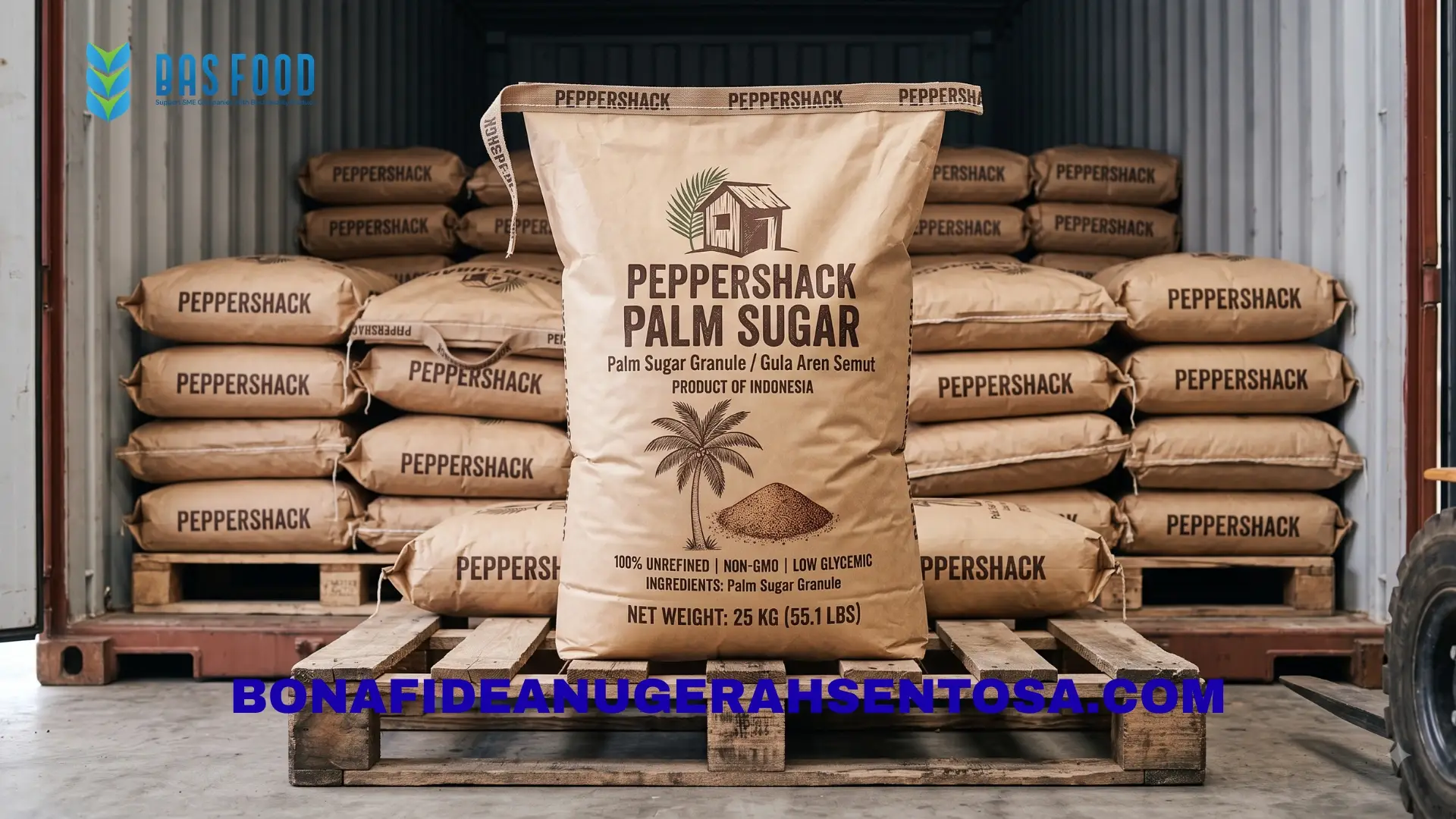
Why Shipping Palm Sugar Requires Careful Planning
Palm sugar is a food ingredient, so transportation should protect both product quality and food safety. Poor handling can create problems even when the original product quality is excellent.
For example, damaged bags can expose the product to the external environment. Excess moisture may affect texture and handling. Poor stacking can also cause bags to collapse during transportation.
Therefore, shipping palm sugar should be treated as part of the overall product quality process rather than as a separate logistics activity.
A reliable palm sugar exporter normally coordinates production, quality control, packaging, warehousing, container loading, shipping documents, and freight arrangements.
For buyers, understanding this process makes it easier to communicate requirements before placing an order.
Choosing the Right Palm Sugar Packaging
Packaging is the first line of protection during international transportation.
Palm sugar may be supplied in several forms, including granulated, powdered, molded, or block formats. Each form can require different packaging considerations.
Bulk buyers may choose commercial packaging such as 20 kg, 25 kg, or other sizes depending on the supplier and application.
For example, a food manufacturer may prefer 25 kg bags because they are relatively practical to handle in a production facility. A distributor, on the other hand, may purchase bulk packaging and then repack the product into smaller consumer units.
The packaging material should also match the transportation conditions.
Depending on the product and buyer requirements, suppliers may use multilayer bags, lined paper sacks, plastic packaging, cartons, or other food-grade packaging formats.
Export Packing: More Than Just a Strong Bag
Good export packing needs to protect the product throughout the supply chain.
A bag may look strong at the factory, but it also needs to withstand loading, stacking, transportation, unloading, and warehouse handling.
Export packing should therefore consider:
- Bag strength
- Product weight
- Moisture resistance
- Sealing method
- Stacking
- Labeling
- Transportation conditions
- Destination requirements
For bulk palm sugar, packaging should also make the product easy to identify.
Labels may include information such as product name, net weight, batch information, country of origin, production information, and storage instructions, depending on the destination market and applicable requirements.
Buyers should confirm labeling requirements with their importer, customs broker, and relevant authorities before shipment.
Moisture Protection During Palm Sugar Shipping
One of the most important considerations when shipping palm sugar is moisture protection.
Palm sugar can interact with moisture from its surroundings. Excess moisture may affect the product’s texture and physical condition.
This becomes particularly relevant during sea transportation.
A shipment may travel through humid ports and experience changes in temperature during the voyage. Condensation can also occur inside containers under certain conditions.
For that reason, the packaging should provide suitable protection, while the container itself should be clean and dry.
Before loading, the exporter should inspect the container for obvious problems such as:
- Water leaks
- Holes
- Strong odors
- Dirt
- Residue from previous cargo
- Damaged flooring
- Visible contamination
Food products should not be loaded into containers that are unsuitable for the shipment.
Container Loading for Palm Sugar
Container loading is a key part of export preparation.
The exporter needs to arrange the cargo so that it remains stable during transportation.
The loading method depends on several factors, including packaging size, total weight, palletization, container dimensions, and destination handling requirements.
Palm sugar may be loaded on pallets or directly into the container.
Palletized cargo can be easier to handle at the destination, particularly for warehouses equipped with forklifts. However, pallets occupy additional space and add weight.
Loose loading may allow the exporter to use container space more efficiently, but it can require more manual labor during loading and unloading.
Therefore, buyers should discuss the preferred loading method before shipment.
Understanding Container Capacity
The amount of palm sugar that can be shipped in a container depends on both volume and weight.
This is important because buyers sometimes assume that the container’s physical volume is the only limitation.
In reality, the total cargo weight also matters.
For example, if palm sugar is packed in 25 kg bags, the buyer can calculate the number of bags by dividing the planned net shipment weight by 25 kg.
However, this calculation provides only a starting point.
The exporter should also consider packaging weight, pallet weight if applicable, container specifications, shipping-line restrictions, and destination regulations.
For this reason, the final loading quantity should always be confirmed before shipment.
Sea Freight for International Palm Sugar
Sea freight is commonly used when shipping large quantities internationally.
It can be more economical than air freight for bulk food ingredients, particularly when the order consists of several tons.
However, sea freight usually takes longer.
The shipment may pass through several stages:
- Factory preparation
- Trucking to the port
- Container loading
- Export customs
- Port handling
- Vessel loading
- Ocean transportation
- Destination port handling
- Import customs
- Final delivery
Because the cargo spends significant time in transit, proper preparation before the container leaves the factory is important.
Shipping Palm Sugar and Export Documentation
Physical cargo is only one part of an international shipment.
The exporter also needs appropriate documentation.
Depending on the transaction and destination, documents may include:
- Commercial invoice
- Packing list
- Bill of lading
- Certificate of origin
- Certificate of analysis
- Other certificates or documents required by the destination market
The packing list is especially useful because it describes the physical shipment.
For example, it can identify the number of bags, packaging type, net weight, and gross weight.
These details should match the actual cargo.
Inaccurate information can create unnecessary questions during customs clearance.
Customs and Import Requirements
Before ordering palm sugar, buyers should understand the import requirements of their country.
Requirements can vary between markets.
Depending on the destination, importers may need to check:
- Food regulations
- Product labeling
- Customs classification
- Import permits
- Food safety requirements
- Documentation
- Origin requirements
- Inspection procedures
The buyer is generally responsible for understanding the rules that apply in the destination country, while the exporter provides the documents agreed in the transaction.
A customs broker can also help importers understand the applicable procedures.
Choosing an Experienced Palm Sugar Exporter
An experienced palm sugar exporter should understand the complete export process, not only product production.
The exporter should be able to coordinate:
- Product specifications
- Packaging
- Quality control
- Export packing
- Container loading
- Documentation
- Shipping arrangements
Good communication is particularly important for first-time buyers.
The buyer should receive clear information about production lead time, packaging, shipment schedule, and documents.
A supplier that answers questions clearly can make the sourcing process much easier.
Working With a Palm Sugar Supplier
A reliable palm sugar supplier should understand that international buyers have different requirements.
A food manufacturer may need bulk industrial packaging.
A retailer may require retail-ready packaging.
A distributor may need a combination of bulk and smaller packaging.
Therefore, buyers should explain their intended application and destination market when requesting a quotation.
This information allows the supplier to recommend a suitable packaging and shipping arrangement.
Shipping Palm Sugar From Indonesia
Indonesia has a long history of producing palm-based sweeteners, and international buyers can source several forms of palm sugar from Indonesian suppliers.
When sourcing from Indonesia, buyers should consider the complete supply chain.
This includes:
- Product origin
- Production method
- Quality specifications
- Packaging
- Factory location
- Export port
- Shipping route
- Destination requirements
The distance between the production facility and export port can also affect inland transportation costs and scheduling.
Therefore, logistics should be discussed together with the product quotation.
CV Bonafide Anugerah Sentosa and Palm Sugar Shipping
For buyers evaluating CV Bonafide Anugerah Sentosa as a potential Indonesian sourcing partner, shipping requirements can be discussed together with the product quotation and order specifications.
Buyers should confirm the current details directly with the company, including:
- Available palm sugar forms
- Packaging options
- Minimum order quantity
- Export packing
- Container loading
- Estimated production time
- Shipping port
- Incoterms
- Export documents
For larger orders, buyers can also discuss their preferred loading method and destination requirements before production begins.
This early communication can help both parties prepare the shipment more efficiently.
Moisture Protection During Long-Distance Transportation
Moisture protection should not stop once the bags are sealed.
The entire supply chain needs to support product protection.
For example, the warehouse should be dry and suitable for food products. The container should be clean and in good condition.
During loading, the exporter should avoid exposing the product unnecessarily to rain or other wet conditions.
After loading, the container should be handled according to appropriate shipping procedures.
At the destination, the importer should also move the cargo into a suitable warehouse as soon as practical.
Good moisture protection is therefore a supply-chain responsibility shared by several parties.
Palletized vs Loose Palm Sugar Loading
Both palletized and loose loading have advantages.
Palletized Loading
Palletized loading can make warehouse handling easier.
Forklifts can move multiple bags at once, which can reduce manual handling at the destination.
This can be especially useful for importers with established warehouse systems.
Loose Loading
Loose loading can make better use of available container space in some situations.
However, unloading requires more manual work.
The best option depends on the buyer’s warehouse, equipment, labor availability, destination handling process, and cost considerations.
How Packaging Affects Shipping Costs
Packaging can influence transportation costs in several ways.
First, packaging adds weight.
Second, packaging occupies space.
Third, pallets may add additional weight and volume.
Fourth, customized packaging can increase product preparation costs.
For example, a buyer requesting custom-printed bags may pay more than a buyer using standard export packaging.
However, cheaper packaging is not always the most economical solution.
If packaging fails during transportation, the buyer may face much higher costs.
The objective should be to find the right balance between protection, handling, cost, and product requirements.
How Buyers Can Prepare for a Palm Sugar Shipment
A simple preparation checklist can make the process easier.
Before Ordering
Confirm:
- Product specification
- Quantity
- Packaging
- Price
- Incoterms
- Payment terms
- Lead time
Before Production
Confirm:
- Artwork if customized
- Labels
- Quality requirements
- Inspection requirements
- Export documents
Before Shipment
Confirm:
- Container type
- Loading method
- Number of bags
- Net weight
- Gross weight
- Shipping schedule
- Documentation
Before Arrival
Prepare:
- Import clearance
- Customs broker
- Warehouse
- Unloading equipment
- Product receiving procedures
This approach helps reduce surprises.
Final Thoughts on Shipping Palm Sugar
Successful shipping palm sugar starts well before the container leaves Indonesia.
Product quality, packaging, moisture protection, container loading, documentation, and transportation all work together.
For B2B buyers, the most important step is to discuss these details with the supplier before confirming the order.
A suitable packaging system can help protect the product during long-distance transportation. Proper container loading can improve cargo stability and handling. Good export packing can reduce the risk of packaging damage.
At the same time, buyers should understand their destination country’s import requirements and prepare their warehouse before the shipment arrives.
For businesses sourcing from Indonesia, an experienced palm sugar exporter can help coordinate the different stages of the export process.
Companies that also source coconut sugar may find value in working with an experienced coconut sugar supplier that understands similar international logistics requirements.
For buyers considering CV Bonafide Anugerah Sentosa, shipping details such as packaging, container loading, export documentation, Incoterms, and destination requirements should be confirmed directly during the commercial negotiation.
In the end, good shipping is not simply about moving palm sugar from one country to another. It is about delivering the product safely, efficiently, and in the agreed condition.