
In the global food and manufacturing industry, selecting the right oil is a strategic decision. It directly affects production cost, product quality, and long-term profitability. Among the most widely used oils are refined coconut oil and palm oil. Therefore, understanding RBD coconut oil vs palm oil is essential for importers, manufacturers, and distributors.
Both oils are popular for their availability and functionality. However, they differ in cost structure, processing behavior, and application suitability. As a result, businesses must evaluate more than just price. They need a complete vegetable oil comparison that considers performance, stability, and market demand.
In this article, we provide a detailed analysis of these two oils. We explore their differences in cost, function, and industrial use. At the same time, we help you identify the best food oil alternatives for your specific business needs.
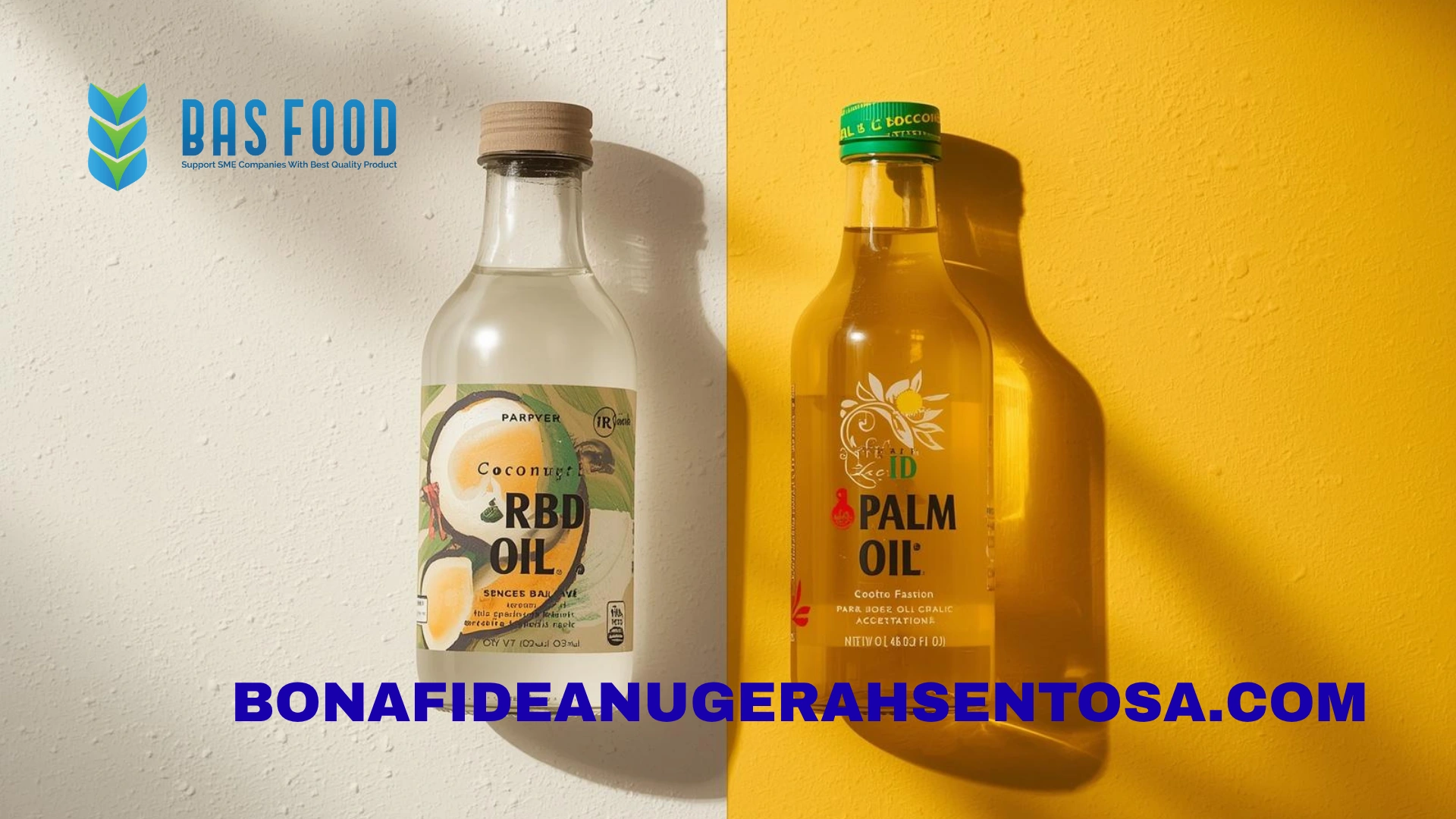
Understanding RBD Coconut Oil and Palm Oil: Composition and Processing
What Is RBD Coconut Oil?
RBD coconut oil stands for refined, bleached, and deodorized coconut oil. It is derived from dried coconut meat and processed to remove impurities, color, and odor. The result is a clean, neutral oil suitable for various food and industrial applications.
One of the key characteristics of coconut oil is its high content of medium-chain triglycerides (MCTs). These fatty acids provide stability and make the oil resistant to oxidation. This is an important factor when analyzing RBD coconut oil vs palm oil.
In addition, RBD coconut oil has a relatively high melting point, which gives it a semi-solid form at room temperature in cooler climates. This property makes it useful in bakery and confectionery products.
What Is Palm Oil?
Palm oil is extracted from the fruit of oil palm trees. It is one of the most widely produced vegetable oils in the world due to its high yield and cost efficiency.
Palm oil contains a mix of saturated and unsaturated fats. It is naturally reddish due to carotene content, but it is often refined for commercial use. Like coconut oil, it is versatile and used in both food and non-food industries.
In any vegetable oil comparison, palm oil stands out for its scalability and affordability. However, its functional properties differ from coconut oil, which affects its performance in certain applications.
Cost Comparison: Evaluating Price vs Value
Production and Supply Factors
When comparing RBD coconut oil vs palm oil, cost is often the first consideration. Palm oil generally has a lower price due to its high production efficiency. Oil palm trees produce more oil per hectare than coconut trees, which reduces overall production costs.
As a result, palm oil is widely used in large-scale manufacturing where cost control is critical. It is especially popular in mass-market food products and industrial applications.
On the other hand, coconut oil production is more labor-intensive. This leads to higher prices. However, the value of coconut oil lies in its functionality and market positioning.
Cost vs Functional Value
While palm oil may be cheaper, it is not always the better option. In some applications, RBD coconut oil offers superior performance. This can reduce waste, improve product quality, and extend shelf life.
Therefore, a proper vegetable oil comparison should focus on total value rather than just price. In many cases, businesses find that investing in higher-quality oil leads to better long-term results.
In addition, coconut oil is often positioned as a premium product. This allows brands to target higher-value markets and increase profit margins.
Functional Performance: How Each Oil Behaves in Processing
Heat Stability and Oxidation Resistance
One of the most important factors in RBD coconut oil vs palm oil is heat stability. Coconut oil has excellent resistance to oxidation due to its high saturated fat content.
This makes it ideal for frying and high-temperature cooking. It produces fewer harmful compounds compared to some other oils.
Palm oil also performs well under heat. However, its oxidation resistance is slightly lower than coconut oil. This difference may affect shelf life and product stability in certain applications.
Texture and Product Consistency
Texture is another key consideration. Coconut oil provides a smooth and creamy texture, which is beneficial in bakery and confectionery products.
Palm oil, in contrast, has a more solid structure. It is often used to create firmness in products like margarine and spreads.
When evaluating food oil alternatives, manufacturers must consider how each oil affects the final product. The choice depends on the desired texture and consistency.
Applications in Food Industry: Matching Oil to Purpose
Where RBD Coconut Oil Performs Best
RBD coconut oil is widely used in premium food products. Its neutral taste and high stability make it suitable for:
- Baked goods
- Dairy alternatives
- Snack foods
- Confectionery
In addition, it is popular in health-focused products due to its MCT content. This gives it a strong position among food oil alternatives.
Where Palm Oil Dominates
Palm oil is commonly used in large-scale food production. Its cost efficiency and functional properties make it ideal for:
- Processed foods
- Instant noodles
- Margarine and spreads
- Frying applications
In the context of RBD coconut oil vs palm oil, palm oil often wins in cost-driven markets. However, coconut oil offers advantages in premium segments.
Sustainability and Market Perception
Environmental Considerations
Sustainability is becoming a key factor in purchasing decisions. Palm oil has faced criticism due to deforestation concerns. However, certified sustainable palm oil is now available.
Coconut oil, on the other hand, is often perceived as more environmentally friendly. However, it also has challenges related to productivity and supply chain efficiency.
A balanced vegetable oil comparison should consider both environmental impact and sourcing practices.
Consumer Trends and Branding Opportunities
Consumer perception plays a major role in product success. Coconut oil is often associated with health and natural products. This makes it attractive for premium branding.
Palm oil, while widely used, does not always carry the same positive image. Therefore, brands targeting health-conscious consumers may prefer coconut oil.
This trend highlights the importance of choosing the right food oil alternatives based on target market preferences.
Strategic Decision-Making: How to Choose the Right Oil
Aligning Oil Selection with Business Goals
Choosing between RBD coconut oil vs palm oil depends on your business objectives. If cost reduction is the priority, palm oil may be the better option.
However, if product quality and brand positioning are more important, coconut oil offers significant advantages.
Therefore, businesses should evaluate their goals, target market, and product requirements before making a decision.
Working with Reliable Suppliers
Supplier selection is critical in ensuring consistent quality. Whether you choose coconut oil or palm oil, working with experienced exporters ensures reliable supply and compliance with international standards.
A good supplier provides transparency, quality assurance, and logistical support. This helps reduce risks and improve operational efficiency.
Conclusion: Balancing Cost and Function for Long-Term Success
The comparison between RBD coconut oil vs palm oil is not about choosing one over the other. Instead, it is about understanding their strengths and using them strategically.
Palm oil offers cost efficiency and scalability. Meanwhile, coconut oil provides superior stability and premium positioning. Both have important roles in the global market.
By conducting a thorough vegetable oil comparison and evaluating food oil alternatives, businesses can make informed decisions that support growth and profitability.
In the end, the right choice depends on your specific needs, market strategy, and long-term vision.