
When food manufacturers look for alternatives to refined sugar, they often find a long list of natural sweeteners. Palm sugar and maple syrup are two popular options, but they are not interchangeable ingredients. If you’ve ever wondered about palm sugar vs maple syrup, this article will help you understand the differences.
The palm sugar vs maple syrup comparison is especially useful for B2B buyers because the two sweeteners come from different plants, use different production methods, and have different physical properties. Palm sugar usually comes in solid, granulated, or powdered forms, while maple syrup is a liquid sweetener with a distinct flavor and color.
For product developers, choosing between them is not simply about which sweetener is “healthier” or more natural. The better question is: Which ingredient fits the product, formulation, processing method, cost target, and consumer expectations?
In this guide, we will compare palm sugar and maple syrup from a practical B2B perspective. We will look at their origins, production, flavor, texture, applications, storage, sourcing, and how they compare with other natural sweeteners such as honey and agave.
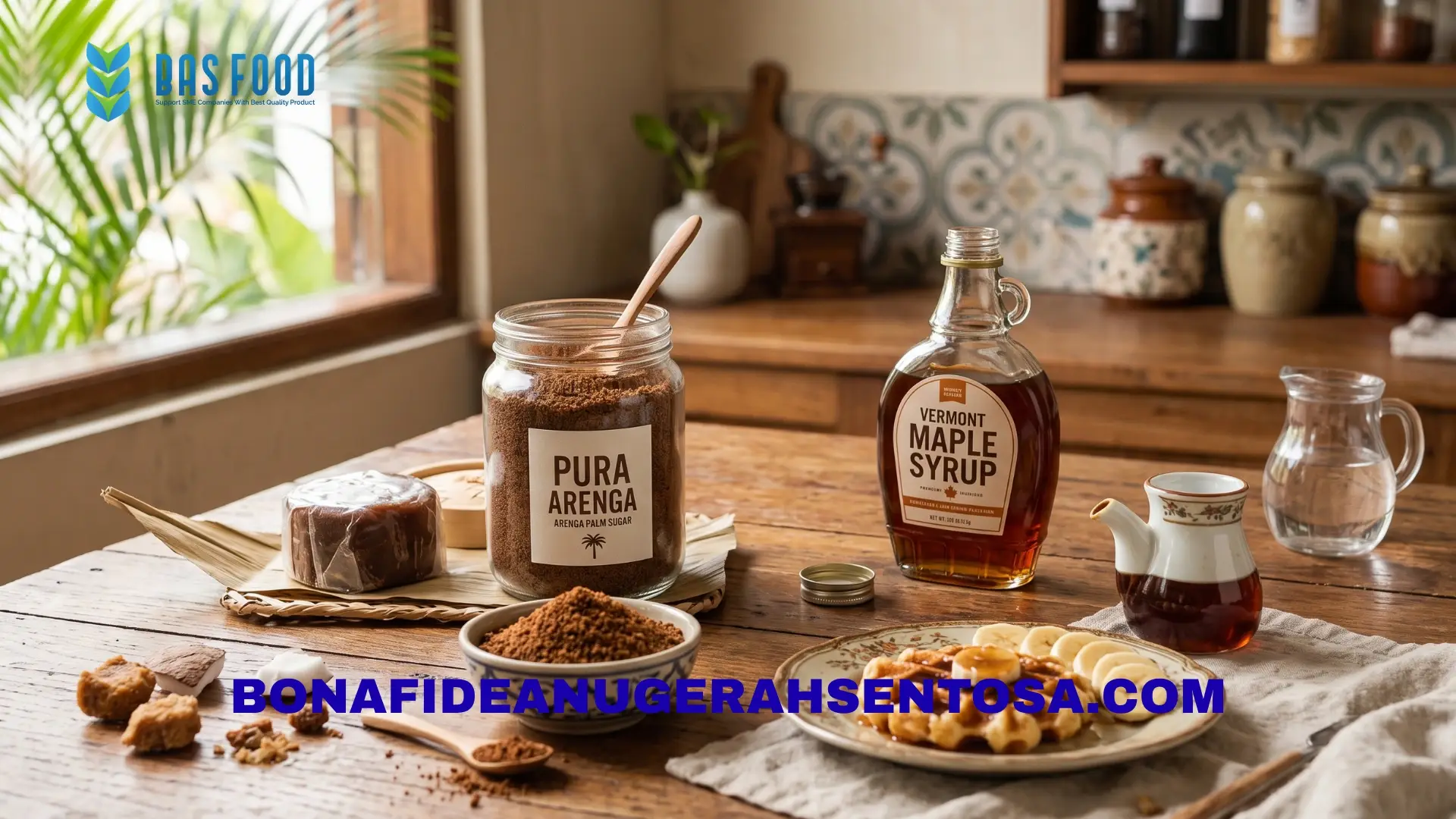
Palm Sugar vs Maple Syrup: Where Do They Come From?
The first major difference in the palm sugar vs maple syrup discussion is their botanical origin. Palm sugar is produced from sap collected from certain palm species. In Indonesia, palm-based sweeteners can come from palms such as the sugar palm, while coconut palm sap is used to produce coconut sugar.
Farmers collect the sap and then process it through controlled heating and concentration. The water gradually evaporates, leaving a concentrated sweet product. Depending on the production method, the final product can be molded, granulated, or powdered.
Maple syrup, on the other hand, comes from maple tree sap. Producers collect sap from suitable maple trees and then concentrate it by removing water. The result is a liquid syrup with its characteristic maple aroma and flavor.
So, although both products begin with plant sap, they come from different plants and develop very different characteristics during processing. This distinction is important when selecting ingredients for a commercial food product.
Palm Sugar at a Glance
Palm sugar is generally available in several forms:
- Molded or block palm sugar
- Granulated palm sugar
- Powdered palm sugar
- Crushed palm sugar
- Other customized forms
This variety gives manufacturers more flexibility, especially when they need a dry ingredient for blending, baking, or food processing.
Maple Syrup at a Glance
Maple syrup is primarily a liquid ingredient. Its natural viscosity and strong flavor make it particularly suitable for applications where a liquid sweetener is desirable.
Because of this difference alone, palm sugar and maple syrup can behave very differently in a food formula.
How Palm Sugar and Maple Syrup Are Produced
Production methods play a major role in the final characteristics of each sweetener.
Palm sugar production begins with fresh palm sap. Farmers collect the sap and send it for processing as quickly and carefully as practical. The sap is filtered or otherwise prepared before heating and concentration.
During cooking, the processor removes water and concentrates the natural sugars. The exact heating process can influence the final color, aroma, moisture, and texture.
Maple syrup follows a different production system. Maple sap is collected from trees and then concentrated until it reaches the required syrup characteristics. Modern maple production often uses controlled equipment designed to improve efficiency and consistency.
Both production systems require careful management. However, the agricultural environment, harvesting techniques, equipment, and processing traditions are very different.
For B2B buyers, this matters because the production method can influence supply availability, product specifications, and sourcing requirements.
Palm Sugar vs Maple Syrup: Flavor and Aroma
Flavor is one of the clearest differences between the two ingredients.
Palm sugar typically has a warm, caramel-like sweetness with earthy or roasted notes. The exact flavor can vary according to the palm species, sap characteristics, processing method, and degree of concentration.
This flavor works particularly well in products that benefit from a deeper sweet profile. It can complement coffee, chocolate, coconut, spices, bakery products, sauces, and desserts.
Maple syrup has a more recognizable maple flavor. Depending on its grade and production characteristics, the flavor can range from relatively delicate to more pronounced and robust.
That makes maple syrup highly useful when the maple character itself is part of the product experience.
For manufacturers, this distinction is important. If a recipe needs a noticeable maple flavor, palm sugar may not provide the same sensory result. Conversely, if a product needs a warm caramel-like sweetness without a strong maple identity, palm sugar may be a more suitable option.
Texture and Physical Form Matter in Food Manufacturing
Another important point in the palm sugar vs maple syrup comparison is physical form.
Palm sugar is generally a dry ingredient when supplied as granules or powder. This makes it convenient for manufacturers that use dry blending systems or need a solid sweetener.
For example, granulated palm sugar can be used in bakery mixes, dry beverage formulations, cereal products, snack products, and other applications where a dry ingredient is preferred.
Maple syrup is liquid. Therefore, manufacturers need to account for its water content and viscosity when developing a formula.
This difference can affect mixing, dosing, packaging, transportation, and storage.
A product developer cannot simply replace a dry palm sugar ingredient with maple syrup at the same weight and expect the formula to behave in the same way. The liquid content changes the overall formulation.
Therefore, ingredient substitution should always involve testing.
Palm Sugar vs Maple Syrup in Baking
Both sweeteners can work well in bakery products, but they behave differently.
Palm sugar granules or powder can be incorporated into cookie, cake, bread, muffin, and other bakery formulations as part of the dry ingredient system.
Its deeper flavor can work especially well with ingredients such as chocolate, cinnamon, ginger, coconut, nuts, coffee, and warm spices.
Maple syrup can also work beautifully in baking, particularly when the product is designed around maple flavor. However, because it is liquid, the formulation may need adjustment.
A baker or food manufacturer may need to consider the additional liquid introduced by maple syrup. The amount of flour, other liquids, and sweetener may need to change depending on the recipe.
This is why B2B buyers should evaluate sweeteners based on function, not just sweetness.
Palm Sugar vs Maple Syrup in Beverages
The beverage sector provides another interesting comparison.
Palm sugar can be used in coffee, tea, ready-to-drink beverages, plant-based drinks, beverage concentrates, and powdered drink mixes. Granulated or powdered formats can be useful when manufacturers need a dry sweetening ingredient.
Its caramel-like flavor can also complement coffee and cocoa. This makes palm sugar interesting for specialty beverage products that want a more distinctive sweetness profile.
Maple syrup can be useful in liquid beverages and flavored drinks, especially when the brand wants maple to be part of the sensory identity.
However, beverage manufacturers need to consider solubility, viscosity, flavor intensity, formulation stability, and packaging.
The best ingredient therefore depends on the beverage concept. A coffee drink may benefit from palm sugar’s deeper sweetness, while a maple-flavored drink may need maple syrup specifically.
Palm Sugar vs Maple Syrup: Nutrition Needs Context
Natural sweeteners are often marketed as healthier alternatives to refined sugar. However, B2B buyers should be careful with broad health claims.
Palm sugar and maple syrup are both sources of sugars and should not automatically be treated as “healthy foods” simply because they come from natural plant sources.
Their nutrient profiles can differ, and both products may contain small amounts of minerals or other naturally occurring compounds. However, these differences do not mean that either ingredient should be consumed without considering total sugar intake.
For manufacturers, it is better to focus on accurate product information rather than making exaggerated claims.
When creating a food label, nutrition information and health-related statements should follow the requirements of the destination market.
This is particularly important for exporters selling ingredients to multiple countries because labeling rules can differ.
Palm Sugar vs Honey: How Do They Compare?
A palm sugar vs honey comparison is another useful part of a broader natural sweetener comparison.
Honey is produced by bees from flower nectar. It is naturally a liquid or semi-liquid ingredient and has its own flavor profile based partly on floral sources and production conditions.
Palm sugar comes from plant sap and is generally available as a solid sweetener. Its flavor is often deeper and more caramel-like.
For manufacturers, the physical difference is important. Honey introduces moisture and can affect texture and water activity in a formulation, while dry palm sugar behaves more like a dry sugar ingredient.
Honey may be preferred for products where floral flavor or liquid sweetness is desirable. Palm sugar may be more practical when a manufacturer wants a dry sweetener with a rich, caramel-like profile.
Again, neither is automatically “better.” The application determines the better choice.
Palm Sugar vs Agave: Another Natural Sweetener Comparison
The palm sugar vs agave comparison highlights another major difference in ingredient functionality.
Agave sweeteners are generally sold as liquid syrups. Their mild flavor can make them useful in beverages, sauces, dressings, and other liquid or semi-liquid products.
Palm sugar is commonly available in solid forms. Granulated and powdered palm sugar can fit into dry formulations much more easily.
Therefore, a manufacturer deciding between palm sugar and agave should consider the final product structure.
If the formula already contains significant liquid, a syrup may be convenient. However, if the formulation requires a dry ingredient, palm sugar may be easier to incorporate.
The desired flavor also matters. Palm sugar can contribute more noticeable caramel and earthy notes, while agave is often selected when a relatively neutral sweetening profile is preferred.
Palm Sugar vs Maple Syrup for Food Manufacturers
For food manufacturers, the decision should begin with the product’s technical requirements.
Consider a cookie manufacturer. A dry palm sugar ingredient can be added to the dry mixing stage and contribute both sweetness and color. Maple syrup, meanwhile, adds liquid and may require formula adjustment.
Now consider a pancake topping. Maple syrup has an obvious advantage because its liquid format and maple flavor fit the application naturally.
For a coffee product, both may have potential. Palm sugar can provide a caramel-like sweetness, while maple syrup can provide a recognizable maple note.
This demonstrates an important sourcing principle: the best sweetener is application-specific.
Manufacturers should test ingredients in the finished formulation instead of choosing solely based on marketing claims or ingredient trends.
Sourcing Palm Sugar From Indonesia
Indonesia is an important origin for palm-based sweeteners. The country’s agricultural landscape supports palm sugar production through networks of farmers and processors.
However, B2B buyers should understand that agricultural products can naturally vary. Climate, raw material conditions, processing practices, and seasonal factors can influence supply.
This makes supplier selection important.
An experienced palm sugar exporter should be able to explain product specifications, packaging options, quality controls, documentation, lead times, and available forms.
Buyers should also request samples before approving larger orders. A sample can help product-development teams test flavor, color, dissolution, and performance in the actual application.
Palm Sugar vs Maple Syrup for Export Procurement
From an international procurement perspective, logistics can influence the choice between the two sweeteners.
Palm sugar is available in dry forms, which can make it practical for bulk ingredient shipments. Maple syrup is liquid and requires packaging designed to contain and protect a liquid product.
Storage conditions also differ.
Palm sugar needs protection from moisture, especially in granulated and powdered forms. Maple syrup requires appropriate handling for a liquid food product.
Packaging, container loading, transportation conditions, and warehouse storage should therefore be discussed before purchase.
For a food manufacturer, the ingredient cost is only one part of total sourcing cost. Freight, packaging, storage, handling, and potential formulation adjustments can all influence the final economics.
Can Palm Sugar Replace Maple Syrup?
In some applications, palm sugar may replace maple syrup, but it is not a direct one-to-one substitution.
The biggest issue is physical form. Palm sugar is usually dry, while maple syrup contains liquid. Replacing a syrup with dry sugar changes the moisture balance of the recipe.
Flavor is another consideration. Palm sugar does not naturally provide the same maple flavor.
However, manufacturers may intentionally make this change when they want a different flavor profile or a dry sweetener format.
The formulation should then be redesigned and tested. Water, other liquids, sweetener quantity, baking time, texture, and flavor may all require adjustment.
For industrial food production, pilot trials are the safest way to determine whether the substitution works.
Which Sweetener Is Better for Your Product?
There is no universal winner in the palm sugar vs maple syrup debate.
Palm sugar may be a strong choice when a manufacturer wants:
- A dry natural sweetener
- Granulated or powdered formats
- Caramel-like flavor
- A Southeast Asian ingredient story
- Applications such as bakery, beverages, sauces, snacks, and confectionery
- Flexible bulk packaging options
Maple syrup may be more suitable when a manufacturer wants:
- A liquid sweetener
- Distinctive maple flavor
- Topping applications
- Maple-focused beverages
- Liquid formulations
Meanwhile, honey and agave can offer different characteristics again.
The right approach is to compare ingredients based on function, formulation, flavor, cost, supply, and target consumer, rather than relying on a simple “natural versus refined” comparison.
Final Verdict: Palm Sugar or Maple Syrup?
The palm sugar vs maple syrup comparison shows that both sweeteners have a place in modern food production, but they serve different purposes.
Palm sugar offers a rich, caramel-like flavor and can be supplied in convenient dry formats such as granules and powder. These characteristics make it attractive to food manufacturers that need a versatile dry sweetener.
Maple syrup offers a distinctive maple flavor and liquid format. It can be particularly valuable when maple is part of the product identity.
For B2B buyers, the best decision starts with the application. Define the product requirements, test samples, compare specifications, review supply reliability, and calculate the total sourcing cost.
If palm sugar fits the formulation, working with a capable palm sugar supplier or palm sugar exporter can help manufacturers develop a reliable supply chain.
For businesses that also source coconut-based ingredients, a qualified coconut sugar supplier may provide another option for developing products with a natural, caramel-like sweetening profile.
Ultimately, the smartest procurement decision is not about finding the “best” natural sweetener. It is about finding the ingredient that performs best for the product you are trying to make.