
The beverage industry is evolving faster than ever. Consumers today are looking for drinks made with simple, recognizable ingredients that offer authentic flavor and a more natural image. As a result, beverage manufacturers are moving beyond refined white sugar and exploring alternative sweeteners that fit modern consumer preferences. One ingredient gaining significant attention is palm sugar for beverages. Palm sugar has become a preferred choice for many beverage brands because it provides balanced sweetness, a rich caramel flavor, and excellent versatility. Whether used in ready-to-drink tea, specialty coffee, fruit juices, smoothies, or functional beverages, palm sugar helps create products with a unique taste while supporting clean and natural ingredient lists.
For importers, beverage manufacturers, distributors, and wholesalers, selecting the right sweetener is more than choosing a source of sweetness. The sweetener influences flavor, production efficiency, product stability, and consumer appeal. Understanding how palm sugar performs in different beverage applications helps businesses develop products that stand out in competitive global markets.
This guide explores everything you need to know about palm sugar for beverages, including its role as a natural beverage sweetener, its performance in tea, coffee, and juice manufacturing, and why working with an experienced palm sugar supplier or trusted coconut sugar supplier Indonesia supports long-term business success.
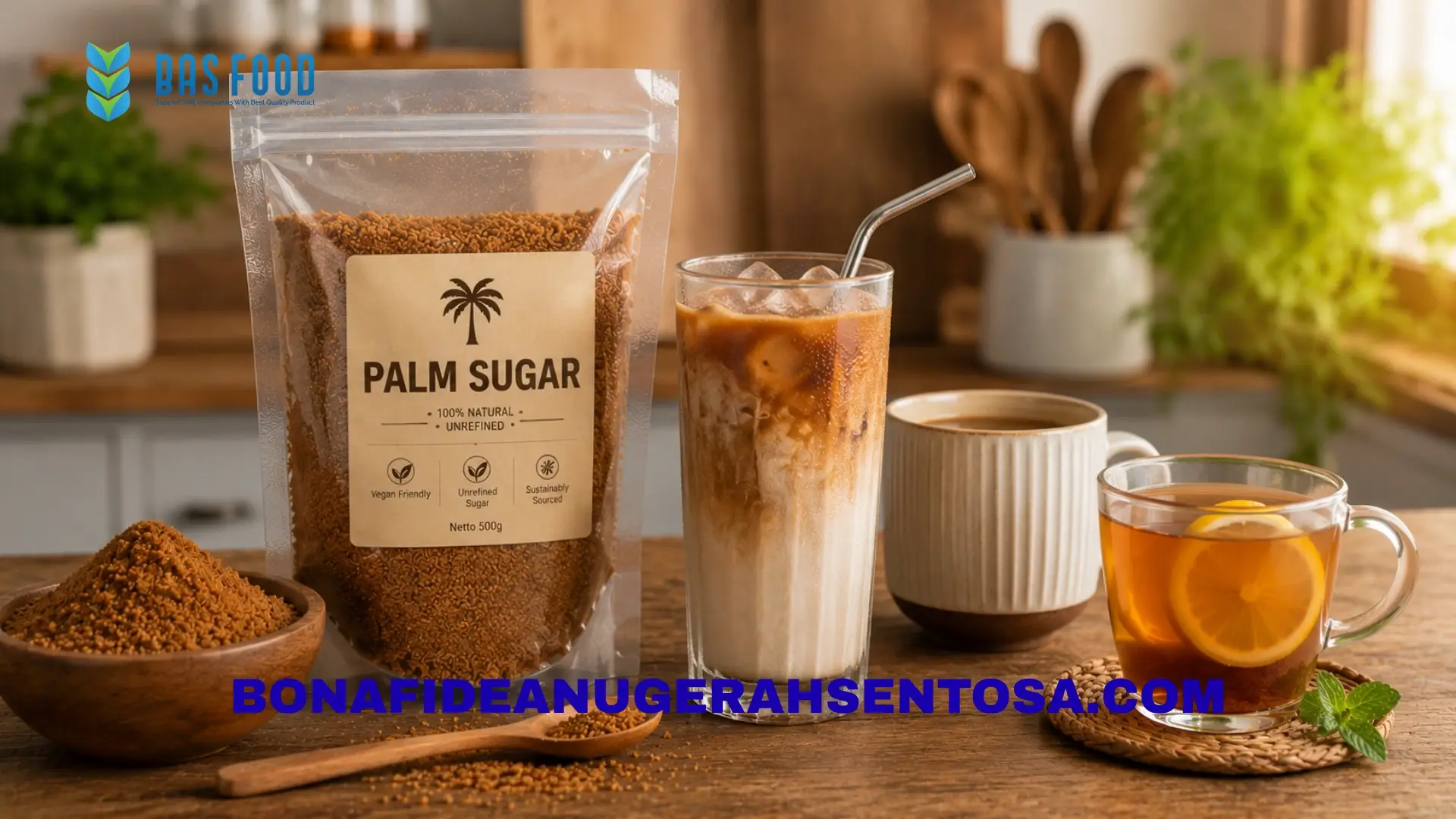
Why Natural Sweeteners Are Changing the Beverage Industry
Consumer expectations have changed dramatically over the past decade.
People increasingly read ingredient labels before purchasing drinks. They often prefer products made with recognizable ingredients rather than highly refined or artificial alternatives.
This growing interest has encouraged beverage companies to reformulate existing products and develop entirely new beverage categories using natural ingredients.
Palm sugar fits well into this trend because it offers pleasant sweetness with minimal processing. It also provides a distinctive flavor that helps beverages stand apart from products sweetened only with refined sugar.
As premium beverages continue gaining popularity, natural sweeteners have become valuable tools for product innovation.
Manufacturers are no longer creating drinks that are simply sweet. Instead, they focus on delivering complete flavor experiences, and palm sugar contributes to that objective.
What Makes Palm Sugar an Excellent Beverage Sweetener?
Every sweetener behaves differently during beverage production.
Palm sugar offers several characteristics that make it an excellent beverage sweetener for commercial manufacturing.
First, it delivers balanced sweetness instead of an overly sharp sugar taste. This allows other ingredients, such as tea leaves, coffee beans, fruits, herbs, or spices, to remain noticeable.
Second, palm sugar contributes gentle caramel notes that naturally enhance beverage flavor without overpowering the recipe.
Third, manufacturers can source palm sugar in several forms, including granules, powder, blocks, syrup, and liquid concentrates, allowing them to choose the most suitable format for their production systems.
These qualities explain why beverage companies increasingly include palm sugar in both traditional and innovative drink formulations.
Palm Sugar in Tea: A Perfect Flavor Partnership
Tea is one of the world’s most consumed beverages, making ingredient selection especially important.
Palm sugar complements many tea varieties because its sweetness remains smooth and balanced.
Black tea develops additional richness when paired with palm sugar’s subtle caramel notes.
Green tea benefits from a softer sweetness that does not dominate its delicate flavor.
Herbal teas also pair well with palm sugar because it blends naturally with botanical ingredients such as ginger, lemongrass, cinnamon, mint, and flowers.
Many ready-to-drink tea manufacturers choose palm sugar because it creates beverages with a warm, authentic flavor profile that appeals to modern consumers.
Its versatility also supports both hot and cold tea applications.
Coffee and Palm Sugar Create a Richer Drinking Experience
Coffee and palm sugar have complemented each other for generations.
The natural caramel flavor of palm sugar enhances roasted coffee notes while providing balanced sweetness.
Specialty cafés often appreciate palm sugar because it contributes flavor complexity rather than simply increasing sweetness.
For commercial coffee manufacturers, palm sugar works well in:
- Ready-to-drink coffee
- Instant coffee mixes
- Coffee concentrates
- Coffee syrups
- Cold brew beverages
- Plant-based coffee drinks
Depending on the product formulation, manufacturers may select powdered, granulated, or liquid palm sugar to achieve the desired production efficiency.
Its compatibility with coffee continues to make it one of the most versatile natural sweeteners available.
Palm Sugar in Juice Manufacturing
Fruit beverages require careful sweetener selection because excessive sweetness can overpower natural fruit flavors.
Palm sugar provides gentle sweetness that supports rather than masks fruit characteristics.
This makes it particularly suitable for juice manufacturing.
Manufacturers use palm sugar in beverages containing:
- Mango
- Pineapple
- Orange
- Lemon
- Apple
- Berry
- Tropical fruit blends
Palm sugar also blends well with vegetable juices and functional beverages that include herbs, botanical extracts, or natural ingredients.
Its balanced sweetness allows fruit flavors to remain the focus of the beverage.
This contributes to a more natural drinking experience that many consumers appreciate.
Different Palm Sugar Forms for Beverage Production
Not every beverage requires the same type of palm sugar.
Manufacturers choose different product forms depending on production methods.
Common options include:
- Granulated palm sugar
- Fine granules
- Powdered palm sugar
- Palm sugar syrup
- Palm sugar liquid concentrate
Powdered products dissolve rapidly and are often selected for instant beverage mixes.
Granulated products work well in brewing applications and many liquid formulations.
Liquid palm sugar simplifies blending in continuous production systems.
An experienced supplier can recommend the most appropriate specification based on equipment, production volume, and finished product requirements.
Flavor Benefits Beyond Simple Sweetness
Palm sugar contributes much more than sweetness alone.
Its naturally rich flavor profile enhances beverages by adding mild caramel notes and subtle depth.
This allows manufacturers to create premium drinks with more distinctive taste.
Unlike neutral refined sugar, palm sugar becomes part of the beverage’s flavor experience.
Consumers often describe beverages made with palm sugar as smoother and more rounded.
These sensory characteristics help beverage brands differentiate themselves in competitive retail markets.
Flavor has become one of the strongest reasons companies continue adopting palm sugar in new product development.
Quality Standards Beverage Manufacturers Should Consider
Consistent ingredient quality is essential for beverage production.
Reliable suppliers maintain standardized quality control systems throughout manufacturing.
Important quality factors include:
- Moisture content
- Particle size
- Flavor consistency
- Color
- Aroma
- Solubility
- Product cleanliness
- Packaging integrity
Beverage manufacturers should also request product specifications and samples before commercial purchases.
Testing ingredients under actual production conditions helps verify compatibility with existing formulations.
Strong quality control reduces production variability while supporting consistent finished products.
Packaging and Export Solutions for Beverage Companies
Packaging plays a critical role in protecting palm sugar during transportation and storage.
Professional exporters provide packaging options suitable for both industrial manufacturers and retail businesses.
Common packaging formats include:
- Kraft paper bags
- Food-grade inner liners
- Bulk bags
- Industrial sacks
- Retail pouches
- Private label packaging
- OEM packaging
Proper moisture protection helps preserve product quality throughout international transportation.
Reliable packaging also improves warehouse handling and production efficiency after delivery.
Professional exporters customize packaging according to customer requirements and destination markets.
Choosing the Right Palm Sugar Supplier
Finding an experienced palm sugar supplier is one of the most important sourcing decisions for beverage manufacturers.
Reliable suppliers provide more than competitive pricing.
They also offer:
- Consistent production quality
- Flexible product specifications
- Customized particle sizes
- OEM manufacturing
- Private label services
- Technical documentation
- Export expertise
- Reliable communication
Long-term supplier relationships improve production planning while reducing sourcing risks.
Professional suppliers understand beverage manufacturing requirements and can recommend suitable product specifications for different applications.
Why Global Buyers Choose a Coconut Sugar Supplier Indonesia
Many beverage companies also source natural sweeteners from a trusted coconut sugar supplier Indonesia because Indonesian manufacturers have extensive experience producing both coconut sugar and palm sugar for export markets.
Indonesia’s tropical climate supports abundant palm and coconut resources, while generations of skilled farmers continue traditional sap harvesting practices.
Modern Indonesian processing facilities combine this agricultural heritage with standardized production systems and strict quality management.
Export-oriented manufacturers provide customized product specifications, flexible packaging solutions, OEM services, and reliable international shipping.
These strengths have made Indonesia one of the world’s leading suppliers of natural sweeteners for the global beverage industry.
Building Long-Term Success in Beverage Manufacturing
Developing successful beverages requires more than selecting a sweetener.
Manufacturers should evaluate supplier consistency, production capacity, technical support, packaging options, and export experience before placing commercial orders.
Regular communication with suppliers also supports product innovation as consumer preferences continue to evolve.
Testing product samples, reviewing technical specifications, and planning future demand help create stronger supply chains.
Long-term partnerships with experienced exporters provide greater stability while supporting continuous product improvement.
Conclusion
The increasing popularity of palm sugar for beverages reflects the beverage industry’s growing focus on natural ingredients, authentic flavor, and premium product development. As a versatile beverage sweetener, palm sugar performs exceptionally well in tea, coffee, and juice manufacturing, while also supporting a wide variety of functional and specialty drinks.
Its balanced sweetness, gentle caramel flavor, and flexible product forms make it an excellent choice for manufacturers seeking to create beverages with distinctive taste and broad consumer appeal.
By partnering with a reliable palm sugar supplier or experienced coconut sugar supplier Indonesia, importers and beverage companies gain access to consistent product quality, customized specifications, professional export support, and dependable long-term supply. Choosing the right sweetener today can help brands create innovative beverages that meet the expectations of tomorrow’s global consumers.