
Finding a reliable gula melaka blok supplier is an important step for importers, food manufacturers, wholesalers, distributors, and businesses that use traditional palm sugar. Although gula melaka blok may look like a simple sweetener, its quality, raw materials, production methods, and consistency can influence the final taste and performance of many food products. Today, international buyers have more reasons to explore traditional palm sugar from Southeast Asia. Food manufacturers use it in beverages, sauces, bakery products, desserts, and traditional recipes. Meanwhile, distributors and retailers see opportunities to introduce authentic palm sugar products to new markets.
However, choosing a supplier involves more than comparing prices. Buyers need to understand the product, check its quality, review packaging options, and assess the supplier’s ability to support international orders.
In this guide, we explore what buyers should know before working with a gula melaka supplier and how to find a dependable business partner for long-term sourcing.
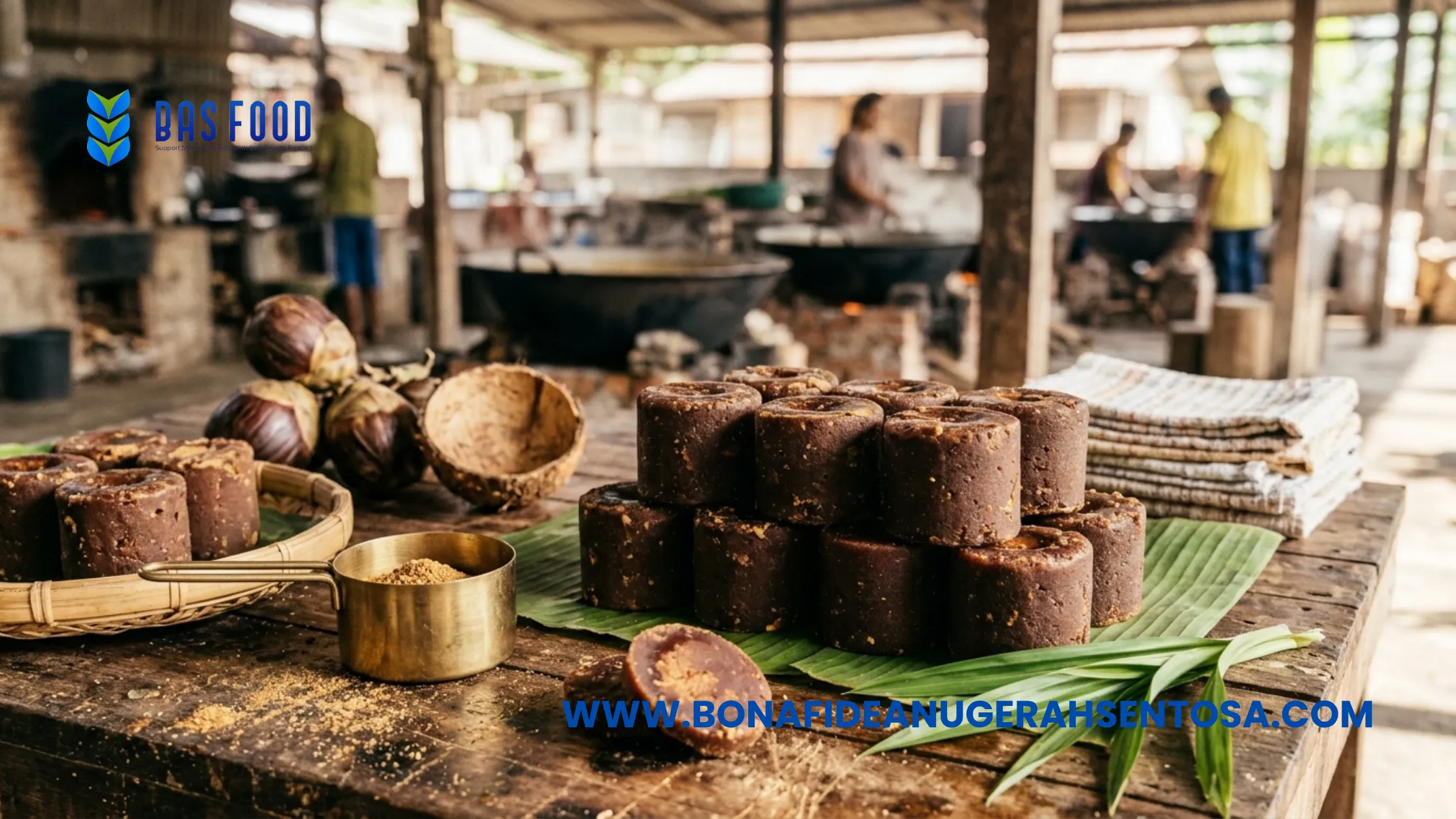
Understanding Gula Melaka Blok and Its Market Potential
Gula melaka blok is a traditional palm sugar product made by concentrating palm sap until it reaches a thick consistency. Producers then pour the concentrated sap into moulds and allow it to cool and solidify. The result is a firm block of palm sugar with a distinctive caramel-like aroma and a rich sweetness.
The term Gula Melaka is strongly associated with Malaysian food traditions. However, palm sugar products with similar names and characteristics are also available in other Southeast Asian markets. Their raw materials can differ depending on local traditions and production methods. Some products use coconut palm sap, while others may come from different palm species. Therefore, buyers should always confirm the botanical source and country of origin rather than relying on the product name alone.
Gula melaka blok has several potential applications in the food industry. Manufacturers can grate, slice, chop, or dissolve the blocks depending on their production requirements. Its characteristic flavor makes it suitable for traditional desserts, beverages, sauces, confectionery, and various sweet food preparations.
For international buyers, this product offers an opportunity to introduce traditional Southeast Asian ingredients to wider markets. As interest in regional flavors continues to grow, a dependable supplier can help businesses maintain product availability and consistent sourcing.
Why Choosing the Right Gula Melaka Blok Supplier Matters
A reliable gula melaka blok supplier can help businesses maintain consistent product quality across different orders. This is particularly important for food manufacturers that use palm sugar as a regular ingredient. Differences in color, texture, moisture, and flavor may affect the final product, especially when a recipe requires consistent results.
For example, a beverage manufacturer may need palm sugar with a predictable flavor profile to maintain the taste of its signature drinks. Similarly, a bakery or confectionery producer may require blocks that dissolve or blend properly during preparation. Working with a supplier who understands these requirements makes product evaluation and purchasing easier.
Furthermore, reliable suppliers can provide useful information about raw materials, production methods, packaging, and product specifications. These details help buyers assess whether the product meets their business requirements before placing larger orders.
Long-term supplier relationships also make procurement planning more practical. Once both parties understand the product requirements, packaging preferences, order schedules, and export documentation needs, communication becomes easier. As a result, businesses can focus more on production, distribution, and market development.
Important Quality Factors to Check Before Buying Gula Melaka Blok
Before selecting a gula melaka supplier, buyers should understand the basic characteristics of good-quality palm sugar. A visual inspection can provide useful initial information, but it should not replace proper product specifications or laboratory testing when required.
Color and appearance
Gula melaka blok can range from golden brown to darker brown, depending on the palm sap, concentration process, and production conditions. A darker color does not automatically indicate better quality, just as a lighter color does not necessarily mean the product is inferior.
Buyers should look for a reasonably consistent appearance within the agreed product specification. The blocks should also be free from visible foreign materials, unusual contamination, and signs of poor handling.
Texture and firmness
Texture is another important consideration. Some blocks may be relatively firm, while others may have a softer consistency depending on their formulation and moisture characteristics.
For manufacturers, the required texture depends on how they plan to process the product. A business that grates or chops palm sugar may have different requirements from one that dissolves it directly into a liquid preparation.
Aroma and flavor
Gula melaka is valued for its characteristic sweet aroma and caramel-like flavor. However, the exact flavor profile can vary according to the raw material and production process.
A clean, pleasant aroma is generally preferable. Buyers should investigate products with unusual sour, musty, or burnt odors because these may indicate problems with raw materials, processing, or storage.
Moisture and product consistency
Moisture content can influence the firmness, handling, and storage behavior of palm sugar blocks. Excessive moisture may contribute to sticky surfaces or changes in texture during storage.
However, moisture content and water activity are different measurements. Buyers who need technical assurance should request relevant product specifications and testing information rather than relying only on visual inspection.
Coconut Palm Sugar and Gula Melaka: Why Raw Material Identification Matters
When comparing suppliers, buyers may encounter several related product descriptions, including coconut palm sugar, palm sugar, and Gula Melaka. Although these names are sometimes used interchangeably in commercial discussions, they do not always describe exactly the same product.
Coconut palm sugar specifically refers to sugar produced from coconut palm sap. In contrast, Gula Melaka is a regional product name associated with Malaysian palm sugar traditions. Depending on the producer, products sold under this name may use coconut palm sap or other palm-based raw materials.
This distinction matters for importers and food manufacturers. Raw material identification affects product descriptions, ingredient declarations, origin information, and the accuracy of marketing claims. Therefore, buyers should confirm the palm species and production origin before purchasing.
A professional coconut sugar supplier should be able to explain the product’s raw material and provide information that supports its description. This is particularly useful for businesses that need accurate ingredient information for labels, technical documents, and international distribution.
If your business specifically requires coconut palm sugar, make that requirement clear during the quotation process. Do not assume that every Gula Melaka product automatically meets this specification.
What to Look for in an Indonesian Palm Sugar Supplier
Indonesia is one of the Southeast Asian countries with a long tradition of producing palm-based sweeteners. Its coconut-growing regions and traditional farming communities support the production of various coconut-derived products, including coconut sugar.
Working with an Indonesian palm sugar supplier can give international buyers access to products rooted in local agricultural practices. However, geographical origin alone does not guarantee quality. Buyers still need to evaluate the supplier’s product specifications, production practices, quality controls, and export readiness.
Here are several important factors to consider.
Product knowledge and transparency
A capable supplier should understand the products it offers. It should be able to explain the raw materials, production process, product characteristics, and available specifications.
Quality management
Ask how the supplier monitors product consistency and handles quality issues. Depending on the product and destination market, buyers may request samples, inspection records, or laboratory test results.
Communication and responsiveness
Clear communication helps prevent misunderstandings about specifications, quantities, packaging, and delivery schedules. A supplier should respond to questions and provide information that helps buyers make purchasing decisions.
Export experience
International shipments involve more than preparing the product. Suppliers and buyers must coordinate commercial documents, packaging requirements, shipping arrangements, and destination-market regulations.
A supplier familiar with export procedures can help make the purchasing process easier to manage. Nevertheless, importers should always confirm the applicable requirements with their customs broker and relevant authorities.
Why Importers Should Compare More Than the Purchase Price
Price is naturally an important consideration when selecting a gula melaka supplier. However, choosing the lowest quotation does not always result in the best purchasing decision.
A product with an attractive price may not meet the buyer’s required specifications. Differences in block size, weight, moisture, appearance, packaging, or raw material can influence the product’s suitability for a particular application.
For this reason, buyers should compare quotations using the same product requirements. For example, if two suppliers offer different raw materials or product specifications, their prices may not represent a fair comparison.
It is also important to consider the total landed cost. This may include:
- Product purchase price
- Export packaging costs
- Inland transportation
- Port and handling charges
- International freight
- Insurance, where applicable
- Import duties and taxes
- Customs clearance and destination handling
The applicable costs depend on the shipping arrangement, destination country, Incoterms, and import regulations.
By comparing the complete purchasing cost alongside product quality, buyers can make more informed sourcing decisions. This approach is especially useful for wholesalers and manufacturers that purchase palm sugar regularly.
Packaging, Storage, and Shipping Considerations
Packaging plays an important role in maintaining the condition of gula melaka blok during storage and transportation. Palm sugar can absorb moisture from its surroundings, so unsuitable packaging or exposure to humid conditions may affect its texture and handling characteristics.
For this reason, buyers should discuss packaging requirements with their supplier before confirming an order. The most suitable packaging depends on block dimensions, product condition, order quantity, transportation method, and destination requirements.
Depending on the supplier’s capabilities, possible packaging arrangements may include individual wrapping, inner food-contact packaging, and outer cartons. These are examples of formats to discuss, not guaranteed options from every supplier.
Storage conditions also matter. Gula melaka blocks should generally be kept in a clean, dry environment, protected from direct sunlight, excessive heat, humidity, and contamination. Buyers should follow the supplier’s product-specific storage instructions.
For international shipments, importers should also consider container cleanliness, cargo protection, loading conditions, and transit time. Packaging should be suitable for the expected shipping environment. If the product has specific temperature or humidity requirements, these should be agreed upon before shipment.
Finally, buyers should request product-specific shelf-life information. Shelf life should not be assumed from appearance or packaging alone. It should be supported by appropriate product evaluation and storage conditions.
CV Bonafide Anugerah Sentosa: Your Partner for Coconut Sugar Sourcing
For businesses looking for an Indonesian supplier of coconut-based products, CV Bonafide Anugerah Sentosa is an exporter to consider. The company supplies coconut sugar and other coconut derivative products to support the needs of international buyers.
As a coconut sugar exporter supplier, the company serves businesses interested in sourcing Indonesian coconut-based ingredients for wholesale, distribution, and food manufacturing. Its product focus makes it relevant to buyers exploring coconut sugar and related palm-based sweeteners.
When discussing a potential order, buyers should communicate their specific requirements. These may include the intended application, raw material preference, product form, quality specifications, packaging requirements, order quantity, and destination country.
It is also important to distinguish between a request for Gula Melaka and a request for coconut palm sugar. Since product names and raw materials can vary, buyers should confirm the exact product specification before proceeding. This helps ensure that the selected ingredient matches the intended use and commercial description.
A successful supplier relationship starts with clear communication. By discussing requirements early, buyers and suppliers can establish a more practical basis for sampling, quotation, quality evaluation, and export arrangements.
How to Start Working with a Gula Melaka Blok Supplier
Once you have identified a potential supplier, the next step is to organize your purchasing requirements. A clear product brief helps the supplier understand what you need and prepare a more accurate quotation.
Start by describing the product you want to purchase. Specify whether you need coconut palm sugar blocks or another type of Gula Melaka. If you have a preferred block size, weight, color, texture, or application, include those details as well.
Next, request a product sample and available specifications. Evaluate the sample based on your business requirements, especially if you plan to use it in a food manufacturing process. If necessary, arrange laboratory testing to verify relevant parameters.
After evaluating the product, discuss the commercial details. Confirm the price, MOQ, packaging, payment terms, lead time, shipping arrangement, and export documentation. Make sure both parties understand the agreed specifications before confirming the purchase order.
Finally, maintain communication after the first shipment. Share feedback about product condition, packaging performance, and consistency. This information can help both parties improve future orders and build a more dependable supply relationship.
Build a Reliable Palm Sugar Supply for Long-Term Business Growth
Finding the right gula melaka blok supplier is not simply about locating a business that can offer palm sugar at a competitive price. It involves finding a supplier that understands the product, communicates clearly, provides reliable specifications, and can support the buyer’s purchasing and export requirements.
For importers, wholesalers, and manufacturers, product consistency is essential. Raw material identification, quality evaluation, packaging, storage, and shipping arrangements all contribute to a successful sourcing process.
Whether you are looking for a gula melaka supplier, a palm sugar supplier, or a coconut sugar supplier, always confirm the product’s origin and specifications before placing an order. If you specifically require coconut palm sugar from Indonesia, working with an experienced Indonesian palm sugar supplier can help you explore suitable sourcing opportunities.
CV Bonafide Anugerah Sentosa welcomes inquiries from businesses interested in Indonesian coconut sugar and related products. By starting with clear requirements and product evaluation, your business can take the first step toward building a dependable supply relationship.