
Sauces can transform a simple meal into something memorable. From barbecue and dipping sauces to salad dressings and marinades, sweetness often plays an important role in balancing acidity, salt, spice, and savory flavors. For food manufacturers, however, choosing the right sweetener is not only about taste. It is also about consistency, processing, texture, mixing, and supply. This is where coconut sugar syrup for sauces can become an interesting ingredient option. As a liquid sweetener, it can support easier blending while bringing the characteristic flavor and color associated with coconut sugar. For manufacturers and ingredient buyers, the format can also simplify formulation when compared with handling a dry sweetener.
For B2B buyers, understanding how coconut sugar syrup works in sauce applications is essential before placing a commercial order. Product characteristics, viscosity, packaging, storage, specifications, and application requirements can all influence the final result.
This guide explores how coconut sugar syrup can be used in sauces, dressings, marinades, and other liquid food products. It also explains what buyers should consider when selecting a coconut sugar supplier or coconut sugar exporter supplier for international sourcing.
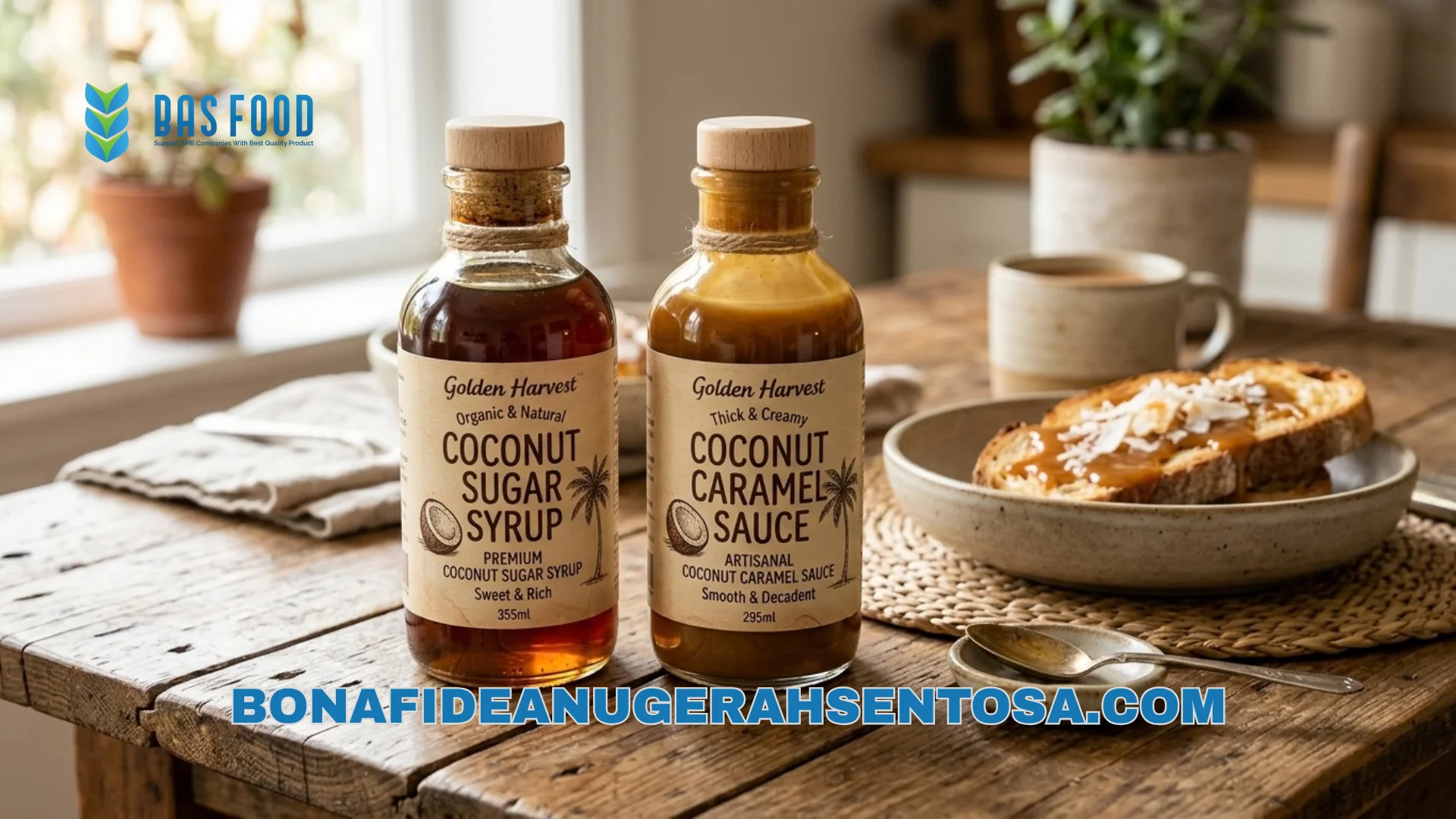
What Is Coconut Sugar Syrup for Sauces?
Coconut sugar syrup for sauces is a liquid sweetener based on coconut sugar that can be incorporated into various sauce formulations. Instead of adding a dry granulated ingredient and waiting for it to dissolve, food manufacturers can work with a liquid format that is already designed for easier incorporation into liquid or semi-liquid products.
This characteristic can be useful in industrial food production. Sauce manufacturers often work with multiple ingredients at the same time, including water, vinegar, spices, salt, oils, thickeners, and flavoring ingredients. A liquid sweetener can become part of this ingredient system without adding another dry powder that needs to dissolve during processing.
The flavor profile is another reason buyers may consider this ingredient. Coconut sugar commonly provides a deeper sweet taste with caramel-like and earthy notes. Depending on the formulation and processing method, these characteristics can complement sauces that already contain spices, fermented ingredients, vinegar, fruit, or savory components.
However, coconut sugar syrup should not be treated as a universal replacement for every sweetener. Each sauce has its own formulation requirements. Manufacturers should evaluate sweetness, viscosity, color, flavor, stability, and processing conditions before making a full-scale change.
Why Liquid Sweeteners Matter in Sauce Manufacturing
In sauce production, ingredient format matters almost as much as ingredient composition. Dry sugar can work well in many formulations, but it needs to dissolve properly. If the process does not provide enough mixing, heat, or liquid, undissolved particles may affect product consistency.
A syrup format offers a different approach. Because the sweetener is already in liquid form, it can be easier to distribute throughout a sauce during mixing. This can help manufacturers design more efficient production processes, especially when the formulation already contains a significant liquid phase.
Moreover, liquid sweeteners can make dosing more convenient for certain production systems. Manufacturers can incorporate the syrup according to their formulation and equipment requirements. Nevertheless, the actual dosing system should be evaluated against the syrup’s viscosity and the plant’s existing processing equipment.
For large-scale production, consistency is particularly important. A sauce may be produced in hundreds or thousands of kilograms per batch. Therefore, even small differences in ingredient behavior can influence the final product. Buyers should discuss specifications and batch consistency with their supplier before commercial production.
How Coconut Sugar Syrup Works as a Sauce Ingredient
As one of the many possible sauce ingredients, coconut sugar syrup can provide sweetness while contributing flavor and color. This makes it potentially useful in sauces where the sweetener is expected to do more than simply increase sweetness.
For example, a manufacturer may formulate a barbecue-style sauce with tomato, vinegar, spices, salt, and a sweetener. Coconut sugar syrup can contribute sweetness while complementing the richer flavor profile of the sauce. Similarly, it may work in certain dipping sauces where a balanced combination of sweet, salty, acidic, and spicy notes is important.
The same principle applies to marinades. A marinade may contain acidic ingredients, spices, salt, herbs, and sweeteners. The syrup format can make incorporation easier during blending, while the flavor can add another layer to the final formulation.
However, food formulation should always begin with the intended product profile. Manufacturers should not select an ingredient simply because it sounds attractive. Instead, they should evaluate how its sweetness, flavor, color, viscosity, and processing behavior fit the finished product.
Applications Across Sauces, Dressings, and Marinades
One of the advantages of coconut sugar syrup is its versatility. Different food manufacturers can explore different applications depending on their target market and product concept.
Barbecue and Grilling Sauces
Barbecue sauces often combine sweet, sour, savory, and spicy elements. Coconut sugar syrup can provide sweetness while complementing darker flavor profiles.
Its liquid format may also simplify integration during sauce blending. This can be useful when manufacturers need to combine the sweetener with tomato-based ingredients, vinegar, spices, and other liquid components.
Dipping Sauces
Dipping sauces can range from sweet and savory products to spicy formulations. Coconut sugar syrup may be considered when manufacturers want a liquid sweetener that integrates easily into the sauce base.
For example, a dipping sauce may combine chili, garlic, vinegar, salt, and sweetener. The final balance depends on the formulation, but coconut sugar syrup can be tested as part of that ingredient system.
Salad Dressings
The concept also extends to salad dressings. Many dressings use a combination of acidity, sweetness, oil, herbs, and spices.
Here, coconut sugar syrup can serve as a dressing sweetener. Its liquid format may help manufacturers incorporate sweetness into the dressing while avoiding the need to dissolve dry sugar separately.
Marinades
Marinades are another possible application. Sweeteners can help balance acidity and spices while contributing to the overall flavor profile.
For B2B manufacturers, the key is to test the syrup under actual production conditions. A small laboratory sample can show basic compatibility, but pilot-scale testing provides more useful information about mixing, viscosity, flavor, and processing behavior.
Coconut Sugar Syrup and Food Formulation
Successful food formulation requires more than selecting individual ingredients. Manufacturers need to understand how those ingredients interact with each other.
For coconut sugar syrup, several factors deserve attention. These include sweetness intensity, syrup concentration, viscosity, color, flavor, moisture contribution, and interaction with other ingredients. The importance of each factor depends on the type of sauce being developed.
For instance, a thin salad dressing may have different viscosity requirements from a thick barbecue sauce. A dipping sauce may require a specific flow behavior, while a marinade may need to remain easy to pump and distribute.
Therefore, buyers should communicate the intended application to their supplier. A supplier that understands the end use can provide more relevant product information and help buyers evaluate whether a particular syrup specification is appropriate.
Viscosity Matters
Viscosity can influence how easily a syrup moves through pumps, pipes, dosing equipment, and mixing systems. It can also affect how quickly the ingredient disperses within a formulation.
Because viscosity can vary depending on product characteristics and temperature, buyers should avoid assuming that every coconut sugar syrup behaves the same way.
Instead, ask for relevant product specifications and test the syrup under the conditions used in the production facility.
Color Can Affect the Final Product
Coconut sugar syrup can contribute color to a finished sauce. For some products, a deeper color may fit the desired appearance. For others, it may need to be carefully managed.
This is especially relevant for manufacturers developing lighter-colored dressings or sauces. Product developers should test the syrup at the intended inclusion level before finalizing the recipe.
Flavor Needs to Fit the Recipe
Sweeteners can influence more than sweetness. Their flavor profile can become part of the finished product.
Coconut sugar-based ingredients may provide characteristic caramel-like or earthy notes. These can work well in certain savory and sweet-savory formulations, but the final result depends on the rest of the recipe.
For this reason, sensory testing remains an important part of product development.
Choosing the Right Coconut Sugar Syrup Specification
Not every buyer needs the same syrup specification. A sauce manufacturer may have different requirements from a beverage producer or bakery ingredient buyer.
Before sourcing, manufacturers should create a clear product specification. This can include desired sweetness, viscosity range, color expectations, ingredient requirements, packaging format, application, and other quality parameters relevant to the product.
The supplier can then use this information to determine whether its standard product is suitable or whether further discussion is needed.
A useful specification process can include:
- Intended sauce or dressing application
- Target sweetness
- Desired viscosity
- Color expectations
- Flavor profile
- Packaging requirements
- Storage conditions
- Batch documentation
- Sampling requirements
- Order volume
- Destination market requirements
This approach makes procurement more efficient because both parties understand what the buyer actually needs.
Packaging and Storage Considerations for B2B Buyers
Packaging is an important part of ingredient sourcing. A high-quality syrup still needs suitable packaging to protect it during transportation, storage, and handling.
For international buyers, packaging should be considered from the beginning of the procurement process. The product may move through several stages before reaching the production facility, including factory handling, inland transportation, port operations, ocean freight, customs clearance, and destination warehousing.
The selected packaging format should therefore match the product characteristics and the buyer’s handling system. Food-contact suitability, secure sealing, durability, labeling, and ease of handling are important considerations.
Storage conditions should also follow the supplier’s product specifications. Buyers should avoid assuming that all liquid sweeteners have identical storage requirements. Instead, the supplier should provide appropriate handling and storage information for the specific product.
Working With a Coconut Sugar Exporter Supplier
A coconut sugar exporter supplier can provide an important link between producers and international food manufacturers. Export experience matters because international orders involve more than production.
The supplier needs to coordinate product preparation, packaging, documentation, logistics, and communication with overseas buyers. These activities can affect the overall purchasing experience.
For buyers, it is useful to work with a supplier that can clearly explain the product specification and export process. Buyers should also discuss order planning early, especially when they require customized packaging or specific product parameters.
At the same time, buyers should evaluate suppliers based on their own procurement requirements. There is no single sourcing model that fits every company. A food manufacturer with regular container-scale demand may have different requirements from a smaller sauce brand that is still testing its market.
Why Product Samples Matter Before Bulk Orders
Samples are particularly useful when purchasing coconut sugar syrup for a new sauce formulation. A technical specification can describe the product, but it cannot fully replace an actual formulation test.
With a sample, product developers can evaluate how the syrup behaves during mixing. They can also assess flavor, color, viscosity, and compatibility with other ingredients.
Ideally, the sample should be tested using a small version of the intended production process. This provides more useful information than simply tasting the syrup by itself.
Once the product passes the development stage, the buyer can move toward a larger order with greater confidence. The final commercial specification should then be clearly documented so both buyer and supplier understand the agreed product requirements.
Sourcing Coconut Sugar Syrup From Indonesia
Indonesia is an important origin for coconut-based agricultural products, including coconut sugar. For international food manufacturers, Indonesian suppliers can provide access to coconut-derived sweetener ingredients for different food applications.
However, origin alone should not determine a purchasing decision. Buyers should still evaluate the supplier’s product specifications, quality process, packaging, documentation, communication, and ability to fulfill commercial requirements.
CV Bonafide Anugerah Sentosa operates in the Indonesian agricultural commodity supply and export sector, including coconut-derived products. For buyers exploring coconut sugar syrup, communication with the supplier can help clarify available specifications, packaging options, sampling, and export requirements.
The most effective sourcing process starts with the application. Instead of simply asking for “coconut sugar syrup,” buyers can explain that the product will be used for barbecue sauce, salad dressing, dipping sauce, marinade, or another specific application. This gives the supplier useful context for the discussion.
Building a Better Sauce With the Right Sweetener
A successful sauce depends on balance. Sweetness must work together with acidity, salt, spice, aroma, texture, and other ingredients.
That is why choosing a sweetener should be part of the overall formulation strategy. Coconut sugar syrup can offer a practical liquid format for manufacturers looking to explore coconut sugar in sauces and dressings.
Still, the best result comes from testing. Manufacturers should evaluate the ingredient at different inclusion levels and under actual processing conditions. They should also consider the impact on viscosity, color, flavor, and final product consistency.
For B2B buyers, this approach reduces surprises when moving from product development to commercial production.
Final Thoughts: Is Coconut Sugar Syrup Suitable for Your Sauce?
Coconut sugar syrup for sauces offers food manufacturers an alternative way to incorporate coconut sugar into liquid and semi-liquid products. Its liquid format can support easier blending, while its characteristic flavor and color can contribute to selected sauce formulations.
It can be explored across barbecue sauces, dipping sauces, marinades, salad dressings, and other products where sweetness plays an important role. However, every formulation is different. Manufacturers should evaluate the syrup according to their own processing conditions and finished-product requirements.
For buyers, the next step is straightforward: define the application, establish the required specifications, request a sample, test the ingredient, and discuss commercial requirements with a suitable coconut sugar supplier or coconut sugar exporter supplier.
When the product specification, formulation, packaging, and supply process are aligned, coconut sugar syrup can become a practical ingredient for developing distinctive sauce products for local and international markets.