
Buying coconut sugar in bulk is an important decision for importers, food manufacturers, distributors, retailers, and foodservice businesses. A supplier may provide attractive product photos, specifications, and pricing, but those details do not always tell the whole story. This is why coconut sugar samples can play an important role in B2B sourcing. A physical sample allows buyers to see, smell, taste, handle, and test the product before committing to a larger purchase. It turns an initial supplier conversation into a practical product evaluation.
For international buyers, sampling is even more valuable. Coconut sugar may travel across borders and become part of a food or beverage product that requires consistent quality. A buyer needs confidence that the ingredient matches the expected specifications before arranging commercial shipments.
A good sample process should therefore be more than simply receiving a small bag of sugar. It should help the buyer compare products, evaluate technical characteristics, test applications, and communicate clear requirements to the supplier.
In this guide, we will explain why coconut sugar samples matter, what buyers should check, how to compare supplier samples, and how to prepare for a successful B2B coconut sugar purchase.
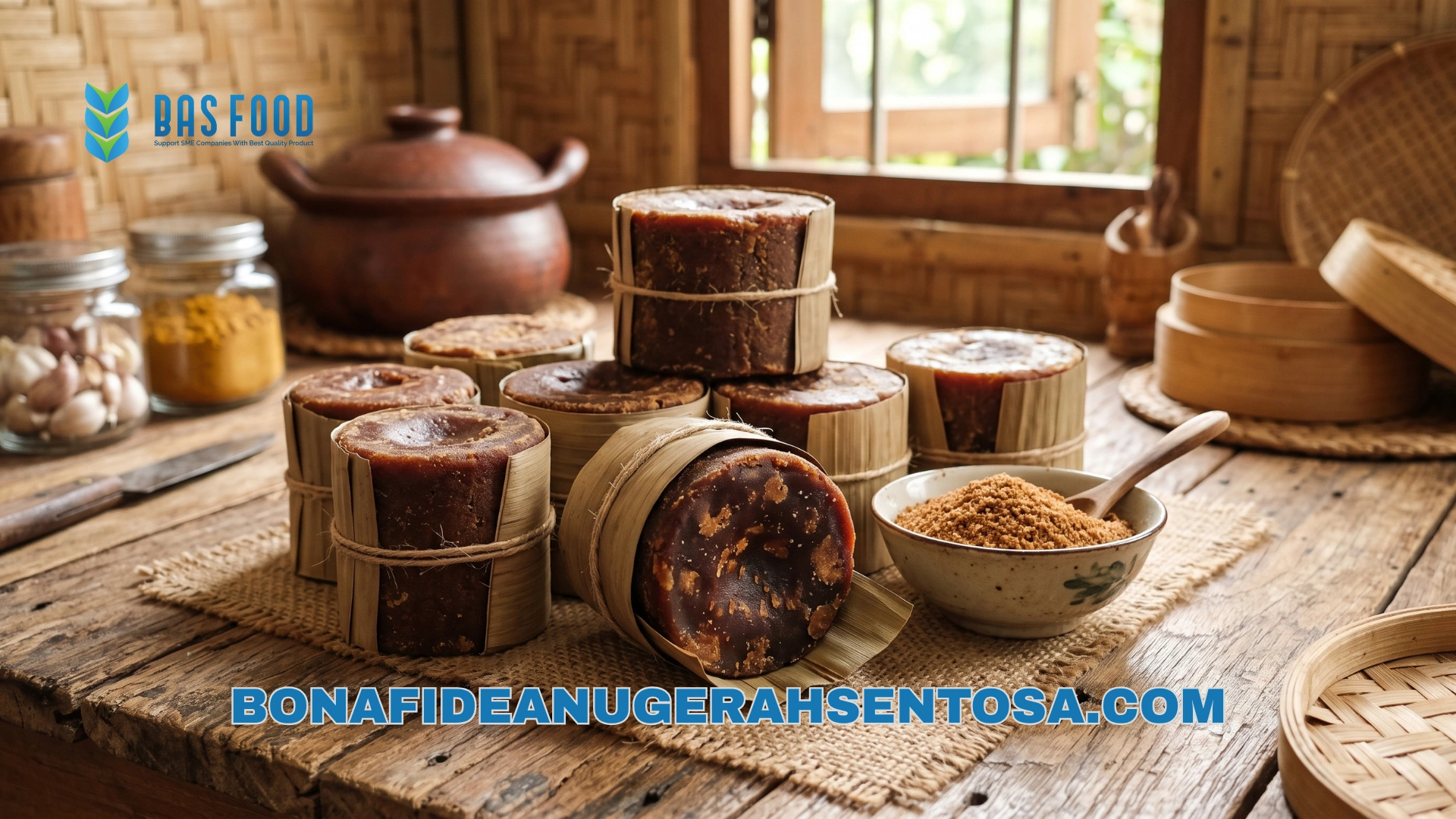
Why Coconut Sugar Samples Matter in B2B Sourcing
When purchasing food ingredients, product quality can have a direct effect on the finished product. Even if two suppliers use the same product name, their coconut sugar may differ in color, flavor, moisture, particle size, texture, and processing characteristics.
For this reason, relying only on a product description can be risky. A sample gives the buyer an opportunity to evaluate the actual ingredient before making a larger commitment.
For example, a chocolate manufacturer may need a particular granule size. A beverage company may care about how quickly the sugar dissolves. A retailer may focus on color, aroma, appearance, and packaging. Each business has different priorities.
Sampling Reduces Purchasing Risk
A sample cannot guarantee that every future shipment will be identical, but it provides a useful reference point.
Once the buyer approves a sample, the supplier and buyer can discuss the expected specifications for commercial production. This creates a clearer basis for future orders.
Sampling can also prevent costly misunderstandings.
Imagine importing several tons of coconut sugar only to discover that the color or particle size does not suit your production line. Testing a small quantity first is generally much easier than solving a large shipment problem later.
What Should a Coconut Sugar Sample Include?
A useful sample should give the buyer enough information to evaluate the product properly.
At the basic level, the sample should clearly identify the product and its format. For example, buyers may receive coconut sugar granules, powder, blocks, or another format.
The sample should ideally be accompanied by relevant coconut sugar specifications.
Depending on the product and supplier, these specifications may include information such as:
- Product name
- Physical format
- Color
- Moisture
- Granule or particle size
- Flavor and aroma
- Packaging format
- Net weight
- Shelf life
- Storage recommendations
- Origin
- Available certifications or quality documents
The exact specifications required will depend on the buyer’s application.
The Sample and Specification Should Match
One important point is that the physical sample and the written specifications should describe the same product.
If a buyer approves a sample of fine coconut sugar powder but later receives a much coarser product, the purchasing process can become complicated.
Therefore, buyers should keep the approved sample and product specifications as a reference.
For larger commercial relationships, the approved sample can become part of the buyer’s internal quality-control process.
How to Evaluate Coconut Sugar Samples
Receiving a sample is only the first step. The next step is evaluation.
A buyer should examine the product carefully rather than immediately deciding whether it is “good” or “bad.”
Start with the physical appearance.
Look at the color, particle consistency, and overall cleanliness of the product. If the product is granulated, check whether the particles appear reasonably consistent with the requested specification.
Then move to aroma and taste.
Coconut sugar can have a distinctive sweet and caramel-like character. However, the exact sensory profile can vary between products.
Create a Simple Evaluation Checklist
A basic sample evaluation can include:
Appearance:
Is the color suitable for your product?
Aroma:
Does the smell match your expectations?
Taste:
Is the sweetness and flavor suitable?
Texture:
Does the product have the expected particle size or structure?
Moisture behavior:
Does the product remain easy to handle under normal conditions?
Application performance:
Does it work in your actual recipe or production process?
This simple approach makes supplier comparison much easier.
Testing Samples in the Actual Product
One of the most important steps is application testing.
A coconut sugar sample may look excellent when evaluated on its own, but the real question is how it performs in the finished product.
For example, a coffee company should test the sample in its coffee formulation. A bakery should use it in an actual recipe. A chocolate manufacturer should evaluate it during chocolate production.
The test should follow the same basic process used for commercial production whenever possible.
Why Application Testing Matters
Different ingredients can behave differently when combined with other raw materials.
Coconut sugar may affect color, taste, texture, moisture, or processing behavior.
For instance, a bakery may find that one sample creates the desired color and flavor, while another produces a different result.
Similarly, a beverage manufacturer may need to test whether the sample dissolves and blends effectively.
Application testing turns a general product evaluation into a business decision based on real production needs.
Comparing Supplier Samples Fairly
Many B2B buyers request supplier samples from several companies before choosing a source.
This is a smart approach, but the comparison needs to be consistent.
If one supplier sends a fine powder and another sends coarse granules, the buyer cannot fairly compare the products unless both formats are suitable for the same application.
Therefore, buyers should provide the same product requirements to every supplier.
Use the Same Specification for Every Supplier
For example, a buyer might request:
- Same product format
- Similar particle size
- Similar packaging quantity
- Same intended application
- Same quality requirements
- Relevant technical documentation
Then the buyer can compare the samples using the same checklist.
Price should also be considered, but it should not be the only factor.
A slightly cheaper ingredient may become more expensive if it causes production problems, inconsistent results, or excessive waste.
Coconut Sugar Specifications Buyers Should Understand
Understanding coconut sugar specifications helps buyers make better purchasing decisions.
One important specification is moisture. Moisture can influence the physical condition and handling of coconut sugar.
Particle size is also important, particularly for food manufacturers.
A buyer producing powdered beverages may need a different format from a company using coconut sugar blocks in traditional recipes.
Color is another consideration. Coconut sugar naturally has a brown color, but the shade can vary depending on processing and product characteristics.
Why Specifications Support Consistency
Specifications provide a common language between buyer and supplier.
Instead of saying “I want a good-quality coconut sugar,” a buyer can communicate specific requirements.
For example:
“I need a granulated product with a defined particle range, suitable for beverage production, packed in bulk food-grade packaging.”
This is much clearer.
The more precise the requirements, the easier it becomes for the supplier to prepare a suitable product and for the buyer to evaluate future shipments.
Sampling Coconut Sugar Granules, Powder, and Blocks
Coconut sugar comes in several formats, and the sampling process can differ slightly for each one.
Granules are often evaluated based on particle size, color, texture, flavor, and application performance.
Powder may require additional attention to fineness, flowability, moisture, and blending behavior.
Blocks or moulded products can be evaluated based on shape, weight, hardness, color, texture, and ease of portioning.
Choosing the Right Sample Format
Buyers should request the format that matches their commercial application.
If the final product will use granulated coconut sugar, there is limited value in evaluating only a moulded sample.
Likewise, if a retail brand intends to sell traditional coconut sugar blocks, the buyer should inspect the actual block format and packaging.
For businesses working with a coconut sugar mould supplier, shape and dimensions can also become important specifications.
The sample should represent the product the buyer expects to purchase.
Why Sample Size Matters
Sample quantity does not need to be large, but it needs to be sufficient for meaningful testing.
A small amount may be enough for sensory evaluation.
However, manufacturers may need more material if they want to conduct several production trials.
For example, a chocolate manufacturer may need to test multiple formulations. A beverage company may need several batches. A bakery may want to compare the ingredient across different recipes.
Request Enough for Proper Testing
Before requesting samples, buyers should explain their intended application to the supplier.
This allows the supplier to understand why the sample is needed and what product format may be appropriate.
A professional B2B sourcing process should focus on useful testing rather than simply sending the smallest possible quantity.
The goal is to gather enough information to make a confident purchasing decision.
From Sample Approval to Commercial Order
Once a buyer approves a sample, the sourcing process can move toward a commercial order.
However, buyers should not assume that sample approval automatically covers every future shipment.
The commercial order should clearly state the agreed product requirements.
These may include product format, specifications, packaging, quantity, labeling, delivery terms, and other relevant requirements.
Keep the Approved Sample as a Reference
For long-term supply relationships, retaining the approved sample can be useful.
The buyer can compare future batches against the agreed reference when necessary.
It is also helpful to keep copies of the corresponding product specifications and purchasing documents.
This creates a clear record of what both sides agreed to.
For growing businesses, this documentation can become part of an internal quality-control system.
How International Buyers Can Evaluate an Indonesian Supplier
For international buyers, sourcing coconut sugar from Indonesia can provide access to a major coconut-producing region and established coconut-based food supply chains.
However, buyers should still conduct proper supplier evaluation.
Look at product consistency, communication, specifications, packaging, export experience, and the supplier’s ability to support commercial orders.
Samples provide an early opportunity to assess how professionally the supplier handles the sourcing process.
CV Bonafide Anugerah Sentosa
CV Bonafide Anugerah Sentosa is an Indonesian exporter and supplier of coconut sugar and other coconut-derived products.
For international B2B buyers, discussions can cover product formats, specifications, packaging, quantities, and export requirements.
When contacting a supplier, it is helpful to explain the intended application clearly.
A buyer looking for coconut sugar for coffee may need a different format from a manufacturer producing confectionery products or a retailer selling traditional coconut sugar.
Using Samples for Private Label and OEM Projects
Samples become especially important for businesses developing private-label or OEM products.
A brand owner may have a specific target for color, texture, flavor, packaging, and product format.
The sample provides a practical starting point for development.
For example, a retailer developing its own coconut sugar brand may want to compare several product formats before deciding whether to launch granules, powder, or moulded products.
Sample Testing Supports Product Development
OEM projects can involve several rounds of testing.
The first sample may establish the general direction.
The next sample may incorporate changes requested by the buyer.
Eventually, both parties can agree on a final specification.
This process helps reduce uncertainty before commercial production begins.
How Samples Can Help Build Long-Term Supply Relationships
Long-term B2B relationships are built on trust and consistency.
The sampling stage is often the first real test of that relationship.
A buyer can evaluate not only the product but also how quickly the supplier responds, how clearly the supplier communicates, and how well the supplier understands technical requirements.
These factors can matter just as much as the physical sample.
Consistency Is the Long-Term Goal
A successful sample is useful, but repeatable quality is the real objective.
Once the buyer approves a product, both sides should work toward maintaining the agreed specifications for future orders.
This is particularly important for food manufacturers whose recipes depend on consistent ingredients.
The supplier should understand that the sample represents the quality and characteristics the buyer expects to receive commercially.
Why Coconut Sugar Samples Are Worth the Effort
For B2B buyers, samples may seem like a small step, but they can have a significant impact on the purchasing decision.
They allow businesses to evaluate the real ingredient rather than relying entirely on descriptions or photographs.
They also create an opportunity to test the product in the buyer’s own production environment.
For importers, manufacturers, distributors, and retailers, this additional step can reduce sourcing uncertainty.
A Better Way to Buy Coconut Sugar
The most effective sourcing process is simple:
Define your requirements → Request relevant samples → Review specifications → Test the product → Compare suppliers → Approve the sample → Confirm commercial specifications → Place the order.
This process creates a clear path from initial inquiry to long-term supply.
It also helps both buyer and supplier understand exactly what is expected.
Final Thoughts: Start With a Sample, Build With Confidence
Coconut sugar samples are one of the most practical tools available to B2B buyers evaluating a new supplier.
A physical sample lets buyers examine the product’s appearance, flavor, texture, particle size, and performance. More importantly, it allows manufacturers to test the ingredient in their real recipes and production processes.
For international sourcing, the sample stage also provides an opportunity to evaluate the supplier’s communication, product documentation, packaging options, and ability to understand specific requirements.
Whether you need coconut sugar granules, powder, blocks, or a custom format, it is better to define the required product before requesting samples.
For buyers sourcing from Indonesia, CV Bonafide Anugerah Sentosa can be considered as a potential coconut sugar supplier for international B2B requirements.
Ultimately, a sample is more than a small package of sugar. It is a practical starting point for quality evaluation, product development, supplier comparison, and long-term business relationships.
When buyers test carefully, define clear coconut sugar specifications, and work with a supplier that can maintain those requirements, they can move from sample testing to commercial sourcing with much greater confidence.