
Coconut sugar is known for its rich flavor, natural brown color, and traditional production methods. However, one detail that often gets less attention is its physical form. Coconut sugar mould shapes can influence how the product is packaged, handled, sold, and used. For B2B buyers, mould shape is more than a visual feature. The size and shape of coconut sugar can affect portion control, packaging efficiency, storage, transportation, and the way consumers use the product. This makes mould design an important consideration for importers, distributors, food brands, restaurants, and manufacturers.
Coconut sugar can be formed into coconut sugar blocks, coconut sugar discs, coconut sugar cakes, and other shapes depending on production methods and buyer requirements. Some shapes follow traditional practices, while others are designed for modern retail or foodservice applications.
In this guide, we will explore the most common coconut sugar mould shapes, how moulding works, what buyers should consider when selecting a shape, and how to work with a reliable coconut sugar supplier.
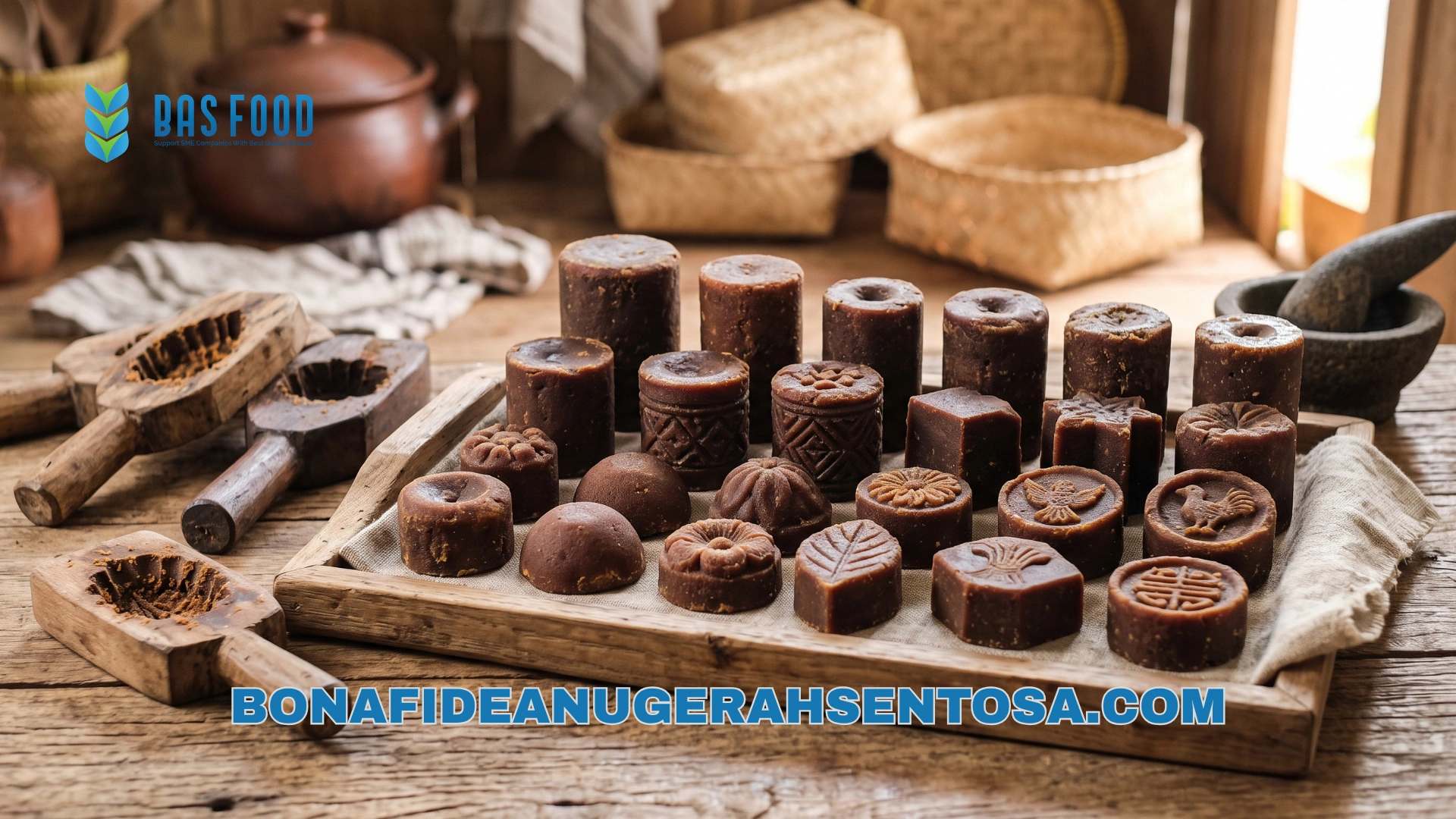
What Are Coconut Sugar Mould Shapes?
Coconut sugar mould shapes refer to the physical forms created when concentrated coconut sugar is poured or formed into moulds and allowed to set. The mould determines the final appearance and dimensions of the product.
Unlike granulated coconut sugar, which is processed into smaller particles, moulded sugar retains a solid shape. This makes it particularly useful for traditional markets, culinary applications, foodservice, and retail products where consumers prefer a solid portion of sugar.
The shape can be simple or customized. Common examples include round discs, small cakes, rectangular blocks, and other practical forms. The best choice depends on the intended market and application.
For B2B buyers, it is important to discuss the shape together with dimensions, weight, packaging, moisture protection, and handling requirements.
Why Mould Shape Matters for B2B Buyers
At first glance, the shape of coconut sugar may seem like a simple design decision. However, the shape can affect several parts of the supply chain.
For example, a manufacturer may need small portions for individual use, while a restaurant or foodservice distributor may prefer larger coconut sugar blocks for kitchen preparation. A retail brand may choose attractive shapes that fit its packaging and appeal to consumers.
Shape can also influence transportation. Products with consistent dimensions are generally easier to pack and arrange inside cartons or larger shipping units. Therefore, mould design should be considered before finalizing packaging.
A professional coconut sugar supplier should be able to discuss these requirements and help buyers determine a practical format.
Coconut Sugar Blocks: A Traditional and Practical Form
Coconut sugar blocks are one of the most recognizable forms of moulded coconut sugar. They are typically solid pieces formed into a defined shape and size.
Blocks are practical because they are easy to stack, package, and store. Their solid form also makes them suitable for traditional cooking applications where the sugar is broken, chopped, grated, or dissolved before use.
For B2B buyers, block dimensions can be an important specification. A buyer may need a particular weight per piece or a particular shape to fit existing packaging.
Why Buyers Choose Coconut Sugar Blocks
Blocks can offer a familiar traditional appearance. This can be particularly useful for brands that want to communicate an authentic or traditional product identity.
They can also work well for foodservice businesses. Chefs and food processors can break the required amount from a block according to the recipe.
However, the best block size depends on the intended application. Buyers should consider portion size, packaging, storage space, and handling before selecting the mould dimensions.
Coconut Sugar Discs: Compact and Easy to Portion
Coconut sugar discs are another common moulded format. Their round shape can make them convenient for portioning and packaging.
Disc-shaped sugar can work well for retail products because the individual pieces have a simple and recognizable appearance. The shape may also make it easy for consumers to handle and measure the product according to their needs.
For B2B buyers, the diameter, thickness, and weight of each disc can be specified. These details help manufacturers design suitable packaging.
Packaging Advantages of Coconut Sugar Discs
A consistent disc shape can simplify packing because every piece follows a similar dimension. This can help brands develop packaging that fits the product closely.
However, buyers should also consider whether the disc dimensions are suitable for the destination market. Packaging that works for a small retail unit may not be practical for foodservice or industrial distribution.
Therefore, mould dimensions should be discussed together with the packaging format from the beginning.
Coconut Sugar Cakes: A Traditional Product Format
Coconut sugar cakes are another way to describe moulded pieces of coconut sugar that have a cake-like or rounded solid form.
The term can vary between markets, so buyers should always provide a physical sample, drawing, photograph, or exact dimensions when ordering a specific shape.
This is particularly important for international trade. Different suppliers may interpret product names differently. A clear specification eliminates uncertainty.
Why Shape Specifications Matter
Instead of simply asking for “coconut sugar cakes,” a buyer can specify:
- Piece weight
- Diameter
- Height
- Shape
- Surface appearance
- Packaging format
- Number of pieces per package
- Number of packages per carton
- Carton dimensions
This makes the purchasing process much clearer.
How Moulded Sugar Is Made
The production of moulded sugar begins with coconut sap collected from coconut flower blossoms. The sap is handled and processed before being concentrated into coconut sugar.
Once the sugar reaches the appropriate processing stage, it can be formed into moulds. The mould determines the final shape and dimensions.
Production methods can vary between producers. Traditional producers may use simple moulding tools, while other facilities may use more standardized equipment for consistent size and weight.
The important point for B2B buyers is consistency. When ordering commercial quantities, the supplier should be able to maintain the agreed shape, dimensions, and approximate piece weight throughout production.
Traditional Coconut Sugar Moulds vs. Modern Moulds
Traditional coconut sugar production often uses simple moulds based on local practices. These moulds can produce familiar shapes that have been used for generations.
Modern production may use more standardized mould designs. These systems can help improve consistency in dimensions, weight, and packaging compatibility.
Neither approach is automatically better. The appropriate method depends on the product positioning and buyer requirements.
For a traditional food brand, the appearance of handmade-style moulded sugar may be an important part of the product identity. For a large retail or foodservice buyer, consistent dimensions may be more important.
Common Coconut Sugar Mould Shapes
There are many possible coconut sugar mould shapes, but several formats are especially practical for commercial use.
Round Shapes
Round moulds can produce discs, small cakes, or other circular pieces. They are visually simple and can work well for retail packaging.
Square Shapes
Square pieces can make efficient use of packaging space. They can also provide a clean, uniform appearance.
Rectangular Blocks
Rectangular blocks are useful when buyers want a larger solid piece. They can be suitable for foodservice or traditional culinary applications.
Small Portion Shapes
Smaller moulds can create individual portions. These can be useful for hospitality, foodservice, or consumer products where portion control matters.
Custom Shapes
Custom moulds can be developed for brands that want a distinctive appearance. However, custom production may require additional discussion about mould design, minimum order quantities, tooling, and production feasibility.
Custom Coconut Sugar Mould Shapes for Private Labels
Private-label brands sometimes want a product that looks different from standard market offerings. In such cases, custom coconut sugar mould shapes can become part of the brand identity.
A custom shape may include a special logo, geometric design, portion size, or distinctive silhouette. However, custom moulding requires careful planning.
The buyer should provide technical information such as drawings, dimensions, weight targets, and packaging requirements. A sample or prototype may also be useful before commercial production.
What to Consider Before Custom Moulding
Before requesting a custom mould, buyers should consider:
- Target piece weight
- Mould dimensions
- Product shape
- Packaging size
- Required production volume
- Tooling requirements
- Minimum order quantity
- Production lead time
- Storage requirements
- Shipping configuration
A custom design should not only look attractive. It should also be practical for production, packaging, logistics, and consumer use.
Coconut Sugar Mould Size and Piece Weight
Shape and size are closely connected. A mould with larger dimensions generally creates a larger piece, although the final weight also depends on the density and physical characteristics of the product.
For B2B purchasing, buyers should specify both dimensions and target weight when possible. This creates a clearer production standard.
For example, saying “small round coconut sugar” may not provide enough information. A better specification could define the diameter, approximate thickness, target weight, packaging format, and acceptable tolerance.
This level of detail is particularly useful for private-label brands and importers who need products to fit pre-designed packaging.
Coconut Sugar Shapes and Packaging
Packaging is one of the most important factors when choosing mould shapes. The product needs packaging that protects it while also presenting it attractively to customers.
Small discs may fit individual wrappers or retail pouches. Blocks may require larger inner packaging. Larger moulded products may need stronger cartons to prevent damage during transportation.
Packaging should also protect the product from moisture and other environmental factors. Coconut sugar can be affected by humidity, so suitable packaging and storage conditions are important.
Therefore, buyers should not select the mould shape first and think about packaging later. These two decisions should be developed together.
Coconut Sugar Mould Shapes for Different Markets
Different markets can have different expectations for coconut sugar products.
Traditional markets may prefer familiar coconut sugar blocks or discs. Retail consumers may prefer small, convenient pieces. Foodservice businesses may want larger blocks that can be used in commercial kitchens.
Meanwhile, premium brands may choose customized moulds to create a distinctive visual identity.
This means the best shape is not necessarily the most attractive one. The best shape is the one that matches the target market, distribution model, packaging, and end use.
For exporters, understanding the destination market can therefore help determine the most suitable product format.
Working With a Coconut Sugar Mould Supplier
A coconut sugar mould supplier can be particularly useful for buyers who need specific product shapes or custom designs.
However, buyers should first determine whether they need a standard mould or a custom mould. Standard shapes are usually simpler to source, while custom shapes require more planning.
For custom orders, communication is especially important. Buyers should provide drawings, measurements, weight targets, and packaging details where possible.
A professional supplier should also explain whether the requested design is practical for production. Not every shape will work equally well with every production process.
CV Bonafide Anugerah Sentosa and Moulded Coconut Sugar
CV Bonafide Anugerah Sentosa is an Indonesian exporter that can be considered by international buyers looking for coconut sugar and related products.
For buyers interested in moulded coconut sugar, the sourcing discussion should focus on the exact product specification. This includes the mould shape, dimensions, piece weight, packaging, quantity, and intended market.
Rather than relying only on product names such as “coconut sugar blocks” or “coconut sugar cakes,” buyers should communicate the exact physical requirements.
Sample approval can also help create a shared reference between the buyer and supplier before larger production begins.
Quality Control for Moulded Coconut Sugar
Shape is only one part of product quality. Buyers should also consider color, aroma, moisture, purity, texture, and overall consistency.
The moulded pieces should match the agreed product specification. Significant differences in size or weight can create packaging and portion-control problems.
Quality control should therefore cover both the product itself and the moulding process. Consistent mould dimensions can help create a more uniform finished product.
For export orders, buyers should also discuss packaging and storage requirements so the product remains protected during transportation.
Common Problems With Coconut Sugar Mould Shapes
One common problem is inconsistent piece size. If moulds are worn, poorly maintained, or used inconsistently, the finished pieces may vary.
Another problem is choosing a shape without considering packaging. A shape may look attractive but leave too much empty space inside a package, increasing packaging requirements and shipping inefficiency.
Custom moulds can also create additional costs. Buyers should discuss tooling, minimum order quantities, lead times, and production feasibility before approving a custom design.
Finally, unclear product descriptions can cause misunderstandings. Always use dimensions, weight, drawings, samples, or photographs when discussing a specific shape.
How to Choose the Best Coconut Sugar Mould Shape
The right mould shape depends on five main questions:
What is the target market?
Traditional consumers may prefer familiar shapes, while modern retail brands may want something more distinctive.
How will the product be used?
Foodservice and industrial users may need larger pieces, while retail products may benefit from smaller portions.
How will it be packaged?
The shape should fit efficiently into the intended packaging.
What production volume is required?
Custom moulds may make more sense for larger commercial orders.
What does the supplier already produce?
Using an existing mould can simplify sourcing compared with developing a completely new design.
Answering these questions makes the selection process much easier.
Final Thoughts on Coconut Sugar Mould Shapes
Coconut sugar mould shapes combine tradition, functionality, packaging, and product presentation. From familiar coconut sugar blocks to convenient coconut sugar discs and coconut sugar cakes, each shape can serve a different commercial purpose.
For B2B buyers, the most important point is to choose the shape based on the final application rather than appearance alone. Dimensions, piece weight, packaging, storage, logistics, and market expectations should all be considered.
If a standard shape meets the requirement, it can offer a straightforward sourcing solution. If a brand needs a unique product identity, custom moulded sugar may be worth exploring.
The key is clear communication. Define the dimensions, weight, shape, packaging, quantity, and quality requirements before production.
By working with a dependable coconut sugar supplier or coconut sugar mould supplier, buyers can develop a product format that is practical for production and attractive to the target market.
For international buyers considering Indonesian coconut sugar, CV Bonafide Anugerah Sentosa can be part of the sourcing conversation. A clear specification and sample approval process can help both buyer and supplier work toward a consistent commercial product.