
Coconut sugar blocks may look simple, but their packaging plays a major role in product quality, shelf life, logistics, and buyer satisfaction. For exporters, choosing the right coconut sugar block packaging is not simply about putting the product inside a box. The packaging needs to protect the sugar from moisture, physical damage, contamination, and changing storage conditions during transportation.
This becomes even more important when coconut sugar blocks travel across countries. A product that leaves Indonesia in good condition can face weeks of transportation, warehouse storage, temperature changes, and handling before reaching the final buyer. Therefore, packaging needs to be planned from the production stage to the final destination.
For importers, wholesalers, food manufacturers, retailers, and distributors, understanding packaging options can make purchasing decisions easier. The right packaging can also help reduce product loss and maintain the appearance and usability of coconut sugar blocks.
In this guide, we will explore how coconut sugar block packaging works, what materials are commonly used, how moulded sugar packaging differs from retail packaging, and what B2B buyers should consider when working with a coconut sugar supplier.
Why Coconut Sugar Block Packaging Matters
Coconut sugar blocks are made by concentrating coconut flower sap until it reaches the right consistency and then placing it into moulds. After cooling and setting, the sugar becomes a solid block that can be stored, transported, and processed further.
Because coconut sugar naturally contains moisture, packaging has an important protective role. Exposure to humid air can affect texture and may cause the surface to become sticky or softer. In addition, poor packaging can allow dust, insects, or other contaminants to reach the product.
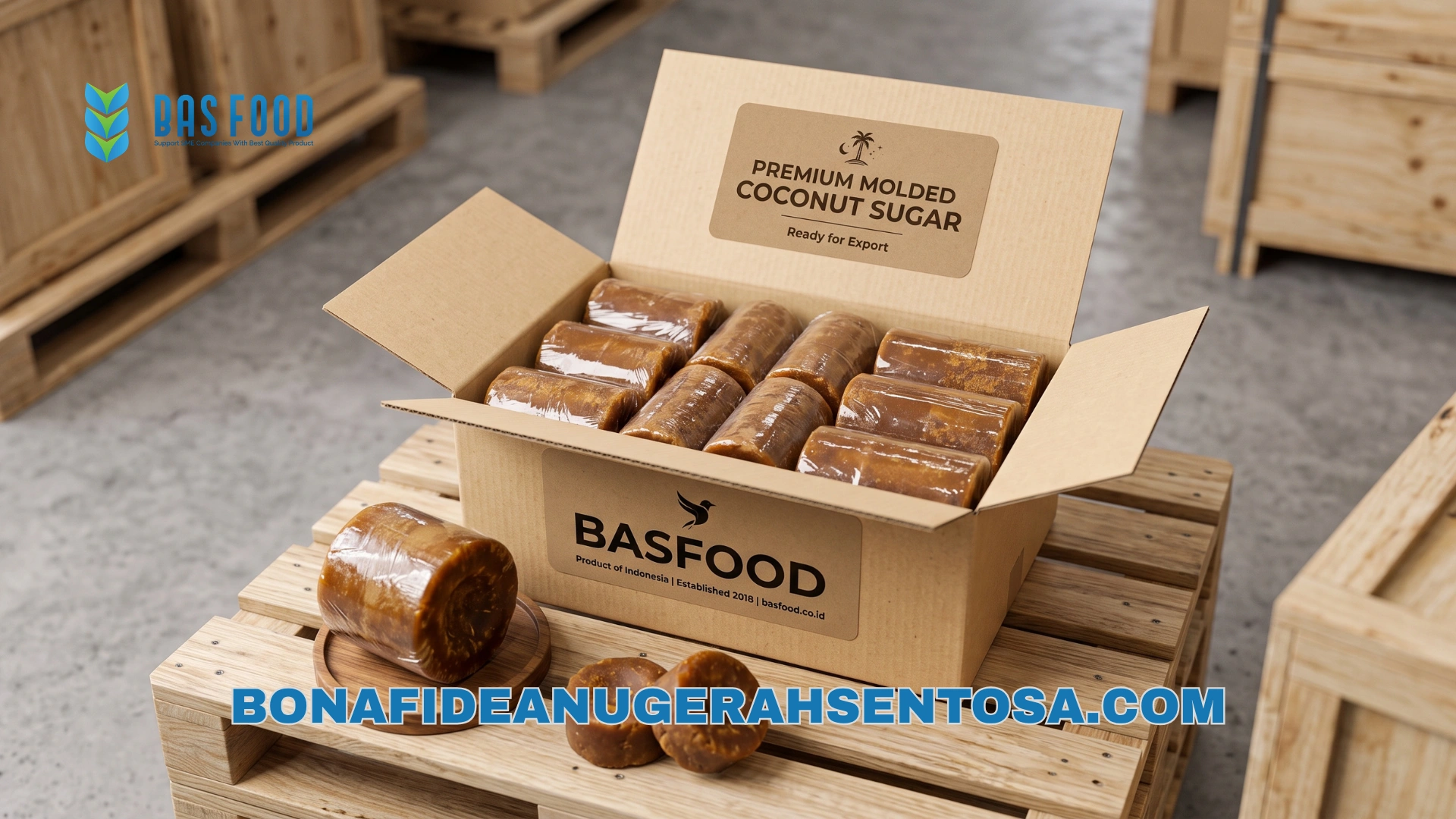
For exporters, packaging also has to handle transportation. Coconut sugar blocks can be packed into cartons, sacks, inner plastic bags, or other food-grade packaging depending on the customer’s requirements. Each layer serves a different purpose.
The inner layer generally protects the sugar from direct exposure to air and moisture. The outer packaging provides strength and makes the product easier to stack, move, and transport. Therefore, good coconut sugar block packaging usually involves more than one protective layer.
Packaging Is Part of Product Quality
When buyers evaluate coconut sugar, they do not only look at the sugar itself. They may also consider packaging condition, cleanliness, labeling, weight consistency, and ease of storage.
For example, a damaged carton can create problems even when the sugar inside is still usable. Similarly, packaging that does not provide sufficient moisture protection can affect the product during long-distance transportation.
That is why exporters should treat packaging as part of the product specification rather than an afterthought.
For a B2B buyer, this approach also makes procurement easier. When packaging requirements are clearly discussed before an order is produced, both supplier and buyer can reduce misunderstandings.
Understanding Moulded Sugar Packaging for Coconut Sugar Blocks
The first packaging consideration starts with the form of the sugar itself. Coconut sugar blocks are commonly produced using moulds that create a consistent shape. This makes the product easier to handle and pack.
Moulded sugar packaging should match the size and shape of the blocks. If the packaging is too large, the blocks can move around during transportation and become damaged. If it is too tight, removing the product can become inconvenient.
For B2B orders, packaging specifications may include the individual block weight, number of blocks per inner pack, carton size, total net weight, and gross weight. These details are especially useful when buyers need to calculate storage space or shipping costs.
The mould itself can also influence packaging requirements. A consistent mould creates blocks with similar dimensions, which helps improve packing efficiency. As a result, cooperation between a coconut sugar mould supplier and a packaging team can be valuable for manufacturers producing large quantities.
Why Consistency Helps Exporters
Imagine receiving a shipment where every coconut sugar block has a different size. It becomes harder to arrange the blocks inside cartons, calculate the number of units per package, and maintain a consistent retail appearance.
Consistent moulding solves part of this problem. Blocks with similar dimensions can be arranged more efficiently and usually require less empty space inside the packaging.
However, the packaging still needs enough protection to account for normal movement during transportation. A good packaging design balances product protection, material usage, shipping efficiency, and buyer requirements.
Choosing the Right Materials for Coconut Sugar Block Packaging
Material selection is one of the most important parts of packaging design. Coconut sugar block packaging should protect the product while remaining practical for the intended supply chain.
Food-grade plastic is commonly used as an inner protective layer because it can help reduce exposure to moisture and contaminants. The exact material and thickness should depend on the buyer’s specifications, intended storage conditions, and applicable food-contact requirements.
The outer layer can use stronger materials such as corrugated cartons or other suitable shipping packaging. The goal is to create a package that can withstand normal handling during loading, unloading, warehousing, and transportation.
For export shipments, packaging strength becomes even more important. Products may pass through multiple warehouses and transportation points before reaching the importer. Therefore, packaging should be selected based on the complete journey rather than only the factory-to-port stage.
Packaging Should Match the Supply Chain
A small domestic shipment does not necessarily need the same packaging configuration as a full container export.
For example, retail coconut sugar may require attractive consumer-facing packaging, while bulk B2B coconut sugar blocks may prioritize protection, efficiency, and easy handling.
This difference is important for exporters because one packaging format may not be suitable for every customer. A food manufacturer buying hundreds of kilograms may have completely different requirements from a retail distributor selling individual packs.
Therefore, suppliers should discuss packaging requirements early. Buyers should also provide clear specifications before production begins.
Export Packaging: Preparing Coconut Sugar for International Shipping
International transportation creates additional challenges. Coconut sugar can spend considerable time in transit before arriving at the destination country. During this period, the product may experience humidity, temperature changes, vibration, stacking pressure, and repeated handling.
This is why export packaging needs to focus on both product protection and logistics. Cartons should be strong enough for stacking, while inner packaging should provide an appropriate barrier against environmental exposure.
Export cartons should also be designed for efficient palletization when required. Efficient pallet arrangement can help reduce wasted space and improve warehouse handling.
For larger B2B shipments, buyers may also request specific carton dimensions or pallet configurations. These requirements can be connected to their warehouse systems, container loading plans, or distribution network.
Labeling Is Also Important
Packaging is not only physical protection. It can also carry important information.
Depending on the buyer and destination market, packaging may need information such as:
- Product name
- Net weight
- Gross weight
- Lot or batch number
- Production information
- Best-before information where applicable
- Country of origin
- Storage instructions
- Exporter or manufacturer information
- Customer-specific information
The exact requirements depend on the destination country and the buyer’s specifications. Therefore, exporters should confirm labeling requirements before printing packaging materials.
For B2B transactions, buyers may also request customized packaging or private-label arrangements. In such cases, artwork, barcode requirements, carton markings, and labeling information should be agreed upon before production.
Bulk Coconut Sugar Blocks vs Retail Coconut Sugar Packaging
Packaging requirements can change significantly depending on the target market. Retail coconut sugar generally needs packaging that looks attractive and is convenient for consumers.
Retail packs may use smaller quantities, resealable formats, printed designs, or branded labels. The package needs to communicate product information clearly while also protecting the sugar.
Bulk B2B packaging has a different purpose. Food manufacturers, bakeries, beverage companies, distributors, and wholesalers often care more about efficient handling, storage, product protection, and cost per kilogram.
For example, a food manufacturer may prefer larger inner packs inside strong cartons. A retailer, on the other hand, may need smaller consumer-ready units that can go directly onto shelves.
One Product, Different Packaging Strategies
This is why coconut sugar exporters should not assume that one packaging format works for every customer.
A supplier may offer coconut sugar blocks in bulk packaging for industrial buyers while also supporting smaller packaging configurations for distributors and retail businesses.
This flexibility can make the procurement process easier. Buyers can select packaging according to their business model instead of changing their operation to match a supplier’s standard packaging.
For B2B purchasing, it is useful to discuss the following points:
- Required block size
- Weight per block
- Units per inner package
- Inner packaging material
- Carton size
- Net and gross weight
- Label requirements
- Pallet requirements
- Private-label requirements
- Destination market
These details can help both parties create a clear packaging specification.
Moisture Protection and Storage Considerations
Moisture is one of the main issues that coconut sugar packaging needs to address. Coconut sugar is hygroscopic, which means it can interact with moisture from its surrounding environment.
When exposed to humid conditions, sugar can become softer or stickier. In some situations, this can affect handling and appearance. Therefore, appropriate packaging and storage conditions are important.
A well-designed package can help reduce exposure to external humidity, but packaging alone cannot solve every storage problem. Warehouses should also maintain suitable cleanliness, ventilation, and storage practices.
Coconut sugar should generally be stored in a clean, dry area away from direct exposure to water and excessive humidity. Packages should also remain properly sealed until the product is needed.
Packaging and Warehouse Practices Work Together
Even excellent packaging can be compromised by poor warehouse handling.
For example, cartons placed directly on a wet floor can absorb moisture. Packages stored near an open loading area may be exposed to rain or humid air. Damaged cartons can also reduce the protection provided by the outer layer.
Therefore, suppliers and buyers should think about packaging as part of a larger storage system.
For exporters, clear storage instructions can also help importers maintain product quality after arrival. This is particularly useful when the product will remain in a warehouse before distribution.
How a Coconut Sugar Supplier Can Support Custom Packaging
A professional coconut sugar supplier should be able to discuss packaging based on the customer’s actual requirements rather than offering only one fixed option.
For example, an importer may need bulk coconut sugar blocks packed for food manufacturing. Another customer may need smaller packs for retail distribution. A third buyer may want customized branding.
These requirements can often be discussed during the quotation stage. The supplier can then evaluate packaging materials, carton dimensions, quantities, labeling, and production requirements.
This is particularly important for international B2B buyers because changing packaging after production can be expensive and time-consuming.
Working With an Experienced Exporter
For buyers looking for Indonesian coconut sugar, CV Bonafide Anugerah Sentosa can be considered as an Indonesian exporter and supplier of coconut-based products.
Working directly with an exporter can provide buyers with a clearer communication channel for discussing product specifications, packaging requirements, shipment quantities, and documentation.
However, buyers should always provide their exact packaging requirements before confirming an order. Packaging specifications can vary significantly depending on the destination market and intended application.
A strong B2B relationship starts with clear specifications. Product form, block size, packaging material, carton configuration, labeling, and shipping requirements should all be discussed before production.
How to Choose the Best Coconut Sugar Block Packaging
There is no single packaging format that is perfect for every coconut sugar buyer. The best choice depends on the product, market, transportation method, storage environment, and final customer.
Start by identifying the purpose of the product. Is it going to a food manufacturer, wholesaler, distributor, restaurant supplier, or retail store? The answer will influence the appropriate packaging format.
Next, consider transportation. If the product will be shipped internationally, packaging needs to withstand longer handling and storage conditions than a product delivered locally.
Buyers should also consider how the product will be stored after arrival. If the importer operates in a humid environment, moisture protection becomes especially important.
Sustainable Packaging Trends for Coconut Sugar Exporters
Sustainability is becoming increasingly relevant in international food supply chains. Many buyers now consider packaging waste alongside product quality and price.
For coconut sugar exporters, this creates an opportunity to review packaging materials and reduce unnecessary layers without compromising food safety or product protection.
However, sustainability should not mean removing protective packaging simply to reduce material use. If a weaker package causes product damage, the environmental and financial costs can become greater.
Instead, exporters can look at the complete packaging system. This may include optimizing carton sizes, reducing empty space, selecting suitable materials, and improving pallet efficiency.
Balancing Protection and Sustainability
The most practical approach is to balance three goals: product protection, logistics efficiency, and responsible material use.
For example, a carton that is unnecessarily large may use more material and require more transportation space. A properly sized carton can reduce empty space while improving handling efficiency.
Similarly, packaging should be strong enough for the expected shipping conditions. The right balance can help exporters meet buyer expectations while maintaining product quality.
As international buyers increasingly ask about sustainability, suppliers that can clearly explain their packaging choices may have an advantage during procurement discussions.
Building a Better Coconut Sugar Packaging Strategy
Good coconut sugar block packaging starts with understanding the entire journey of the product. From moulding at the production site to final storage at the buyer’s warehouse, every stage can influence packaging requirements.
For B2B buyers, packaging should be discussed as part of the purchasing specification. This includes block dimensions, inner packaging, outer cartons, labeling, palletization, and destination requirements.
At the same time, exporters need to understand that packaging is not only about appearance. It protects product quality, supports logistics, simplifies handling, and helps buyers manage inventory.
Whether the product is intended for industrial processing, wholesale distribution, or retail coconut sugar, the packaging should match its final purpose.
For importers searching for a reliable coconut sugar supplier, clear communication is one of the most important factors. Discuss the product form, packaging format, order volume, labeling, destination, and shipping requirements before confirming production.
Ultimately, the right packaging helps create a smoother supply chain. It protects the coconut sugar, supports efficient transportation, and gives buyers greater confidence in every shipment.