
Coconut sugar syrup is becoming an interesting ingredient for food manufacturers, beverage companies, bakeries, cafés, and private-label brands looking for a distinctive liquid sweetener. Unlike refined liquid sugar, coconut sugar syrup offers a deeper color and a characteristic flavor that can add more than sweetness to a finished product. However, choosing a suitable syrup for commercial use involves more than checking whether it tastes sweet. Buyers need to understand the coconut sugar syrup characteristics that influence handling, processing, storage, packaging, and final product quality.
Properties such as syrup viscosity, coconut syrup color, syrup texture, and flavor profile can vary depending on the raw material, processing method, concentration, filtration, and storage conditions. Therefore, understanding these characteristics helps importers and food manufacturers select a product that fits their application.
For businesses sourcing from Indonesia, working with an experienced coconut sugar exporter supplier can also make the procurement process easier. A reliable coconut sugar supplier should be able to explain product specifications, processing practices, packaging options, and quality controls before a commercial order is placed.
What Is Coconut Sugar Syrup?
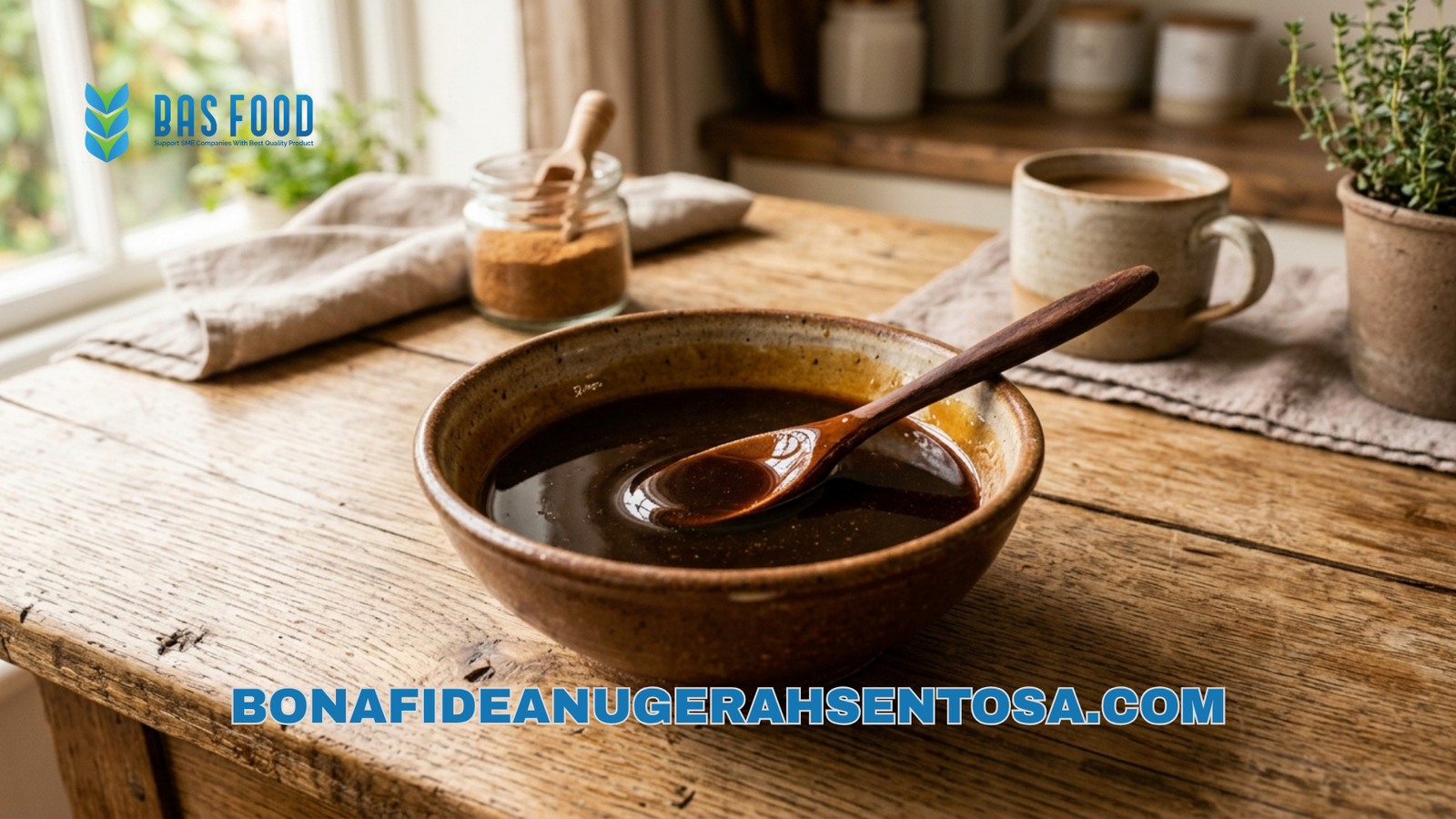
Coconut sugar syrup is a liquid sweetener made from coconut sap or processed coconut sugar, depending on the production method. Coconut sap naturally contains sugars and other components that contribute to its characteristic taste and color. Through controlled processing, the liquid can be concentrated into a syrup with a suitable consistency for food and beverage applications.
The final product can have a smooth, pourable texture and a sweet flavor with caramel-like or mildly earthy notes. Because of these characteristics, coconut sugar syrup can be used in beverages, sauces, desserts, bakery products, toppings, and other food formulations.
For B2B buyers, however, the most important point is consistency. A syrup may look attractive and taste good, but manufacturers also need predictable viscosity, color, flavor, and stability from one batch to another.
That is why understanding the basic characteristics of coconut sugar syrup is an important part of supplier evaluation.
The Main Coconut Sugar Syrup Characteristics Buyers Should Know
When evaluating coconut sugar syrup, buyers usually look at several physical and sensory properties. These characteristics help determine whether the syrup is suitable for a particular production process.
The most important properties include:
- Syrup viscosity
- Coconut syrup color
- Syrup texture
- Flavor profile
- Sweetness
- Aroma
- Solubility
- Moisture content
- Concentration
- Packaging stability
- Batch-to-batch consistency
Each characteristic can affect the way manufacturers use the syrup. For example, a thick syrup may work well as a topping but may require different handling when used in a beverage formulation.
Similarly, a darker coconut syrup color may be desirable for caramel-style products but less suitable when a manufacturer wants a lighter visual appearance.
Therefore, buyers should evaluate the syrup based on its intended application rather than relying on one characteristic alone.
Syrup Viscosity: Why Thickness Matters
Syrup viscosity describes how easily the liquid flows. In simple terms, it tells manufacturers whether the syrup pours quickly like a thin liquid or moves more slowly like a thick sauce.
Viscosity is particularly important in industrial food production because it affects pumping, filling, mixing, dosing, and packaging. A manufacturer using automated equipment needs a syrup that behaves consistently during production.
For example, beverage manufacturers may prefer a syrup that can be measured and mixed easily. Meanwhile, dessert producers may prefer a thicker consistency for drizzling, topping, or filling applications.
Temperature can also influence viscosity. Generally, a syrup flows more easily when warm and becomes thicker as it cools. Therefore, buyers should consider not only the viscosity specification but also the temperature conditions during transportation, storage, and production.
For this reason, commercial buyers should discuss viscosity requirements with their coconut sugar supplier before ordering. If the syrup will be used in automated processing equipment, a clear product specification becomes even more important.
Coconut Syrup Color and What It Tells Buyers
Another noticeable coconut sugar syrup characteristic is its color. Coconut syrup color can range from golden brown to deeper brown shades depending on the raw material and processing conditions.
The color comes from the natural characteristics of coconut sap and the concentration and heating process used during production. As the liquid becomes more concentrated, its appearance can become deeper and richer.
Color is not simply an aesthetic issue. It can influence the appearance of the finished food or beverage. A darker syrup, for example, can contribute a warm brown appearance to sauces, bakery products, desserts, and beverages.
On the other hand, manufacturers developing products with a lighter visual profile may need a syrup with a specific color range.
Therefore, B2B buyers should request a clear color specification or product sample before making a large purchase. Comparing samples with the intended application can provide more useful information than relying on a general description such as “brown syrup.”
Syrup Texture and Mouthfeel
Syrup texture refers to how the product feels and behaves when poured, mixed, or consumed. A good coconut sugar syrup should have a reasonably smooth and consistent texture for its intended application.
Manufacturers may evaluate whether the syrup pours smoothly, mixes easily, and maintains its expected consistency. These factors are especially relevant for beverages, sauces, dessert toppings, and bakery fillings.
A syrup that is too thick may create challenges during filling or dosing. Conversely, a syrup that is too thin may not provide the desired coating or topping effect.
Texture can also influence consumer perception. A smooth syrup can provide a pleasant mouthfeel, while a product with unwanted particles or inconsistent texture may create problems in the final formulation.
For industrial buyers, this makes filtration, processing control, and proper storage important considerations. The supplier should be able to explain how the syrup is processed and what controls are used to maintain a consistent texture.
Flavor Profile: More Than Just Sweetness
One of the reasons businesses choose coconut sugar syrup is its distinctive flavor profile. Unlike plain refined sugar syrup, coconut-based sweeteners can offer additional sensory characteristics.
Depending on the product and processing method, the flavor may include caramel-like, molasses-like, mildly toasted, or earthy notes. These characteristics can make the syrup useful in products where a richer sweetener profile is desirable.
For example, coconut sugar syrup can complement coffee, chocolate, bakery products, pancakes, desserts, sauces, and selected beverage formulations.
However, flavor intensity should always be evaluated against the final recipe. A strong syrup flavor can become an important part of a product’s identity, but it may not be suitable for every formulation.
This is why product sampling is particularly valuable for international buyers. A sample allows the manufacturer to test the syrup directly in its own recipe before committing to larger volumes.
Aroma Is Another Important Sensory Characteristic
Although flavor usually receives more attention, aroma also contributes to the overall sensory experience of coconut sugar syrup.
The aroma can support the sweet, caramel-like character of the syrup. When used in food and beverages, this aroma may contribute to the overall impression of the finished product.
However, aroma should remain consistent with the intended product specification. Manufacturers producing branded foods often need predictable sensory characteristics because even small differences can affect the finished product.
For that reason, buyers should include sensory evaluation as part of supplier approval. Looking at color and viscosity alone does not provide a complete picture of the syrup.
A practical evaluation can include appearance, aroma, flavor, texture, flow behavior, and performance during actual recipe testing.
How Processing Influences Coconut Sugar Syrup Characteristics
The production process plays a major role in determining the final characteristics of coconut sugar syrup. Raw material quality, heating, concentration, filtration, and handling can all affect the finished product.
Coconut sap needs careful handling because it is a natural raw material. Once collected, it can undergo changes if it is not processed appropriately. Therefore, production control starts from raw material collection and continues throughout the processing stage.
During concentration, heat and processing time can influence color, flavor, viscosity, and overall consistency. Manufacturers need to balance these factors according to the desired product specification.
Filtration can also influence the final texture and appearance. Proper filtration helps create a smoother syrup suitable for applications where a clean liquid consistency is required.
Consequently, a serious coconut sugar exporter supplier should have a clear understanding of how processing conditions influence the product’s final characteristics.
Why Consistency Matters for Food Manufacturers
For household consumers, a small difference between two syrup bottles may not be a major issue. For food manufacturers, however, consistency can be critical.
A factory may formulate a beverage or sauce using a specific syrup viscosity and sweetness level. If the next shipment behaves differently, the production team may need to adjust the recipe or processing conditions.
This can increase production complexity and make quality control more difficult.
Therefore, commercial buyers should evaluate whether a coconut sugar supplier can maintain consistent specifications across batches. Product documentation, samples, batch testing, and communication between supplier and buyer can all support better consistency.
In addition, buyers should clearly communicate their requirements before production begins. Instead of simply asking for “coconut sugar syrup,” they can provide information about the desired application, packaging, viscosity range, color preference, and other relevant specifications.
Coconut Sugar Syrup for Beverage Applications
Beverages are one of the areas where liquid sweeteners can offer practical advantages. Because coconut sugar syrup is already in liquid form, manufacturers can incorporate it into selected beverage formulations without first dissolving a solid sweetener.
This can simplify certain mixing processes and help manufacturers create consistent sweetness when the syrup is properly standardized.
Coconut sugar syrup can be considered for products such as coffee beverages, specialty drinks, dessert beverages, smoothies, and selected ready-to-drink formulations.
However, formulation testing remains important. The syrup’s color and flavor can influence the finished drink. For example, a darker syrup may noticeably change the appearance of a light-colored beverage.
Therefore, beverage manufacturers should test the syrup at different dosage levels before finalizing a commercial formula.
Coconut Sugar Syrup in Bakery and Dessert Products
Bakery manufacturers can also explore coconut sugar syrup as a liquid sweetening ingredient. Its flavor profile can pair well with ingredients such as chocolate, cinnamon, coconut, nuts, coffee, oats, and spices.
The syrup can be used in selected cakes, sauces, fillings, dessert toppings, pancakes, waffles, and other sweet products.
However, liquid sweeteners can influence more than sweetness. They may also contribute moisture to a recipe. As a result, formulators need to consider the total liquid balance when replacing or partially replacing another sweetener.
This is another reason why manufacturers should conduct recipe trials. A syrup that works well in one product may require formulation adjustments in another.
Packaging and Storage Considerations
Packaging is an important part of maintaining coconut sugar syrup quality during transportation and storage. Since the product is liquid, the packaging needs to prevent leakage and protect the syrup from contamination.
For B2B shipments, suitable packaging may depend on order volume, destination, handling requirements, and the buyer’s production system. Bulk formats can be considered for industrial users, while smaller formats may be appropriate for foodservice or retail applications.
Storage conditions should also be discussed with the supplier. Temperature, exposure to heat, container condition, and storage duration can affect product performance.
International buyers should therefore request clear packaging and storage instructions before placing an order. This helps reduce avoidable issues during transportation and warehouse handling.
Choosing an Indonesian Coconut Sugar Exporter Supplier
Indonesia is an important source of coconut-based agricultural products, making Indonesian suppliers an option for international companies looking for coconut sugar and related ingredients.
When selecting an Indonesian coconut sugar exporter supplier, buyers should consider production capability, product consistency, communication, packaging, documentation, and export experience.
A supplier that understands international B2B requirements can help buyers move from sample evaluation to commercial sourcing more smoothly.
At the same time, buyers should conduct their own product evaluation. Supplier information is useful, but actual sample testing remains one of the best ways to determine whether a syrup fits a specific application.
For this reason, the sourcing process should ideally include specification discussions, samples, testing, commercial quotation, packaging confirmation, and shipment planning.
CV Bonafide Anugerah Sentosa and Coconut Sugar Sourcing
CV Bonafide Anugerah Sentosa is an Indonesian exporter of coconut sugar and other coconut-derived products. For international buyers exploring coconut-based sweeteners, the company can be considered as a potential sourcing partner for coconut sugar products.
When discussing coconut sugar syrup, buyers can communicate their intended application and product requirements so the supplier can better understand the specification needed for the project.
This approach is especially useful for B2B customers because different industries can require different syrup characteristics. A beverage producer, bakery manufacturer, foodservice distributor, and retail brand may all have different requirements.
A clear discussion about viscosity, color, texture, flavor, packaging, and order volume can therefore help create a more suitable sourcing process.
Final Thoughts on Coconut Sugar Syrup Characteristics
Understanding coconut sugar syrup characteristics is essential for businesses that want to use this ingredient successfully. Properties such as syrup viscosity, coconut syrup color, syrup texture, and flavor profile can directly affect how the syrup performs in food and beverage production.
At the same time, no single characteristic determines whether a syrup is suitable. The right product depends on the intended application, formulation, processing equipment, packaging requirements, and desired sensory profile.
For international buyers, the sourcing process should therefore start with clear specifications and practical sample testing. Working with an experienced coconut sugar supplier can also help buyers better understand product options and commercial requirements.
For businesses searching for an Indonesian coconut sugar exporter supplier, CV Bonafide Anugerah Sentosa can be part of the supplier evaluation process. By discussing product characteristics, application requirements, packaging, and supply needs in advance, buyers can build a clearer path from product sampling to long-term sourcing.
Ultimately, the best approach is simple: understand the characteristics, test the product, define the specifications, and communicate clearly with the supplier. This gives manufacturers a stronger foundation for using coconut sugar syrup in commercial food and beverage applications.