
Buying coconut sugar syrup from another country involves more than choosing the right product and agreeing on a price. For importers, food manufacturers, distributors, and wholesalers, the next challenge is getting the syrup from the supplier to the destination in good condition. That is why shipping coconut sugar syrup deserves careful planning from the beginning. Because coconut sugar syrup is a liquid food ingredient, buyers need to consider packaging, handling, storage, transportation, export documents, customs requirements, and delivery conditions.
Unlike dry coconut sugar granules or moulded coconut sugar, syrup requires a different logistics approach. The product needs suitable food-grade containers, protection from leakage, and careful handling during transportation. At the same time, the shipping method should make commercial sense for the order size and destination.
For international buyers sourcing from Indonesia, understanding these factors can make the purchasing process much easier. In this guide, we explain how coconut sugar syrup moves through the export supply chain and what buyers should discuss with a coconut sugar supplier before shipment.
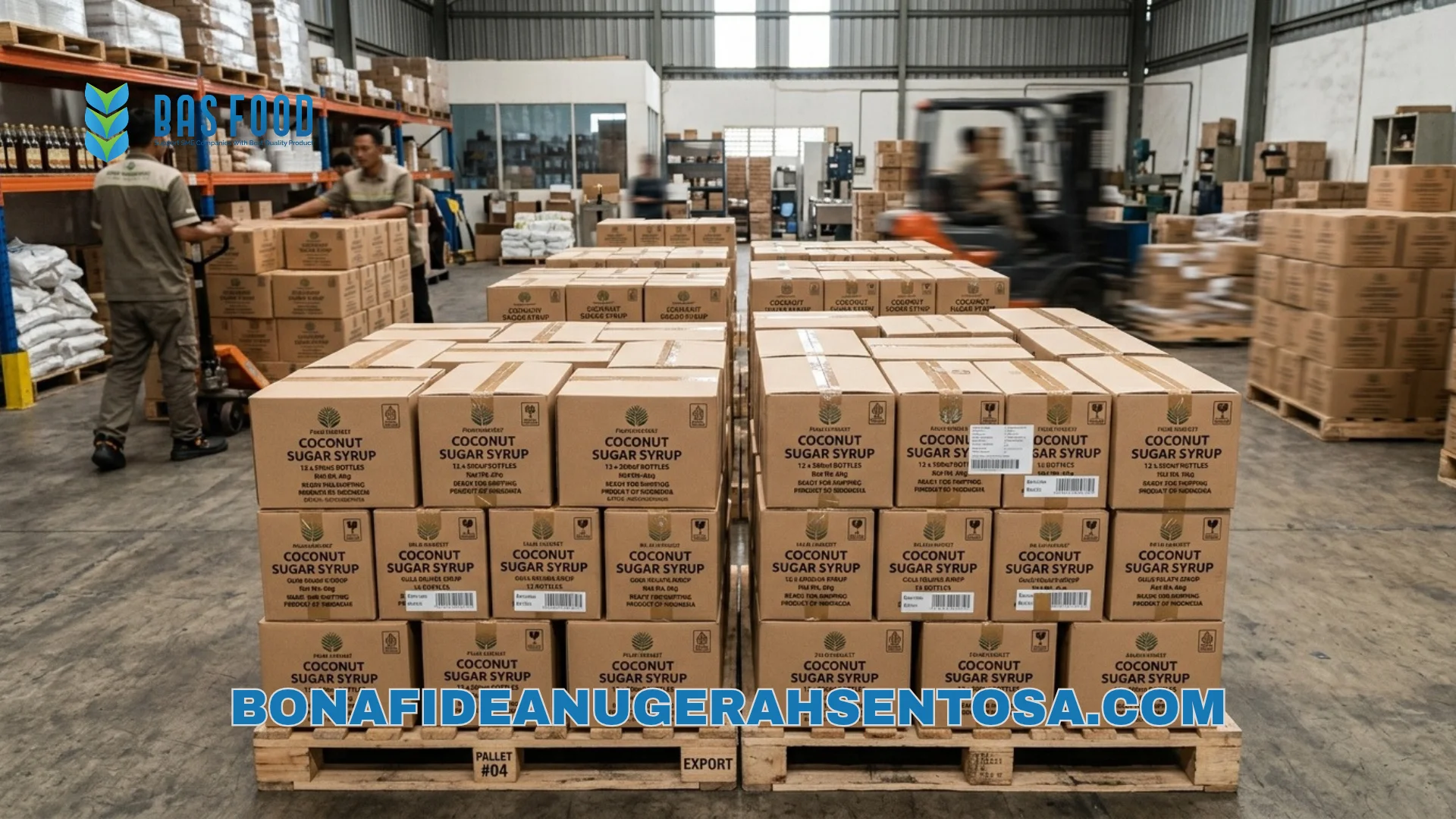
What Makes Shipping Coconut Sugar Syrup Different?
Coconut sugar syrup is a liquid sweetener produced from coconut sugar or coconut sap-based processing, depending on the product and manufacturing method. Its liquid form gives it different transportation requirements compared with dry sugar products.
A dry ingredient can usually be packed in bags, cartons, or other solid-product packaging. Syrup, however, needs a container that can hold the liquid securely throughout handling and transportation. The packaging must also suit the product’s characteristics, storage conditions, shipping duration, and buyer requirements.
Therefore, shipping coconut sugar syrup begins before the cargo reaches the port. The supplier and buyer need to agree on the product specification and packaging first. This helps prevent problems later during loading, customs clearance, transportation, and receiving.
Another important point is that not every coconut sugar syrup product has the same technical characteristics. Viscosity, solids content, packaging format, shelf life, and storage requirements can vary. Buyers should therefore work from the supplier’s product specification instead of assuming that every syrup has identical shipping requirements.
Preparing Coconut Sugar Syrup for Export
Good export preparation starts with the product itself. Before shipment, the supplier should confirm the agreed specification, batch information, packaging, quantity, and documentation.
For B2B orders, buyers commonly need product information that allows their receiving and quality teams to identify the shipment. Depending on the transaction and destination, this can include the product name, net weight, batch or lot information, production information, shelf-life information, storage conditions, and other agreed specifications.
Packaging also deserves close attention. The container needs to be suitable for food products and appropriate for liquid transportation. The exact packaging format may vary depending on the order size and the buyer’s requirements.
Why Packaging Matters
Packaging performs several jobs during international transportation. First, it holds the syrup. Second, it protects the product from contamination and physical damage. Third, it helps the buyer handle and store the product after arrival.
A suitable package should remain secure during normal transportation and handling. The supplier should also consider the possibility of vibration, movement, stacking, temperature changes, and repeated handling during the logistics process.
Before confirming an order, buyers should ask the coconut sugar exporter supplier about available packaging options. They should also clarify whether the packaging is designed for bulk industrial use, smaller wholesale quantities, or retail distribution.
Choosing the Right Shipping Method
The best shipping method depends on order volume, destination, delivery schedule, packaging, and budget. International coconut sugar syrup shipments commonly require coordination between the supplier, freight forwarder, shipping line or carrier, customs broker, and importer.
For larger international orders, ocean freight may be considered because it can support substantial cargo volumes. Smaller or more urgent shipments may require different transportation arrangements.
This is where export logistics becomes important. Export logistics covers the movement of goods from the supplier’s facility through inland transportation, port handling, international transportation, customs processes, and final delivery.
Ocean Freight and Container Shipping
Container shipping can be suitable for larger B2B shipments when the cargo is packed in appropriate containers or secondary packaging.
However, buyers should not assume that every liquid shipment can simply be placed into a standard container without further planning. The packaging method, quantity, container configuration, handling requirements, and shipping regulations need to be reviewed before booking.
For example, a supplier may prepare the syrup in drums, jerry cans, food-grade containers, or other agreed packaging. The exact solution depends on the product, volume, destination, and logistics arrangement.
The buyer should therefore ask for a proposed packing configuration before finalizing the shipment. This allows the importer to understand how much cargo will arrive and how the product will be handled after unloading.
Understanding Liquid Cargo
One of the most important concepts for buyers is liquid cargo. Liquid food products need packaging and handling procedures that differ from dry ingredients.
Coconut sugar syrup is not necessarily classified as hazardous cargo simply because it is liquid. However, the shipping arrangement still needs to follow the requirements that apply to the product, packaging, carrier, and destination.
This distinction matters because buyers should not confuse “liquid cargo” with “dangerous goods.” Classification depends on the actual product and applicable transportation rules.
Preventing Leakage During Transit
Leakage is one of the most serious practical risks when shipping liquid food products. A small packaging failure can damage other cargo, create cleaning problems, and result in product loss.
For this reason, packaging inspection should take place before loading. Suppliers should check closures, seals, container condition, labeling, and outer protection as appropriate.
Buyers can also request photographs of the packed cargo before shipment. For larger orders, they may establish an agreed inspection process before the cargo leaves the supplier’s facility.
This simple step can provide an additional layer of confidence without making the shipping process unnecessarily complicated.
Storage Conditions Before and During Shipping
Storage conditions matter because coconut sugar syrup is a food product. The supplier and buyer should agree on the appropriate storage conditions before shipment.
The product specification should explain how the syrup should be stored. Depending on the formulation and packaging, this may involve protecting the product from unsuitable temperature conditions, direct sunlight, contamination, or other factors that could affect product quality.
Importers should also consider the time between production and final use. A shipment may spend time at the supplier’s warehouse, during inland transportation, at the port, on the vessel, during customs clearance, and finally at the buyer’s warehouse.
Planning Around Shelf Life
Shelf life should be considered when planning an international order. The buyer needs to make sure that the expected shipping and clearance period fits comfortably within the product’s stated shelf life.
This is especially important for buyers importing large quantities. A shipment that arrives with limited remaining shelf life may create inventory problems even if the product itself is still within specification.
Therefore, buyers should discuss production dates, batch information, shelf life, shipping schedules, and expected arrival dates with the supplier.
A good coconut sugar supplier should be able to communicate these details clearly enough for the buyer to plan inventory.
Export Documents for Coconut Sugar Syrup
Shipping coconut sugar syrup internationally requires appropriate export and import documentation. The exact documents depend on the origin, destination, product, transaction terms, and regulatory requirements.
Common commercial documents may include a commercial invoice and packing list. Depending on the shipment, a certificate of origin, bill of lading, product specification, certificate of analysis, and other documents may also be required or requested.
The buyer should not assume that every destination uses exactly the same document set. Import regulations can differ between countries and may also change over time.
Commercial Invoice and Packing List
The commercial invoice provides important transaction information, such as the seller, buyer, product description, quantity, price, and commercial terms.
The packing list focuses more on how the cargo is packed. It can include package counts, net and gross weights, dimensions, and other shipping information.
These documents should be consistent with the actual cargo. Differences between the invoice, packing list, shipping documents, and physical shipment can create unnecessary delays during customs clearance.
Certificate of Origin
A certificate of origin may be requested to confirm where the goods originate. Its importance can depend on the destination country’s import rules and whether a trade agreement or preferential tariff arrangement applies.
Buyers should confirm origin documentation requirements with their customs broker or relevant authorities before shipment.
Bill of Lading
For ocean freight, the bill of lading is a key shipping document. It contains information about the cargo and transportation arrangement.
The buyer should review the shipping instructions carefully before the document is finalized. Product descriptions, consignee details, notify party information, package counts, and other details should match the agreed transaction.
Customs Clearance and Import Planning
A shipment does not end when the vessel departs. The importer also needs to prepare for arrival.
Customs clearance can involve reviewing commercial documents, product information, tariff classification, import requirements, and other regulatory matters. The specific process depends on the destination country.
For this reason, buyers should work with a customs broker or import specialist when necessary. The importer is generally responsible for ensuring that the shipment meets the requirements of its destination market.
Working With a Coconut Sugar Exporter Supplier
Choosing the right supplier can make international shipping much easier. A supplier should not only provide the product but also communicate clearly about packaging, production schedules, documentation, and shipment preparation.
When evaluating a coconut sugar exporter supplier, buyers should look beyond the product price. Logistics capability, communication speed, documentation accuracy, and packaging experience can have a major effect on the total purchasing experience.
For example, a supplier that understands export procedures can help coordinate information with the freight forwarder and prepare documents according to the agreed shipment.
Shipping Coconut Sugar Syrup From Indonesia
Indonesia is an important source of coconut-based agricultural products, including coconut sugar and related ingredients. International buyers can source from Indonesian suppliers for applications such as beverages, sauces, bakery products, desserts, and food manufacturing.
However, international sourcing works best when buyers treat the supplier relationship as a supply-chain partnership rather than a simple purchase.
The first step is to define the product clearly. The buyer should explain the required syrup characteristics, packaging, estimated quantity, destination, and intended application.
After that, the supplier can provide information about product availability, samples, packaging, and export preparation.
The Role of CV Bonafide Anugerah Sentosa
CV Bonafide Anugerah Sentosa supplies coconut sugar and coconut-derived products for international buyers. For businesses considering Indonesian sourcing, the company can be included in the supplier evaluation process for coconut sugar syrup.
As with any B2B sourcing decision, buyers should confirm the exact product specification, packaging, order quantity, commercial terms, shipping arrangements, and required documentation before placing an order.
The supplier and buyer should also establish clear communication about responsibilities. This is especially useful when discussing freight, customs documentation, shipment schedules, and delivery arrangements.
Incoterms and Shipping Responsibilities
International buyers should also understand the commercial shipping terms used in their purchase. Incoterms can determine which party is responsible for certain transportation costs, risks, and logistics activities.
The exact responsibilities depend on the agreed Incoterm. Therefore, buyers should not assume that the supplier automatically handles every part of the transportation process.
For example, the supplier may handle export-side activities under one arrangement while the buyer handles the main international freight and import clearance. Another arrangement may include more transportation services from the seller.
Why Clear Responsibilities Matter
Shipping problems often become more difficult when neither party knows who is responsible for a specific step.
Before shipment, confirm:
- Who arranges inland transportation
- Who books the international freight
- Who handles export clearance
- Who handles import clearance
- Who pays the relevant freight charges
- Who arranges insurance when applicable
- Where risk transfers
- Who receives the cargo at destination
Clear responsibilities help prevent unexpected costs and delays.
Building a Reliable Coconut Sugar Syrup Supply Chain
One shipment can be successful without creating a reliable supply chain. B2B buyers who regularly use coconut sugar syrup need a longer-term sourcing strategy.
That means monitoring product consistency, packaging performance, delivery reliability, documentation, communication, and inventory levels over time.
Buyers should also keep records of approved product specifications and samples. These records create a useful reference when future batches arrive.
From One Shipment to Long-Term Supply
A strong supplier relationship grows through clear communication. If the buyer plans to increase order volume, introduce a new product, or enter a new market, the supplier should know early enough to plan production.
Likewise, buyers should provide realistic forecasts whenever possible. Better planning can help suppliers organize raw materials, production, packaging, and shipping arrangements.
This approach is especially valuable for manufacturers that depend on coconut sugar syrup as a regular ingredient.
Common Shipping Mistakes to Avoid
The first common mistake is waiting until the cargo is ready before discussing shipping. Logistics planning should begin while the commercial order is being prepared.
Another mistake is using unsuitable assumptions about packaging. Liquid products need specific packaging solutions, and the right option depends on the product and shipping arrangement.
A third mistake is ignoring destination-country requirements. Export documentation from Indonesia does not automatically mean that the shipment satisfies every import requirement in the destination market.
A Simple Way to Reduce Risk
The solution is straightforward: create a shipping checklist before production.
The checklist can include:
- Approved product sample
- Product specification
- Packaging specification
- Quantity
- Batch information
- Shelf-life information
- Storage requirements
- Commercial invoice
- Packing list
- Origin documentation where required
- Shipping instructions
- Bill of lading details
- Customs requirements
- Freight arrangement
- Delivery address
- Contact information for the receiving party
Reviewing this checklist before loading can prevent many avoidable problems.
Final Checklist for Shipping Coconut Sugar Syrup
Before the shipment leaves the supplier’s facility, B2B buyers should confirm the following:
Product
- Product specification approved
- Sample approved where applicable
- Batch information available
- Shelf life confirmed
Packaging
- Food-suitable packaging confirmed
- Containers properly sealed
- Package quantity confirmed
- Outer protection agreed where necessary
- Labels checked
Logistics
- Shipping method confirmed
- Freight booking arranged
- Container or cargo configuration confirmed
- Loading schedule confirmed
- Delivery destination confirmed
Documentation
- Commercial invoice checked
- Packing list checked
- Origin documentation checked where required
- Product documentation prepared
- Shipping documents reviewed
Import
- Customs requirements checked
- Import regulations reviewed
- Food requirements checked
- Customs broker or import representative prepared
This simple checklist can help buyers coordinate the supplier, freight forwarder, customs broker, and receiving warehouse more effectively.
Conclusion: Plan the Shipment Before You Plan the Delivery
Successful shipping coconut sugar syrup starts long before the cargo reaches the port. Product specifications, packaging, storage, documentation, freight arrangements, customs requirements, and delivery planning all work together.
For B2B buyers, the goal is not simply to move liquid cargo from one country to another. The goal is to protect product quality while keeping the supply chain clear, practical, and commercially efficient.
That is why choosing the right coconut sugar supplier matters. A capable supplier should communicate clearly about product specifications, packaging, production, documentation, and export logistics.
For businesses sourcing from Indonesia, CV Bonafide Anugerah Sentosa can be part of the supplier evaluation process. Buyers should discuss their required syrup specification, packaging, order volume, destination, and shipping arrangement before confirming an order.
With proper planning, suitable packaging, clear documentation, and good communication between the buyer and supplier, international coconut sugar syrup shipments can become a much more predictable part of the B2B supply chain.