
In international trade, buying a large quantity of coconut oil without testing its quality can create unnecessary risks. That’s why requesting RBD coconut oil samples before placing a bulk order is essential to ensure consistency and quality. Imagine receiving a shipment of oil that looks different from the approved specification, has an unexpected odor, or performs poorly during manufacturing. These problems can affect production schedules, increase costs, and damage customer confidence.
Fortunately, there is a practical way to reduce these risks before committing to a commercial order: requesting RBD coconut oil samples.
Samples allow importers, food manufacturers, cosmetic producers, and industrial buyers to evaluate product characteristics before purchasing in bulk. Through proper oil sample testing, businesses can examine quality parameters, compare suppliers, and determine whether the oil meets their specific requirements.
However, sample evaluation involves more than checking color or smelling the oil. It requires a structured process that includes laboratory analysis, product specifications, and supplier qualification.
In this guide, we will explore how to request, test, and evaluate RBD coconut oil samples. We will also explain how international buyers can use sample results to make smarter purchasing decisions when sourcing coconut oil from Indonesia.
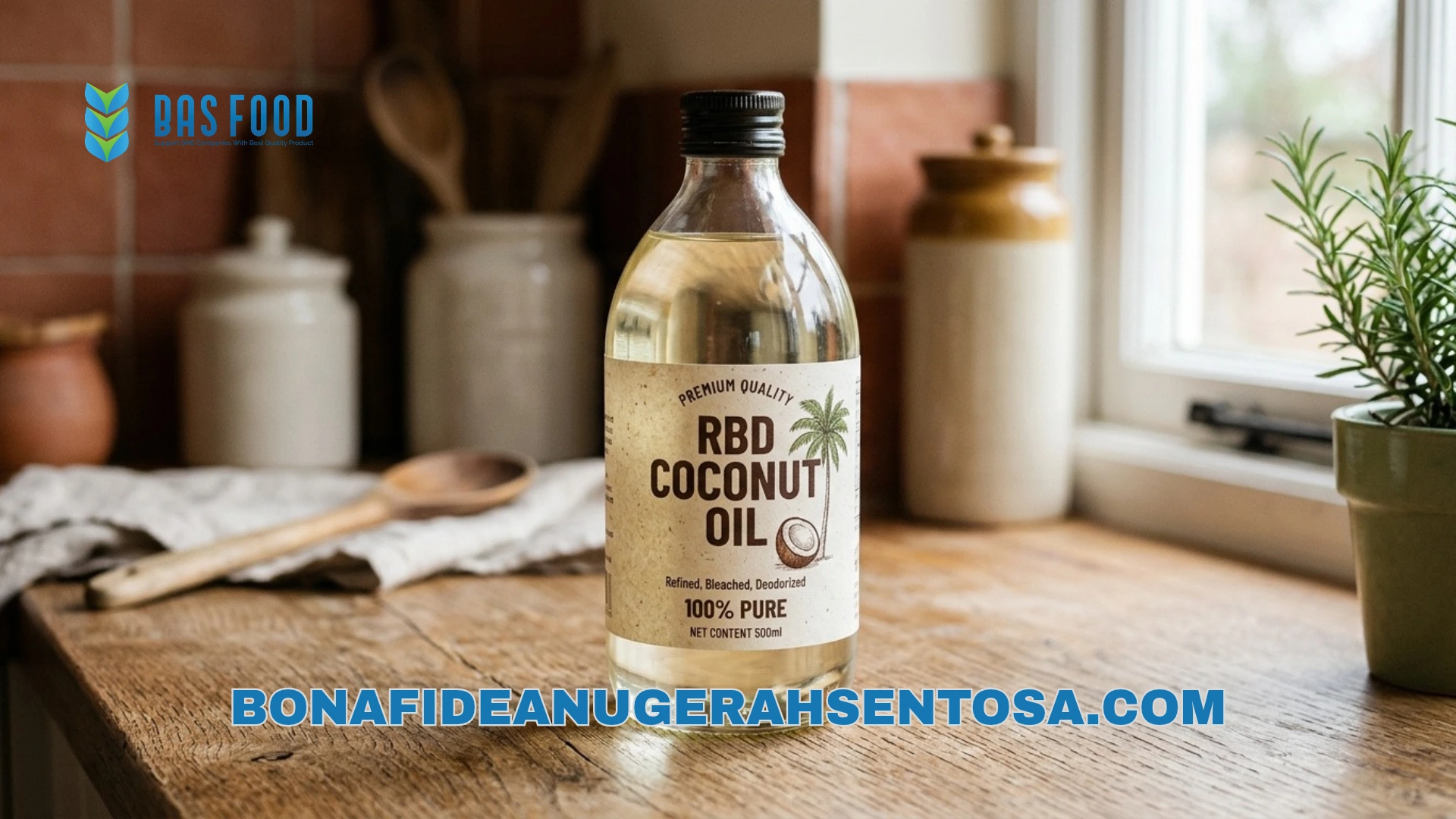
What Are RBD Coconut Oil Samples?
RBD coconut oil samples are small quantities of refined, bleached, and deodorized coconut oil provided for evaluation before commercial purchasing. They allow potential buyers to inspect the product, conduct laboratory tests, and assess its suitability for specific applications.
RBD stands for Refined, Bleached, and Deodorized. These processing stages help remove selected impurities, reduce color, and produce an oil with a relatively neutral odor and flavor. As a result, RBD coconut oil can be considered for various food, cosmetic, and industrial applications, depending on its grade and specifications.
Unlike virgin coconut oil, which is generally processed to retain more of its natural coconut aroma, RBD coconut oil undergoes refining to achieve different sensory and technical characteristics. However, not all RBD coconut oil products have identical specifications. Processing conditions, raw materials, and quality requirements can vary among manufacturers.
That is why samples matter. A buyer can use them to evaluate whether the supplied material matches the intended product specification rather than relying only on marketing descriptions.
For example, a bakery manufacturer may want to understand how the oil behaves in a particular formulation. Meanwhile, a soap manufacturer may focus on fatty acid composition and saponification properties. Both buyers need samples, but their evaluation methods may differ.
Why RBD Coconut Oil Samples Matter Before Bulk Purchasing
Reduce purchasing risks
One of the biggest advantages of requesting RBD coconut oil samples is the opportunity to identify potential problems before making a large financial commitment.
Bulk orders involve shipping costs, import procedures, storage requirements, and production planning. If the delivered oil fails to meet agreed specifications, resolving the problem may become expensive and time-consuming.
Sample evaluation helps buyers identify mismatches early. For example, laboratory testing may reveal that a sample’s free fatty acid level differs from the buyer’s target specification. Similarly, practical testing may show that the oil behaves differently from what the production team expected.
Although sample approval cannot guarantee that every future shipment will meet specifications, it provides a useful foundation for purchasing decisions.
Support consistent product quality
Manufacturers need ingredients that perform consistently across production batches. Even small differences in raw material properties can affect finished products.
For food manufacturers, oil characteristics may influence texture, flavor, melting behavior, and processing performance. Cosmetic manufacturers may consider appearance, odor, formulation compatibility, and stability. Industrial users may have additional technical requirements.
By evaluating samples against clearly defined standards, companies can establish a reference for future deliveries.
However, buyers should also request batch-specific documentation for commercial shipments. An approved sample is valuable, but it should not replace incoming quality checks or the agreed quality assurance process.
Improve supplier comparison
When evaluating several suppliers, product samples create an opportunity for more objective comparisons.
Instead of choosing a supplier based only on price, buyers can compare laboratory results, documentation, communication, and technical suitability.
This approach is especially important in international procurement, where buyers may not be able to visit production facilities before making their first purchase.
A structured sample evaluation process can therefore improve supplier qualification and support more confident sourcing decisions.
Key Quality Parameters to Check During Oil Sample Testing
Proper oil sample testing should focus on parameters relevant to the oil’s intended use. While visual inspection provides useful initial information, laboratory measurements offer a more objective understanding of product quality.
Free fatty acid content
Free fatty acid content, commonly called FFA, is an important quality parameter for refined oils.
FFA indicates the presence of free fatty acids that are not bound within triglycerides. Elevated levels may indicate hydrolytic deterioration or issues involving raw material handling, processing, or storage.
Manufacturers typically establish an acceptable FFA limit based on the intended application and purchasing specification.
When evaluating samples, buyers should compare measured FFA values with the agreed requirement rather than assuming that every RBD coconut oil product follows one universal limit.
Moisture and volatile matter
Moisture content is another important consideration because excess water can contribute to quality deterioration and processing problems.
For industrial buyers, moisture may affect storage performance, handling, and downstream manufacturing processes.
Laboratory analysis can determine whether the sample meets the moisture and volatile matter limits specified by the buyer.
However, moisture testing should be conducted using an appropriate method. Simply observing whether the oil looks clear is not a reliable substitute for measurement.
Color and odor
RBD coconut oil generally has a relatively light appearance and neutral sensory characteristics when handled under suitable conditions.
Nevertheless, visual appearance can change with temperature. Coconut oil may become cloudy or solidify as it cools, and this behavior is not automatically evidence of contamination or poor refining.
Therefore, buyers should evaluate appearance under defined temperature conditions.
Odor assessment is also useful. Unexpected rancid or foreign odors may indicate quality concerns, but sensory inspection alone cannot confirm whether an oil meets all chemical or safety requirements.
Peroxide value
Peroxide value is commonly used to assess primary oxidation products in fats and oils.
A higher peroxide value can indicate the presence of oxidation products, although interpretation depends on the oil, its processing history, and the applicable specification.
Because oxidation develops through several stages, peroxide value should not be treated as a complete measure of oxidative condition in every situation.
Buyers may need additional testing depending on the product’s intended use and storage requirements.
Fatty acid composition
Coconut oil is known for its relatively high proportion of saturated fatty acids, including lauric acid.
Fatty acid composition can help confirm the oil’s identity and evaluate whether its characteristics suit a particular application.
For example, soap manufacturers may use fatty acid information when developing formulations, while food manufacturers may consider how the oil’s composition influences melting behavior.
A fatty acid profile should be evaluated against suitable reference data and the agreed product specification.
How Laboratory Analysis Supports Better Purchasing Decisions
Laboratory analysis provides measurable information that helps buyers evaluate RBD coconut oil samples more consistently.
A laboratory can examine selected physical and chemical properties using recognized analytical methods. Depending on the intended application, testing may include FFA, moisture, peroxide value, fatty acid composition, and other relevant parameters.
For stronger purchasing decisions, buyers should request test results that identify the sample, test method, measurement units, and applicable acceptance criteria.
It is also useful to work with a laboratory that has suitable technical competence for the required tests. Where necessary, buyers can select an accredited laboratory with the relevant methods included in its accreditation scope.
Understanding the Certificate of Analysis
A Certificate of Analysis, or CoA, summarizes the results of specified tests conducted on a product or batch.
For RBD coconut oil, a CoA may include physical and chemical quality parameters relevant to the product specification.
However, not every CoA contains the same information. Buyers should confirm which tests were performed, whether the document relates to the actual sample or batch, and whether the reported methods are appropriate.
A CoA should support the purchasing decision, not replace all independent verification.
For critical applications, buyers may choose to conduct additional testing through a qualified third-party laboratory.
Why independent testing can be useful
Independent testing provides another source of evidence when buyers need additional assurance.
For example, an importer may compare the supplier’s CoA with laboratory results from a separately collected sample.
If the results differ, the buyer should investigate possible causes, including sampling methods, test methods, sample handling, and analytical uncertainty.
A difference does not automatically prove that a supplier provided incorrect information. Proper investigation is necessary before reaching a conclusion.
How to Request RBD Coconut Oil Samples from an Export Supplier
Requesting samples is usually one of the first technical steps in evaluating a new supplier.
Before contacting an exporter, buyers should prepare a clear description of their requirements. This helps avoid confusion and ensures that the sample evaluation addresses the correct product.
Start by explaining the intended application. Is the oil required for food manufacturing, cosmetics, soap production, or another industrial process?
Next, provide any relevant specifications, including the desired grade, quality parameters, and testing requirements.
Buyers should also explain whether they need samples for laboratory analysis, production trials, or both.
Information to include in a sample request
A useful request may contain the following details:
- Company name and destination country
- Intended application of the RBD coconut oil
- Required product grade and specifications
- Requested sample quantity
- Laboratory tests or production trials planned
- Preferred sample packaging
- Delivery address and shipping requirements
- Expected commercial order volume
- Requested supporting documents
Providing this information helps the supplier assess the request and explain which sample options are available.
Importantly, sample quantities, shipping arrangements, and associated charges may differ among suppliers. Buyers should confirm these details before arranging delivery.
Sample packaging and transportation
Sample packaging should protect the oil from contamination, leakage, and unnecessary exposure during transportation.
The appropriate container depends on the sample size, product requirements, and shipping conditions.
Coconut oil can solidify at relatively cool temperatures. Therefore, buyers should understand that a solid or cloudy sample may simply reflect temperature-dependent physical behavior.
If warming is required before testing, the sample should be handled according to an appropriate procedure that avoids unnecessary overheating or changes to its quality.
Proper labeling is equally important. Each sample should have a clear identification code, allowing the laboratory results to be connected to the correct material.
A Practical Step-by-Step RBD Coconut Oil Sample Evaluation Process
A structured testing process makes it easier to compare suppliers and document purchasing decisions.
The first step is to establish acceptance criteria. Before testing begins, the buyer should decide which characteristics are essential and what limits apply.
For example, a food manufacturer may prioritize the agreed edible-oil specifications, oxidation indicators, sensory properties, and performance during production.
A cosmetic manufacturer may focus on different parameters depending on the formulation.
Step 1: Verify sample identity
Check the label, supplier information, product description, and available documentation.
Confirm that the sample represents the grade being considered for purchase.
Where possible, request information connecting the sample to its production or batch identification.
Step 2: Conduct initial inspection
Examine the sample for obvious packaging damage, leakage, foreign material, or unexpected odor.
Record the temperature and physical condition during inspection.
Remember that coconut oil may be liquid or solid depending on temperature. Physical state alone does not establish product quality.
Step 3: Perform laboratory testing
Send the sample to a suitable laboratory for the required analysis.
Compare the results with the predefined acceptance criteria.
If results are outside specification, discuss the findings with the supplier and investigate the cause before approving the product.
Step 4: Run application trials
Laboratory results are important, but they do not always predict how an ingredient will perform in a finished formulation.
Therefore, manufacturers should test the sample under realistic production conditions.
A bakery manufacturer might assess texture and processing behavior, while a soap producer may evaluate the oil’s performance in a controlled formulation.
Step 5: Document the decision
Record the sample identification, test results, observations, and final evaluation.
The documentation should explain whether the sample was approved, conditionally approved, or rejected.
If the supplier is approved, retain the agreed specification and establish a process for verifying future commercial deliveries.
Supplier Qualification: Looking Beyond the Sample
Supplier qualification involves evaluating whether a company can consistently meet purchasing, quality, documentation, and delivery requirements.
A sample may pass laboratory testing, but that alone does not establish a supplier’s long-term reliability.
Buyers should also assess communication, traceability, quality assurance procedures, production or sourcing arrangements, and export capabilities.
For example, an exporter should be able to clarify the product being offered, explain available documentation, and communicate realistic commercial terms.
Depending on the risk and order size, buyers may request additional supplier information, conduct an audit, or arrange an independent inspection.
Important questions for supplier qualification
Ask whether the supplier can provide consistent product specifications and batch-specific documentation.
Find out how product quality is checked before shipment and how nonconforming products are handled.
It is also important to clarify packaging options, minimum order quantities, lead times, payment terms, and the agreed Incoterms.
For international buyers, export documentation should be reviewed according to the destination country’s requirements and the specific product classification.
Finally, confirm how the supplier manages complaints or quality discrepancies.
A dependable sourcing relationship requires clear responsibilities on both sides, especially when purchasing ingredients for ongoing manufacturing operations.
Why Indonesia Is Worth Considering for RBD Coconut Oil Sourcing
Indonesia is one of the world’s major coconut-producing countries, making it an important location for businesses exploring coconut-based ingredients.
The country’s coconut industry supports various products, including coconut sugar, coconut oil, desiccated coconut, and other coconut derivatives.
For international buyers, sourcing from Indonesia can provide access to suppliers and exporters involved in different stages of the coconut product supply chain.
However, geographic origin alone does not guarantee quality. Buyers should evaluate each supplier according to product specifications, documentation, quality management, and commercial reliability.
Working with CV Bonafide Anugerah Sentosa
CV Bonafide Anugerah Sentosa is an Indonesian supplier and exporter associated with coconut-derived products and other commodities.
Businesses exploring Indonesian coconut ingredients can contact the company to discuss their sourcing requirements and confirm whether RBD coconut oil is currently available within its product offerings.
If RBD coconut oil samples are available, buyers should request the applicable product specifications, sample conditions, and supporting documentation before proceeding with testing.
It is also useful to explain the intended application and expected purchasing volume so the company can assess the inquiry appropriately.
Although buyers may discover the company while searching for a coconut sugar exporter supplier or coconut sugar supplier, coconut sugar and RBD coconut oil are different products with different manufacturing processes and quality requirements.
Therefore, importers should request product-specific information rather than assuming that documentation or specifications for coconut sugar also apply to coconut oil.
Conclusion: Test First, Source with Confidence
Requesting RBD coconut oil samples is an important step for importers and manufacturers that want to reduce sourcing risks and evaluate ingredient quality before bulk purchasing.
Through structured oil sample testing, buyers can examine essential parameters such as free fatty acids, moisture, peroxide value, and fatty acid composition. They can also conduct application trials to understand how the oil performs in real manufacturing conditions.
Meanwhile, laboratory analysis provides measurable evidence that supports more objective purchasing decisions. When combined with supplier qualification, clear specifications, and appropriate documentation, sample testing becomes a valuable part of international procurement.
For companies exploring coconut oil sourcing from Indonesia, selecting the right supplier requires more than comparing prices. Product consistency, technical suitability, communication, and commercial reliability all matter.
CV Bonafide Anugerah Sentosa can be contacted regarding its current coconut product offerings and export sourcing arrangements. Buyers interested in RBD coconut oil should confirm product availability, sample options, specifications, and commercial terms directly with the company.
Before your next bulk order, make sample evaluation part of your purchasing strategy. A well-planned testing process can help protect production quality, reduce avoidable costs, and support stronger supplier relationships.