
The secret to great baked goods is not just flour, sugar, or the skill of the baker. Fat also plays an important role in texture, moisture, flavor, and the overall quality of the finished product. For commercial bakeries and food manufacturers, choosing the right fat can make a real difference in production consistency and customer satisfaction. One ingredient worth understanding is RBD coconut oil for bakery applications. RBD stands for refined, bleached, and deodorized. This processing method helps produce coconut oil with a neutral aroma and mild taste, making it a potential ingredient for bakery products where a strong coconut flavor is not desired.
However, RBD coconut oil is not a universal replacement for butter, margarine, or shortening. Each fat behaves differently during mixing, baking, cooling, and storage. Therefore, bakery businesses should understand how coconut oil works before adding it to an existing recipe or developing a new product.
In this guide, we will explore the characteristics of RBD coconut oil, its potential bakery applications, its differences from traditional bakery fats, and the practical factors buyers should consider when sourcing ingredients for commercial production.
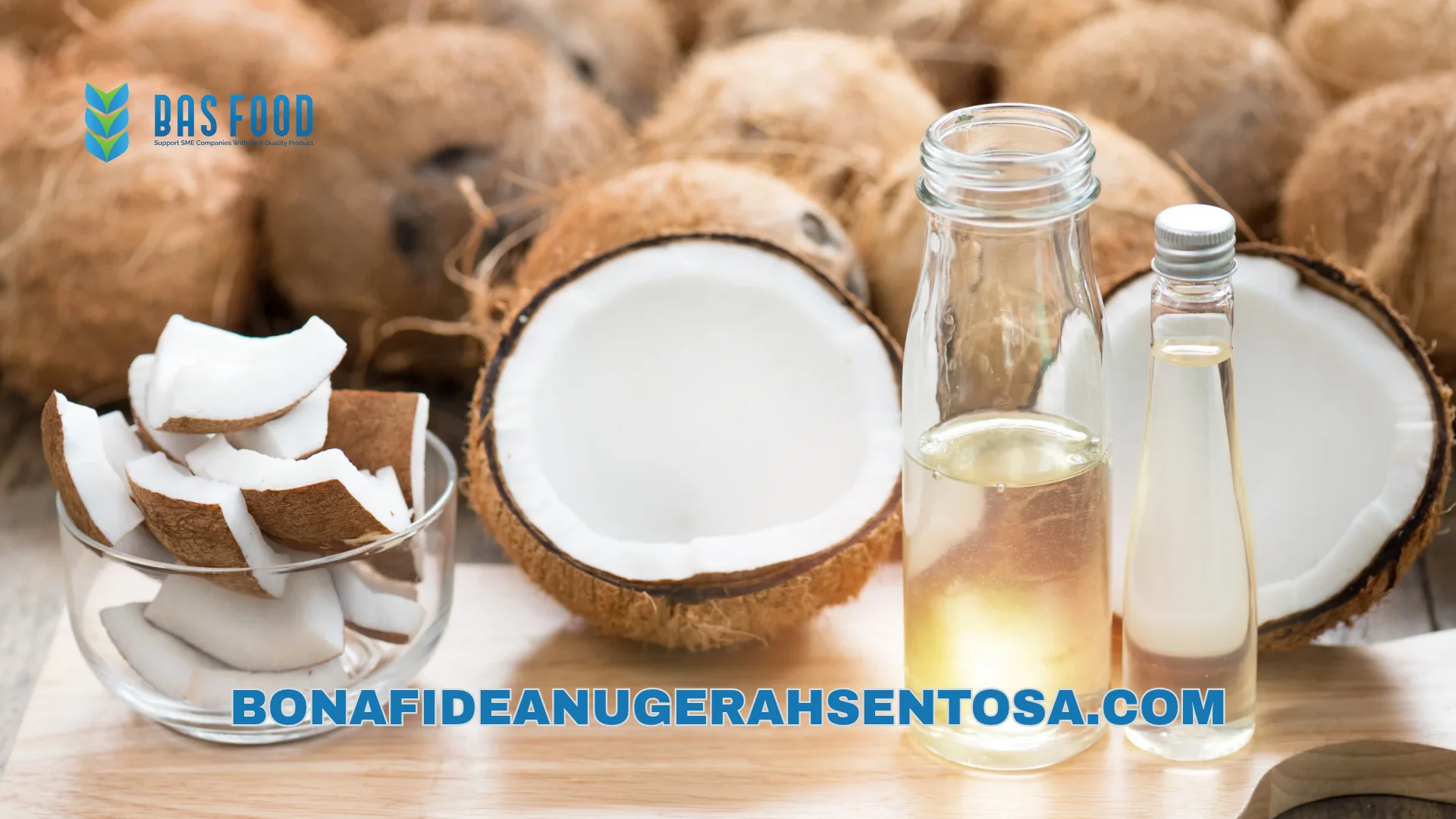
What Is RBD Coconut Oil for Bakery Applications?
RBD coconut oil is coconut oil that undergoes three main processing stages: refining, bleaching, and deodorizing. These steps help reduce unwanted impurities, pigments, free fatty acids, and odor-producing compounds. The result is generally a mild-tasting oil with a neutral aroma.
For bakeries, this neutral profile can be useful when the recipe needs fat functionality without a strong coconut flavor. For example, a manufacturer producing cookies, cakes, or selected pastries may want the other ingredients to define the product’s taste.
RBD coconut oil also has distinctive physical properties. It contains a high proportion of saturated fatty acids, which means it can become solid or semi-solid as temperatures decrease. Its melting behavior influences how it performs in a recipe, so bakeries should evaluate the specific product rather than assume that all coconut oils behave identically.
Why Does Refining Matter?
Raw or less-refined coconut oil can have a more noticeable coconut aroma and flavor. Refining and deodorizing help reduce these sensory characteristics, which may make RBD coconut oil suitable for recipes that require a more neutral fat.
The bleaching stage also helps reduce certain pigments and impurities through appropriate processing methods. Despite the term “bleaching,” this does not mean that manufacturers simply add household bleach to the oil.
Nevertheless, RBD processing does not automatically make every coconut oil suitable for every bakery application. Buyers should still review the product specification, sensory profile, and relevant food safety documentation before approving it for production.
Is RBD Coconut Oil the Same as Bakery Shortening?
No. RBD coconut oil is an oil ingredient, while shortening is a fat product formulated for particular functions in baking and other food applications.
Some shortenings use coconut oil or other vegetable fats as ingredients. However, commercial shortening may contain a carefully selected fat blend and may undergo additional processing to achieve specific plasticity, aeration performance, or melting characteristics.
Consequently, a bakery should not assume that ordinary RBD coconut oil can replace shortening in equal quantities without changing the recipe. Testing is essential to determine whether the oil delivers the desired results.
How RBD Coconut Oil Works in Baked Goods
Fat contributes more than richness to baked goods. It affects the way ingredients combine, how dough or batter handles, how products feel when eaten, and how they behave during storage.
When a bakery uses RBD coconut oil, the result depends on the product formulation and the oil’s physical state during processing. For example, liquid oil behaves differently from solid fat when a baker creams fat with sugar or creates layers in pastry dough.
Therefore, understanding the role of fat in the recipe is the first step toward deciding whether RBD coconut oil is suitable.
Texture and Mouthfeel
Fat can help create a tender texture by limiting the development of gluten in certain dough systems and by influencing the structure of the finished product. It also contributes to the rich mouthfeel that consumers expect from many baked goods.
RBD coconut oil may support these functions in selected recipes. However, its performance depends on the fat’s melting profile, the mixing method, and the balance of ingredients.
For example, a cake made with liquid oil may have a different crumb and mouthfeel from a cake made with a solid fat that is creamed with sugar. Neither result is automatically better. The correct choice depends on the style of cake and the quality targets of the bakery.
Moisture Perception and Freshness
Fat can make baked goods feel moist and tender, although oil does not replace water in a recipe. The actual moisture content depends on ingredients, baking time, temperature, and the product’s ability to retain water.
RBD coconut oil may contribute to a soft eating experience in suitable formulations. However, it does not guarantee a longer shelf life or prevent baked goods from drying out.
To improve freshness, bakeries should also consider packaging, storage conditions, water activity, product size, and the other ingredients in the recipe. A complete formulation approach produces more reliable results than changing the fat alone.
Flavor and Aroma
Because RBD coconut oil generally has a neutral sensory profile, it can suit bakery products where the baker wants vanilla, chocolate, spices, fruit, or other ingredients to stand out.
Even so, the final flavor depends on the quality of the oil and the overall recipe. Buyers should assess a representative sample and conduct a baking trial before approving the ingredient for large-scale use.
Bakery Products That May Use RBD Coconut Oil
RBD coconut oil can be considered for several bakery applications, provided the product’s specifications match the recipe’s requirements. The following examples are potential uses rather than a guarantee that every formulation will perform well with coconut oil.
Cakes and Muffins
Some cake and muffin recipes use liquid oil to produce a tender crumb and a soft eating texture. RBD coconut oil may be suitable for selected recipes, especially when the manufacturer wants to avoid a strong coconut aroma.
However, coconut oil can solidify as the product cools, depending on the recipe and storage temperature. This may affect the final mouthfeel compared with oils that remain liquid at lower temperatures.
For commercial production, bakers should compare test batches with the original recipe. Check the crumb structure, flavor, volume, texture after cooling, and performance during storage.
Cookies and Biscuits
Cookies and biscuits depend heavily on the type and amount of fat used. Fat influences spread, crispness, tenderness, thickness, and the way the dough handles during forming.
RBD coconut oil may work in selected cookie recipes, but it will not necessarily produce the same result as butter or shortening. The melting behavior of coconut oil can affect how quickly dough spreads in the oven.
Before switching fats, a bakery should test dough consistency, portioning, spread, color, crispness, and texture after cooling. These checks are particularly important for automated production lines, where small changes in dough behavior can affect output.
Pastries and Layered Dough
Pastry production often requires fats with specific plasticity and melting characteristics. These properties help bakers create layers, maintain dough structure, and control the final texture.
Standard RBD coconut oil may not provide the plasticity needed for every laminated pastry. Depending on the formulation, a specially formulated bakery fat or shortening may be more appropriate.
Therefore, bakery manufacturers should evaluate the fat’s solid-fat content, melting behavior, and handling characteristics before using it in croissants, puff pastry, or other layered products.
Fillings, Icings, and Coatings
Some fillings, icings, and bakery coatings require fats that contribute to smoothness, firmness, or a particular melting profile. RBD coconut oil may be suitable for selected applications, depending on the other ingredients and desired result.
However, the product may become firm as temperatures fall. This behavior can be useful in some formulations but undesirable in others.
Manufacturers should test the finished product at realistic storage and serving temperatures. They should also evaluate whether the fat affects the product’s stability, appearance, or consumer experience.
RBD Coconut Oil vs. Other Bakery Fats
Choosing a fat is a technical and commercial decision. A bakery must balance performance, ingredient cost, flavor, handling, nutritional considerations, and the expectations of its customers.
RBD coconut oil, butter, margarine, and shortening have different compositions and functional properties. Comparing them helps buyers decide which option deserves a formulation trial.
| Fat ingredient | General characteristics | Potential advantages | Important considerations |
|---|---|---|---|
| RBD coconut oil | Neutral aroma; relatively high saturated-fat content; may solidify as it cools | Useful in selected recipes requiring coconut oil with a mild flavor | Melting behavior can differ from other oils and formulated fats |
| Butter | Dairy fat with characteristic flavor | Rich taste and useful properties in many traditional baked goods | Contains dairy; price and handling can affect production |
| Margarine | Formulated fat product, often containing vegetable oils and water | Can be designed for particular baking uses | Performance depends on the formulation and product grade |
| Shortening | Fat product formulated for specific food applications | Can provide desired texture, handling, and aeration properties | Composition and performance vary by product |
| Liquid vegetable oil | Remains liquid at many common room temperatures | Convenient for some cake and muffin recipes | May not provide the solid-fat structure needed for creaming or layering |
This table provides a general comparison. Specific products can behave differently, so bakeries should evaluate the manufacturer’s technical data rather than rely only on the ingredient category.
Can RBD Coconut Oil Replace Butter?
Sometimes, but not always on a one-to-one basis. Butter contains both fat and water, along with milk solids that contribute to flavor and browning. RBD coconut oil is primarily fat and does not provide the same composition.
Replacing butter with coconut oil may therefore change the moisture balance, flavor, spread, crumb, and color of the finished product. A baker may need to adjust the liquid content or other ingredients to achieve a similar result.
For commercial recipes, conduct controlled trials and record the ingredient ratios, processing conditions, and final product characteristics. This is especially important when a bakery needs consistent results across multiple production batches.
Can RBD Coconut Oil Replace Shortening?
RBD coconut oil may replace shortening in selected recipes, but the two ingredients are not automatically interchangeable. Shortening is often formulated to provide specific physical properties that ordinary oil may not have.
For example, a shortening designed for creaming may hold air differently from a coconut oil that becomes fully liquid during mixing. This can influence the volume and texture of cakes, cookies, and other products.
If a bakery wants to make the switch, it should first identify what the shortening contributes to the recipe. The manufacturer can then test whether RBD coconut oil, a suitable fat blend, or another alternative can deliver the required performance.
The Role of Bakery Fats and Shortening Ingredients
Bakery fats are selected according to their role in the final product. Some fats help create tenderness, while others support aeration, structure, crispness, or a smooth filling texture.
For this reason, choosing bakery fats should begin with a clear understanding of the recipe. A fat that works well in a cake may not perform well in a laminated dough or a high-speed cookie production line.
RBD coconut oil can be one option in the ingredient selection process, but the correct choice depends on the formulation and product requirements.
Understanding Shortening Ingredients
Shortening ingredients can include different vegetable fats and oils, depending on the manufacturer’s formulation and the intended application. Some products are designed for cake production, while others are made for cookies, pastry, fillings, or frying.
Their functional properties may depend on the types of fats used, the blending ratio, and processing methods. Manufacturers may also select fats based on their melting characteristics and solid-fat content.
A bakery should therefore request product-specific information when sourcing shortening. If a recipe calls for shortening with defined handling or aeration properties, ordinary RBD coconut oil should not be assumed to provide the same functionality.
How Fat Choice Affects Production Efficiency
The right fat can help a bakery maintain consistent dough handling, portioning, baking, and finished-product quality. Conversely, an unsuitable fat may cause problems such as excessive spread, uneven texture, or difficulty handling dough.
These issues can affect production speed, waste, and the consistency of products supplied to customers. Therefore, the lowest-priced ingredient may not always deliver the lowest total production cost.
A practical evaluation should consider ingredient price, usage rate, production yield, process changes, product quality, and storage requirements. This broader view helps procurement teams compare options more accurately.
Quality Standards for Bakery-Grade RBD Coconut Oil
Food manufacturers should assess the quality of RBD coconut oil using product specifications and relevant testing. A neutral aroma alone does not prove that an oil meets all requirements for food manufacturing.
The appropriate standards depend on the intended application, buyer requirements, and destination-market regulations. A reliable procurement process should identify these requirements before the supplier ships the product.
Why a Certificate of Analysis Matters
A certificate of analysis, or COA, provides test results for a specific product or batch. It helps the buyer determine whether the supplied material meets the agreed specification.
Review the product name, batch identification, test results, and relevant acceptance limits. For large or critical orders, independent testing may provide additional assurance when appropriate.
Bakery manufacturers should also confirm packaging integrity, batch traceability, and the product’s recommended storage conditions. These controls help protect ingredient quality between receipt and use.
How to Choose an RBD Coconut Oil Supplier
A suitable supplier should be able to explain the product, provide relevant documentation, and communicate clearly about commercial terms. These points matter particularly when sourcing food ingredients internationally.
Start by confirming that the product is food-grade RBD coconut oil and that its specification suits the intended application. If your recipe requires a defined melting range or other special properties, ask for supporting technical information rather than relying on a general product description.
Working with CV Bonafide Anugerah Sentosa
CV Bonafide Anugerah Sentosa operates in the Indonesian commodity export sector. Businesses interested in coconut-derived commodities can contact the company to confirm current product availability, specifications, packaging options, and export terms.
When making an inquiry, explain whether you need RBD coconut oil for cakes, cookies, fillings, or another application. Include your target quantity, destination country, required technical parameters, and packaging preference. This information can help establish whether the requested product matches the company’s current offering.
Buyers may also encounter the search terms coconut sugar exporter supplier, coconut sugar supplier, and exportador de azúcar de coco, which means coconut sugar exporter in Spanish. These keywords relate to coconut sugar sourcing rather than directly describing RBD coconut oil. Therefore, businesses should identify the exact commodity they need and confirm availability instead of assuming that a supplier of one coconut-derived product automatically supplies every other product.
Before confirming a purchase, agree on the product specification, documentation, order quantity, shipping conditions, and procedure for handling any quality issues. Clear communication helps reduce avoidable problems in international procurement.
Conclusion: Make the Right Fat Choice for Better Baking
RBD coconut oil can be a useful ingredient for commercial bakeries that need refined coconut oil with a generally neutral aroma and flavor. Depending on the recipe, it may contribute to tenderness, mouthfeel, and other product characteristics.
However, it is not a universal replacement for butter, margarine, or shortening. Its melting behavior and composition can affect dough handling, aeration, texture, and the quality of finished baked goods. For that reason, bakery manufacturers should review technical specifications, conduct formulation trials, and confirm product suitability before moving to bulk purchasing.
For B2B buyers, the best approach is to match the ingredient to the application, compare total cost of use, and work with suppliers who can provide clear product information. If you are sourcing coconut-derived commodities from Indonesia, contact CV Bonafide Anugerah Sentosa to confirm current availability and discuss the requirements relevant to your business.