
The global demand for palm sugar continues to grow as food manufacturers, wholesalers, distributors, and retailers seek natural sweeteners for a wide range of products. However, producing premium palm sugar is only part of a successful export business. Delivering the product safely, efficiently, and on time is just as important. This is where palm sugar logistics plays a critical role.
Whether you are importing one pallet or multiple shipping containers, understanding the logistics process helps reduce delays, protect product quality, and control transportation costs. Every stage matters, from production planning and packaging to customs documentation, container loading, and final delivery.
Many first-time importers focus only on product specifications and pricing. While these factors are important, overlooking logistics can lead to unexpected expenses, damaged cargo, customs delays, or missed production schedules. Fortunately, careful planning and working with an experienced exporter can prevent many of these problems.
In this guide, we will explain everything buyers need to know about palm sugar logistics, including export logistics, container shipping, freight, international delivery, and why choosing a trusted palm sugar exporter and palm sugar supplier Indonesia can make global sourcing much easier.
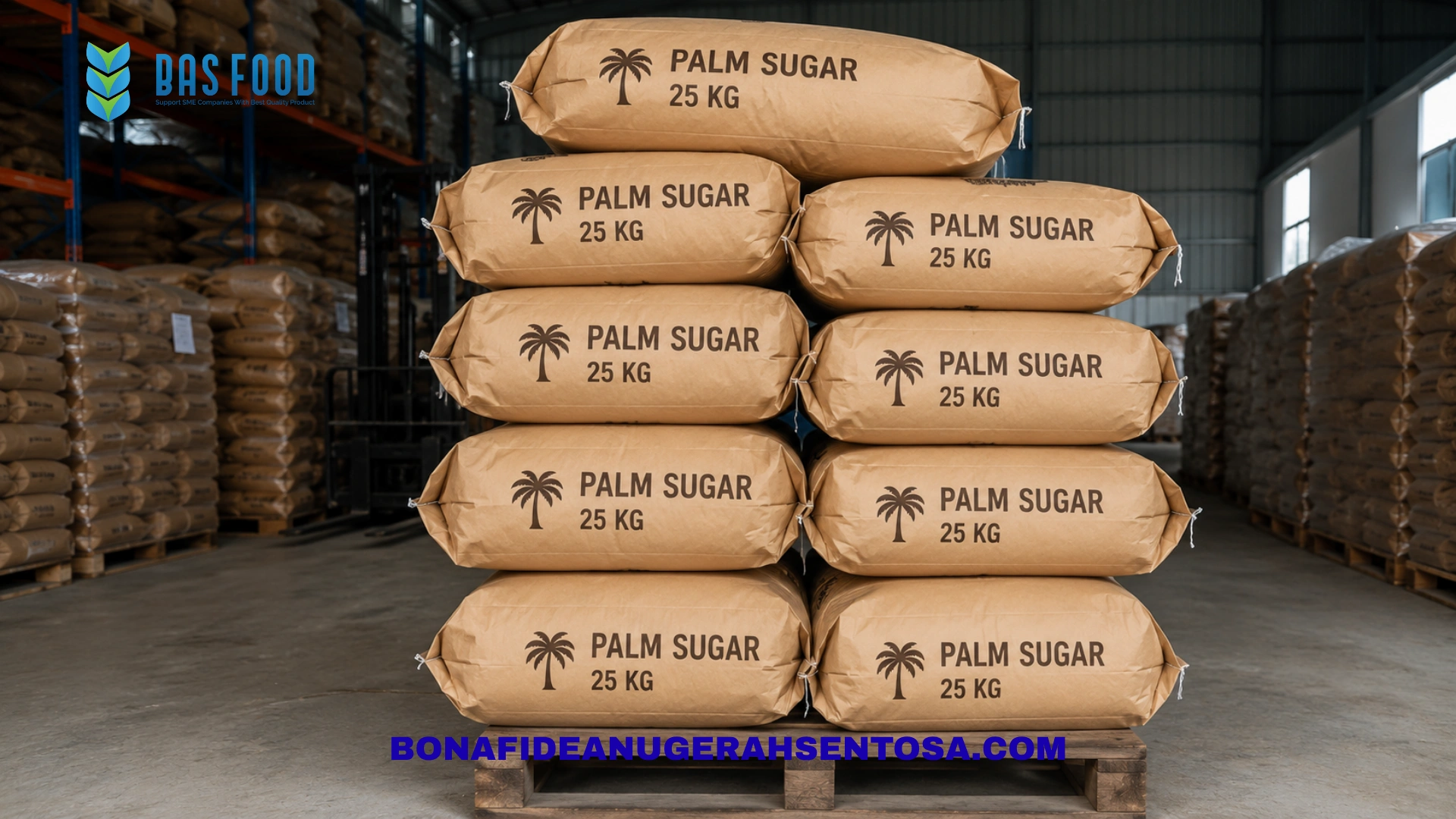
Why Palm Sugar Logistics Matters in International Trade
Logistics is the bridge between production and your warehouse. Even the highest-quality palm sugar has little value if it arrives late, damaged, or with incomplete documentation.
International buyers depend on reliable logistics to maintain production schedules and keep products available for customers. A delayed shipment may interrupt manufacturing, increase storage costs, or create supply shortages.
Good logistics planning improves every stage of the supply chain. It helps suppliers coordinate production with shipping schedules while allowing importers to manage inventory more efficiently.
Reliable logistics also supports stronger business relationships. When deliveries consistently arrive as expected, buyers gain confidence in their suppliers and are more likely to build long-term partnerships.
Understanding the Palm Sugar Export Process
Every export shipment follows a series of coordinated steps before the products reach the destination country.
The process usually begins after the purchase order is confirmed. The supplier prepares raw materials, schedules production, performs quality inspections, and packages the products according to the agreed specifications.
After production is complete, the exporter prepares export documentation, arranges transportation to the port, and books space with the shipping line or freight provider.
Once the container is loaded, customs clearance takes place before the cargo is released for international shipment.
After departure, the shipment travels by sea or another transportation method until it reaches the destination port, where import customs procedures begin.
Understanding each stage helps buyers communicate more effectively with suppliers and logistics partners.
Export Logistics: Coordinating Every Step Efficiently
Professional export logistics involves much more than transporting products from one country to another.
It requires careful coordination between manufacturers, freight forwarders, customs brokers, shipping companies, warehouse operators, and buyers.
Every activity follows a planned schedule to reduce delays and improve efficiency.
Key export logistics activities include:
- Production planning
- Packaging preparation
- Cargo inspection
- Container booking
- Export documentation
- Customs clearance
- Port handling
- Shipment tracking
- Delivery coordination
When these activities are properly managed, products move smoothly through the international supply chain.
Experienced exporters continuously monitor shipment progress and communicate updates with customers throughout the process.
Container Shipping for Palm Sugar
For international trade, container shipping remains one of the most common transportation methods.
Containers protect palm sugar from weather conditions, contamination, and physical damage during long-distance transportation.
Depending on order size, buyers may choose:
- Full Container Load (FCL)
- Less than Container Load (LCL)
FCL shipments are often preferred for larger orders because the entire container is reserved for one customer. This reduces cargo handling and minimizes the risk of contamination from other products.
LCL shipments combine cargo from multiple customers into one container. This option can be economical for smaller orders, although it may require additional handling during consolidation and deconsolidation.
Choosing the right shipping method depends on shipment volume, budget, and delivery schedule.
Freight Planning Helps Reduce Shipping Costs
Transportation costs are an important consideration for every importer.
Effective freight planning helps businesses control expenses while maintaining reliable delivery schedules.
Several factors influence freight costs, including:
- Shipment volume
- Cargo weight
- Packaging dimensions
- Destination country
- Shipping season
- Port congestion
- Fuel prices
- Transportation method
Planning orders in advance often provides greater flexibility when selecting shipping schedules.
Instead of relying on urgent shipments, businesses that forecast demand accurately can often secure more efficient freight arrangements.
Working with experienced logistics providers also helps identify the most suitable transportation options.
International Delivery Requires Careful Coordination
Successful international delivery depends on accurate planning from the factory to the final destination.
Each shipment passes through multiple organizations, including exporters, shipping companies, customs authorities, freight forwarders, and importers.
Clear communication between all parties reduces the risk of misunderstandings and unexpected delays.
Accurate documentation is especially important.
Common export documents include:
- Commercial Invoice
- Packing List
- Bill of Lading
- Certificate of Origin
- Product Specifications
- Laboratory Reports (when requested)
Preparing these documents correctly helps simplify customs procedures while supporting timely delivery.
Packaging Protects Palm Sugar Throughout Transportation
Packaging is one of the most important elements of successful palm sugar logistics.
Palm sugar naturally absorbs moisture from the surrounding environment. Without proper packaging, product quality may decline during transportation or storage.
Professional exporters use packaging materials that help maintain product integrity throughout international shipping.
Common packaging options include:
- Kraft paper bags
- Food-grade inner liners
- Woven polypropylene bags
- Retail pouches
- Bulk packaging
- Private label packaging
- OEM packaging
Additional protection such as pallet wrapping, corner protectors, and moisture control products can further improve shipment security.
Proper packaging reduces product damage while increasing customer satisfaction.
How to Choose a Reliable Palm Sugar Exporter
Selecting the right palm sugar exporter is one of the most important decisions for international buyers.
An experienced exporter offers more than competitive pricing. They also provide reliable communication, quality management, export documentation, and logistics coordination.
Before selecting a supplier, buyers should evaluate:
- Manufacturing experience
- Production capacity
- Export history
- Packaging capabilities
- Documentation support
- Communication quality
- Logistics expertise
- Customer service
Suppliers who understand international trade requirements can often resolve shipping challenges more efficiently.
Strong exporter relationships also improve long-term supply chain stability.
Why Indonesia Is a Leading Palm Sugar Export Hub
Indonesia has become one of the world’s largest producers and exporters of palm sugar.
Its abundant natural resources, experienced farmers, and long history of traditional palm sugar production create a reliable foundation for international supply.
Many companies searching for a dependable palm sugar supplier Indonesia choose export-oriented manufacturers because they combine traditional expertise with modern production systems.
These manufacturers typically offer customized packaging, flexible production capacity, OEM services, private label solutions, and comprehensive export support.
Strong logistics networks also allow Indonesian exporters to serve customers across Europe, North America, Asia, the Middle East, Africa, and many other global markets.
For importers, Indonesia provides both consistent product quality and reliable international shipping capabilities.
Common Logistics Challenges and How to Avoid Them
Every international shipment faces potential risks. Fortunately, many of these challenges can be reduced through proper planning.
Some common logistics issues include:
- Shipping schedule changes
- Port congestion
- Documentation errors
- Packaging damage
- Customs delays
- Weather disruptions
Experienced exporters prepare for these situations by monitoring vessel schedules, verifying documentation, using protective packaging, and maintaining regular communication with logistics partners.
Buyers also benefit from placing orders early rather than waiting until inventory becomes critically low.
A proactive approach significantly reduces supply chain disruptions.
Best Practices for Successful Palm Sugar Logistics
Successful logistics begins long before the shipment leaves the factory.
Importers should forecast demand accurately, confirm product specifications early, and communicate packaging requirements before production starts.
Regular updates between buyers and suppliers help ensure production schedules remain aligned with shipping deadlines.
It is also helpful to review export documentation carefully before shipment to minimize customs issues.
Finally, developing long-term partnerships with experienced suppliers and logistics providers creates greater efficiency, more predictable deliveries, and stronger business relationships over time.
Conclusion
Effective palm sugar logistics is essential for ensuring products arrive safely, on time, and in excellent condition. From export logistics planning and container shipping to efficient freight management and reliable international delivery, every stage of the supply chain contributes to successful global trade.
Choosing an experienced palm sugar exporter with strong logistics expertise can reduce transportation risks, improve communication, and simplify international sourcing. Likewise, partnering with a trusted palm sugar supplier Indonesia provides access to dependable production, customized packaging, and professional export support.
By understanding the complete logistics process and working with reliable partners, importers, distributors, wholesalers, and food manufacturers can build stronger supply chains, improve operational efficiency, and achieve long-term success in the growing global palm sugar market.