
When food manufacturers and distributors buy coconut sugar in bulk, they often focus on price, volume, and shipping. However, the physical form of the sugar also matters. For businesses that need traditional blocks, cakes, discs, or other solid formats, choosing the right moulded coconut sugar supplier can make a big difference in production, storage, handling, and customer satisfaction.
Moulded coconut sugar is made by concentrating coconut sap and forming the cooked sugar into specific shapes while it is still workable. After cooling and setting, the sugar becomes a solid product that can be packed, stored, transported, and used in different food applications. Although the process looks simple, consistent results require good raw material control and careful processing.
For international buyers, the challenge is not simply finding someone who can make coconut sugar blocks. A reliable supplier should understand product specifications, hygiene, packaging, order volume, export requirements, and repeat-order consistency.
This guide explains what B2B buyers should consider when selecting an Indonesian coconut sugar supplier, how moulded coconut sugar is produced, and what to ask before placing a commercial order.
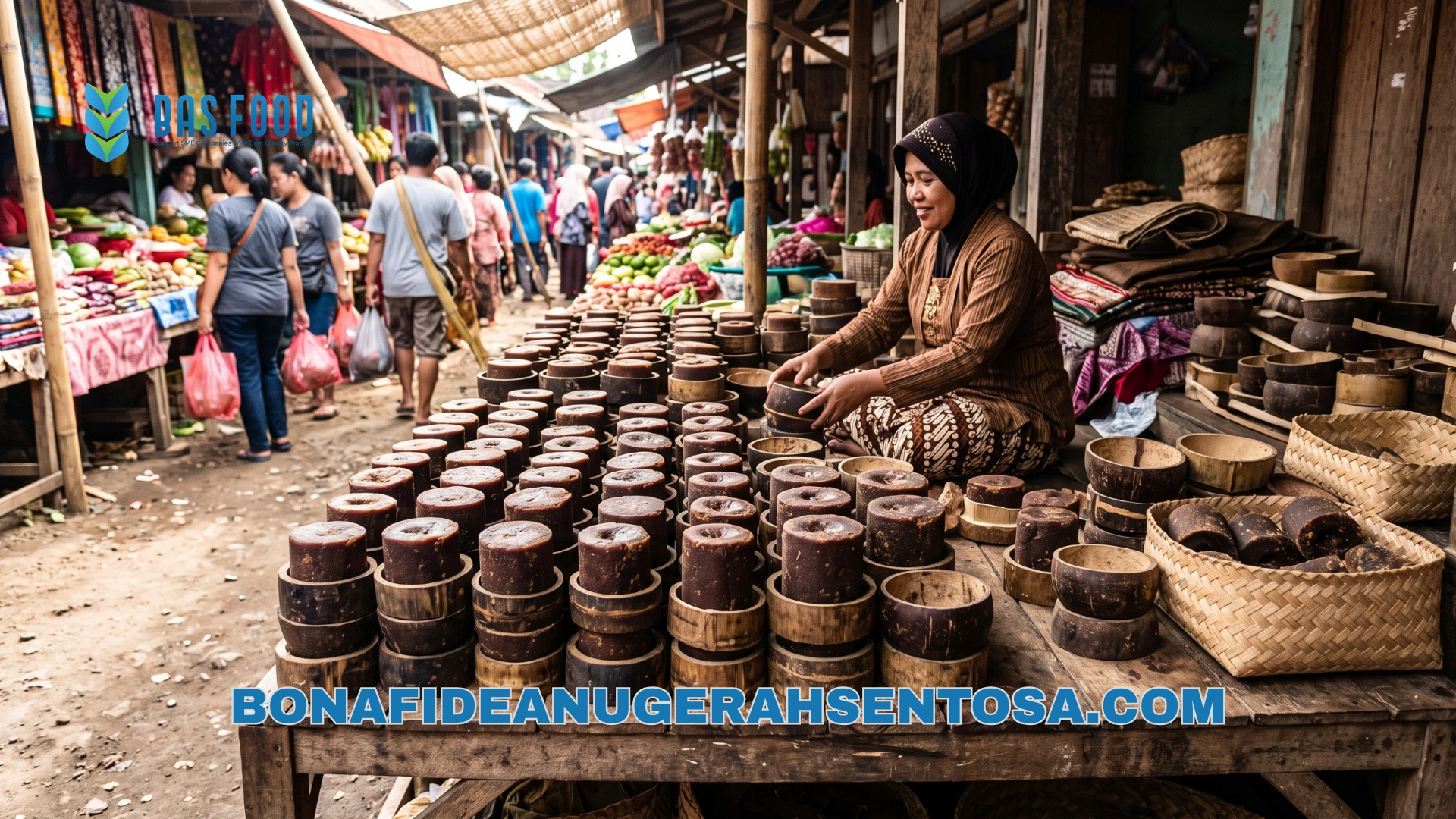
What Is Moulded Coconut Sugar?
Moulded coconut sugar is coconut sugar that has been formed into a solid shape rather than being sold as loose granules or powder. Common formats include blocks, cakes, discs, and other shapes designed according to traditional use or buyer requirements.
The basic raw material is coconut sap collected from coconut flower blossoms. Producers heat the sap to remove water and concentrate its natural sugars. Once the syrup reaches the appropriate stage, workers or production teams transfer it into moulds. The product then cools and becomes firm.
This format remains popular because it is practical for traditional food preparation and certain food-processing applications. It can also offer a familiar appearance for consumers who associate coconut sugar with traditional Indonesian sweeteners.
For B2B buyers, however, the shape is only one part of the product. The buyer should also consider weight, dimensions, moisture, color, aroma, cleanliness, packaging, and shelf-life expectations.
Why the Supplier Matters More Than the Mould
At first glance, it may seem that moulded coconut sugar is a straightforward product. After all, the producer only needs to cook the sap and put it into a mould. In reality, consistent production requires much more control.
Raw coconut sap can naturally vary. The condition of the sap, collection practices, cooking temperature, cooking time, and handling can all influence the finished product.
A professional coconut sugar supplier understands that every stage contributes to the final result. The supplier must manage the raw material and production process carefully enough to deliver a product that remains within the agreed specifications.
This becomes especially important for repeat orders. A buyer may accept a sample shipment, but the real test comes when the supplier delivers the same product several times.
Therefore, supplier evaluation should look beyond photographs and price lists. Buyers should assess production capability, quality procedures, communication, packaging, and the supplier’s ability to support long-term orders.
Understanding the Indonesian Coconut Sugar Supply Chain
Indonesia has a long tradition of producing coconut-based sweeteners. Many producers work with local farmers who collect coconut sap from trees in rural production areas.
The supply chain can involve several stages. Farmers collect the sap, producers or processors receive and handle the raw material, and the sap then moves through cooking, concentration, moulding, cooling, quality checking, and packaging.
This traditional supply chain can provide valuable product knowledge. At the same time, it requires good coordination. Since coconut sap is a natural raw material, handling and timing can influence quality.
An Indonesian coconut sugar supplier should therefore be able to explain where its raw material comes from and how it manages production.
For international buyers, this information helps create a clearer picture of the supply chain. It can also support better planning for quality control, purchasing, and future orders.
How Moulded Coconut Sugar Is Produced
The process begins with coconut sap collection. Farmers collect sap from coconut flower blossoms using established tapping practices. The collected sap is then transported or processed according to the producer’s handling system.
The sap is heated to reduce its water content and concentrate the sugars. During cooking, the producer needs to monitor the process carefully because excessive or insufficient heating can affect the final product.
Once the concentrated coconut sugar reaches the required consistency, the producer transfers it into moulds. The mould determines the final shape and can also influence the product’s weight and dimensions.
After moulding, the sugar is allowed to cool and set. The finished pieces can then undergo inspection before packaging.
For commercial production, every stage matters. A good coconut sugar exporter should be able to coordinate production with the quality requirements of its international customers.
Common Moulded Coconut Sugar Formats
The most familiar format is the coconut sugar block. Blocks can vary in weight and dimensions depending on the traditional market, customer requirements, and production method.
Coconut sugar discs or cakes are another common format. These shapes can be convenient for household use because users can break off or dissolve a portion when preparing food and drinks.
Some buyers may also request custom shapes or dimensions. However, custom moulding should be discussed carefully because it can affect production volume, tooling, packaging, and minimum order quantities.
A supplier should provide clear information about available formats instead of promising every possible shape without checking production feasibility.
For B2B purchasing, the ideal specification should state the desired shape, approximate or exact weight, dimensions, acceptable variation, packaging format, and quantity per carton or outer package.
What Makes a Good Moulded Coconut Sugar Product?
Quality starts with the raw material. Clean and properly handled coconut sap provides the foundation for producing good coconut sugar.
The finished product should also have characteristics that match the buyer’s specification. These may include a consistent shape, suitable hardness, acceptable color, characteristic aroma, appropriate moisture level, and clean appearance.
Physical consistency is especially useful for businesses that purchase bulk coconut sugar. If blocks vary significantly in size or weight, packaging and inventory calculations can become more difficult.
Likewise, excessive moisture can affect the physical stability of the product. It may contribute to a softer texture or other storage problems depending on the product and environment.
Therefore, buyers should evaluate the complete product profile rather than judging quality from appearance alone.
Why Product Specifications Are Important
A clear product specification gives both buyer and supplier the same target. Without one, words such as “premium,” “high quality,” or “large block” can mean different things to different companies.
A B2B specification can include:
- Product name
- Product form
- Block or mould shape
- Individual weight
- Dimensions
- Color
- Aroma
- Taste
- Moisture requirement
- Purity requirements
- Packaging
- Net weight
- Gross weight
- Shelf-life information
- Storage recommendations
- Applicable food safety requirements
The exact specification should depend on the buyer’s application and destination market.
For an international order, the specification should be agreed before production whenever possible. This reduces misunderstandings and gives the supplier a clear reference for quality control.
Choosing Between Traditional and Customized Moulds
Traditional moulded coconut sugar often follows familiar local shapes. These formats can be useful for buyers serving traditional food markets or customers who recognize conventional coconut sugar products.
Customized moulds may be more suitable when a buyer needs a particular weight, shape, or presentation. However, customization may require additional planning.
The buyer should ask whether the supplier already has the required mould. If not, the supplier may need to produce or source a new mould before starting regular production.
This can affect lead time and cost. Therefore, custom moulding should be treated as part of the procurement discussion rather than as a minor packaging detail.
A good coconut sugar mould supplier should be transparent about what can be produced using existing equipment and what requires additional preparation.
Packaging Is Part of Product Quality
Even a well-produced moulded coconut sugar product can experience problems if the packaging does not protect it properly.
Packaging should help protect the sugar from moisture, contamination, physical damage, and unsuitable storage conditions during transportation.
For export shipments, the packaging also needs to withstand handling through multiple stages. Products may be moved from the production facility to a warehouse, loaded into containers, transported internationally, unloaded at the destination, and then distributed to customers.
The appropriate packaging depends on the product, destination, shipping method, and buyer requirements.
Therefore, buyers should ask the supplier for packaging specifications before confirming an order. This is particularly important for bulk coconut sugar shipments.
Storage Considerations for Moulded Coconut Sugar
Moulded coconut sugar should be stored in a clean, dry environment. Moisture control is particularly important because sugar products can interact with moisture from the surrounding environment.
The storage area should also protect the product from direct exposure to water, excessive humidity, heat, contamination, and strong odors.
Good warehouse practices can help maintain the physical condition of the product throughout its intended storage period.
International buyers should also consider the climate of the destination country. A product shipped from a tropical production region may experience different humidity conditions during international transport and storage.
For this reason, storage instructions should form part of the purchasing discussion between the buyer and supplier.
Why Production Consistency Matters for B2B Buyers
A restaurant or household may purchase coconut sugar occasionally. A food manufacturer, however, may use it repeatedly in a commercial recipe.
This creates a different requirement. The buyer needs the product to remain reasonably consistent from shipment to shipment.
For example, significant changes in block weight can create packaging problems. Changes in moisture can affect handling. Differences in color or aroma may affect the finished food product.
Consequently, B2B buyers should not evaluate a supplier only on the first sample. They should also ask how the supplier manages repeat production.
A reliable coconut sugar exporter should understand the importance of consistency and should have a process for checking products against agreed specifications.
Bulk Coconut Sugar Purchasing: What Buyers Should Plan
When purchasing bulk coconut sugar, buyers should calculate more than the purchase price per kilogram.
Consider the required annual volume, shipment frequency, packaging, storage capacity, lead time, transport costs, import requirements, and expected product shelf life.
It is also useful to estimate how much product will be needed per production cycle. This can help determine whether moulded blocks are practical or whether another format, such as granules, would be more efficient.
For some food manufacturers, moulded sugar works well because it fits their traditional processing method. For others, granulated coconut sugar may reduce preparation time.
The right format depends on the buyer’s operation.
The Role of CV Bonafide Anugerah Sentosa
CV Bonafide Anugerah Sentosa is an Indonesian supplier and exporter of coconut sugar and other Indonesian agricultural products. For B2B buyers evaluating potential suppliers, the company can be considered as part of a broader supplier qualification process.
When discussing a moulded coconut sugar order, buyers should communicate the required format and specifications clearly. This can include block weight, dimensions, packaging, quantity, quality requirements, and destination market.
The same principle applies when buyers are looking for a coconut sugar supplier or coconut sugar mould supplier for long-term purchasing. Clear specifications help both parties understand what needs to be delivered.
Buyers should confirm current product availability, specifications, packaging options, minimum order quantities, certifications, and export documentation directly with the supplier before placing an order.
How to Compare Moulded Coconut Sugar Suppliers
Price is important, but it should not be the only comparison point.
A useful supplier comparison can include:
| Evaluation Area | What Buyers Should Check |
|---|---|
| Product quality | Color, aroma, texture, moisture and purity |
| Mould format | Shape, weight and dimensions |
| Production | Capacity and consistency |
| Raw material | Coconut sap sourcing and handling |
| Packaging | Protection against moisture and damage |
| Documentation | Product and export documents |
| Communication | Response time and clarity |
| MOQ | Suitability for purchasing volume |
| Lead time | Ability to meet production schedules |
| Export support | Experience with international shipments |
This approach creates a more balanced supplier assessment.
For example, a supplier with a slightly higher price may provide better consistency, packaging, communication, or export support. Over time, those factors can be more valuable than a small difference in the initial purchase price.
Building a Long-Term Supplier Relationship
Once a suitable supplier has been selected, the relationship should not stop at the first shipment.
Buyers can improve consistency by maintaining an approved product specification and reference sample. Both sides can then use the same standard when discussing future orders.
Regular communication is also useful. Buyers can share changes in demand, packaging requirements, forecast volumes, or new product applications ahead of time.
Meanwhile, suppliers can communicate production schedules, lead times, and any factors that could affect availability.
This type of communication is especially valuable for businesses that depend on regular shipments of coconut sugar.
The Future of Moulded Coconut Sugar in Global B2B Markets
Coconut sugar continues to attract interest from food businesses looking for distinctive natural sweeteners and traditional ingredients. While granulated formats are convenient for industrial applications, moulded coconut sugar remains relevant for traditional foods, specialty products, retail markets, and businesses that value its familiar physical form.
For Indonesian producers, this creates opportunities to serve different types of international buyers. However, long-term success depends on more than access to coconut sap. Suppliers need to combine traditional production knowledge with consistent quality control, appropriate packaging, clear specifications, and reliable export support.
For buyers, the opportunity is equally practical. A well-qualified supplier can provide a stable source of moulded coconut sugar while helping the buyer manage quality, volume, and logistics.
Conclusion: Choosing the Right Moulded Coconut Sugar Supplier
Finding the right moulded coconut sugar supplier is not simply about finding the lowest price. B2B buyers need to consider product quality, mould dimensions, block weight, production consistency, packaging, storage, documentation, and export capability.
An experienced Indonesian coconut sugar supplier should be able to explain the production process and provide clear information about the product. Buyers should also request samples and agree on specifications before moving to regular purchasing.
For businesses looking for bulk coconut sugar, the choice between moulded and granulated formats should depend on the intended application. Moulded sugar can be an excellent option for traditional food production, specialty products, and markets that prefer solid coconut sugar formats.
At the same time, businesses should evaluate suppliers as long-term partners rather than one-time vendors. Clear communication, realistic specifications, consistent production, and dependable export support can make the entire sourcing process easier.
For companies considering CV Bonafide Anugerah Sentosa as a potential supplier, the best next step is to discuss the exact product requirements directly. Buyers can specify the desired mould shape, block weight, dimensions, packaging, volume, destination, and other technical requirements.
In the end, the best supplier is one that can consistently deliver the product your business actually needs. When product specifications, production capability, and export requirements all line up, moulded coconut sugar can become a practical and reliable ingredient for international food businesses.