
The popularity of coconut-based products has grown rapidly in the past decade. Among the most discussed are MCT oil and coconut oil. When considering MCT oil vs coconut oil, it’s important to note that while both come from coconuts, they are not the same. Shoppers, health enthusiasts, and importers often get confused about which one to choose.
This article will take a close look at MCT Oil vs Coconut Oil, exploring what sets them apart, their benefits, and their roles in different industries. We will also highlight how suppliers like CV Bonafide Anugerah Sentosa, a trusted coconut supplier and spices exporter from Indonesia, contribute to the global coconut trade.
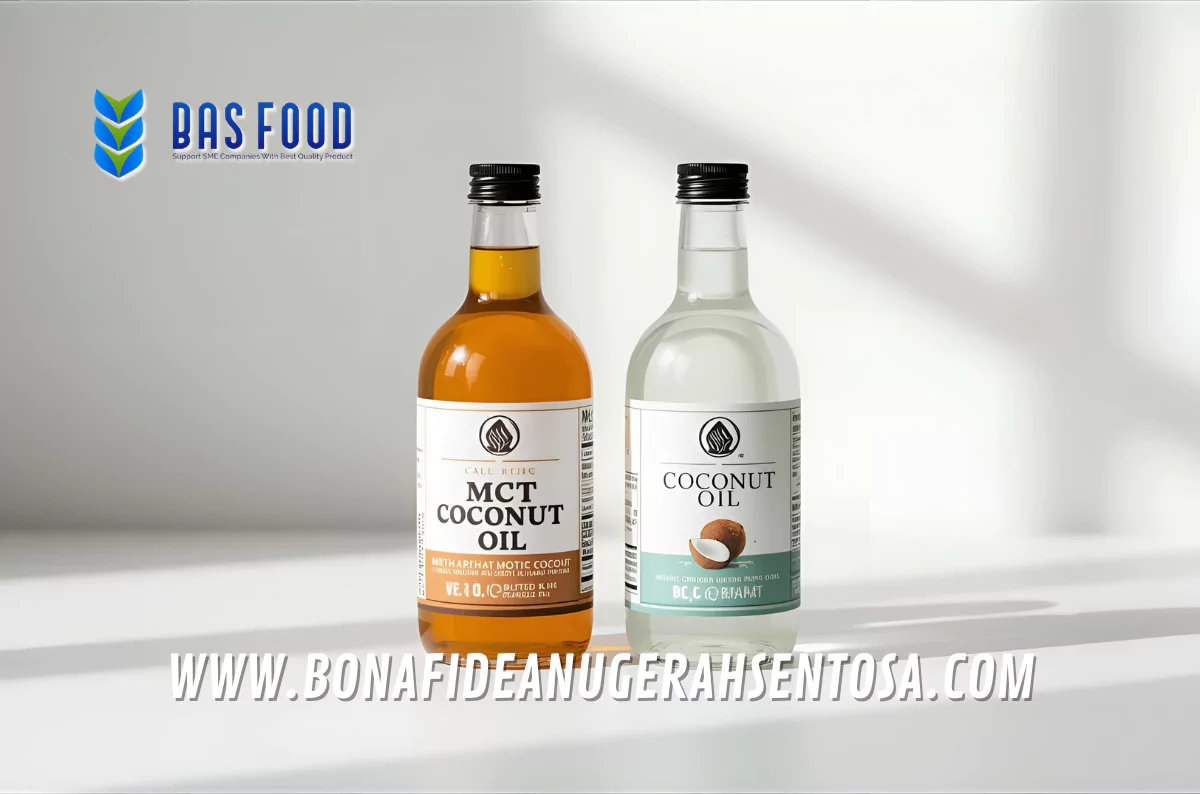
What Is Coconut Oil?
Coconut oil is a natural oil extracted from the meat of mature coconuts. It has been used for centuries in cooking, skincare, and traditional medicine. The oil contains a mixture of fatty acids, including both medium-chain triglycerides (MCTs) and long-chain triglycerides (LCTs).
Traditionally, coconut oil is available in two main forms: virgin coconut oil (VCO) and refined coconut oil (RBD oil). Virgin coconut oil is less processed, often made through cold-pressing, while refined oil undergoes more steps to remove impurities. Both, however, retain a natural coconut aroma and flavor that many consumers appreciate.
When it comes to the coconut oil comparison, one clear feature is that it is versatile. You can cook with it, bake with it, or apply it directly to the skin. Yet, despite its versatility, it is not as concentrated in pure MCTs as specialized oils derived from coconuts.
What Is MCT Oil?
MCT oil stands for medium-chain triglyceride oil, which refers to a type of fat made up of shorter fatty acid chains. Unlike regular coconut oil, pure MCT oil is refined to isolate only medium-chain fatty acids, usually caprylic acid (C8) and capric acid (C10).
This process often involves creating fractionated coconut oil, where the long-chain fatty acids are removed. The result is a clear, flavorless oil that stays liquid at room temperature. MCT oil is valued in the health and fitness industry because the body absorbs and uses it quickly for energy.
Unlike coconut oil, MCT oil does not have a coconut flavor, making it a popular additive in coffee, smoothies, and dietary supplements. It has become especially popular in keto and low-carb communities for its quick energy boost and metabolism support.
MCT Oil vs Coconut Oil: Key Nutritional Differences
When we compare MCT Oil vs Coconut Oil, the most important distinction lies in their fatty acid composition. Coconut oil contains about 55–65% MCTs, while MCT oil is close to 100% pure MCT oil.
This difference means coconut oil provides a balanced mix of both short and long-chain fats, while MCT oil delivers a concentrated source of energy. As a result, MCT oil is digested faster and does not require bile acids to be absorbed. This makes it ideal for people with digestive issues or those looking for immediate energy.
In terms of calories, both oils are similar, since all fats provide about 9 calories per gram. However, the coconut oil comparison shows that MCT oil is metabolized more efficiently and is less likely to be stored as fat in the body. That’s one reason athletes and dieters prefer it.
Health Benefits: Coconut Oil vs MCT Oil
Both oils offer benefits, but in different ways. Coconut oil is rich in lauric acid, which has antimicrobial and immune-boosting properties. It’s also a common ingredient in skincare products, acting as a natural moisturizer and hair conditioner.
MCT oil, on the other hand, is prized for its quick energy release. Since it bypasses the typical digestion process, it enters the bloodstream rapidly. Research suggests MCTs may support weight management, brain health, and athletic performance.
While coconut oil is great for everyday cooking and beauty use, MCT oil is often marketed as a supplement. The MCT Oil vs Coconut Oil debate is not about which is better overall, but which is more suited to your goals.
Culinary Uses: Cooking, Baking, and Beyond
In the kitchen, coconut oil is well-loved for frying, sautéing, and baking. Its natural coconut flavor enhances curries, desserts, and tropical recipes. Virgin coconut oil has a lower smoke point than refined versions, but both are suitable for high-heat cooking.
MCT oil, however, is not meant for high-heat cooking. It has a lower smoke point, which makes it unsuitable for frying. Instead, people use it in coffee, smoothies, or salad dressings. Because it is odorless and flavorless, it doesn’t affect the taste of food.
This coconut oil comparison highlights a key difference: coconut oil is versatile for traditional cooking, while MCT oil works best as a dietary supplement or light addition to meals and drinks.
Industrial and Commercial Applications
Beyond kitchens and health stores, both oils have roles in the cosmetic, pharmaceutical, and wellness industries. Coconut oil is widely used in soap-making, hair oils, and skincare. Its moisturizing properties make it a favorite ingredient for lotions and balms.
MCT oil, particularly fractionated coconut oil, is used as a carrier oil in aromatherapy, massage therapy, and pharmaceutical formulations. Because it is stable, lightweight, and non-greasy, it is often preferred over raw coconut oil for these applications.
Suppliers like CV Bonafide Anugerah Sentosa play an important role in delivering high-quality coconut derivatives to global markets. Based in Indonesia, they are a trusted coconut supplier and spices supplier, providing products such as coconut oil, MCT oil, and fractionated coconut oil to importers worldwide.
Which One Should You Choose?
Choosing between MCT oil vs coconut oil depends on your needs. If you want a versatile kitchen oil with natural coconut aroma, go for coconut oil. If your focus is quick energy, weight management, or supplement use, MCT oil is the better option.
Importers and bulk buyers often stock both, since consumer demand spans culinary, wellness, and cosmetic industries. Having both options ensures you can serve a wide range of markets, from food manufacturers to beauty brands.
Conclusion: The Coconut Connection
At the end of the day, MCT oil vs coconut oil is not a competition but a complement. They serve different functions, even though they come from the same fruit. Coconut oil brings flavor, tradition, and versatility, while MCT oil delivers concentrated energy and specialized applications.
For importers looking to source high-quality coconut-based products, suppliers like CV Bonafide Anugerah Sentosa stand out. With expertise in exporting coconut oil, MCT oil, spices, and other natural commodities from Indonesia, they connect local farmers with global demand.
Contact CV Bonafide Anugerah Sentosa how we can provide the best solutions for you. WhatsApp: +62 8213 4505 737, Email: info@bonafideanugerahsentosa.com / bas.mdir@gmail.com.