
Indonesia is known as the heart of tropical agriculture, producing some of the finest natural ingredients the world has ever seen. Among them, coconut sugar stands out as a symbol of tradition, sustainability, and craftsmanship. The coconut sugar export process represents not just a trade flow but a story of community empowerment and international collaboration.
From local coconut farmers tapping nectar in rural Java to global importers distributing organic sweeteners across Europe, the export journey of coconut sugar is a complex but inspiring process. Every grain of coconut sugar carries with it a story—one that starts under the tropical sun and ends on the shelves of premium food stores worldwide.
The Roots of Coconut Sugar Production in Indonesia
The journey begins in the coconut groves of Indonesia, where millions of smallholder farmers produce sap from coconut blossoms daily. This natural process has been passed down through generations. The sap, collected early in the morning, is then slowly heated and crystallized into golden-brown sugar.
Unlike industrial sugarcane refining, coconut sugar production relies heavily on manual skills and sustainable farming practices. Farmers use traditional earthen pots and natural wood fires, maintaining both the purity and authenticity of the product. This artisanal method forms the foundation of Indonesia’s coconut sugar export process, setting it apart from synthetic sweeteners and heavily processed sugars.
Quality Control: From Sap to Export-Ready Sugar
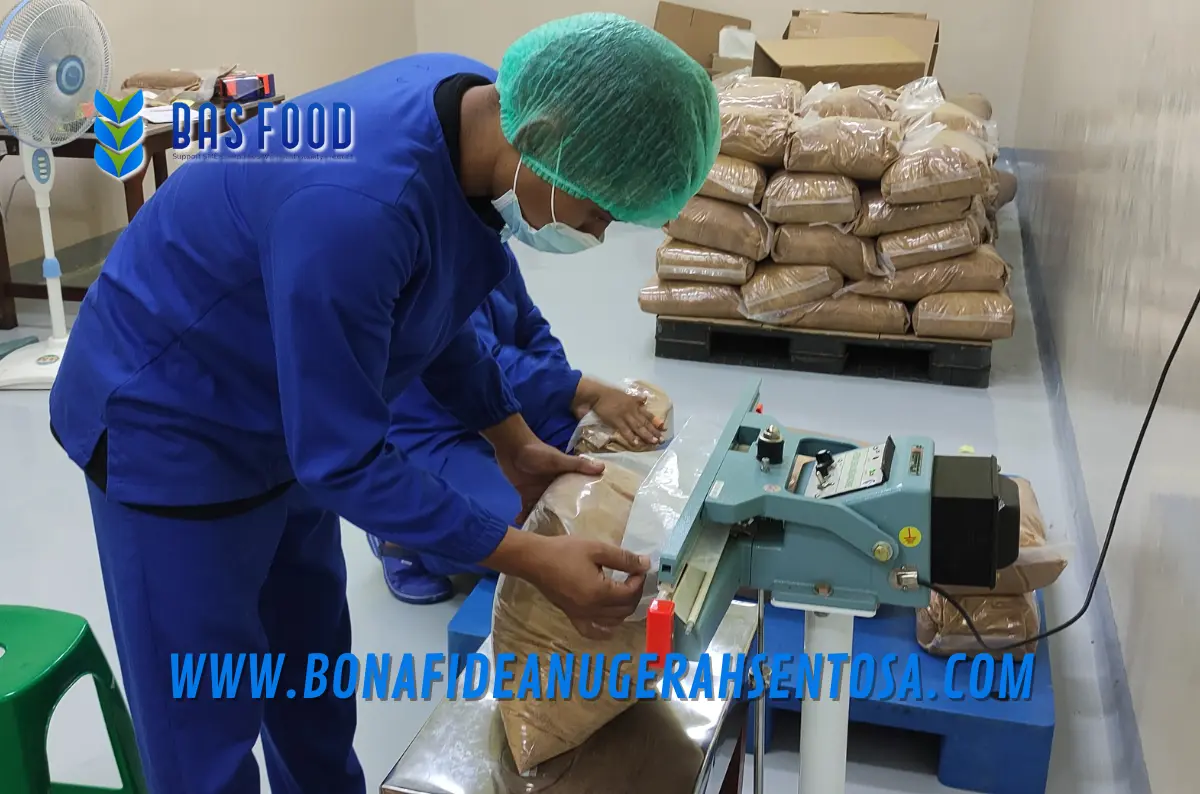
Quality assurance is at the heart of the export journey. For global buyers, consistency and safety are non-negotiable. Therefore, every exporter—such as CV Bonafide Anugerah Sentosa—implements strict packaging standards, moisture control, and microbial testing before shipment.
Before export, coconut sugar is sieved to uniform granulation sizes, dried to maintain ideal moisture content, and tested for contaminants in accredited laboratories. Each batch is then certified under international quality schemes such as USDA Organic, EU Organic, and HACCP to meet global trade requirements. The goal is simple: to ensure that every shipment maintains the same taste, purity, and quality as it had at the source.
Export Documentation: The Backbone of International Trade
Once the coconut sugar meets export quality standards, the next critical step is export documentation. These legal and logistical documents ensure smooth clearance at ports and compliance with international regulations. For exporters like Bonafide, this includes a Certificate of Origin, Phytosanitary Certificate, Bill of Lading, and Invoice Documentation.
Each document serves a vital function. The Certificate of Origin verifies the product’s Indonesian roots, while the Phytosanitary Certificate guarantees the product’s safety and cleanliness. Proper documentation not only supports transparency but also builds trust with global buyers who demand traceable and verifiable sourcing.
Packaging Standards: Protecting Quality Across Long Distances
Packaging is more than aesthetics—it’s a safeguard for quality during international shipment. Coconut sugar’s natural texture can be sensitive to humidity, so exporters must use moisture-proof and food-grade packaging materials. Common options include multi-layer kraft paper bags, vacuum-sealed pouches, and bulk cartons with plastic liners.
For large-scale bulk coconut sugar exports, packaging integrity ensures that the product arrives at its destination in perfect condition. Exporters like CV Bonafide Anugerah Sentosa adhere to packaging standards aligned with buyer requirements, including labeling in compliance with import country regulations. Whether shipped to the United States, Japan, or the Middle East, consistency in presentation and protection defines professional export operations.
Logistics and International Shipment: From Port to Port
Once the sugar is packed and paperwork complete, the international shipment stage begins. Indonesia’s strategic location gives it access to major global shipping routes. Most coconut sugar shipments are handled via sea freight from major ports like Tanjung Priok (Jakarta), Tanjung Perak (Surabaya), or Semarang.
Freight options vary depending on order size and urgency. Full Container Load (FCL) shipments are preferred for large-scale exports, ensuring product security and easier customs clearance. Less than Container Load (LCL) options suit smaller orders. Each shipment is tracked carefully to ensure timely arrival and quality retention upon delivery.
Export Challenges and How Indonesia Overcomes Them
The coconut sugar export process is not without challenges. Logistics, fluctuating global prices, and varying import regulations can all influence trade flows. However, Indonesian exporters have continually adapted through innovation and collaboration with international certification bodies.
Exporters like CV Bonafide Anugerah Sentosa invest in research, farmer training, and efficient processing to ensure a consistent supply chain. By aligning local production methods with international expectations, Indonesia has solidified its reputation as a global trade leader in natural coconut-based products.
Global Trade Impact: Indonesia as a Leading Coconut Sugar Exporter
Today, Indonesia ranks among the top coconut sugar exporting countries, supplying markets in Europe, North America, and Asia. The product’s global demand has increased as consumers prefer sustainable and ethically sourced alternatives to refined sugar.
Indonesia’s dominance in this sector is supported by a strong network of exporters and farmer cooperatives. These collaborations help maintain product quality while empowering local communities. The result is a thriving ecosystem where sustainability meets profitability—an ideal combination in the competitive landscape of global trade.
Sustainable Practices and Farmer Empowerment
At the core of this industry are the coconut sap farmers, whose daily work sustains both local economies and global supply chains. Through fair trade programs and training, these farmers learn best practices for tapping, processing, and organic compliance.
Exporters such as CV Bonafide Anugerah Sentosa ensure that sustainability remains a priority. By providing fair wages, supporting reforestation, and reducing waste in production, Bonafide contributes to an ethical and eco-friendly coconut sugar export process. This human-centered approach strengthens Indonesia’s reputation as a responsible and forward-thinking supplier.
The Role of CV Bonafide Anugerah Sentosa in Global Coconut Sugar Trade
As one of Indonesia’s trusted exporters, CV Bonafide Anugerah Sentosa plays a crucial role in connecting small-scale producers with international buyers. The company specializes in coconut products, spices, and fishery goods—offering reliable quality, consistency, and transparency in every shipment.
Bonafide’s commitment to sustainability, combined with modern production facilities and global certifications, has made it a preferred partner for importers seeking premium, ethically sourced ingredients. Its track record in international shipment and export documentation ensures that buyers experience a smooth process from order to delivery.
Future Trends: Where the Coconut Sugar Industry Is Heading
The future of the coconut sugar export process looks promising. With global demand for natural and sustainable sweeteners rising, exporters are investing in innovation—such as improved drying technology, bulk automation, and traceability systems.
As global awareness about fair trade and eco-friendly sourcing grows, more brands will prioritize suppliers who meet sustainability benchmarks. Indonesia, with its abundant coconut resources and experienced exporters, is poised to remain at the forefront of the coconut sugar trade for decades to come.
Conclusion: A Journey of Sweet Success from Indonesia to the World
The export of coconut sugar is far more than a business operation—it’s a story of heritage, quality, and global connection. From traditional tapping in rural farms to certified packaging and overseas logistics, every stage reflects Indonesia’s dedication to excellence.
Through responsible exporters like CV Bonafide Anugerah Sentosa, the coconut sugar export process has become a model for how developing nations can merge tradition with innovation to succeed in global trade. As the world continues to value authenticity and sustainability, Indonesian coconut sugar will remain one of the country’s sweetest contributions to international markets.
Contact CV Bonafide Anugerah Sentosa how we can provide the best solutions for you. WhatsApp: +62 8213 4505 737, Email: info@bonafideanugerahsentosa.com / bas.mdir@gmail.com.