
Virgin coconut oil (VCO) has become an important ingredient for food manufacturers, personal care brands, cosmetic producers, and international buyers. Its natural coconut aroma, light texture, and wide range of applications make it an attractive product in global markets. However, not all virgin coconut oil comes from the same manufacturing process. The production method can influence the oil’s aroma, appearance, moisture level, quality, and suitability for different applications.
Understanding virgin coconut oil production methods helps buyers make better sourcing decisions. It also allows manufacturers to ask more informed questions about raw materials, extraction techniques, processing conditions, and quality control.
In this guide, we explore the main production methods, explain how each process works, and discuss the factors that buyers should consider when sourcing VCO from Indonesia.
Why Production Methods Matter for VCO Quality
The manufacturing method affects more than how producers extract oil. It can influence the product’s aroma, clarity, moisture content, free fatty acid level, and overall stability. For example, a well-controlled process can help preserve the natural characteristics of coconut oil while reducing unwanted water and impurities.
Temperature is another important factor. Excessive heat may change the oil’s aroma and other quality characteristics. However, this does not mean every process involving heat automatically produces poor-quality oil. The actual result depends on temperature, processing time, equipment, raw material condition, and process control.
Hygiene also plays a major role. Fresh coconut meat and coconut milk can spoil if producers handle them poorly or leave them exposed for too long. Clean equipment, suitable processing areas, and proper handling help reduce contamination risks.
For B2B buyers, understanding these factors makes supplier evaluation easier. Instead of asking only whether a product is virgin coconut oil, buyers should ask how the oil is extracted, how moisture is controlled, and what quality tests the producer performs.
Wet Processing: Extracting Oil from Fresh Coconut Milk
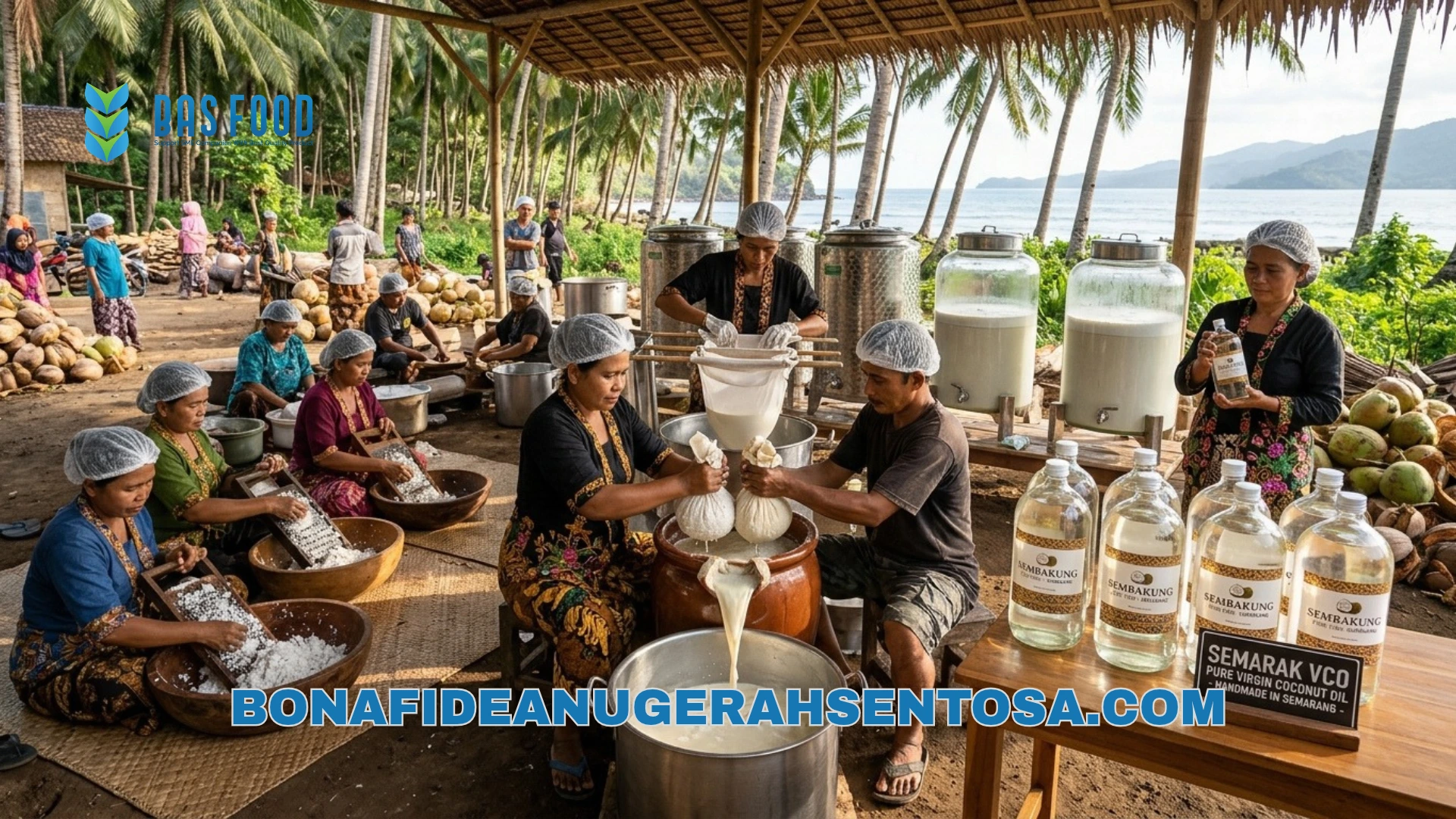
Wet processing is one of the traditional approaches to virgin coconut oil production. In this method, producers first grate fresh coconut meat and press or extract it with water to obtain coconut milk. The milk contains water, oil, and dissolved or suspended coconut components.
The next step is separating the oil from the water and coconut solids. Producers can use several techniques, including controlled fermentation, heating, or mechanical separation. Each technique has different processing requirements and produces different results.
Controlled fermentation
In controlled fermentation, producers allow coconut milk to separate over a managed period. Natural changes in the coconut milk help separate the oil layer from the water-based components and curd. The separated oil can then be collected and filtered.
Although this method uses a traditional process, it still requires careful control. Temperature, time, hygiene, and the condition of the coconut milk can affect the result. Poor handling may encourage unwanted microbial activity, off-odors, or inconsistent quality.
Therefore, producers should not treat fermentation as a process that can run without supervision. They need clear operating procedures and suitable quality checks to maintain consistency between batches.
Heating-based separation
Some wet-processing techniques use controlled heating to help separate oil from coconut milk. Heat encourages water removal and changes the structure of the coconut milk components, making oil separation easier.
However, producers must manage temperature and processing time carefully. Excessive heating may affect the natural aroma and other characteristics of the finished oil. Buyers interested in this method should ask about the actual temperature range and how the producer controls the process.
Centrifugal Extraction: Separating Oil with Mechanical Force
Centrifugal extraction uses a machine to separate coconut oil from the other components of coconut milk. The equipment spins the mixture at high speed, creating a force that helps separate materials according to their density.
In a typical process, producers prepare fresh coconut milk and feed it into a suitable centrifuge. The machine separates the oil-rich fraction from water and other components. Depending on the equipment and process design, additional separation stages may improve the purity of the oil.
One advantage of centrifugal extraction is that it can reduce reliance on long fermentation periods. It also allows producers to manage processing conditions more consistently when they use suitable equipment and operating procedures.
Nevertheless, centrifugal extraction does not guarantee superior quality by itself. The condition of the raw coconut, cleanliness of the equipment, separation efficiency, and post-extraction handling all influence the final product.
For buyers, useful questions include:
- Does the producer use a food-grade centrifuge?
- How does the producer clean and maintain the equipment?
- Does the process include additional filtration or moisture removal?
- What quality parameters does the producer test after extraction?
- Can the supplier provide a batch-specific Certificate of Analysis (COA)?
These questions help buyers understand whether the production process matches their quality requirements.
Cold-Pressed Virgin Coconut Oil: A Mechanical Approach
Cold pressing is another method associated with virgin coconut oil production. Producers use mechanical pressure to extract oil from prepared coconut material without relying on conventional high-temperature refining.
The exact process depends on the equipment and raw material preparation. Some producers press fresh coconut meat or prepared coconut material, while others use different mechanical arrangements designed to recover oil efficiently.
The term cold-pressed should be interpreted carefully. It does not always mean that the entire production process takes place at a very low temperature. Mechanical pressing can generate friction and heat, so producers need to monitor actual processing temperatures if temperature control is important to the buyer.
Cold pressing can offer a relatively direct extraction route. However, the process may leave some oil in the remaining coconut material, depending on the press design and operating conditions. Producers must balance extraction efficiency with the desired product characteristics.
For international buyers, it is useful to request details about the raw material, pressing equipment, temperature monitoring, filtration, and finished-oil specifications. This information provides a clearer picture of what the supplier means by cold-pressed VCO.
Expeller Pressing and Other Mechanical Extraction Techniques
Expeller pressing uses a mechanical screw press to apply continuous pressure to coconut material. As the screw rotates, it moves the material through the press and forces oil out through openings in the equipment.
This technique is widely used in vegetable oil processing. However, the suitability of a particular expeller system for virgin coconut oil depends on the raw material preparation and processing conditions. Some systems process dried coconut material, which may produce oil with characteristics different from VCO made from fresh coconut.
For that reason, buyers should not assume that every mechanically pressed coconut oil qualifies as virgin coconut oil. They should confirm whether the producer uses fresh coconut material and whether the process meets the product definition and requirements of the intended market.
Mechanical extraction can offer advantages in terms of process control and production efficiency. At the same time, producers must manage heat generated by friction, prevent contamination, and ensure that the finished oil meets the required quality specifications.
When comparing suppliers, ask them to explain the full process rather than relying only on terms such as expeller-pressed, natural, or virgin.
Dry Processing and Its Difference from Wet Processing
Dry processing generally involves removing moisture from coconut meat before extracting the oil. Producers may dry the coconut meat to create copra or another dried coconut material, then use mechanical pressing or other extraction techniques.
This approach is common in conventional coconut oil manufacturing. However, it is important to distinguish traditional copra-based oil production from virgin coconut oil made from fresh coconut meat.
Drying conditions can influence the quality of the raw material and the resulting oil. Poorly dried or improperly stored coconut material may develop undesirable odors or become contaminated. These issues can affect the finished product.
In addition, oil extracted from dried copra may require refining to achieve the desired color, aroma, flavor, and other specifications. This is one reason why copra-based crude coconut oil and RBD coconut oil should not automatically be classified as VCO.
For buyers seeking virgin coconut oil, the most important question is whether the supplier’s process uses fresh coconut material and meets the relevant product requirements. Ask for a process description and supporting quality documentation before placing a bulk order.
Filtration, Moisture Control, and Quality Testing
Oil extraction is only one part of virgin coconut oil production. After separation, producers may need to filter the oil to remove fine coconut particles and other suspended materials. Filtration helps improve clarity and prepares the oil for packaging.
Moisture control is especially important. Water remaining in the finished oil can affect storage stability and may encourage quality deterioration. Producers therefore need suitable separation, drying, or other moisture-control steps based on their process.
Quality testing helps confirm whether the finished product meets buyer specifications. Common parameters to discuss include:
- Moisture and volatile matter: Indicates the amount of water and other volatile substances in the oil.
- Free fatty acid (FFA): Helps assess hydrolytic deterioration.
- Peroxide value: Provides an indication of primary oxidation.
- Appearance and clarity: Helps identify visible particles, cloudiness, or unusual color.
- Odor and flavor: Helps confirm whether the oil has the expected sensory characteristics.
- Fatty acid profile: Helps verify the oil’s composition when required by the buyer or applicable standard.
Testing requirements vary by market, application, and customer specification. Buyers should request a current product specification sheet and a batch-specific COA. If the product will be used in food manufacturing, they should also confirm the applicable food safety and regulatory requirements in the destination country.
Packaging and Storage: Protecting Quality After Production
Even well-produced virgin coconut oil can lose quality if producers package or store it incorrectly. Exposure to oxygen, light, heat, moisture, and contaminants can affect the product during storage and transportation.
Suitable packaging helps protect VCO from these risks. Depending on the order size and market requirements, suppliers may offer food-grade bottles, jars, cans, or bulk containers. Buyers should confirm the packaging material, container size, sealing method, and suitability for food contact.
Storage conditions also matter. Producers and buyers should follow the supplier’s validated storage instructions and avoid unnecessary exposure to direct sunlight or excessive heat. Containers should remain tightly closed after opening to limit contact with air and moisture.
For export orders, packaging must also suit the shipping method and expected transit conditions. Buyers should discuss container loading, palletization where applicable, outer packaging, labeling, and handling requirements before confirming an order.
A clear agreement about packaging and storage can reduce product damage and help maintain quality throughout the supply chain.
Sourcing Virgin Coconut Oil from Indonesia
Indonesia is one of the world’s major coconut-producing countries. Its coconut-growing regions support a supply chain that includes farmers, processors, manufacturers, and exporters. This creates opportunities for international buyers seeking coconut-based ingredients for food, personal care, and other industries.
However, a strong sourcing decision requires more than choosing a country with abundant coconut resources. Buyers should evaluate the individual supplier’s production process, quality management, communication, and export capabilities.
CV Bonafide Anugerah Sentosa is an Indonesian commodity supplier and exporter. International buyers can contact the company to discuss current product availability, specifications, samples, packaging options, and export arrangements. Buyers should confirm the current availability of virgin coconut oil and request relevant technical documents before proceeding with an order.
For businesses sourcing multiple coconut-derived ingredients, working with an experienced supplier can also make procurement discussions more convenient. If you are comparing a coconut sugar supplier or a coconut sugar exporter supplier, it is still important to evaluate each product separately. Coconut sugar and virgin coconut oil have different production processes, quality parameters, and storage requirements.
Conclusion: The Right Process Starts with the Right Questions
Virgin coconut oil production methods vary, but they share one important goal: extracting oil from suitable coconut material while maintaining consistent quality. Wet processing, fermentation, centrifugal separation, and mechanical pressing each have their own advantages and processing requirements.
For B2B buyers, the best method is not simply the one with the most attractive name. It is the process that consistently delivers oil suitable for the intended application and meets the buyer’s technical, safety, and regulatory requirements.
Before choosing a supplier, review the raw material source, extraction process, quality tests, packaging, and export documentation. Request samples and confirm specifications in writing. These steps help reduce sourcing risks and build a more reliable supply relationship.
If you are exploring Indonesian coconut-derived ingredients, CV Bonafide Anugerah Sentosa can be contacted to discuss current product availability and export requirements.