
In the global food industry, choosing the right oil involves more than comparing prices. Food manufacturers, importers, distributors, and industrial buyers must also consider purity, consistency, safety, and performance. Meeting RBD coconut oil quality standards is vital when purchasing refined, bleached, and deodorized coconut oil, commonly known as RBD coconut oil.
Understanding RBD coconut oil quality standards helps buyers evaluate whether a product meets their manufacturing needs and applicable market requirements. These standards cover important characteristics such as free fatty acid levels, moisture content, color, odor, impurities, and fatty acid composition. Depending on the intended application, buyers may also need to assess melting behavior, oxidation indicators, packaging integrity, and documentation.
RBD coconut oil is widely used in food processing, bakery products, confectionery, frying, and other industrial applications. However, not every specification is suitable for every use. An oil intended for food manufacturing may require different documentation and performance characteristics from oil intended for soap production or other non-food applications.
For this reason, businesses should evaluate the product’s intended use before finalizing a purchase. By understanding quality parameters, reviewing a certificate of analysis, and confirming applicable food safety requirements, buyers can make more informed sourcing decisions.
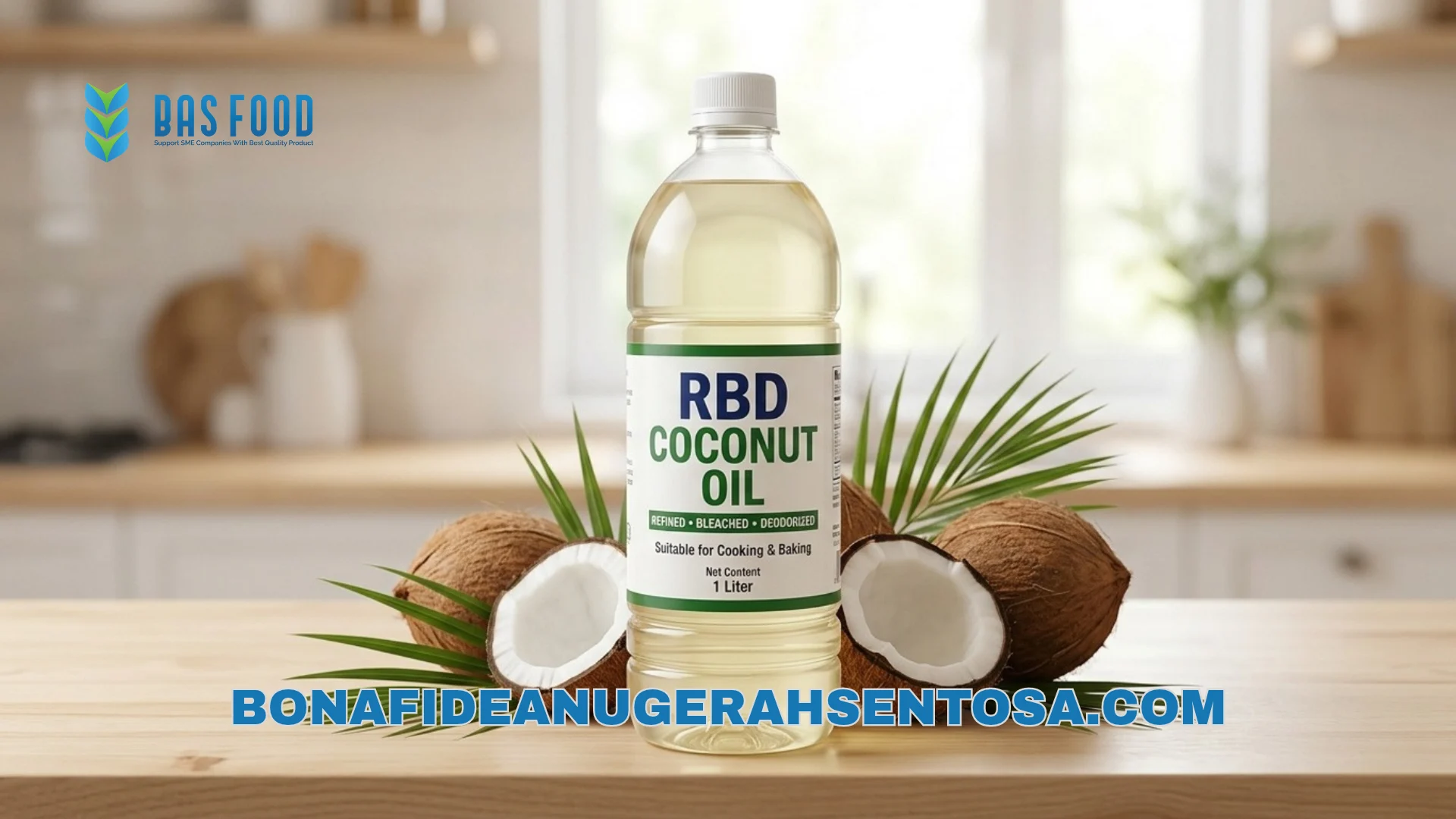
Understanding the Main RBD Coconut Oil Quality Standards
Quality standards provide a framework for determining whether coconut oil meets defined requirements. These requirements may come from national regulations, recognized industry standards, customer specifications, or purchasing contracts. The appropriate criteria depend on the destination market and the product’s intended application.
For B2B buyers, it is useful to distinguish between legal requirements and commercial specifications. Legal requirements determine what a product must meet to be marketed in a particular jurisdiction. Commercial specifications define the characteristics a buyer and supplier agree upon, such as color range, free fatty acid limits, or packaging format.
Several key parameters commonly appear in coconut oil specifications.
Free fatty acids
Free fatty acids, often expressed as a percentage calculated as lauric acid for coconut oil, are an important indicator of oil quality and hydrolytic changes. Elevated levels can indicate deterioration or problems with raw material handling and processing.
Buyers should check the reporting basis carefully. A result expressed as lauric acid is not directly interchangeable with one expressed as oleic acid unless the appropriate conversion is applied.
Moisture and volatile matter
Moisture and volatile matter measurements help assess the amount of water and other volatile substances present in the oil. Excessive moisture can contribute to hydrolytic deterioration and may affect storage stability.
A supplier’s specification should state the applicable test method and acceptance limit. Buyers should avoid relying on vague descriptions such as “low moisture” without a measurable value.
Insoluble impurities
Insoluble impurities refer to particles and other materials that do not dissolve in the oil and can be separated through an appropriate analytical method. Low levels are generally desirable for refined edible oil because visible particles or sediment can create processing and product-quality problems.
The acceptable limit should be defined in the relevant product specification. Visual inspection alone cannot establish the complete impurity profile.
Color and odor
RBD coconut oil generally has a light appearance and a mild or nearly neutral odor. Unusual discoloration or unpleasant odors may indicate a quality issue, although appearance and smell cannot replace laboratory testing.
For repeat orders, buyers may establish agreed color measurements and sensory criteria. Instrumental color results are more useful when the measurement method and reporting scale remain consistent.
The Certificate of Analysis: Your First Quality Check
A certificate of analysis (CoA) is one of the most useful documents for evaluating a shipment of RBD coconut oil. It records analytical results for specified quality parameters and allows buyers to compare the product with the agreed specification.
A CoA may include free fatty acids, moisture and volatile matter, insoluble impurities, color, and other relevant results. Depending on the product and purchasing agreement, it may also include iodine value, peroxide value, fatty acid composition, or additional parameters. Not every CoA contains all these measurements, so buyers should confirm that the document covers the requirements relevant to their application.
When reviewing a CoA, check the following details:
- Product identification: Confirm that the document names the correct product and grade.
- Batch or lot number: Ensure that the results correspond to the product being supplied.
- Test methods: Review the methods used to measure each parameter.
- Units and limits: Compare the reported values with the agreed specification.
- Testing date: Check when the sample was tested.
- Issuing organization: Confirm who performed or authorized the analysis.
- Traceability: Ensure that the document can be connected to the relevant shipment or production batch.
A CoA is valuable, but it is not a universal guarantee of product safety or regulatory compliance. It reflects the results and scope of the tests reported. Buyers may need additional documentation, independent testing, or shipment-specific verification depending on the risks involved.
For larger contracts, importers can agree on sampling procedures, laboratory methods, and corrective actions before the first shipment. These steps help reduce misunderstandings if a result falls outside the agreed limits.
Food Safety Requirements for RBD Coconut Oil
Meeting food safety requirements is essential when purchasing RBD coconut oil for edible applications. Buyers must consider the rules of the destination market, the supplier’s production controls, transportation conditions, and the intended use of the oil.
Food safety expectations may cover contamination prevention, hygienic handling, traceability, suitable packaging, and compliance with relevant limits for contaminants. Depending on the jurisdiction and risk assessment, additional testing may be required for specific substances or residues.
A food-grade product should be supported by appropriate information about its intended use and handling. However, the term “food grade” alone is not enough to demonstrate compliance with every market’s regulations. Buyers should ask for the documents needed for their particular application and destination.
Production hygiene and traceability
Good manufacturing practices and appropriate hygiene controls help prevent contamination during processing, storage, and packaging. Traceability systems also help suppliers identify the production batch and support investigations if a quality issue arises.
Importers should ask how the supplier identifies lots and links them to production and testing records. This information becomes particularly important when a manufacturer uses the oil across multiple production lines or distributes it to several customers.
Packaging and transportation
Packaging must be suitable for the product and its intended use. Bulk shipments, drums, and other containers should protect the oil from contamination and be compatible with the transport and storage conditions.
Coconut oil can become cloudy or solidify at cooler temperatures because of its natural melting characteristics. This physical change does not automatically indicate spoilage. Buyers should follow the supplier’s handling guidance and avoid unnecessary overheating, which may affect product quality.
Destination-market compliance
Requirements differ across countries and applications. Importers should confirm applicable food laws, labeling obligations, documentation, and any required testing before placing an order.
Where certification is important, buyers should verify the exact certificate, its scope, validity, and relevance to the supplied product and production site. A supplier should not be assumed to hold a particular certification unless it can provide valid evidence.
Fatty Acid Composition and Functional Performance
Coconut oil has a distinctive fatty acid composition that influences its physical behavior and suitability for different applications. It contains a high proportion of saturated fatty acids, including lauric acid, along with other fatty acids in smaller amounts.
Fatty acid composition can help buyers verify product identity and understand expected performance. However, composition results should be interpreted using the appropriate analytical method and relevant specification. Natural variation and differences in testing or reporting can affect how results should be compared.
For manufacturers, composition is particularly important when the oil serves a technical function rather than simply adding fat to a recipe. For example, bakery and confectionery manufacturers may care about melting behavior, texture, and compatibility with other fats. Soap producers may focus on saponification characteristics and the fatty acids that contribute to cleansing and foam.
Melting behavior
RBD coconut oil can change from a solid or semi-solid state to a liquid as temperature increases. Its melting behavior affects storage, pumping, blending, and dosing in manufacturing facilities.
If the product will be used in a temperature-controlled production line, buyers should ask for relevant technical data and test the oil under actual operating conditions. They should not assume that every batch will behave identically under all temperatures.
Oxidation indicators
Oxidation can affect oil quality, particularly during prolonged exposure to oxygen, heat, and light. Peroxide value is commonly used to assess primary oxidation products, while other analytical measures may be useful for a more complete evaluation.
No single oxidation measurement describes every aspect of oil stability. Buyers should interpret results alongside storage history, packaging, production date, and any additional tests included in the specification.
How to Evaluate Edible Oil Quality Before Purchasing
Assessing edible oil quality requires a combination of document review, physical inspection, analytical testing, and application trials. Each step answers a different question. Documents show what the supplier claims and what has been measured; testing helps verify those claims; and production trials reveal how the oil performs in the buyer’s process.
First, request the current product specification and a representative CoA. Compare the stated limits with your manufacturing requirements. If a parameter is essential to product performance, make sure the specification defines a measurable acceptance range rather than relying on general terms.
Next, inspect the packaging and product identification. Look for intact seals, clear lot numbers, appropriate labels, and signs of leakage or contamination. If the oil has solidified during transport, evaluate it according to the supplier’s guidance before concluding that there is a quality problem.
For critical applications, consider independent laboratory testing. Agree on a representative sampling method and use a qualified laboratory with appropriate analytical methods. Testing a sample that does not represent the shipment can lead to misleading conclusions, so sampling procedures matter as much as the test itself.
Finally, conduct an application trial. An oil that meets its basic chemical specification may still need validation for a specific manufacturing process. Evaluate flavor, odor, texture, melting behavior, process performance, and finished-product quality as relevant.
This structured approach gives buyers a clearer picture of both technical suitability and commercial risk. It also creates a practical basis for comparing suppliers without relying on price alone.
Building a Reliable Quality Specification with Your Supplier
A clear purchasing specification helps buyers and suppliers work toward the same expectations. Instead of relying on a general description such as “premium RBD coconut oil,” define the key parameters, acceptable limits, test methods, packaging requirements, and documentation that apply to the order.
The specification should reflect the end use. A manufacturer producing confectionery may require detailed information about melting behavior and sensory properties. A foodservice distributor may focus more heavily on edible-use documentation, packaging integrity, and consistent product identification. Different applications may need different acceptance criteria.
Buyers should also agree on how the supplier will handle nonconforming products. The contract may describe how to report a concern, preserve samples, arrange retesting, and decide whether a shipment can be accepted or requires corrective action. Clear procedures help both parties resolve problems efficiently.
For ongoing supply, it is useful to review quality performance over time. Compare CoAs across batches, record any deviations, and communicate changes in manufacturing requirements. If a supplier changes its production process, raw material sourcing, or product specification, buyers should determine whether the change affects their application.
A well-managed supplier relationship turns quality control into a shared process rather than a last-minute inspection. It supports more predictable production and helps businesses maintain consistent finished products.
Choosing an RBD Coconut Oil Supplier for International Trade
For importers, supplier selection involves more than identifying a product that meets technical specifications. Buyers must also evaluate communication, shipment planning, documentation, traceability, and the supplier’s ability to meet the agreed commercial terms.
CV Bonafide Anugerah Sentosa operates in Indonesia’s commodity export sector. Businesses interested in its product range can contact the company directly to confirm current RBD coconut oil availability, specifications, packaging formats, and export terms. Product availability and technical capabilities should always be confirmed before a purchasing commitment.
When contacting a potential supplier, explain the intended application, destination country, estimated order volume, preferred packaging, and required quality parameters. This information helps establish whether the available product is suitable for the buyer’s needs.
It is also important to distinguish between related product categories. A coconut sugar exporter supplier or coconut sugar supplier may provide useful context when sourcing coconut-based ingredients, but coconut sugar and RBD coconut oil are different products with different specifications. Buyers should confirm that the supplier can provide the exact oil grade and supporting documents they require rather than assuming that a supplier of one coconut product automatically supplies another.
Before placing a large order, verify the product specification, CoA format, shipping conditions, documentation, and agreed quality limits. For international trade, also confirm any import permits, labeling requirements, or food safety documents that apply in the destination market.
Conclusion: Make Quality Standards the Foundation of Every Purchase
Understanding RBD coconut oil quality standards helps importers and manufacturers make informed decisions about purity, consistency, safety, and performance. Key parameters include free fatty acids, moisture and volatile matter, insoluble impurities, color, odor, fatty acid composition, and relevant oxidation indicators.
However, quality control should never depend on a single measurement or document. A certificate of analysis provides useful evidence, while appropriate testing, traceability, packaging checks, and application trials help buyers evaluate the product more completely.
For successful sourcing, start by defining the requirements of your application and destination market. Then compare suppliers using clear specifications, reliable documentation, and transparent communication. By taking these steps, businesses can build stronger supply relationships and reduce avoidable quality risks.
If you are evaluating coconut-based ingredients for your business, contact CV Bonafide Anugerah Sentosa to confirm current product availability and discuss your sourcing requirements.