
Instant noodles have become a staple food in many countries because they are affordable, convenient, and easy to prepare. From busy office workers to students and families, millions of consumers rely on them for a quick meal. Behind every packet, however, manufacturers must make important decisions about ingredients, processing methods, product quality, and production efficiency. One ingredient that deserves attention is RBD coconut oil for instant noodles.
Refined, bleached, and deodorized (RBD) coconut oil is a refined vegetable oil that can serve as a frying medium in suitable instant noodle production systems. Its functional properties make it worth considering for manufacturers looking to evaluate frying oil options, improve process consistency, and manage the needs of large-scale food production.
However, choosing the right oil requires more than comparing prices. Manufacturers must consider frying temperature, oil stability, noodle texture, flavor, shelf life, food safety, and compatibility with their production equipment. This guide explains how RBD coconut oil fits into instant noodle manufacturing and what B2B buyers should evaluate before making a purchasing decision.
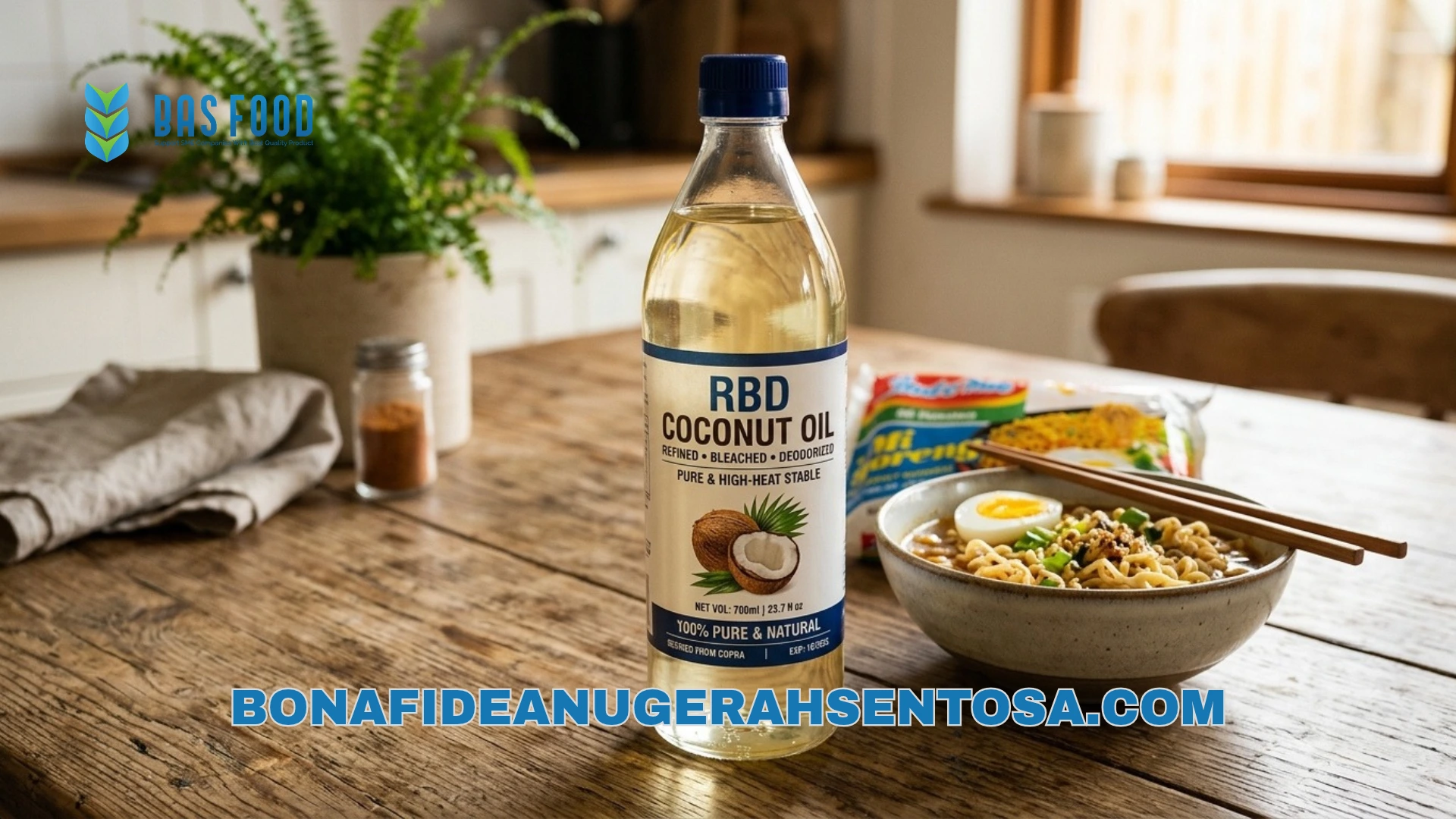
How Instant Noodle Manufacturing Uses Frying Oil
Frying plays an important role in the production of many instant noodles. After mixing, sheeting, cutting, and steaming, noodle strands may pass through a frying stage that removes moisture and helps create the structure needed for quick preparation. Manufacturers can also produce non-fried instant noodles through alternative drying methods, so not every instant noodle product requires frying oil.
In fried instant noodle production, the oil transfers heat to the steamed noodles and supports moisture removal. The resulting porous structure helps the noodles absorb hot water during preparation. The precise texture, cooking time, and rehydration performance depend on several factors, including noodle thickness, formulation, steaming conditions, frying temperature, and processing time.
The oil also becomes part of the finished product. Some oil remains in the noodles after frying, while another portion may drain away or remain in the processing system. As a result, the frying medium can influence the finished product’s fat content, sensory characteristics, and overall formulation.
For this reason, frying oil is a major process input rather than a simple commodity purchase. Manufacturers need an oil that fits their technical requirements, supply chain, and operating conditions.
When evaluating RBD coconut oil for instant noodles, a factory should test its performance under actual production conditions. A controlled trial can help determine whether the oil works with the existing equipment, delivers acceptable product quality, and meets the company’s cost targets.
Why Manufacturers May Consider RBD Coconut Oil for Instant Noodles
One reason manufacturers may evaluate RBD coconut oil is its relatively neutral flavor and odor after suitable refining. In instant noodle production, the frying medium should not introduce unwanted sensory characteristics that conflict with the intended product. A neutral oil can offer formulation flexibility, although the final result still depends on the oil specification, frying conditions, seasoning, and packaging.
Another consideration is its fatty acid composition. Coconut oil contains a high proportion of saturated fats, which affects its physical properties and behavior during storage. These characteristics may be useful in certain applications, but they do not prove that coconut oil will always deliver better frying performance or a longer usable life than competing oils.
Manufacturers should also examine its melting behavior. Coconut oil can solidify at temperatures commonly encountered in cool storage environments. This can affect pumping, dosing, filtration, and equipment start-up if the factory does not provide suitable temperature control. Before choosing this oil, production teams should confirm that their storage tanks, pipes, pumps, and handling procedures can accommodate its physical characteristics.
Finally, purchasing teams may consider the availability of coconut oil from established suppliers. A reliable supply arrangement can help manufacturers plan production and reduce disruptions. However, supply reliability must be assessed using actual lead times, production capacity, specifications, and export documentation rather than general marketing claims.
In short, RBD coconut oil deserves consideration when its functional properties match the production process. The best decision comes from comparing real technical and commercial data instead of assuming that one oil is suitable for every instant noodle factory.
RBD Coconut Oil Compared With Other Industrial Cooking Oil Options
Instant noodle manufacturers can choose from several vegetable oils, depending on their location, product requirements, and manufacturing system. Common options may include palm oil, palm olein, soybean oil, sunflower oil, and other suitable edible oils. Each option has its own fatty acid profile, physical characteristics, price movements, and processing considerations.
Palm olein is widely used in many commercial frying applications because it offers useful frying characteristics and is available in multiple markets. Soybean and sunflower oils have different fatty acid profiles and may fit particular formulation or procurement strategies. Coconut oil, meanwhile, has a higher proportion of saturated fatty acids and different melting behavior. These differences mean that manufacturers should not treat the oils as interchangeable without testing.
The following table provides a general comparison.
| Factor | RBD coconut oil | Other vegetable oils |
|---|---|---|
| Fatty acid profile | High in saturated fatty acids, including lauric acid | Varies by oil type |
| Flavor and odor | Generally neutral after suitable refining | Depends on oil and refining quality |
| Low-temperature behavior | May solidify in cool conditions | Varies considerably |
| Frying suitability | Must be validated for the specific process | Must also be validated |
| Supply cost | Depends on market conditions and specification | Depends on oil type and market conditions |
| Finished noodle quality | Requires production trials | Requires production trials |
This comparison shows why purchasing decisions need a technical and commercial approach. A lower purchase price does not necessarily mean a lower total production cost. Oil consumption, filtration requirements, heating energy, product consistency, waste, and equipment compatibility can all affect operating expenses.
Manufacturers should also avoid assuming that a particular oil automatically creates healthier instant noodles. The nutritional profile of the finished product depends on the amount of oil absorbed, the overall formulation, serving size, and other ingredients. Any nutrition or health claim should be supported by appropriate product data and comply with the regulations of the intended market.
What Happens to Oil During the Frying Process?
Frying oil changes as it experiences heat, oxygen, moisture, and food particles. Over time, these factors can contribute to oxidation, hydrolysis, and other chemical reactions. The rate of deterioration depends on the oil’s composition, frying temperature, exposure time, moisture load, filtration, and production practices.
During instant noodle frying, water released from the noodles enters the oil system. Small particles may also accumulate in the frying medium. If operators do not manage the process properly, these contaminants can affect oil quality and contribute to undesirable flavors, odors, color changes, or excessive foaming.
Therefore, manufacturers need a planned oil management program. Operators should monitor frying temperature, remove food particles through suitable filtration, follow established oil replacement criteria, and inspect the frying system regularly. Where appropriate, the quality team can use validated analytical methods to assess oil condition.
It is not enough to select an oil based only on its initial specification. The factory must also understand how that oil behaves during repeated exposure to production conditions. A suitable trial should measure oil consumption, product quality, process stability, and the frequency of oil replacement under realistic operating conditions.
RBD coconut oil’s saturated fatty acid profile may influence its oxidative behavior, but it does not make the oil immune to degradation. Manufacturers should use measured performance data rather than assuming that coconut oil will always last longer than other frying oils.
How Frying Oil Can Influence Noodle Texture and Rehydration
The quality of instant noodles depends on several connected stages. Flour quality, water content, dough development, sheet thickness, steaming, frying, and cooling all contribute to the finished structure. Frying oil is one part of this system, and its effects should be assessed alongside the other process variables.
During frying, moisture leaves the noodles and creates a structure that helps hot water enter the product during preparation. If the frying conditions are unsuitable, the noodles may develop inconsistent color, texture, or moisture levels. The oil itself cannot compensate for poor dough formulation or incorrect processing temperatures.
Oil absorption also matters. The quantity of oil retained by the noodles can influence their fat content, mouthfeel, energy content, and sensory properties. Different oils may produce different results depending on their physical properties and the operating conditions, so manufacturers should measure the outcome rather than rely on assumptions.
A practical evaluation should include several quality indicators:
- Texture: Check whether the cooked noodles have the intended firmness and bite.
- Rehydration time: Measure how quickly the noodles reach the required eating quality.
- Appearance: Evaluate color consistency and the presence of unwanted dark spots.
- Oil content: Determine the amount of fat retained in the finished product.
- Flavor and odor: Check whether the oil contributes any unwanted sensory notes.
- Batch consistency: Compare results across repeated production runs.
By measuring these factors, manufacturers can determine whether RBD coconut oil meets their product requirements. This approach also helps the quality team identify whether any changes in performance come from the oil, the frying system, or another production variable.
Food Safety, Quality Control, and Shelf Life
Food safety must remain a priority when selecting processed food ingredients. For instant noodle manufacturers, that means reviewing the supplier’s quality documentation, confirming that the oil is suitable for the intended food application, and maintaining appropriate storage and handling conditions.
Buyers should request a current product specification and certificate of analysis where available. Depending on the supplier and destination market, useful information may include the oil’s appearance, odor, relevant chemical quality parameters, fatty acid profile, packaging details, batch identification, and applicable food safety documentation. The exact documents required will depend on the buyer’s quality system and local regulations.
Manufacturers should also confirm compliance with applicable requirements in the country of production and the destination market. Importers may need specific declarations, certificates, or other documents depending on the product, shipment, and regulatory framework. These requirements should be checked before the purchase order and shipment are finalized.
Shelf life requires special attention. Although refined coconut oil may offer useful stability characteristics, the usable life of a particular product depends on its specification, packaging, exposure to heat and light, storage conditions, and quality controls. Buyers should rely on the supplier’s validated shelf-life information rather than apply a universal period to every product.
Packaging also matters. The container should protect the oil from contamination and suit the expected storage and transport conditions. Bulk buyers should confirm whether the offered packaging is compatible with their unloading equipment, storage tanks, handling procedures, and local requirements.
For manufacturers, these checks help reduce the risk of receiving material that does not meet production needs. They also support traceability and more consistent quality management throughout the supply chain.
Storage and Handling: Getting the Best From RBD Coconut Oil
Because coconut oil can solidify at cooler temperatures, factories should establish handling procedures that match the supplier’s recommendations and the oil’s physical characteristics. If the oil becomes too firm for the handling system, operators may experience difficulties during transfer, pumping, or dosing.
Before purchasing, engineering and production teams should review the design of their storage tanks, pipes, pumps, and temperature controls. Any heating used to maintain flow should follow suitable operating procedures and avoid unnecessary overheating. The goal is to keep the oil manageable without exposing it to conditions that could damage its quality.
Good storage practices also include keeping containers clean and closed, preventing water or foreign material from entering the oil, and using a stock rotation system. Staff should inspect packaging for damage and maintain clear batch records so that each lot can be traced through the production process.
For large factories, these steps can influence both efficiency and cost. Poor handling may lead to delays, product waste, or inconsistent dosing. A clear operating procedure helps employees manage the oil consistently and makes it easier to investigate any quality problems.
Before introducing RBD coconut oil into an existing line, conduct a handling trial. Check the oil’s behavior at the temperatures encountered during storage, transfer, and dosing. This simple step can reveal equipment issues before the factory commits to a large commercial order.
Calculating the Real Cost of RBD Coconut Oil for Instant Noodles
Purchase price is important, but it does not tell the whole story. Manufacturers should evaluate the total cost of using an oil throughout the production process. This includes the price per kilogram, freight, import duties where applicable, storage requirements, handling costs, oil consumption, filtration, waste management, and any equipment changes.
For example, an oil that appears competitive at the supplier level may require additional temperature management in the factory. Those operating costs could affect the overall economics of the purchase. On the other hand, an oil that works well with existing equipment may reduce the need for process adjustments. The result depends on the factory’s actual conditions.
A useful starting point is to calculate the cost of oil per unit of finished product rather than comparing purchase prices alone. Manufacturers can track the kilograms of oil consumed against the tonnes of noodles produced, while also recording product quality and waste. This makes it easier to compare suppliers and oils on a consistent basis.
Procurement teams should also consider supply continuity. Changes in shipping schedules, raw material markets, exchange rates, and freight costs can influence the final landed price. Buyers should request clear quotations that identify the product specification, packaging, order quantity, delivery terms, lead time, and quotation validity.
The most reliable decision combines technical trials with a realistic cost analysis. If RBD coconut oil meets the quality requirements and delivers acceptable economics, it may be a suitable option for the intended production line. If it does not, another frying oil may be a better fit.
Choosing a Reliable Supplier for Industrial Cooking Oil
Selecting a supplier is an important part of managing industrial food production. A supplier should be able to explain the product specification, provide relevant documentation, communicate clearly about availability, and confirm the commercial terms before an order is placed.
For buyers sourcing industrial cooking oil, it is helpful to ask questions about refining specifications, quality checks, packaging, batch traceability, minimum order quantities, lead times, and export documentation. Buyers should also confirm whether samples can be provided for testing and whether the quoted product matches the specification used during the trial.
CV Bonafide Anugerah Sentosa operates in Indonesia’s commodity export sector. Businesses interested in sourcing coconut-derived products can contact the company to confirm current product availability, specifications, packaging options, minimum order quantities, and export terms. Do not assume that every oil grade or packaging format is available without direct confirmation.
A clear supplier evaluation process should include more than a price comparison. Assess communication, documentation, consistency between samples and commercial batches, shipping arrangements, and the supplier’s ability to address technical questions. These factors can make a meaningful difference when a factory relies on a steady flow of raw materials.
Buyers should also distinguish between product categories when discussing sourcing. The terms coconut sugar supplier and coconut sugar exporter supplier refer to sweetener sourcing, not to the technical specification of RBD coconut oil. Likewise, exportador de azúcar de coco means coconut sugar exporter in Spanish. These phrases may be relevant to a company’s broader export portfolio, but they should not replace a specific request for edible oil documentation.
Before finalizing a contract, make sure the purchase order describes the actual product being bought. Clear product naming helps prevent confusion between coconut oil, coconut sugar, and other coconut-derived ingredients.
Conclusion: Is RBD Coconut Oil the Right Choice for Instant Noodles?
RBD coconut oil for instant noodles is an option worth evaluating for manufacturers seeking a suitable frying medium for specific production requirements. Its refined sensory profile and distinctive fatty acid composition make it different from other commonly used vegetable oils. At the same time, its melting behavior, handling needs, cost, and performance under actual frying conditions require careful consideration.
The right choice depends on the factory’s equipment, noodle formulation, quality targets, food safety procedures, and commercial objectives. No single oil is ideal for every manufacturer, and no supplier description can replace a controlled production trial.
For B2B buyers, the most effective approach is straightforward: define the required specification, request supporting documents, test the oil in the intended process, and calculate the total cost of use. Then confirm supply terms with a qualified supplier before placing a commercial order.
CV Bonafide Anugerah Sentosa can be contacted to discuss its current product portfolio and export capabilities. Buyers should confirm directly whether the required RBD coconut oil specification is available and request the technical and commercial information needed for a proper evaluation.
With careful testing and supplier selection, instant noodle manufacturers can make more informed decisions about their frying oil and build a procurement strategy that supports consistent production.