
RBD coconut oil is a popular ingredient in food manufacturing, commercial kitchens, and ingredient distribution. Its neutral aroma, refined appearance, and useful functional properties make it suitable for a range of applications. However, like other edible oils, it needs proper handling and storage to maintain its quality over time. For importers, wholesalers, and manufacturers, understanding RBD coconut oil shelf life is more than a matter of checking a date on a container. Storage temperature, exposure to air, packaging quality, moisture, handling practices, and the condition of the oil before shipment can all affect its usable life.
This is especially important when purchasing in bulk or importing oil over long distances. A shipment may spend weeks in transit and then remain in a warehouse before reaching the production line. Without a suitable storage plan, businesses may experience quality changes, unnecessary waste, or difficulties meeting their own product requirements.
In this guide, we explain how long RBD coconut oil may last, what affects its shelf life, how to store it correctly, and how to prevent quality problems. We also cover packaging, inventory management, and the questions buyers should ask suppliers before placing an order.
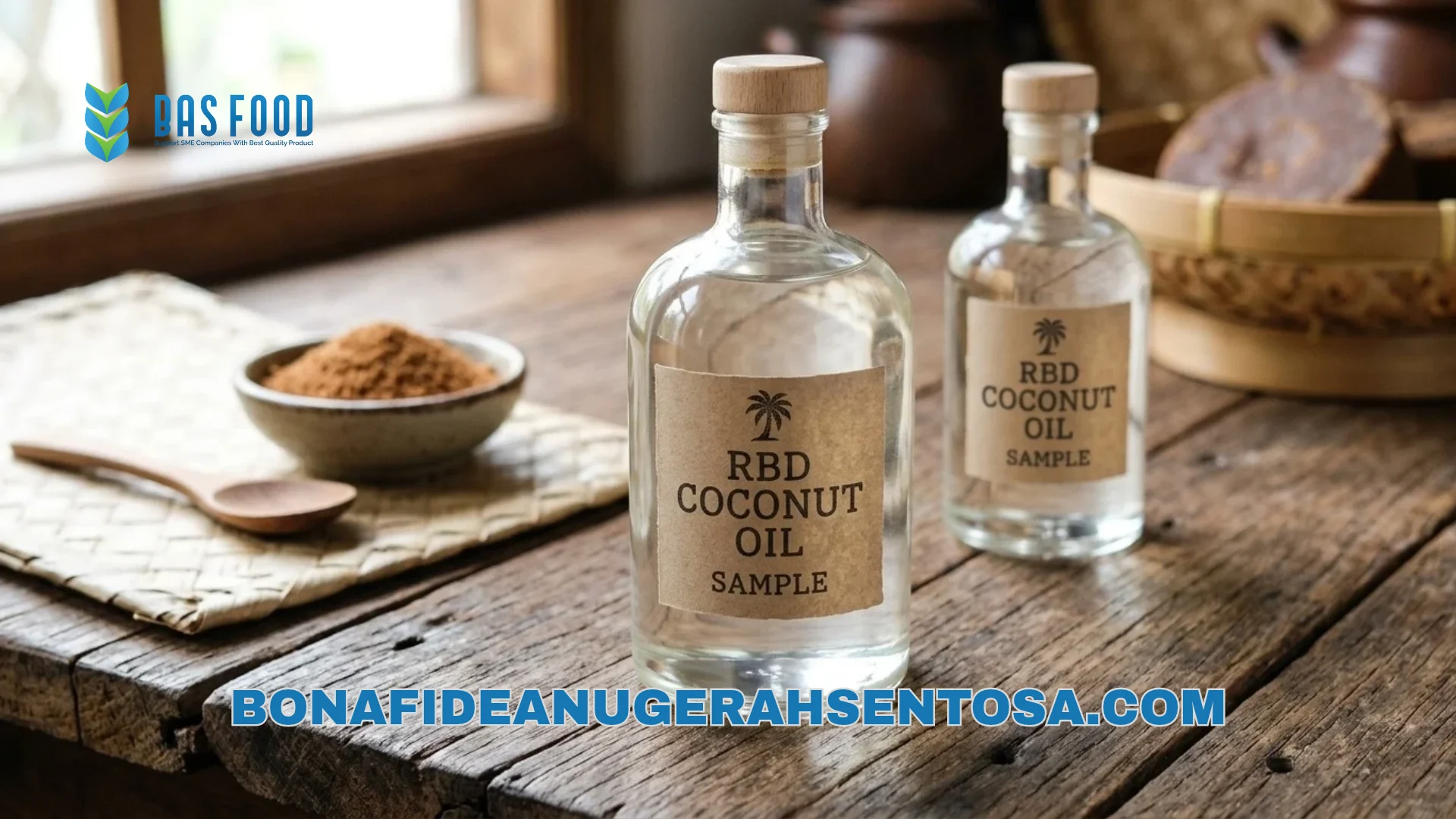
What Is RBD Coconut Oil and Why Does Shelf Life Matter?
RBD stands for refined, bleached, and deodorized. These terms describe the main processing stages used to refine coconut oil and improve characteristics such as appearance, odor, and suitability for specific applications.
During refining, producers may remove unwanted impurities and free fatty acids. Bleaching helps reduce certain pigments and other compounds, while deodorization uses controlled processing to reduce undesirable odors and flavors. The exact process depends on the producer’s methods and product specification.
RBD coconut oil is often used in food manufacturing because of its relatively neutral sensory profile. Depending on the specification, it may be suitable for confectionery, bakery products, frying applications, food preparation, and other industrial uses. Buyers should always confirm that the grade meets the requirements of their intended application.
What Does Shelf Life Mean for Coconut Oil?
Shelf life refers to the period during which a product is expected to maintain its required quality under specified storage conditions. For edible oil, this includes characteristics such as odor, appearance, flavor, and compliance with relevant quality and safety requirements.
The shelf life of RBD coconut oil is not determined by processing alone. Packaging, storage conditions, initial quality, and handling throughout the supply chain also matter. Oil stored in a clean, sealed container under suitable conditions may maintain quality longer than oil exposed repeatedly to heat, air, or contamination.
The manufacturer’s stated shelf life should therefore be the primary reference for a specific product. Buyers should check the production date, best-before or expiry information where applicable, batch details, and storage instructions before accepting a shipment.
Why Shelf Life Matters to B2B Buyers
For manufacturers, oil quality can influence the consistency of finished products. Changes in odor, flavor, or other properties may affect a recipe or production process, even when the oil still appears normal.
For importers and distributors, shelf life also affects inventory planning. A shipment with limited remaining shelf life may be unsuitable if customs clearance, warehouse storage, and onward distribution take a significant amount of time.
As a result, buyers should assess not only the total stated shelf life but also the remaining shelf life on arrival. This helps businesses determine whether the product can be stored, processed, and distributed within their operational timelines.
How Long Does RBD Coconut Oil Last?
There is no single shelf-life period that applies to every RBD coconut oil product. Some commercial products may carry a stated shelf life of around 18 to 24 months when stored under the manufacturer’s recommended conditions. However, this is only a general industry reference, not a guarantee for every grade, brand, batch, or package.
The actual period should come from the product specification or label supplied by the manufacturer. Buyers should not assign a shelf life based only on general information found online, especially when importing food ingredients for commercial use.
Several factors influence the period. These include the oil’s quality at production, refining conditions, packaging material, storage temperature, exposure to air and light, and the prevention of contamination during handling.
Production Date and Best-Before Date
When receiving RBD coconut oil, check the production date and the date marking used by the manufacturer. Depending on the applicable rules and product labeling, this may be a best-before date or another relevant date designation.
A best-before date generally relates to the period during which the product is expected to retain its intended quality under stated conditions. It should not be confused with a universal guarantee that the oil is suitable indefinitely before that date or automatically unsafe immediately afterward. Businesses must follow applicable food regulations and their own quality procedures.
For imported oil, the production date alone does not tell you how much useful shelf life remains. Calculate the remaining period using the manufacturer’s stated date and your expected delivery and storage schedule.
Remaining Shelf Life on Arrival
Suppose a supplier offers oil with a stated shelf life of 24 months from production. If the shipment arrives several months after production, the remaining period will be shorter than 24 months.
That difference matters if your company needs time for customs clearance, laboratory checks, warehouse storage, repacking, or resale. A buyer should establish a minimum remaining shelf-life requirement before confirming the purchase.
For example, a distributor may require a certain number of months remaining at the time of delivery to ensure that customers can use the product before its quality period ends. Agree on this requirement in writing and ask the supplier to confirm the expected production date or remaining shelf life before dispatch.
What Factors Affect RBD Coconut Oil Shelf Life?
Although coconut oil contains a high proportion of saturated fatty acids, it can still undergo quality changes during storage. Its relatively high saturation can make it more resistant to oxidative deterioration than oils with higher levels of polyunsaturated fats, but it does not make the product immune to poor handling or contamination.
Understanding the main risk factors helps businesses build better storage procedures and make more informed purchasing decisions.
Exposure to Air and Oxidation
Oxidation occurs when oil reacts with oxygen. Over time, this process can produce compounds that affect odor, flavor, and overall quality. Exposure to air can contribute to oxidative deterioration, especially when combined with unfavorable storage conditions.
RBD coconut oil is relatively stable compared with many oils that contain more unsaturated fatty acids. Nevertheless, buyers should not assume that it cannot become oxidized. Repeated opening, poorly sealed containers, excessive air exposure, and unsuitable storage conditions can still create quality risks.
Good oxidation prevention begins with keeping containers properly sealed and minimizing unnecessary exposure to air. Businesses should also follow the manufacturer’s instructions for handling opened containers and avoid returning used or potentially contaminated oil to the original package.
- Temperature and Heat Exposure
- Light Exposure
- Moisture and Contamination
Always use clean, dry tools and containers when transferring or handling oil. Keep lids and closures clean, avoid using wet equipment, and make sure storage areas protect the product from spills and other contamination sources.
For food manufacturing, hygiene procedures should cover receiving, storage, transfer, and dispensing. Good handling practices help protect both the oil and the products made with it.
Coconut Oil Storage: Best Practices for Warehouses and Factories
Correct coconut oil storage helps preserve quality and makes inventory easier to manage. The goal is to protect the oil from unfavorable temperatures, air exposure, moisture, light, and contamination while maintaining clear records of each batch.
Storage practices should reflect the product specification, packaging format, local conditions, and scale of operations. A small food business storing a few containers may need different equipment from an importer holding several pallets or a manufacturer using bulk tanks.
- Choose a Suitable Storage Area
- Keep Containers Sealed
- Follow First-In, First-Out Inventory Management
Record each batch’s arrival date, production date, date marking, quantity, and storage location. Use these records to plan production, sales, and replenishment.
Before dispatching oil to a customer or production line, check the container condition and relevant date information. This simple step helps reduce the chance of sending stock that does not meet the customer’s remaining shelf-life requirements.
Does Coconut Oil Solidifying Mean It Has Expired?
No. RBD coconut oil can change from a liquid to a solid or semi-solid state as the temperature changes. This is a normal physical characteristic of coconut oil and does not, by itself, mean the product has expired or become spoiled.
Coconut oil commonly begins to solidify at temperatures around the mid-20s degrees Celsius, although the exact behavior depends on the product composition and conditions. In cooler environments, it may appear white, cloudy, or firm. At warmer temperatures, it may become clear and liquid again.
These changes can occur during storage or transportation, especially when shipments move between regions with different climates. Buyers should understand this behavior before treating solidification as a quality defect.
How to Handle Solidified RBD Coconut Oil
If the product has solidified, first check the supplier’s instructions and confirm that the container remains intact. If melting is necessary for handling or processing, use a controlled method suitable for the product and packaging.
Avoid direct, excessive heat or uncontrolled heating methods that could damage the packaging or create local hot spots. Follow the manufacturer’s recommended temperature and handling procedure.
If the oil returns to its expected appearance after controlled warming, that change alone does not prove the oil’s quality is acceptable or unacceptable. Use the product specification and relevant quality checks to make that decision.
When Should You Investigate a Quality Concern?
Investigate if the oil develops an unusual odor, unexpected color change, visible foreign matter, signs of contamination, or other characteristics outside the agreed specification. Also investigate damaged packaging, unexplained leakage, or uncertainty about the storage history.
Do not rely on appearance alone to determine whether oil remains suitable for use. If there is a suspected quality or safety issue, isolate the affected batch and follow your company’s quality procedure. Contact the supplier and arrange appropriate testing or assessment when necessary.
Oil Packaging: Choosing the Right Protection for Shelf Life
Oil packaging plays an important role in protecting RBD coconut oil during storage and transportation. The package must be suitable for food contact, compatible with the oil, secure against leakage, and strong enough for the intended handling and shipping conditions.
The right format depends on the order volume, customer requirements, transport route, storage facilities, and dispensing system. Common commercial formats may include drums, pails, cans, intermediate bulk containers, or larger bulk systems, depending on the supplier’s available packaging options.
Buyers should confirm the actual formats offered by their supplier instead of assuming that every package size is available.
Food-Grade Packaging and Container Integrity
Packaging intended for edible oil should meet the applicable food-contact requirements for the destination market. It should also be compatible with the product and the expected storage conditions.
Before accepting a shipment, inspect the containers for dents, punctures, broken seals, leaks, corrosion where relevant, or other damage. Check that labels and batch identifiers are legible and match the shipping documents.
If the oil will be transferred into a storage tank, assess the suitability and cleanliness of that tank before unloading. A good original package cannot protect the product if the receiving equipment introduces water or contaminants.
Packaging and Exposure to Air
A well-sealed container helps limit unnecessary air exchange and protects the oil from outside contamination. The degree of protection depends on the closure, packaging material, filling process, and how the container is used.
Once a container is opened, handling practices become especially important. Close it after dispensing and minimize repeated exposure to air. For large tanks, follow appropriate procedures for tank design, cleaning, venting, and product transfer.
If your business has specific requirements for headspace, protective gases, or bulk tank handling, discuss them with a qualified supplier or packaging specialist. Do not assume that specialized methods are necessary for every RBD coconut oil product.
Packaging for Export Shipments
Export packaging must withstand the expected transport route, loading, unloading, and storage conditions. Buyers should clarify how containers will be secured, what outer protection is used, and whether the shipment needs particular labels or handling instructions.
Confirm the net weight, gross weight, package dimensions, number of units, and pallet configuration when requesting a quotation. These details affect freight planning and warehouse capacity.
For international purchases, also agree on who is responsible for packaging, cargo insurance where applicable, export clearance, and other shipment tasks under the chosen Incoterms.
Oxidation Prevention: How to Protect Oil Quality Over Time
Oxidation prevention involves reducing conditions that encourage oil deterioration. Since coconut oil is relatively high in saturated fatty acids, it generally has good oxidative stability compared with oils rich in polyunsaturated fats. Even so, proper handling remains important throughout the supply chain.
For businesses that store oil for extended periods, the best approach is to combine suitable packaging, controlled storage, clean handling, and regular inspections. No single measure can compensate for every other weakness in the system.
Limit Unnecessary Exposure to Air and Heat
Keep containers closed whenever possible and avoid transferring oil between containers without a clear operational need. If transfer is necessary, use clean equipment and follow the supplier’s handling guidance.
Store the oil away from direct heat sources and avoid leaving it in hot areas during production or loading. Where practical, plan transfers and production runs so that containers do not remain open for extended periods.
These steps can help reduce exposure to conditions that may contribute to deterioration.
Inspect Oil and Keep Records
Set up a routine inspection schedule appropriate for your operation. Depending on the product and business requirements, checks may include container condition, date marking, appearance, odor, storage conditions, and batch traceability.
Keep records of any unusual findings and the action taken. If you notice a change in a batch, compare it with the specification and previous inspection records instead of relying only on memory.
For critical applications, establish a quality-control plan with appropriate tests and acceptance limits. The required tests should reflect the product specification, intended use, and applicable regulations.
How Suppliers Can Help Buyers Manage Shelf Life
A supplier’s role does not end when the product leaves the factory. Clear product information and communication help buyers understand how to receive, store, and use the oil according to the manufacturer’s recommendations.
When evaluating a supplier, ask for the product specification, stated shelf life, storage instructions, packaging details, and available batch documentation. You should also confirm the production date or remaining shelf life expected at dispatch.
Considering CV Bonafide Anugerah Sentosa
CV Bonafide Anugerah Sentosa operates in Indonesia’s commodity export and supply sector, including coconut-related products. Buyers researching Indonesian commodity suppliers can contact the company to discuss their requirements and confirm whether RBD coconut oil is currently available.
When making an inquiry, provide the intended application, estimated order volume, destination country, packaging preference, and any relevant quality requirements. Ask for the current product specification, stated shelf life, storage guidance, and available supporting documents before confirming a purchase.
Do not assume that a particular oil grade, packaging size, certification, or shipment schedule is available until the company confirms it. Product specifications and export arrangements should be verified directly.
Businesses searching for a coconut sugar exporter supplier, coconut sugar supplier, or exportador de azúcar de coco may also be researching broader Indonesian coconut commodity sourcing. However, coconut sugar and RBD coconut oil are different products with different specifications and handling needs. Buyers should always confirm the exact product being quoted rather than rely on a supplier’s general commodity category.
Conclusion: Protect Quality From Production to the Last Drop
Understanding RBD coconut oil shelf life helps businesses manage product quality, reduce waste, and plan purchasing more effectively. Although coconut oil’s fatty acid composition gives it useful oxidative stability, the product still needs suitable storage, packaging, and handling.
For B2B buyers, the most important steps are straightforward: confirm the manufacturer’s stated shelf life, check the remaining shelf life at arrival, protect the oil from excessive heat and contamination, and maintain clear batch records. Choose suitable packaging and use appropriate quality checks whenever concerns arise.
If you are sourcing RBD coconut oil from Indonesia, contact your prospective supplier to confirm current product availability, specifications, packaging options, shelf life, and export terms. Clear information before shipment helps your business plan storage, protect product quality, and make better purchasing decisions.