
Refined, bleached, and deodorized coconut oil, commonly known as RBD coconut oil, is widely used in food manufacturing, confectionery, bakery products, personal care formulations, and other industrial applications. However, before purchasing this ingredient in bulk, buyers need to understand more than its appearance, smell, or price. One of the most important technical details is the RBD coconut oil fatty acid composition. Fatty acid composition helps manufacturers understand the characteristics of coconut oil, assess its suitability for a particular application, and compare supplier specifications. For importers, food manufacturers, distributors, and procurement teams, this information can support better purchasing decisions and more consistent product quality.
In this guide, we will explore the main fatty acids found in RBD coconut oil, explain their functions, and discuss how refining affects the oil. We will also cover laboratory testing, quality documentation, and practical considerations for international buyers sourcing coconut-derived ingredients.
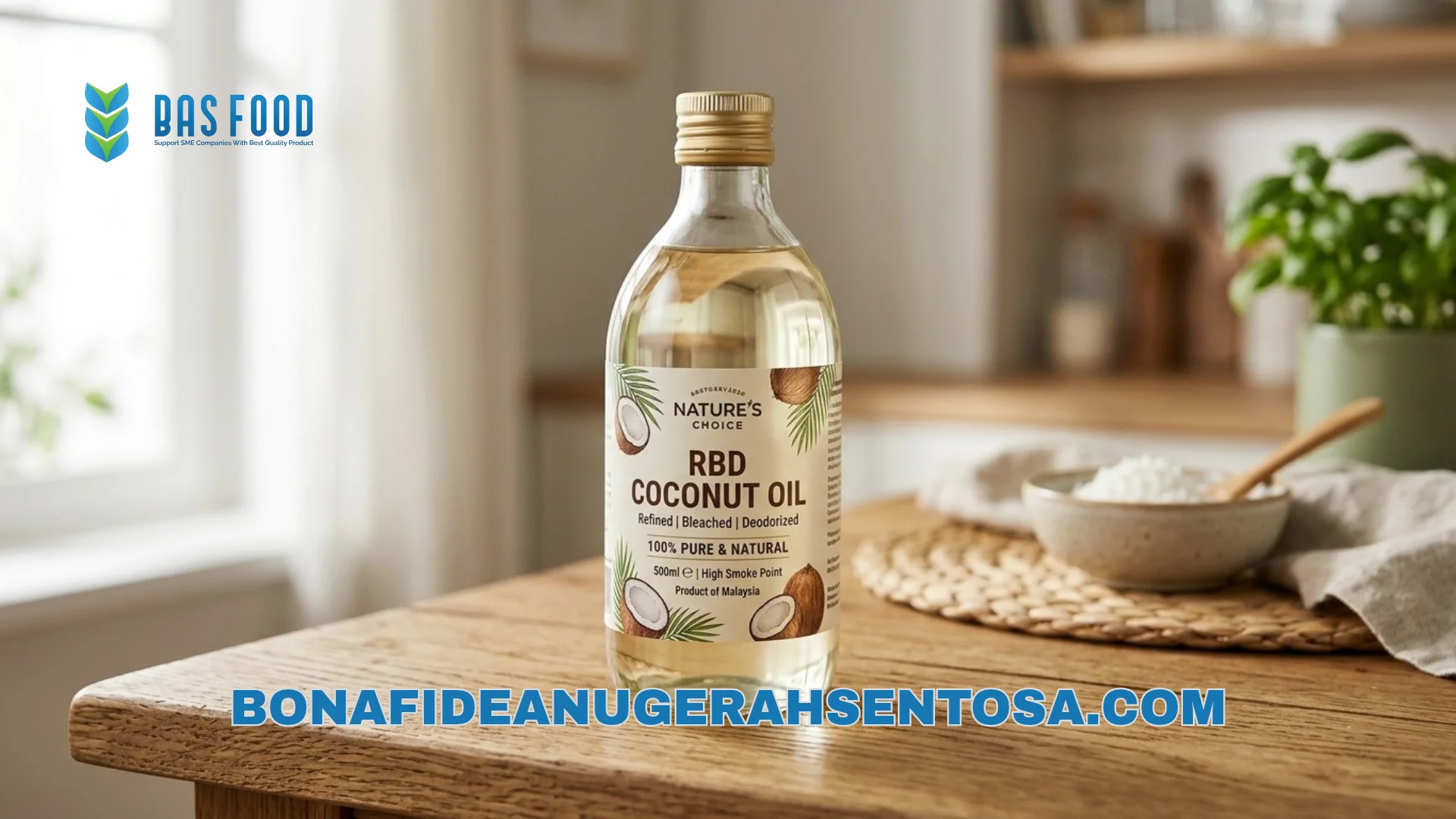
What Is RBD Coconut Oil?
RBD coconut oil is coconut oil that has undergone three main processing steps: refining, bleaching, and deodorizing. These processes help improve the oil’s purity, color, odor, and suitability for commercial applications. Manufacturers commonly use RBD coconut oil when they need a more neutral ingredient than unrefined coconut oil.
During refining, processors reduce unwanted components, such as free fatty acids and certain impurities. Bleaching helps remove color pigments and other substances that affect appearance. Deodorizing uses controlled conditions, often involving steam and reduced pressure, to remove volatile compounds responsible for strong or unwanted odors.
Although these steps change several physical and chemical characteristics, conventional RBD processing generally does not substantially change the oil’s overall fatty acid profile. Most of the fatty acids remain present in the triglycerides, which form the main part of coconut oil. However, the exact outcome depends on the processing conditions and whether the product undergoes additional treatments, such as fractionation or hydrogenation.
For this reason, buyers should distinguish between conventional RBD coconut oil and modified coconut oil products. Fractionated coconut oil, for example, has a different fatty acid distribution because processors separate components according to their physical properties. Hydrogenated coconut oil may also have a different fatty acid profile because hydrogenation changes the degree of unsaturation.
Understanding the product category is therefore the first step toward interpreting its technical specifications correctly.
Understanding RBD Coconut Oil Fatty Acid Composition
Fatty acids are the building blocks of many fats and oils. Each fatty acid has a carbon chain and a chemical structure that influence its behavior, melting characteristics, stability, and performance in different applications.
Coconut oil is particularly known for its high proportion of saturated fatty acids. Unlike many vegetable oils that contain substantial amounts of long-chain unsaturated fatty acids, coconut oil contains a large share of medium-chain fatty acids, especially lauric acid.
The RBD coconut oil fatty acid composition describes the relative proportions of individual fatty acids in a sample. Laboratories commonly report these values as percentages of the total fatty acids identified through an analytical method, often gas chromatography.
For example, a laboratory report may show that lauric acid accounts for approximately half of the fatty acid profile. This does not mean that half of the entire oil exists as free lauric acid. In ordinary coconut oil, most fatty acids are chemically bound to glycerol in triglycerides.
This distinction matters because buyers may encounter several related measurements in a technical specification. Fatty acid composition, free fatty acid content, acid value, and total fat content are different parameters. Each measures a different aspect of the product, so one result cannot replace another.
For B2B buyers, fatty acid composition provides a useful technical reference. Nevertheless, it should be reviewed alongside other quality indicators, including moisture and volatile matter, color, odor, peroxide value, and the relevant requirements of the intended application.
The Main Fatty Acids Found in RBD Coconut Oil
Coconut oil contains a combination of saturated and unsaturated fatty acids. The proportions can vary with the raw material, origin, processing conditions, and analytical method. The following ranges are commonly used as general reference values for conventional coconut oil, rather than guaranteed specifications for every RBD product.
| Fatty acid | Common abbreviation | Approximate share of total fatty acids |
|---|---|---|
| Caproic acid | C6:0 | 0.4–0.6% |
| Caprylic acid | C8:0 | 5.0–10.0% |
| Capric acid | C10:0 | 4.5–8.0% |
| Lauric acid | C12:0 | 45.0–53.0% |
| Myristic acid | C14:0 | 16.0–21.0% |
| Palmitic acid | C16:0 | 7.5–10.0% |
| Stearic acid | C18:0 | 2.0–4.0% |
| Oleic acid | C18:1 | 5.0–10.0% |
| Linoleic acid | C18:2 | 1.0–2.5% |
These ranges are indicative and may not add up to exactly 100% because they are independent ranges rather than a single analytical result. Other fatty acids may also appear in smaller quantities. Buyers should use the applicable standard and the supplier’s current certificate of analysis when evaluating a specific shipment.
Lauric Acid: The Main Fatty Acid
Lauric acid is usually the dominant fatty acid in coconut oil. Its carbon chain contains 12 carbon atoms, which is why its abbreviation is C12:0. The zero after the colon indicates that the fatty acid has no carbon-carbon double bonds and is therefore saturated.
Lauric acid plays an important role in the characteristic properties of coconut oil. Its relatively high concentration contributes to the oil’s melting behavior, texture, and suitability for various food formulations. It is also one of the main reasons manufacturers distinguish coconut oil from oils that contain much lower proportions of lauric acid.
For industrial buyers, lauric acid content can be a useful comparison point when reviewing laboratory results. However, it should not be used as the only measure of quality. Two oils with similar lauric acid levels may still differ in moisture, oxidation indicators, odor, or other specifications.
Myristic Acid: Another Major Component
Myristic acid, identified as C14:0, is the second-largest fatty acid component in many coconut oil samples. It contributes to the oil’s saturated fat profile and influences its physical characteristics.
Because myristic acid is present in a relatively high proportion, its measured level can help buyers understand whether a sample has a fatty acid distribution consistent with the expected profile of coconut oil. A result outside the applicable specification may justify further investigation.
Nevertheless, buyers should not judge authenticity from one fatty acid alone. A full fatty acid profile, supported by suitable laboratory methods, provides a more informative basis for evaluating a product.
Caprylic and Capric Acids: Medium-Chain Components
Caprylic acid, or C8:0, and capric acid, or C10:0, are medium-chain saturated fatty acids. Both occur naturally in coconut oil, although their proportions are much lower than those of lauric and myristic acids.
These fatty acids are relevant to the food and personal care industries because manufacturers may use coconut-derived ingredients in different formulations. However, ordinary RBD coconut oil should not automatically be treated as equivalent to medium-chain triglyceride oil, often called MCT oil.
MCT oil is typically produced through additional processing that concentrates particular medium-chain fatty acids. Its composition can therefore differ considerably from that of conventional coconut oil. Buyers should check the exact product description and technical documentation before comparing the two.
Palmitic and Stearic Acids: Long-Chain Saturated Fats
Palmitic acid, or C16:0, and stearic acid, or C18:0, are long-chain saturated fatty acids found in coconut oil. They normally occur at lower levels than lauric and myristic acids.
These components contribute to the overall physical behavior of the oil, including its solid-fat characteristics at different temperatures. Their proportions can also help form part of the fatty acid profile used to assess product identity.
For manufacturers, the complete profile is more useful than any isolated number. Looking at the relative proportions of several fatty acids helps provide a clearer picture of the material being purchased.
Oleic and Linoleic Acids: The Unsaturated Components
Oleic acid, or C18:1, is a monounsaturated fatty acid, while linoleic acid, or C18:2, is a polyunsaturated fatty acid. Both contain carbon-carbon double bonds, unlike saturated fatty acids.
Coconut oil generally contains much smaller proportions of these unsaturated fatty acids than many oils derived from seeds, such as soybean or sunflower oil. Their presence is normal, but their levels can vary between samples.
Because unsaturated fatty acids have double bonds, their chemical behavior differs from that of saturated fatty acids. A complete analysis of these components helps buyers compare the product against the expected characteristics of conventional coconut oil.
Why Is Coconut Oil Rich in Saturated Fatty Acids?
One of the defining characteristics of coconut oil is its high proportion of saturated fatty acids. In typical samples, saturated fatty acids account for around 90% or more of the total fatty acid profile, although the precise percentage depends on the sample and analytical results.
This composition helps explain why coconut oil behaves differently from many other vegetable oils. For example, coconut oil often becomes firm or solid at relatively warm room temperatures compared with oils rich in unsaturated fatty acids. Its melting behavior depends on the combined fatty acid and triglyceride composition, as well as temperature and processing history.
For food manufacturers, these characteristics can be useful when developing products that require a particular texture or fat behavior. Coconut oil may be selected for certain confectionery, bakery, filling, and other food applications because of its functional properties.
However, a high saturated fat content does not automatically mean that an oil is suitable for every product. Manufacturers should evaluate the oil against the technical and nutritional requirements of the final formulation. In addition, fatty acid composition alone does not establish the overall health effects of a food product. Dietary considerations depend on the amount consumed and the wider dietary context.
How Does the Refining Process Affect Fatty Acid Composition?
Conventional refining is designed primarily to remove unwanted components rather than to deliberately change the proportions of the main fatty acids. This is why RBD coconut oil generally retains a fatty acid profile similar to that of the coconut oil used as its starting material.
During refining, processors may reduce free fatty acids, phospholipids, trace metals, and other impurities, depending on the raw material and process design. Bleaching helps reduce pigments and certain contaminants, while deodorization removes volatile compounds that affect odor and flavor.
These operations can influence several quality measurements. For example, refining may reduce free fatty acid content and improve sensory characteristics. Yet a lower free fatty acid value does not necessarily mean that the relative fatty acid composition has changed significantly.
The distinction is important when reviewing laboratory reports. Free fatty acid content measures fatty acids that are not bound within triglycerides, while fatty acid composition typically describes the distribution of fatty acid components after laboratory preparation and analysis.
Additional processing can produce different results. Fractionation separates portions of the oil based on their melting and crystallization properties, potentially changing the relative proportions of fatty acids in the resulting fractions. Hydrogenation modifies unsaturated bonds and can change the fatty acid profile. Therefore, buyers should confirm whether a product is conventional RBD coconut oil or has undergone further modification.
Why Fatty Acid Composition Matters to B2B Buyers
For manufacturers and importers, fatty acid composition is more than a technical detail. It helps establish whether the product matches the intended raw material and whether it is suitable for a particular production process.
First, the profile supports product identification and consistency checks. A result that falls outside the expected range may indicate natural variation, a difference in product type, an analytical issue, or possible adulteration. Such a result does not automatically prove a problem, but it can signal the need for additional testing.
Second, fatty acid composition helps procurement teams compare supplier documentation. When evaluating two quotations, buyers should confirm that both suppliers are offering the same product type and using comparable specifications. A price comparison is less meaningful if one product is conventional RBD coconut oil while the other is fractionated or otherwise modified.
Third, the profile can help manufacturers maintain consistency between batches. Food processors may have established requirements for melting behavior, formulation performance, or final product characteristics. Monitoring the fatty acid profile can support quality control, especially when used alongside other relevant tests.
Finally, the profile provides useful information for technical discussions between buyers, suppliers, and laboratories. A clear specification makes it easier to agree on acceptance criteria, identify deviations, and resolve quality questions before a shipment is approved.
How Is RBD Coconut Oil Fatty Acid Composition Tested?
Laboratories commonly determine fatty acid composition using gas chromatography, often gas chromatography with flame ionization detection (GC-FID). The exact procedure depends on the applicable standard and laboratory method.
In a typical analysis, the fatty acids are converted into fatty acid methyl esters, or FAMEs, so that the individual components can be separated and measured. The instrument separates these compounds based on their interactions with the chromatographic system. The resulting signals are then used to identify and estimate the relative proportions of the fatty acids.
The laboratory report generally lists individual fatty acids by name or abbreviation and provides their relative percentages. Buyers should check the report date, sample identification, test method, and units of measurement. These details help confirm that the report relates to the product and batch under consideration.
When evaluating a certificate of analysis, it is also important to distinguish between a supplier’s typical specification and the actual result for a particular batch. A specification describes the agreed requirements or expected range, while a batch analysis reports the measurements obtained for the tested sample.
For important purchases, buyers may request testing from a qualified independent laboratory, especially when the material will be used in a regulated food application or when supplier documentation does not answer a technical question. The appropriate method and acceptance limits should be agreed upon before testing whenever possible.
Choosing a Reliable Coconut Oil Supplier for International Trade
For international buyers, selecting a supplier involves more than checking the price per metric ton. A reliable sourcing process should include product identification, technical specifications, quality documentation, packaging details, and clear communication about shipping arrangements.
Start by asking for a current technical data sheet and a representative COA. Confirm the product’s intended use, applicable standards, packaging format, and the quality parameters that will be checked before shipment. If your application requires a specific fatty acid profile, state the required limits clearly rather than relying on a general product description.
Next, review the supplier’s ability to provide consistent documentation and respond to technical questions. Buyers should confirm the origin of the product, traceability arrangements, relevant compliance documents, and any destination-market requirements that apply to their business. Samples can also be useful for preliminary evaluation, although a sample should not replace the agreed batch-release process.
CV Bonafide Anugerah Sentosa operates in the Indonesian commodity supply and export sector. Buyers interested in sourcing coconut-derived ingredients can contact the company to confirm its current product range, including whether the required RBD coconut oil grade is available. They should request the latest technical documentation and verify specifications, order quantities, packaging, and export terms directly before placing an order.
The keywords coconut sugar exporter supplier, coconut sugar supplier, and exportador de azúcar de coco relate to broader sourcing and organic-product searches. However, they should not be treated as proof that a company supplies a particular oil grade or holds a specific organic certification. Buyers should verify each product’s availability, certification status, and documentation separately.
Conclusion: Use Fatty Acid Data to Make Better Sourcing Decisions
The RBD coconut oil fatty acid composition provides important information about the identity and characteristics of conventional refined coconut oil. Lauric acid is usually the dominant component, followed by myristic acid, while caprylic, capric, palmitic, stearic, oleic, and linoleic acids contribute to the overall profile.
For manufacturers and importers, understanding these components makes it easier to compare technical specifications, investigate unusual laboratory results, and select an oil that fits the intended application. However, the fatty acid profile is only one part of product evaluation. Free fatty acid content, oxidation indicators, moisture, sensory characteristics, and relevant compliance documents also deserve attention.
Before finalizing a bulk order, buyers should confirm the exact product type, request a batch-specific COA, agree on acceptance criteria, and verify the supplier’s documentation. These practical steps help create a more transparent procurement process and reduce avoidable quality disputes.
For buyers exploring Indonesian commodity suppliers, CV Bonafide Anugerah Sentosa can be contacted to discuss current product availability and sourcing requirements. Always confirm the requested oil grade, specifications, packaging, and export terms directly with the supplier before making a purchasing decision.