
Coconut sugar treacle has a distinctive character that makes it interesting for food manufacturers, beverage companies, bakeries, sauce producers, and other businesses looking for a naturally derived liquid sweetener. Unlike refined sugar solutions that mainly provide sweetness, coconut sugar treacle can bring additional sensory qualities, including deeper sweetness, cooked-sugar notes, and a pleasant aroma.
For B2B buyers, understanding the coconut sugar treacle flavor is important before choosing a supplier. Flavor affects how the ingredient performs in beverages, bakery products, sauces, desserts, confectionery, and other formulations. In addition, the aroma, color, viscosity, and overall sensory profile can influence the final product.
However, coconut sugar treacle does not always taste exactly the same from one supplier or batch to another. Processing conditions, coconut sap characteristics, heating, concentration, storage, and product specifications can all influence the final sensory profile. Therefore, buyers should evaluate samples rather than relying only on a product name.
This guide explains what coconut sugar treacle can taste and smell like, what creates its flavor, how buyers can evaluate it, and what to consider when sourcing it from an Indonesian supplier.
What Is Coconut Sugar Treacle?
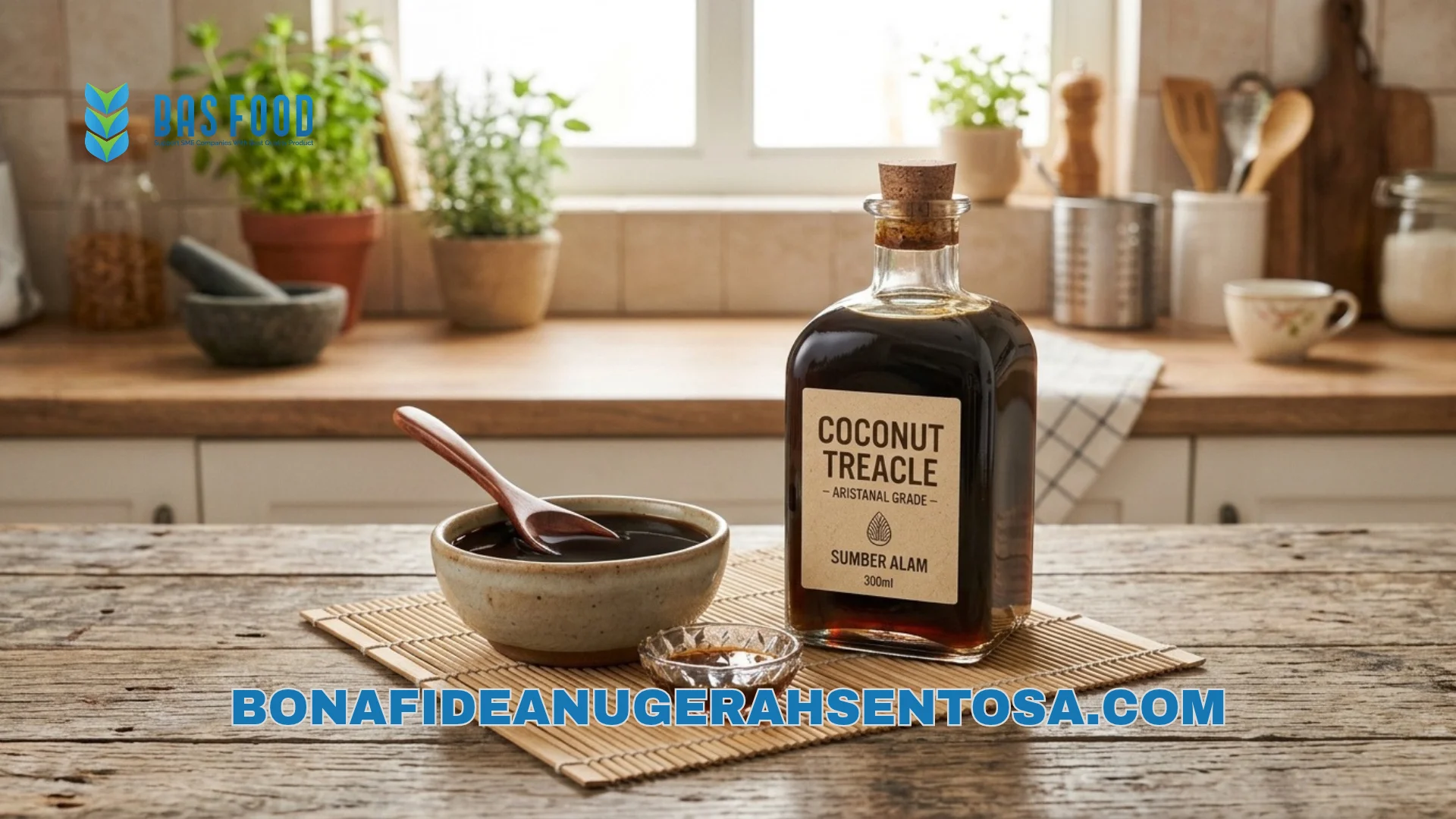
Coconut sugar treacle is a rich liquid sweetener made from coconut-derived sugar processing. The starting material is generally coconut sap, which is collected and processed through controlled heating and concentration. As the liquid becomes more concentrated, its sweetness, color, aroma, and texture develop.
The word “treacle” can have different meanings depending on the market and supplier. Some businesses may use it to describe a thick liquid sweetener with a deep cooked-sugar profile, while others may use terms such as coconut sugar syrup or liquid coconut sugar. Because terminology can vary, B2B buyers should always check the actual product specification before placing an order.
From a sensory perspective, the product is often valued for more than sweetness alone. The heating and concentration process can contribute to a richer flavor profile. Depending on the processing method, buyers may notice sweet, caramel-like, molasses-like, toasted, or mildly smoky notes.
For this reason, coconut sugar treacle flavor should be evaluated as a complete sensory profile rather than as a single taste. Sweetness, aroma, aftertaste, color, and mouthfeel can all affect the way the ingredient works in a finished product.
Understanding Coconut Treacle Taste
The coconut treacle taste can be described as rich, sweet, and cooked, although the exact profile depends on the product and processing conditions. Many buyers are interested in this characteristic because it can add depth to recipes without requiring several different sweetening ingredients.
The taste may begin with noticeable sweetness and develop into deeper cooked-sugar notes. Some products can have a caramel-like character, while others may show more pronounced molasses or toasted notes. The final profile should therefore be confirmed through sampling.
Another important point is that coconut sugar treacle does not necessarily taste strongly like fresh coconut. The raw material comes from coconut sap rather than coconut flesh. As a result, the finished product can have a brown-sugar or caramel-like sensory character instead of the creamy coconut flavor associated with coconut milk or coconut cream.
For food manufacturers, this distinction matters. A buyer looking for a strong coconut flavor may need a different ingredient. However, a manufacturer looking for a rich liquid sweetener with a naturally derived background flavor may find coconut sugar treacle more suitable.
Where Does the Flavor Come From?
The flavor of coconut sugar treacle starts with the characteristics of the coconut sap. Fresh sap contains naturally occurring sugars and other components that contribute to its sensory profile. Once the sap is collected, handling and processing become important factors in maintaining the desired quality.
Heating is another major part of the process. As the sap is heated and concentrated, water is removed and the sugar becomes more concentrated. At the same time, the cooking process can influence color and flavor.
This is one reason why natural caramel flavor is often associated with coconut sugar-based liquid sweeteners. The caramel-like impression does not necessarily mean that artificial caramel flavor has been added. Instead, it can describe the sensory impression created during processing and concentration.
Nevertheless, buyers should not assume that every coconut sugar treacle will have the same caramel profile. Processing temperature, heating duration, concentration level, and other production factors can influence the result. Therefore, supplier samples remain an important part of B2B purchasing.
Coconut Sugar Treacle Flavor and Sweetener Aroma
Taste is only one part of the sensory experience. Aroma can strongly influence how people perceive a sweetener. When a product is used in coffee, bakery fillings, sauces, desserts, or beverages, its aroma can become part of the finished product’s identity.
The sweetener aroma of coconut sugar treacle may include cooked-sugar, caramel-like, toasted, or earthy impressions. However, the intensity can vary. A mild aroma may work well in products where the manufacturer wants the main ingredients to remain dominant, while a stronger profile may be useful in products designed around rich sweet flavors.
For B2B buyers, aroma should be evaluated together with taste. A product may have an attractive appearance but an aroma that does not match the intended application. Likewise, a sweetener can have good sweetness but an aftertaste that affects the final formulation.
Therefore, sensory testing should be part of supplier evaluation. Buyers can compare samples side by side and assess aroma before and after the treacle is added to their own product formulation.
Why Color and Flavor Often Work Together
Color can influence flavor perception. A darker liquid sweetener may visually suggest a deeper, richer flavor, while a lighter product may create expectations of a milder taste. However, color alone cannot determine the actual flavor.
Coconut sugar treacle can range from lighter brown to darker brown depending on the raw material and processing. Because of this variation, buyers should agree on the desired color range with their supplier rather than assuming that one color represents a universal quality standard.
For food manufacturers, color consistency can be especially important. Beverage producers, sauce manufacturers, and bakery companies may need the ingredient to create a consistent appearance across production batches.
Consequently, buyers should discuss color and flavor together. A supplier should be able to explain the product characteristics and provide samples that allow the buyer to evaluate whether the sensory profile matches the intended application.
How Processing Can Influence Coconut Sugar Treacle Flavor
Processing plays a central role in determining the final sensory profile. The journey begins with fresh coconut sap, but the final product is shaped by collection, handling, heating, concentration, filtration, and storage.
For example, the intensity of cooked-sugar notes can change as the sap is concentrated. Longer or stronger heating can influence color and flavor development. Meanwhile, careful processing can help maintain a more controlled sensory profile.
This does not mean that a darker or stronger-tasting product is automatically better. Instead, the appropriate profile depends on the application. A beverage company may want a balanced sweetener that does not overpower coffee or tea. A bakery producer may prefer a richer flavor that complements chocolate, spices, or caramel-based recipes.
That is why B2B purchasing should focus on fit for application, not simply on whether a sample tastes strong or mild.
Coconut Sugar Treacle Flavor in Beverages
Coconut sugar treacle can be used in beverage formulations where manufacturers want both sweetness and additional flavor depth. It may be suitable for coffee drinks, tea beverages, smoothies, dessert drinks, flavored milk products, and other applications, depending on the formulation.
In coffee, for example, the cooked-sugar profile can complement roasted notes. This can create a more rounded sensory experience. However, the right dosage depends on the recipe, coffee characteristics, desired sweetness, and supplier specification.
The same principle applies to tea and other beverages. A strong treacle profile can become noticeable quickly, so product developers should conduct formulation trials rather than relying on a general usage assumption.
For commercial production, manufacturers should also evaluate how the treacle behaves after mixing. Solubility, viscosity, color contribution, and storage conditions can all influence the final beverage.
Coconut Sugar Treacle Flavor in Bakery Products
Bakery applications provide another opportunity to use the rich character of coconut sugar treacle. Its sweetness and cooked-sugar notes can complement cakes, cookies, fillings, sauces, glazes, and dessert products.
The natural caramel flavor impression can work particularly well with ingredients such as chocolate, cinnamon, vanilla, nuts, and roasted grains. As a result, product developers can use the treacle not only as a sweetener but also as part of the overall flavor design.
However, liquid sweeteners can also affect dough and batter characteristics. Adding a liquid ingredient may change moisture balance, texture, browning, and processing behavior.
For that reason, manufacturers should run formulation trials before commercial production. A small change in dosage can affect both sweetness and texture, so technical testing remains essential.
Using Coconut Sugar Treacle in Sauces and Food Products
Sauce manufacturers may also find coconut sugar treacle useful when developing products that require sweetness and depth. It can be incorporated into certain dessert sauces, dressings, marinades, glazes, and other food formulations.
The richer taste can help create a more complex sensory profile. For example, a sauce may benefit from the combination of sweetness, cooked-sugar notes, acidity, spices, and savory ingredients.
However, the final result depends heavily on formulation. Acidity, salt, spices, fats, proteins, and other ingredients can change how the treacle is perceived.
Therefore, manufacturers should test the ingredient within the actual recipe. Evaluating the treacle on its own is useful, but testing it in the finished formulation provides much more practical information.
How B2B Buyers Should Evaluate the Flavor
When evaluating coconut sugar treacle flavor, buyers should start with a simple sensory checklist. Look at the color, smell the sample, taste a small amount, and then evaluate the aftertaste.
First, check whether the aroma is clean and appropriate for the product. Next, evaluate sweetness intensity. Then, look for additional flavor notes such as caramel-like, cooked-sugar, toasted, earthy, or molasses-like characteristics.
The aftertaste also deserves attention. A pleasant aftertaste can support premium food applications, while an unwanted aftertaste may become more noticeable after the ingredient is used at commercial dosage.
Buyers should also test multiple batches where possible. One sample may not provide enough information about consistency. If the ingredient is intended for long-term production, consistency between batches is usually more important than one excellent sample.
Why Samples Matter Before Bulk Purchasing
A product description can tell buyers about the ingredient, but it cannot completely replace a physical sample. Sensory characteristics are difficult to judge from specifications alone.
This is especially true for flavor and aroma. Two products can have similar descriptions while producing noticeably different results in an actual formulation.
Therefore, importers and food manufacturers should request samples before committing to a bulk purchase. The sample should be evaluated in the buyer’s own application whenever possible.
For example, a beverage manufacturer can test the treacle in coffee or tea. A bakery producer can use it in a standard recipe. A sauce manufacturer can compare the sample with the current sweetener used in production.
This approach gives the buyer a much clearer understanding of whether the ingredient is commercially suitable.
Questions to Ask a Coconut Sugar Supplier
Choosing a coconut sugar supplier requires more than comparing prices. Buyers should also ask about product characteristics, processing, packaging, shelf life, available documentation, and supply capability.
For flavor-focused purchasing, ask whether the supplier can provide a product specification and representative sample. It is also useful to ask how the supplier manages batch consistency and whether the flavor profile can vary due to natural raw material differences.
Buyers can also discuss packaging requirements, storage recommendations, shipment conditions, and the intended application. Clear communication at the beginning can prevent misunderstandings later.
For international buyers, it is also helpful to clarify export documentation and shipping arrangements early in the procurement process. This helps both sides prepare the order more efficiently.
Choosing an Indonesian Coconut Sugar Exporter Supplier
Indonesia is well known as a source of coconut-based products, making it an important sourcing market for international buyers. However, selecting the right supplier still requires careful evaluation.
A reliable coconut sugar exporter supplier should understand the needs of international B2B buyers. That includes communication, product consistency, packaging, documentation, samples, production planning, and export handling.
CV Bonafide Anugerah Sentosa can be considered by buyers who are exploring Indonesian coconut sugar products for international sourcing. As with any supplier evaluation, buyers should review the actual product specifications and samples before making purchasing decisions.
The most important point is to establish a clear product standard. Instead of simply asking for “coconut sugar treacle,” buyers should describe the desired flavor, aroma, color, texture, packaging, and application requirements as clearly as possible.
Building a Consistent Flavor Profile for Production
Consistency is one of the biggest concerns for food manufacturers. A recipe may perform well during product development but become difficult to reproduce if the sweetener changes significantly between batches.
For that reason, buyers should communicate their preferred sensory profile to the supplier. If a particular sample performs well, the buyer can use it as a reference when discussing future orders.
A practical specification may include the desired color range, sweetness profile, aroma, viscosity, packaging format, and other relevant quality parameters. The exact parameters should be agreed between buyer and supplier according to the intended application.
This approach creates a clearer purchasing standard. It also makes supplier communication easier because both sides have a common reference.
Final Thoughts: Flavor Is Part of the Product Specification
The coconut sugar treacle flavor is more than simple sweetness. Its sensory character can include cooked-sugar, caramel-like, toasted, earthy, and other notes depending on the raw material and production process.
For food manufacturers and importers, understanding this flavor profile helps determine whether the ingredient is appropriate for beverages, bakery products, sauces, desserts, confectionery, and other applications.
Most importantly, buyers should evaluate the actual product rather than relying only on terminology. Samples, product specifications, application testing, and clear supplier communication provide a much stronger basis for purchasing decisions.
If you are sourcing from Indonesia, working with an experienced supplier such as CV Bonafide Anugerah Sentosa can be part of your supplier evaluation process. Before moving to a bulk order, discuss the desired flavor, aroma, color, viscosity, packaging, documentation, and other requirements with your coconut sugar supplier.
In the end, the best coconut sugar treacle is not simply the one with the strongest flavor. It is the one that delivers the right sensory profile, consistency, quality, and performance for your specific product.