
Buying coconut sugar syrup in bulk is not simply about finding a sweetener at the right price. For food manufacturers, beverage companies, distributors, and importers, coconut sugar syrup quality can directly affect production, product consistency, storage, and customer satisfaction. A syrup may look good when it arrives as a sample. However, that does not always mean every future batch will perform the same way. Differences in color, flavor, viscosity, moisture, packaging, and handling can create problems when a buyer moves from small samples to regular bulk orders.
That is why B2B buyers need a clear quality assessment process. Instead of judging a product only by appearance or price, buyers should examine the complete supply chain, from raw material handling to processing, packaging, storage, and export.
This guide explains the main factors that influence coconut sugar syrup quality and shows how importers can evaluate a coconut sugar supplier before starting a long-term business relationship.
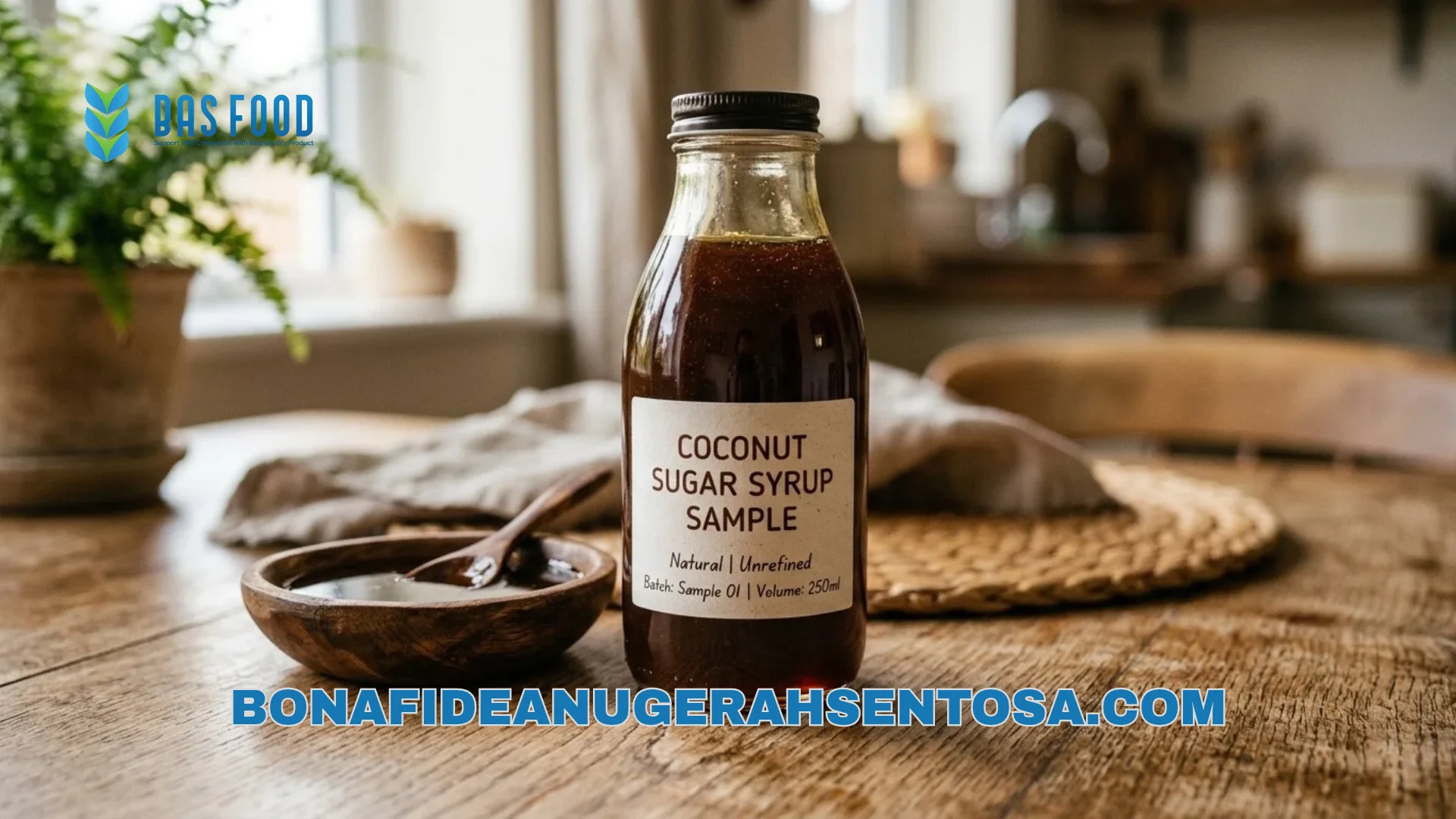
What Does Coconut Sugar Syrup Quality Really Mean?
The term coconut sugar syrup quality covers several characteristics that determine whether the product is suitable for its intended application. These characteristics can include appearance, aroma, flavor, viscosity, consistency, cleanliness, packaging, shelf stability, and compliance with the buyer’s food requirements.
In other words, quality is not based on just one number or one visual characteristic. A syrup can have an attractive color but still fail to meet a buyer’s expectations for flavor or consistency. Similarly, a syrup can taste good but create production problems if its viscosity changes significantly between batches.
For B2B purchasing, quality should therefore be viewed as a combination of product performance and supplier reliability. The buyer needs confidence that the product will meet the agreed specification not only once, but repeatedly.
This is where supplier quality becomes important. A reliable supplier should be able to communicate product specifications clearly, explain its quality control process, provide representative samples, and maintain reasonable batch consistency.
Raw Material Quality Starts the Process
Coconut sugar syrup begins with coconut sap or coconut-derived sugar materials, depending on the production method used by the supplier. Therefore, the quality of the raw material can influence the final product.
Fresh and properly handled raw materials can help produce a syrup with a more desirable flavor and aroma. In contrast, poor handling before processing may affect the final sensory profile. For this reason, buyers should ask how the supplier manages raw materials before they enter production.
The production environment also matters. Suppliers need suitable procedures for receiving, handling, processing, and storing ingredients. These steps form part of the overall quality control system.
For importers, it is useful to ask suppliers questions such as:
- Where does the raw material come from?
- How is it collected and handled?
- How quickly does processing take place?
- How does the supplier control contamination risks?
- How does the supplier maintain consistency between production batches?
- What product specifications does the supplier normally follow?
These questions can reveal much more about a supplier than simply asking for a price quotation.
Color Is Important, But It Is Not the Only Quality Indicator
Color is one of the first characteristics buyers notice when checking coconut sugar syrup. Depending on the product and processing method, the syrup can have a light to deeper brown appearance.
However, buyers should avoid using color alone as proof of quality. A particular color may be suitable for one food application but less suitable for another. For example, a beverage manufacturer may have different requirements from a bakery or sauce producer.
Therefore, buyers should define their preferred color range as part of the product specification rather than relying on descriptions such as “light brown” or “dark brown.”
During sample evaluation, compare samples under similar conditions. Check whether the color is uniform and whether it remains reasonably consistent from one sample to another.
More importantly, discuss the reason for any color variation with the supplier. Natural ingredients can show some variation, but significant changes may require further investigation.
Flavor and Aroma Can Reveal Product Differences
Flavor is another major part of coconut sugar syrup quality. Coconut sugar syrup is often valued for its characteristic sweet taste and caramel-like notes, although the exact sensory profile can vary according to raw materials and processing.
For B2B buyers, the important question is not simply whether the syrup tastes good. The real question is whether the flavor works consistently in the buyer’s final product.
For example, a beverage producer may need a syrup that blends well with coffee, tea, milk-based drinks, or other ingredients. A sauce manufacturer may need a flavor profile that supports savory ingredients without becoming too dominant.
Aroma should also be checked during sample evaluation. Buyers can compare the smell of different samples and note whether the aroma is clean, pleasant, and appropriate for the intended application.
When evaluating several suppliers, it helps to create a simple sensory checklist covering:
- Color
- Aroma
- Sweetness
- Flavor intensity
- Aftertaste
- Overall sensory profile
- Performance in the intended application
This makes supplier comparison more objective and easier to communicate internally.
Viscosity Matters for Manufacturing
Viscosity is particularly important when coconut sugar syrup is used in commercial food and beverage production. It affects how the syrup flows, mixes, pumps, fills, and interacts with other ingredients.
A syrup that is too thick for a particular production system may create handling problems. On the other hand, a syrup that is too thin may not deliver the desired formulation performance.
For this reason, B2B buyers should discuss viscosity requirements before placing a bulk order. Rather than assuming that every coconut sugar syrup has the same consistency, buyers should request the supplier’s available specification and testing method.
The testing method matters because viscosity measurements can depend on equipment, temperature, and testing conditions. Therefore, a number without its testing context may not provide enough information for a meaningful comparison.
During product sampling, buyers should also test the syrup in the actual production environment whenever possible. A sample that performs well in a small kitchen test may behave differently in industrial equipment.
Batch Consistency Is Critical for B2B Buyers
One of the most important aspects of coconut sugar syrup quality is batch consistency. A food manufacturer does not want a syrup that changes significantly from one shipment to the next.
Imagine a beverage company developing a drink using a specific syrup. The product team approves a sample because it delivers the desired sweetness, color, and flavor. Several months later, the company receives a new shipment that has noticeably different characteristics.
Even if both products are technically coconut sugar syrup, the difference can affect the finished beverage.
Consistent production helps reduce this risk. Suppliers should have documented specifications and appropriate quality checks for their production batches.
Buyers can ask whether the supplier checks characteristics such as:
- Appearance
- Color
- Flavor
- Aroma
- Viscosity
- Moisture or solids-related parameters
- Microbiological requirements
- Packaging condition
- Other agreed customer specifications
The exact parameters will depend on the product and application. The key point is that the buyer and supplier should agree on measurable quality requirements before regular production begins.
Food Safety Should Never Be an Afterthought
For food ingredients, food safety is just as important as sensory quality. A syrup can have the right color and flavor, but that alone does not establish that it is suitable for commercial food production.
Food safety begins with hygienic handling and continues through processing, storage, packaging, and transportation. Buyers should therefore understand how suppliers manage potential contamination risks throughout the production process.
When evaluating a coconut sugar supplier, ask about its food safety procedures, production hygiene, cleaning practices, raw material handling, and product testing. If documentation such as a specification sheet, test report, or certificate of analysis is available for the relevant product or shipment, buyers can use it as part of their quality review.
However, documentation should match the actual product being purchased. Buyers should avoid assuming that a document for one product or batch automatically applies to another.
A good B2B purchasing process connects three things: the agreed specification, the supplier’s quality control process, and the evidence available for the delivered product.
Quality Control Should Continue From Production to Packing
Good quality control does not happen only at the end of production. It should be integrated throughout the process.
For coconut sugar syrup, this can include checking incoming raw materials, monitoring processing conditions, checking the finished product, inspecting containers, and confirming that packaging is suitable for transportation.
Packaging deserves particular attention for export orders. Syrup is a liquid product, so unsuitable packaging can create leakage, contamination, handling, or storage problems.
Before placing a large order, buyers should confirm:
- Packaging type
- Container size
- Closure system
- Label information
- Batch identification
- Storage instructions
- Handling requirements
- Export packaging suitability
The final packaging should protect the product during normal handling and transportation. It should also make batch identification easier if the buyer needs to trace a shipment later.
How to Test Coconut Sugar Syrup Samples
A product sample is one of the most useful tools for evaluating coconut sugar syrup quality before making a bulk purchase. However, buyers should test samples systematically instead of simply tasting them once.
Start by comparing the sample against the agreed specification. Look at the appearance and color. Then evaluate aroma and flavor. Next, check viscosity and other technical characteristics relevant to the intended application.
After that, perform an application test.
For example, a beverage company can test the syrup in its actual drink formula. A bakery manufacturer can evaluate its behavior in a recipe. A sauce manufacturer can test its mixing and flavor contribution.
This approach provides more useful information than a simple sensory test because it shows whether the syrup works under real production conditions.
It is also useful to retain a reference sample. If the buyer later receives a bulk shipment, the reference can help the quality team compare the new material with the approved sample.
Supplier Quality Can Be More Important Than a Low Price
Price is naturally important in B2B purchasing. However, the lowest quotation does not always represent the lowest total cost.
Consider a shipment that has inconsistent syrup characteristics. The buyer may need additional testing, formulation adjustments, production changes, or communication with the supplier. In some cases, inconsistent raw materials can also create waste.
This is why supplier quality should be part of the purchasing decision.
A professional supplier should communicate clearly about specifications, production, packaging, samples, and export requirements. The supplier should also understand that B2B buyers often need consistency rather than a one-time transaction.
Before choosing a supplier, buyers can review:
- Product specification
- Sample performance
- Quality control process
- Batch consistency
- Food safety practices
- Packaging
- Communication
- Production capacity
- Export experience
- Documentation
This checklist creates a more complete picture of the supplier.
Why Sample Approval Should Come Before Bulk Orders
Moving directly from a quotation to a large order can create unnecessary risk. A better approach is to evaluate a sample first, especially when the buyer is working with a new supplier.
Sample approval allows the buyer to check whether the product matches the intended application. It also gives both sides an opportunity to discuss specifications before production becomes more complicated.
Once the sample is approved, the buyer and supplier can establish a reference specification for future orders.
This does not mean every future batch will be completely identical in every natural characteristic. Instead, it creates an agreed quality target and a clear basis for communication if a batch differs from the expected specification.
For long-term B2B relationships, that clarity can make a major difference.
Working With an Indonesian Coconut Sugar Exporter Supplier
Indonesia is an important origin for coconut-based products, and international buyers can work directly with Indonesian suppliers for different coconut sugar formats.
When sourcing from Indonesia, buyers should evaluate the supplier based on the same core principles used anywhere else: product quality, food safety, production control, consistency, packaging, documentation, and communication.
For companies looking for a coconut sugar exporter supplier, direct communication with the producer or exporter can make the sourcing process easier. Buyers can explain their specifications, request samples, discuss packaging, and determine whether the supplier can support their expected order requirements.
However, buyers should still conduct their own product evaluation. Country of origin alone does not guarantee a specific quality level. The individual supplier’s process and agreed specifications remain important.
CV Bonafide Anugerah Sentosa and B2B Coconut Sugar Sourcing
For buyers exploring Indonesian coconut-based ingredients, CV Bonafide Anugerah Sentosa can be considered as part of a supplier sourcing process for coconut sugar products.
The most useful approach is to communicate the exact product requirement rather than simply asking for “coconut sugar syrup.” Buyers can explain their application, desired product characteristics, packaging needs, estimated volume, and destination market.
This allows the supplier to understand the purchasing requirement more clearly and helps both parties discuss the appropriate product specification.
As with any international supplier relationship, buyers should review samples, specifications, quality procedures, packaging, and commercial terms before moving into regular bulk purchasing.
Building Long-Term Quality With Your Supplier
A strong B2B relationship does not end after the first shipment. Buyers and suppliers should continue communicating about product performance, batch consistency, packaging, and future requirements.
If a buyer changes its formulation or production process, the supplier should know when the change could affect the required syrup specification. Likewise, suppliers should communicate relevant production or packaging changes that could affect the buyer’s expectations.
Regular communication supports better supplier quality management.
Over time, buyers can develop a more detailed supplier evaluation system based on actual shipment performance. This may include delivery reliability, product consistency, documentation accuracy, packaging condition, and responsiveness.
The goal is not simply to find a supplier once. The goal is to establish a reliable supply relationship that supports consistent production.
Final Thoughts: Quality Starts With Clear Specifications
Understanding coconut sugar syrup quality requires more than checking whether a syrup looks attractive or tastes good. B2B buyers need to consider the complete product and supply process.
Color, flavor, aroma, viscosity, food safety, packaging, and batch consistency all play important roles. At the same time, supplier quality matters because consistent products depend on consistent production and effective quality control.
Therefore, buyers should request samples, define specifications, test the syrup in the intended application, and communicate requirements clearly before placing large orders.
Whether you are a food manufacturer, beverage producer, distributor, or importer, a structured evaluation process can make coconut sugar syrup sourcing much easier. By focusing on product requirements and supplier performance rather than price alone, buyers can build a clearer foundation for long-term B2B sourcing.