
Coffee has changed from a simple morning drink into a global beverage category with endless possibilities. From specialty coffee shops to ready-to-drink products, manufacturers and café operators continue to explore new ingredients that can create a more distinctive drinking experience. One ingredient gaining attention is coconut sugar syrup for coffee. Unlike dry sugar, coconut sugar syrup comes in a liquid form that can be mixed directly into coffee beverages. This makes it practical for iced coffee, hot coffee, milk-based drinks, specialty coffee, and commercial beverage formulations. At the same time, it can bring a characteristic sweetness and flavor that makes a coffee recipe different from one made with ordinary refined sugar.
For B2B buyers, however, choosing a coffee sweetener involves more than simply looking for something sweet. Flavor, color, viscosity, mixing behavior, packaging, storage, consistency, and supplier reliability all matter. Therefore, beverage manufacturers and coffee businesses need to understand how the ingredient works before using it at scale.
This guide explores how coconut sugar syrup can be used in coffee, what makes it useful as a liquid sweetener, and what international buyers should consider when sourcing it from an Indonesian supplier.
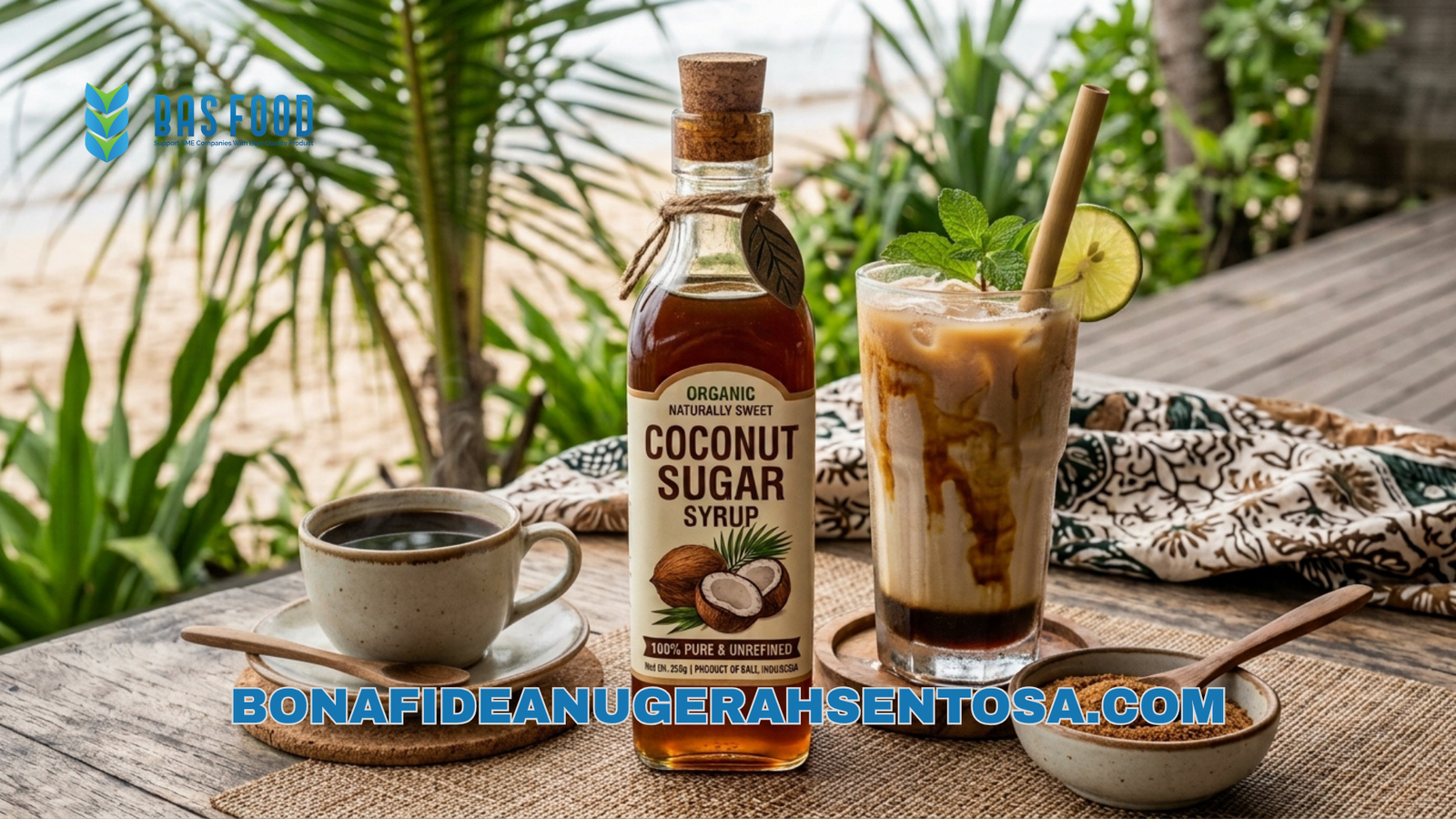
What Is Coconut Sugar Syrup for Coffee?
Coconut sugar syrup for coffee is a liquid sweetening ingredient designed to provide sweetness in coffee-based beverages. Because it is already in liquid form, it can be added directly to coffee recipes without first dissolving dry sugar.
This simple difference can be useful in commercial beverage preparation. A café worker, for example, can add a measured amount of syrup to an iced coffee and mix it with the other ingredients. Similarly, beverage manufacturers can incorporate liquid syrup into a controlled formulation during production.
Coconut sugar syrup can also contribute its own flavor and color. Depending on the product specification and processing, it may have a characteristic caramel-like or molasses-like profile. Therefore, it can become part of the flavor design rather than functioning only as a source of sweetness.
For this reason, coffee developers should evaluate the syrup as a complete ingredient. The objective is not simply to make coffee sweeter. Instead, the goal is to find the right balance between coffee flavor, sweetness, aroma, milk, and other ingredients.
Why Use a Liquid Sweetener in Coffee?
Coffee contains many flavor compounds, and the sweetener can influence how those flavors are perceived. A well-balanced sweetener can soften bitterness and help other flavor notes become easier to enjoy.
A liquid sweetener offers another practical advantage: it can be easier to distribute throughout a beverage. Dry sugar may require additional stirring, particularly in cold coffee. By contrast, syrup can be incorporated directly into the drink.
This can be especially useful for iced coffee. When the beverage contains cold liquid and ice, dissolving granulated sugar may take more time. A liquid ingredient can simplify preparation and help create a more consistent recipe.
For cafés, consistency is important. Customers expect the same drink to taste similar each time they order it. Therefore, using a measured amount of syrup can become part of a standardized beverage preparation process.
Easier Dosing
Liquid syrup can also support controlled dosing. A café can use a pump, measuring container, or another suitable dispensing method to add a repeatable amount to each drink.
This approach can make recipe standardization easier. For example, a coffee business can establish a defined syrup quantity for a particular cup size and adjust it during product development.
Of course, the actual dosage depends on the syrup specification and the complete recipe. Beverage developers should determine the right amount through testing rather than relying on a universal ratio.
How Coconut Sugar Syrup Changes the Coffee Experience
One of the most interesting aspects of coconut sugar syrup is its potential contribution beyond sweetness. Coffee already has a complex flavor profile, so the sweetener needs to complement rather than overwhelm it.
Coconut sugar-based syrup may add a warm sweetness that works well with coffee, milk, spices, or other flavor ingredients. This can create opportunities for specialty drinks with a more distinctive flavor identity.
However, coffee beans differ considerably in flavor. Light-roasted coffee may have bright, fruity, or floral notes, while darker roasts may have stronger roasted, chocolate, or caramel-like characteristics.
As a result, the same syrup may perform differently in different coffee recipes. A beverage developer should test it against the specific coffee profile being used.
Pairing With Dark Roasts
Dark-roasted coffee often has a stronger roasted character. A sweetener with a deeper flavor profile may complement this style of coffee, especially in milk-based beverages.
For example, a café might test coconut sugar syrup in iced latte, cappuccino-inspired drinks, or other specialty recipes.
Nevertheless, the correct balance depends on the recipe. Too much syrup can hide the coffee’s original characteristics, while too little may not provide the intended sweetness.
Pairing With Milk-Based Coffee
Milk can soften coffee’s bitterness and add creaminess. When combined with coconut sugar syrup, it can create a sweet and rounded beverage profile.
This combination can work in iced coffee, hot lattes, flavored coffee, and other milk-based drinks.
The key is balance. Beverage developers should consider the sweetness already contributed by other ingredients and adjust the syrup accordingly.
Coconut Sugar Syrup for Iced Coffee
Iced coffee is one of the most practical applications for liquid sugar. Cold temperatures can make dry sweeteners slower to dissolve, particularly when the drink contains ice.
Coconut sugar syrup can be incorporated before or during mixing, depending on the recipe. Because it is already liquid, it can distribute through the beverage more easily than dry sugar in many preparation settings.
For cafés, this can support faster drink preparation. A standardized syrup dose can also help staff follow the same recipe during busy service periods.
For packaged iced coffee products, however, the formulation becomes more complex. Manufacturers need to consider the interaction between coffee, syrup, milk or plant-based ingredients, flavors, water, and other components.
Therefore, commercial RTD coffee should undergo proper formulation and stability testing based on the product’s intended processing and storage conditions.
Coconut Sugar Syrup for Hot Coffee
Coconut sugar syrup can also be used in hot coffee. The warm beverage can help the syrup blend into the coffee during stirring or mixing.
This makes it suitable for café drinks where customers want a sweeter coffee without adding dry sugar. It can also work in specialty recipes that combine coffee with spices, milk, cocoa, or other ingredients.
For hot beverages, however, flavor balance remains important. Heat can affect how aroma and sweetness are perceived. Therefore, coffee developers should evaluate the finished beverage at the temperature at which customers will actually consume it.
This is particularly important for cafés and beverage brands developing signature drinks. A recipe that tastes balanced when tested at room temperature may taste different when served hot.
Coconut Sugar Syrup in Specialty Coffee Recipes
Specialty coffee provides many opportunities for experimentation. Instead of using coconut sugar syrup simply as a basic sweetener, cafés can incorporate it into signature recipes.
For example, it can be explored in coffee beverages containing cinnamon, vanilla, cocoa, caramel-style flavors, coconut ingredients, or plant-based milk.
These combinations can create a broader range of menu concepts. However, the syrup should complement the coffee rather than make every drink taste the same.
A strong specialty beverage program usually begins with a clear flavor concept. Once the desired flavor direction is established, the syrup can be tested at several dosage levels.
Creating a Signature Coffee Drink
A signature coffee beverage should have a recognizable flavor while remaining practical for daily preparation.
Coconut sugar syrup can help create this type of drink because it is easy to measure and can be incorporated into both hot and cold recipes.
For B2B buyers, this also creates an opportunity to develop products that are different from conventional coffee beverages. Beverage brands can test different coffee origins, milk bases, flavors, and syrup levels to create a distinctive formulation.
Coconut Sugar Syrup as a Coffee Sweetener
The term coffee sweetener covers many different products, including granulated sugar, syrups, flavored syrups, and other sweetening ingredients. Coconut sugar syrup belongs to the liquid category and can provide both sweetness and its characteristic flavor.
For coffee businesses, the advantage is flexibility. A syrup can be incorporated into recipes without changing the basic coffee preparation method too much.
It can also be useful when a business wants to offer customers an alternative sweetening option. Instead of presenting only refined sugar, cafés can include a coconut sugar-based syrup as part of their specialty beverage menu.
Still, product positioning should match the actual product characteristics. Buyers should avoid making unsupported nutritional or health claims and instead focus on the ingredient’s flavor, format, application, and sourcing story.
Can It Also Be Used as a Tea Sweetener?
Yes, coconut sugar syrup can also be considered as a tea sweetener. Its liquid format makes it suitable for tea-based beverages where a liquid sweetening ingredient is preferred.
This creates opportunities for suppliers and beverage manufacturers that produce both coffee and tea products. A single syrup format may potentially be tested across several beverage categories.
For example, manufacturers can explore it in iced tea, milk tea, spiced tea, or tea-based specialty drinks.
However, coffee and tea have different flavor profiles. A syrup that works well with a strong espresso may behave differently in a delicate tea. Therefore, each application should be evaluated independently.
Using Coconut Sugar Syrup as Liquid Sugar for Beverages
The broader category of liquid sugar for beverages includes ingredients designed to provide sweetness in liquid formulations. Coconut sugar syrup can fit this category when its specifications match the needs of the beverage manufacturer.
Its liquid format can support applications where rapid mixing, controlled dosing, and convenient handling are important.
However, manufacturers should not assume that all liquid sweeteners can be used interchangeably. Concentration, viscosity, flavor, color, and other product characteristics can differ significantly.
Consequently, product samples and technical specifications should be reviewed before commercial production.
What Coffee Manufacturers Should Check Before Buying
A commercial buyer should evaluate the syrup from both a formulation and procurement perspective. The first step is to define the intended application.
Will the syrup be used in café drinks, bottled iced coffee, RTD products, coffee concentrates, or another beverage? Each application may require different specifications.
Next, the buyer should identify the key product parameters. These may include flavor, color, viscosity, sweetness, packaging, storage requirements, and other specifications relevant to the production process.
Request Product Samples
Samples are particularly useful because coffee formulation is highly application-specific. A supplier’s general product description cannot show exactly how the syrup will taste in a particular coffee recipe.
The product development team can test several inclusion levels and compare the results.
For larger beverage manufacturers, testing should eventually move from laboratory trials to pilot production. This helps confirm that the syrup works with actual mixing equipment and manufacturing procedures.
Review Packaging
Packaging also deserves attention. A liquid ingredient needs packaging that supports safe handling, storage, and transportation.
For international shipments, the packaging must also be considered alongside palletization, container loading, transport conditions, warehouse handling, and destination storage.
The exact packaging format should be agreed between buyer and supplier according to product requirements and logistics conditions.
Choosing a Reliable Coconut Sugar Supplier
Selecting a coconut sugar supplier requires more than comparing prices. A B2B buyer needs a supplier that can communicate product specifications clearly and support a consistent procurement process.
The supplier should be able to discuss the intended application and provide relevant information about the product. Buyers should also evaluate sample quality, packaging, documentation, communication, and supply capability.
For international buyers, working with a coconut sugar exporter supplier can simplify sourcing from Indonesia. Export experience can be particularly relevant when buyers need support with shipment documentation, packaging arrangements, and international logistics.
CV Bonafide Anugerah Sentosa is an Indonesian supplier and exporter of coconut-based products that can be considered by businesses looking for a B2B sourcing partner.
As with any ingredient purchase, buyers should conduct their own technical and commercial evaluation before approving a supplier for regular procurement.
From Coffee Sample to Commercial Production
Moving from a sample to commercial production should be a structured process. Start by testing the syrup in a small coffee recipe.
Evaluate sweetness, flavor, color, aroma, and mixing. If the results are promising, repeat the test with different coffee beans and preparation methods.
Next, document the preferred formulation. Record the coffee type, syrup amount, other ingredients, preparation method, serving temperature, and other relevant variables.
This information becomes useful when the beverage moves into regular production.
For industrial beverage manufacturers, the next step is pilot-scale production. The objective is to confirm that the approved recipe remains practical when larger equipment and production volumes are introduced.
Common Mistakes When Using Coconut Sugar Syrup in Coffee
One common mistake is adding too much syrup. Because coconut sugar syrup contributes both sweetness and flavor, excessive use can overpower the coffee.
Another mistake is evaluating the syrup only in one beverage. A product may perform differently in black coffee, milk coffee, iced coffee, or RTD formulations.
Buyers should also avoid choosing a supplier based only on price. Consistency, communication, packaging, documentation, and supply reliability can have a major impact on long-term purchasing.
Finally, do not skip sample testing. A sample provides an opportunity to identify formulation issues before committing to a larger order.
The Future of Coconut Sugar Syrup in Coffee
Coffee consumers continue to explore new flavors and beverage formats. At the same time, cafés and beverage manufacturers need ingredients that are practical to handle and suitable for consistent production.
Coconut sugar syrup offers an interesting combination of liquid convenience and distinctive sweetness. Its applications can range from simple café coffee to specialty beverages and larger-scale commercial formulations.
However, successful use depends on proper testing. The best syrup for one coffee recipe may not automatically be the best choice for another. Flavor, viscosity, color, dosage, and formulation conditions all need to be considered.
For B2B buyers, the sourcing process should therefore start with the application. Define the beverage, establish the desired characteristics, request samples, conduct formulation trials, and then agree on a clear product specification with the supplier.
For businesses looking for an Indonesian coconut sugar supplier, CV Bonafide Anugerah Sentosa can be evaluated as a potential sourcing partner for coconut-based sweetener products. The most important step is to match the product specification with the buyer’s formulation, quality requirements, packaging needs, and target market.