
Coconut sugar has moved beyond its traditional role as a local sweetener. Today, food manufacturers, distributors, retailers, and ingredient buyers in international markets are increasingly looking for coconut sugar in practical formats that fit their production and packaging needs. One of those formats is moulded coconut sugar. For businesses searching for a coconut sugar supplier moulded, the challenge is not simply finding a supplier that can make sugar blocks. A reliable supplier should also understand product consistency, moulding requirements, packaging, moisture control, export preparation, and long-term supply. These factors can directly affect production efficiency and customer satisfaction.
Moulded coconut sugar is made by concentrating coconut sap and forming the resulting sugar into specific shapes or blocks. Depending on the buyer’s requirements, the product can be supplied in different weights, dimensions, packaging formats, and quantities.
For importers, therefore, supplier selection should involve more than comparing prices. A good purchasing decision starts with understanding the product itself and then evaluating whether the supplier can consistently meet the required specification.
This guide explains what buyers should know before choosing a moulded coconut sugar supplier, from production and specifications to quality control, packaging, and international purchasing.
What Is Moulded Coconut Sugar?
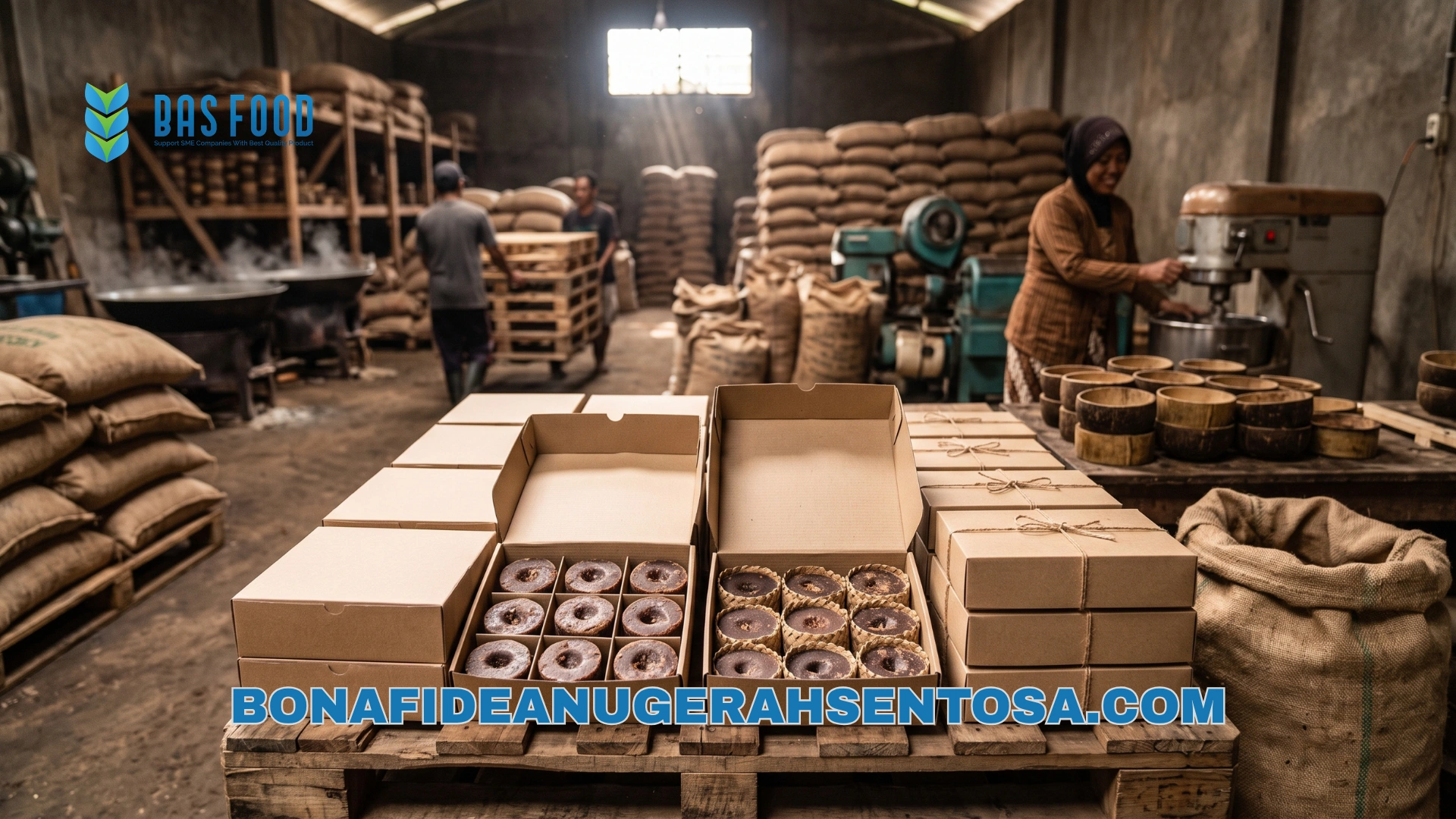
Moulded coconut sugar is coconut sugar that has been formed into a specific shape after the concentrated coconut sap reaches the appropriate stage during processing. Instead of producing loose crystals or granules, producers pour or transfer the cooked sugar into moulds, where it cools and becomes a solid form.
The basic raw material is coconut sap, sometimes called coconut nectar or coconut blossom sap. Farmers collect the sap from coconut flower stalks and bring it for processing. The sap is then filtered and heated to reduce its water content. As the liquid becomes thicker, producers carefully control the cooking process until the sugar reaches the desired consistency for moulding.
After cooking, the hot sugar can be placed into suitable moulds. Once it cools and becomes firm, the moulded pieces are removed and prepared for further handling. The result is a solid coconut sugar product that can be supplied as blocks, cakes, discs, or other agreed shapes.
This format remains popular because it is practical for certain traditional recipes and food applications. It can also provide an attractive presentation for retail products when the shape and packaging are designed appropriately.
However, moulded coconut sugar requires careful handling. The final product can react to moisture in the surrounding environment. Consequently, processing, cooling, packaging, warehousing, and transportation all play important roles in maintaining product quality.
Why Choose Moulded Coconut Sugar for B2B Applications?
The best coconut sugar format depends on the buyer’s application. A food manufacturer producing powdered drink mixes may prefer granulated coconut sugar, while a traditional food producer may specifically need solid blocks. Moulded coconut sugar can be a practical option when the production process calls for a solid sweetener that can be broken, grated, melted, or incorporated into recipes.
For traditional food applications, the solid format can also fit established production methods. Restaurants, food producers, bakeries, sauce manufacturers, and specialty food businesses may use moulded coconut sugar in recipes where a solid form is convenient to handle and measure.
From a commercial perspective, moulded products can also create opportunities for product differentiation. A supplier may produce standard blocks for industrial use or customized shapes for particular retail requirements. However, customization should always be discussed in detail before an order is placed because mould dimensions, unit weight, packaging, and production quantities can affect cost and lead time.
Another advantage is flexibility. A business can source moulded coconut sugar in bulk and process it further according to its own production needs. For example, a manufacturer can crush or melt the blocks before incorporating them into sauces, bakery products, beverages, desserts, or other formulations.
The important point is that the product format should match the buyer’s operation. Buying the cheapest coconut sugar does not necessarily create the lowest total cost. If the format causes additional processing, excessive waste, inconsistent weight, or difficult storage, the apparent saving can disappear quickly.
How Coconut Sugar Is Made Before Moulding
Understanding coconut sugar production helps buyers evaluate suppliers more effectively. The quality of moulded coconut sugar begins long before the sugar enters the mould. It starts with the raw coconut sap and continues through filtering, heating, concentration, moulding, cooling, and packing.
Farmers collect coconut sap from the flower stalks of coconut palms. The timing and handling of sap collection matter because fresh sap can change over time. Producers therefore need appropriate collection and handling practices before the sap enters the cooking process.
The sap is filtered to remove unwanted physical material. After that, producers heat it in cooking vessels to evaporate water and concentrate the natural sugars. The cooking stage requires attention because excessive heating or poor process control can affect the final color, aroma, flavor, and texture.
Once the concentrated sugar reaches a suitable condition, the producer moves to the moulding stage. The hot product is placed into moulds with the required shape and size. It then cools and solidifies.
At this stage, consistency becomes especially important. Buyers purchasing commercial quantities need units that are reasonably consistent in shape and weight. Large variations can make packing, inventory control, portioning, and retail presentation more difficult.
For this reason, a prospective coconut sugar supplier should be able to explain its general production process and quality controls. Buyers do not necessarily need every internal production detail, but they should have enough information to understand how the supplier maintains product consistency.
Choosing the Right Coconut Sugar Mould Size
One of the most important decisions when purchasing moulded coconut sugar is the size of each piece. There is no single mould size that works for every buyer. The appropriate dimensions depend on the intended application, packaging design, handling method, and customer expectations.
For industrial buyers, block weight can be more important than appearance. A food manufacturer may need larger blocks because the sugar will be processed in bulk. On the other hand, a retail brand may prefer smaller pieces because individual units can be easier to pack and sell.
When discussing mould specifications with a supplier, buyers should clearly define several points. These may include unit weight, length, width, height, shape, acceptable weight variation, packaging format, and labeling requirements.
A buyer should also ask whether the supplier already produces the requested mould. If the supplier needs to create or modify a mould, the project may involve additional development time or minimum order quantities.
Common Considerations for Moulded Coconut Sugar
| Specification | Why It Matters |
|---|---|
| Unit weight | Helps with portion control and packaging |
| Length and width | Determines packaging fit |
| Height | Affects storage and carton arrangement |
| Shape | Supports branding and application needs |
| Weight tolerance | Helps maintain product consistency |
| Surface condition | Influences visual quality |
| Packaging | Protects against moisture and contamination |
| Minimum order | Important for production planning |
These specifications should be confirmed before commercial production begins. A written specification can reduce misunderstandings between buyer and supplier, especially when both parties operate in different countries.
Supplier Evaluation: What Should B2B Buyers Check?
A serious supplier evaluation should cover more than a product sample. A sample tells you what the supplier can produce at one point in time. A B2B buyer also needs confidence that the supplier can repeat the same quality across future orders.
Start by asking about the supplier’s experience with moulded coconut sugar. Does the supplier regularly produce moulded products, or is this a special request? A supplier with experience in the requested format may have a better understanding of moulding consistency, packaging, storage, and shipping challenges.
Next, review the product specification. Make sure both sides agree on the raw material, product format, unit weight, appearance, moisture requirements, packaging, and other relevant parameters. If the buyer has a technical specification sheet, share it with the supplier before requesting a final quotation.
Quality documentation should also form part of the evaluation. Depending on the destination market and intended application, buyers may require product specifications, certificates, laboratory test results, food safety documents, or other export documentation. Requirements vary by country and product application, so the buyer should identify them early.
Communication is another practical factor. International procurement often involves questions about production schedules, packaging artwork, shipping documents, payment terms, and delivery. A supplier that communicates clearly can make the purchasing process much easier.
For businesses considering cv bonafide anugerah sentosa, the same principle applies. Buyers should discuss their exact moulded coconut sugar requirements directly with the company and request current product specifications, available formats, packaging options, minimum order quantities, and export documentation relevant to their market.
Quality Factors That Matter in Moulded Coconut Sugar
Quality is not determined by color alone. Although appearance matters, professional buyers should assess several characteristics together. These can include aroma, flavor, texture, moisture, cleanliness, consistency, and overall product condition.
Color can naturally vary in coconut sugar depending on raw material and processing conditions. Therefore, buyers should establish an acceptable color range rather than assuming every batch will have exactly the same shade.
Moisture deserves particular attention. Coconut sugar is naturally hygroscopic, which means it can interact with moisture from the surrounding environment. If the product absorbs too much moisture, the texture can change and the surface may become sticky or softer.
For moulded coconut sugar, moisture control is particularly important because buyers generally want the pieces to remain stable during storage and transport. Poor packaging or unsuitable warehouse conditions can increase the risk of quality changes.
Texture also matters. A moulded piece should have sufficient structure for handling while remaining suitable for its intended application. Excessive softness, cracking, or irregularity may indicate problems with processing, cooling, storage, or handling.
A professional buyer should therefore request a representative sample and evaluate it under realistic conditions. If the product will spend several weeks in storage before use, the buyer should consider how the packaging and product behave during that period.
Packaging: The First Line of Protection
Packaging plays a major role in protecting moulded coconut sugar. This is especially true during international shipping, where products may experience changes in temperature and humidity.
The packaging system should protect the sugar from moisture, physical damage, contamination, and excessive exposure to air. The exact solution depends on the product, destination, shipping duration, and buyer’s requirements.
For bulk coconut sugar, suppliers may use food-grade inner packaging combined with stronger outer cartons, sacks, or other suitable transport packaging. Retail products may require individual wrapping, pouches, boxes, or customized labels.
Buyers should not select packaging based only on appearance. A beautiful package is not useful if it does not protect the product during transportation. Instead, packaging should balance protection, cost, handling, storage, and presentation.
When working with a coconut sugar mould supplier, ask how the supplier normally protects moulded pieces during shipment. Also discuss whether the supplier can provide customized packaging if the buyer has its own brand or distribution requirements.
Storage and Handling After Arrival
Once moulded coconut sugar reaches the buyer’s warehouse, storage conditions continue to affect product quality. Even a well-produced product can develop problems if the warehouse is hot, humid, poorly ventilated, or exposed to direct water or condensation.
The storage area should be clean, dry, and suitable for food ingredients. Products should remain inside their protective packaging until they are needed. Buyers should also avoid placing cartons directly on a wet floor or in locations where water leakage can occur.
Good stock rotation is equally important. Businesses should organize inventory so that older batches are used first when appropriate. Clear lot identification can help with traceability and stock management.
Temperature and humidity should also be monitored when the product and destination environment make this necessary. The goal is simple: keep the product protected from unnecessary moisture exposure and physical damage.
This becomes especially important for importers purchasing larger volumes. Wholesale coconut sugar may remain in storage for a significant period before distribution or production. Therefore, storage planning should be part of the procurement process rather than an afterthought.
Working With an Indonesian Coconut Sugar Supplier
Indonesia is an important origin for coconut-based products, and buyers looking for an Indonesian coconut sugar supplier should evaluate suppliers based on their actual capabilities rather than origin alone.
A supplier should understand the needs of international buyers, including product specifications, packaging, documentation, production planning, and shipping. Clear communication becomes particularly important when the buyer and supplier are located in different countries.
Buyers should also understand the difference between a producer, trader, exporter, and integrated supplier. These business models can all work, but the buyer needs to know who controls production and who is responsible for quality.
For businesses seeking a long-term coconut sugar supplier, consistency should be a central consideration. A successful first shipment is useful, but repeatable quality and dependable communication are more valuable for long-term procurement.
This is where supplier relationships can make a real difference. Instead of treating each purchase as a one-time transaction, B2B buyers can establish agreed specifications, packaging standards, quality expectations, and communication procedures for future orders.
How CV Bonafide Anugerah Sentosa Fits Into Your Sourcing Process
For buyers researching cv bonafide anugerah sentosa as a potential coconut sugar source, the best approach is to start with a detailed product inquiry. Explain the desired mould shape, block weight, dimensions, packaging, order volume, destination country, and intended application.
As an exporter of coconut sugar and other Indonesian commodities, CV Bonafide Anugerah Sentosa can be considered as part of a broader supplier evaluation process. However, every buyer should confirm current product availability, specifications, production capacity, packaging options, and applicable export documentation directly before placing an order.
Buyers can also discuss whether moulded coconut sugar is the right format for their application. If the intended use requires easier dosing or blending, a granulated format may be more practical. If the application values solid blocks or traditional processing, moulded sugar may be a better fit.
The most productive supplier discussions are specific. Instead of asking only, “What is your price for coconut sugar?”, provide the complete requirement and ask the supplier to quote against it. This allows both sides to discuss the same product.
The Bottom Line: Choose Consistency Over a Cheap Quote
The right coconut sugar supplier moulded should offer more than a competitive price. B2B buyers need a supplier that understands product specifications, moulding, packaging, quality control, and international supply requirements.
Moulded coconut sugar can be an attractive ingredient format for traditional food products, specialty foods, distributors, and manufacturers. However, its performance depends heavily on proper processing, mould consistency, moisture control, packaging, and storage.
Therefore, buyers should compare suppliers using clear criteria. Look at product quality, specification control, communication, packaging, documentation, order flexibility, and delivery planning. Price should remain part of the decision, but it should not be the only factor.
For companies exploring cv bonafide anugerah sentosa, a direct conversation about specifications and purchasing requirements is a sensible starting point. Ask for current product details, available moulded formats, packaging options, minimum order quantities, and export information that applies to your market.
Ultimately, successful coconut sugar sourcing is about creating a supply chain that works from the first sample to repeated commercial shipments. With clear specifications and the right supplier relationship, moulded coconut sugar can become a dependable ingredient for international food businesses.