
Coconut sugar is one of Indonesia’s traditional sweeteners that has found a place in both local and international food markets. While many modern food manufacturers prefer granulated products, moulded coconut sugar continues to serve an important role in traditional cooking, foodservice, retail, and specialty food products.
At the center of this traditional format is a simple but important production tool: the coconut sugar mould.
A mould determines much more than the appearance of the finished product. It can influence the size, shape, weight, handling, packaging, and consistency of moulded coconut sugar. For B2B buyers, understanding these details can make sourcing easier and help avoid problems during commercial production.
The terms coconut sugar mould and coconut sugar mold refer to the same basic concept. “Mould” is commonly used in British English, while “mold” is common in American English.
This guide explains how coconut sugar moulds work, the different forms they can create, what buyers should consider, and how moulded products compare with granulated coconut sugar.
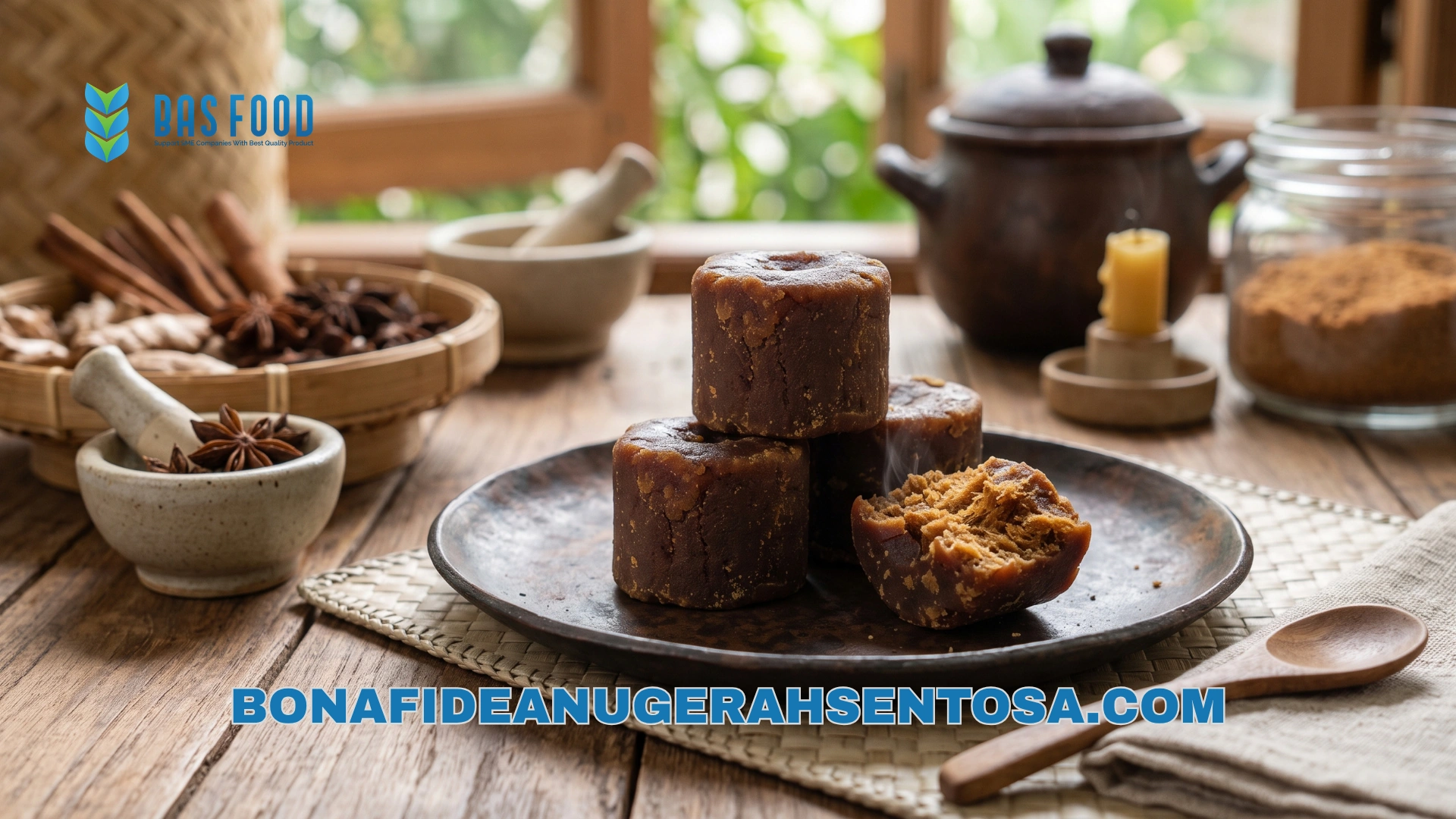
What Is a Coconut Sugar Mould?
A coconut sugar mould is a tool used to shape concentrated coconut sugar into a specific form. After coconut sap has been collected and heated, the liquid gradually loses water and becomes a thick sugar concentrate. Producers can then place the concentrated sugar into moulds before it cools and hardens.
The mould gives the sugar a defined physical shape. Depending on the production method and market requirement, the result can be a disc, block, round piece, tablet, or another customized form.
Although the mould itself is simple, its role in production is important. A well-designed mould can help producers make products with more consistent dimensions and weight. This matters when the finished coconut sugar needs to be packed, counted, transported, or sold according to a specific specification.
Why Moulded Coconut Sugar Still Matters
Modern food manufacturing often favors granulated ingredients because they are easy to measure and mix. However, that does not mean moulded coconut sugar has become irrelevant.
Moulded coconut sugar remains useful for traditional recipes, local food markets, foodservice, retail products, and specialty applications. In some markets, the familiar shape is part of the product’s identity.
For consumers, a block or disc can also communicate a sense of traditional production. The product looks different from refined white sugar and can provide a visual connection to its agricultural origin.
For B2B buyers, this creates a different type of opportunity. Instead of competing only through ingredient functionality, moulded coconut sugar can also be positioned around culinary tradition, product presentation, and authenticity.
From Coconut Sap to Coconut Sugar Blocks
The production process begins with coconut sap collected from coconut flower stalks. Producers collect the sap and then filter it before heating.
During heating, water evaporates and the sap becomes increasingly concentrated. The producer carefully controls the process to achieve the desired consistency before transferring the concentrated sugar into moulds.
Once the sugar enters the mould, it cools and becomes solid.
The result is a range of coconut sugar blocks or other moulded forms. The exact appearance depends on mould design, filling technique, cooling conditions, and production practices.
Therefore, the mould is only one part of the production system. Consistent results also require good control of the earlier processing stages.
Understanding Different Coconut Sugar Shapes
One of the most interesting aspects of moulded coconut sugar is the variety of possible shapes.
Traditional producers may use round or disc-shaped moulds. Other producers may create rectangular or block-shaped products. Some buyers may also request customized shapes for specific packaging or retail concepts.
These coconut sugar shapes can affect how the product is handled.
A small disc may be convenient for individual portions. A larger block may be better suited to foodservice or traditional culinary use. Meanwhile, a customized shape could support a particular brand concept.
The best shape therefore depends on the intended market and application.
Coconut Sugar Mould and Product Weight
Product weight is a major consideration for commercial buyers.
If a manufacturer sells coconut sugar in fixed-size packages, inconsistent individual pieces can create packaging and inventory problems.
For example, a buyer may require each moulded piece to have approximately the same target weight. The mould dimensions can help establish a consistent volume, while controlled filling helps achieve the desired weight.
However, buyers should understand that a mould does not automatically guarantee exact weight.
The producer must also control the amount of sugar placed into each mould and perform appropriate quality checks.
How Mould Size Affects the Final Product
Mould dimensions directly affect the size of the finished coconut sugar.
A deeper mould can create a thicker product, while a wider mould can create a larger surface area. The exact result depends on the mould design and how much sugar the producer fills into it.
This becomes particularly important when packaging is already designed.
For example, a retail box may have limited internal space. If the coconut sugar blocks are too large, they may not fit properly. If they are too small, the packaging may contain too much unused space.
Therefore, mould dimensions and packaging design should be considered together.
Choosing the Right Mould Material
The material used to make a coconut sugar mold is another important consideration.
Because the mould comes into contact with food, buyers should ask the producer about the material, cleaning method, durability, and suitability for the production environment.
A practical mould should be easy to maintain and should support consistent production.
Durability also matters for producers handling regular commercial orders. A mould that wears out quickly can increase maintenance and replacement costs.
For long-term B2B production, buyers should therefore look beyond the initial price.
Hygiene and Cleaning Requirements
Food-contact equipment needs proper hygiene management.
Sugar residue can remain inside a mould if cleaning is not performed correctly. Over time, poor cleaning practices can create quality concerns.
A good production system should include appropriate cleaning, drying, storage, and inspection procedures.
For international buyers, this is a useful topic to discuss with suppliers before placing an order.
Ask how the moulds are cleaned, how often they are inspected, and how producers prevent contamination during handling.
These questions provide a better understanding of the overall production environment.
Traditional Moulds and Modern B2B Requirements
Traditional production methods have significant cultural and commercial value. However, B2B customers often require more consistency than traditional household production.
They may need standardized weight, dimensions, packaging, labeling, documentation, and shipment quantities.
This does not mean traditional production must disappear.
Instead, producers can combine traditional knowledge with better process control.
The result can be a product that maintains its traditional identity while meeting the practical requirements of modern buyers.
Custom Coconut Sugar Shapes for Special Products
Some food brands may want something different from standard blocks or discs.
A custom mould can potentially create a unique product shape.
For example, a brand may want a particular size that fits its packaging. A specialty food company may want a shape associated with a traditional product concept.
However, customization should be planned carefully.
A custom mould can require additional development, testing, and production adjustments. Buyers should therefore determine whether the expected commercial volume justifies the investment.
When Moulded Coconut Sugar Is the Better Choice
Moulded products can make sense when the physical shape is part of the product experience.
Traditional food manufacturers may prefer blocks because their customers already understand the format.
Restaurants and foodservice businesses may also use blocks because they can be stored and portioned according to their cooking process.
Retail brands may choose moulded products when they want to offer something visually different from granulated sugar.
In these cases, the mould becomes part of the product strategy rather than simply a production tool.
Packaging Moulded Coconut Sugar
Packaging is closely connected to the mould.
A block that has a particular size and shape needs packaging that can protect it during storage and transportation.
The packaging should also help protect the product from moisture and physical damage.
This is especially important for international shipments, where products may pass through several handling stages before reaching the final buyer.
Buyers should therefore test the complete combination of product, mould, packaging, storage, and transport.
Why Moisture Control Matters
Coconut sugar can be affected by environmental conditions, particularly moisture.
Exposure to humid conditions may influence the physical characteristics of the product. For moulded sugar, excessive moisture can affect surface texture and handling.
Therefore, packaging and storage conditions should be discussed before export.
A supplier should be able to explain the recommended storage environment and packaging configuration.
Buyers can then make sure their warehouses and distribution systems are suitable for the product.
Why Samples Are Important
Product samples are especially useful for moulded coconut sugar.
Photos can show the general appearance, but they cannot fully demonstrate weight, hardness, texture, packaging quality, or handling characteristics.
A physical sample allows the buyer to inspect the actual product.
It can also be tested in the buyer’s own kitchen, factory, packaging line, or distribution process.
For larger commercial orders, sampling is a relatively small step that can prevent much larger problems later.
Indonesia as a Coconut Sugar Origin
Indonesia has extensive coconut cultivation and long-standing experience producing coconut-based products.
Traditional coconut sugar production is found in several regions, with local producers using established methods to process coconut sap.
For international buyers, this creates sourcing opportunities close to the agricultural origin.
However, country of origin alone should never be the only supplier-selection criterion.
Different producers can have different quality standards, capacities, equipment, packaging systems, and export experience.
Therefore, buyers should evaluate the specific supplier and product.
Working With CV Bonafide Anugerah Sentosa
CV Bonafide Anugerah Sentosa can be considered by buyers looking for an Indonesian source for coconut sugar.
For buyers interested specifically in moulded products, discussions can cover the available coconut sugar mould formats, product weight, shape, packaging, MOQ, production capacity, and export requirements.
Buyers interested in granulated products can instead discuss particle size, packaging, moisture specifications, and application requirements with the supplier.
As with any B2B purchase, current product specifications, availability, certifications, capacity, pricing, and shipping terms should be confirmed directly before a commercial order is placed.
The Role of a Reliable Coconut Sugar Supplier
A reliable coconut sugar supplier should understand the buyer’s requirements and communicate clearly.
The supplier should be able to discuss product formats, specifications, packaging, production schedules, and export documentation.
For repeat B2B business, consistency becomes particularly important.
The buyer should be able to expect the same product specifications across future shipments unless changes have been agreed in advance.
This is what turns a simple purchase into a sustainable supply relationship.
The Role of a Coconut Sugar Granules Supplier
For manufacturers that do not need moulded products, a coconut sugar granules supplier may be more suitable.
Granulated coconut sugar can support applications where precise weighing and mixing are important.
Food manufacturers may require specific granule sizes depending on their formulation and processing equipment.
Therefore, buyers should provide clear technical specifications before requesting a quotation.
How Brands Can Use Coconut Sugar Shapes
The physical appearance of moulded coconut sugar can support product differentiation.
A brand may use traditional shapes to emphasize Indonesian heritage or a handcrafted concept.
Another brand may choose smaller pieces for portion control or retail convenience.
The important point is to connect the shape with the actual product strategy.
A unique shape should have a clear purpose rather than being different simply for the sake of being different.
From Traditional Product to Export Product
Turning traditional coconut sugar into an export product requires attention to more than the recipe.
The producer must consider product consistency, hygiene, packaging, labeling, documentation, storage, and transportation.
This process does not have to remove the traditional character of the product.
Instead, it can protect that character while making the product more suitable for international trade.
That balance can create opportunities for Indonesian coconut sugar in specialty food markets.
The Future of Coconut Sugar Moulded Products
The growing interest in specialty food products creates room for moulded coconut sugar.
While granulated coconut sugar will likely remain important for industrial food manufacturing, moulded products can continue serving traditional and specialty applications.
Future growth may come from combining traditional forms with modern quality control.
Better consistency, improved packaging, clear specifications, and reliable export processes can make moulded coconut sugar easier for international buyers to source.
Why the Right Mould Matters
A mould may look like a small component of the production process.
In reality, it affects the final product in several ways.
It can influence shape, weight, packaging, handling, and presentation. That means the choice of mould should be connected to the buyer’s complete product requirements.
For B2B sourcing, small technical details often have a large commercial impact.
Conclusion: Shape the Product Around the Market
The coconut sugar mould plays an important role in transforming processed coconut sap into a recognizable finished product.
From traditional discs to larger coconut sugar blocks and customized coconut sugar shapes, moulded products can serve different markets and applications.
The right choice depends on the buyer’s needs.
If the goal is traditional retail or culinary use, moulded coconut sugar may be an excellent format. If the product will be blended into bakery, beverage, chocolate, or other industrial formulations, granulated coconut sugar may be more practical.
For international buyers, the most important step is to evaluate the complete supply chain.
Look at product quality, mould specifications, hygiene, packaging, capacity, documentation, and export experience. Do not focus on price alone.
For buyers considering CV Bonafide Anugerah Sentosa, a direct discussion can help clarify current product formats, mould options, specifications, MOQ, packaging, production capacity, and export requirements.
Ultimately, the best coconut sugar mould is not simply the one that creates an attractive shape.
It is the one that creates a consistent product that fits the market, packaging, production process, and customer expectations.