
Palm sugar has become an interesting ingredient for food manufacturers, beverage companies, bakeries, retailers, and importers looking for natural sweetening options. However, buying palm sugar is not simply about finding a product with the right price. For B2B buyers, one of the most important factors is consistent palm sugar quality from one shipment to the next. A buyer may receive an excellent batch today, but if the next shipment has a different color, moisture level, flavor, texture, or granule size, it can create problems in food production. Recipes may change, processing performance can become unpredictable, and finished products may not have the same taste or appearance.
That is why consistency should be part of every purchasing decision. A reliable palm sugar supplier should have clear quality controls, stable sourcing, proper processing, suitable packaging, and an effective quality assurance system. For international buyers, these factors are even more important because products may travel long distances before reaching the factory or warehouse.
This guide explains what consistent palm sugar quality means, why batch consistency matters, which factors influence quality, and how buyers can evaluate a palm sugar supplier before placing regular orders.
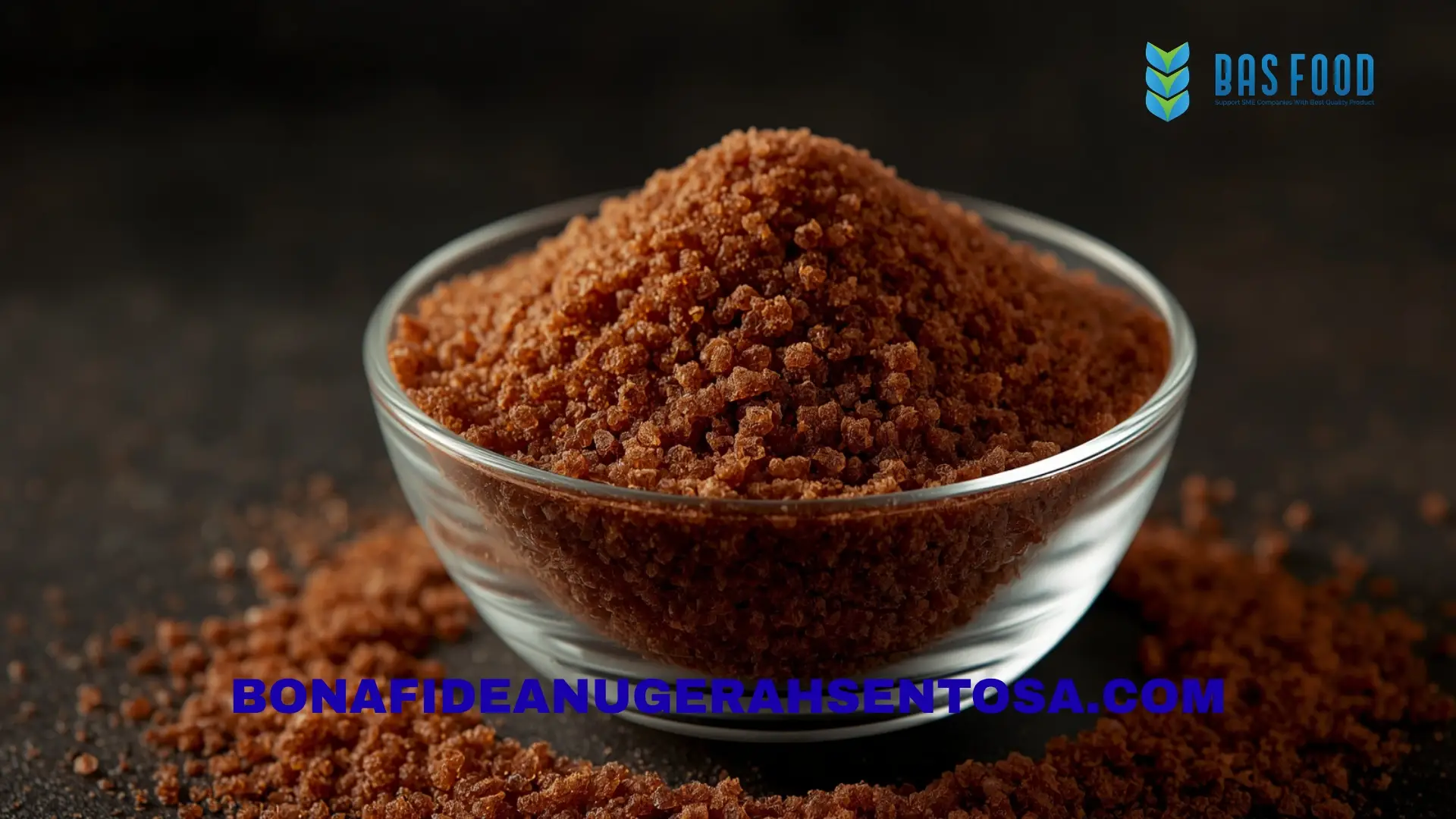
What Does Consistent Palm Sugar Quality Really Mean?
Consistent palm sugar quality means that different production batches maintain similar and agreed characteristics. These characteristics can include color, sweetness, aroma, moisture, texture, particle size, solubility, cleanliness, and overall appearance.
For example, a food manufacturer may specify a particular type of palm sugar granule with a certain color and particle size. If one shipment contains fine granules while another contains a mixture of fine and coarse particles, the ingredient may behave differently during production. Even when both products are technically palm sugar, the difference can affect the final product.
Consistency does not necessarily mean that every natural product will look exactly identical. Palm sugar comes from agricultural raw materials, so natural variation can occur. Instead, good consistency means that the supplier controls this natural variation within an agreed specification.
For B2B buyers, this approach is much more useful than simply judging a product from a single sample. A sample can show what the supplier can produce, but a quality system shows whether the supplier can maintain that quality over time.
Why Batch Consistency Matters in Food Production
Batch consistency is especially important when palm sugar becomes part of a commercial recipe. Food manufacturers often produce thousands of units using the same formulation. A small change in an ingredient can influence the taste, color, aroma, texture, or processing behavior of the final product.
Imagine a beverage producer using palm sugar as a sweetener. If the sugar has a stronger caramel note in one batch and a lighter flavor in another, the finished beverage may taste different. Customers can notice these differences, especially when they buy the same product regularly.
The same issue can happen in bakery and confectionery production. Differences in moisture can affect dough or batter behavior. Differences in granule size can influence how quickly the sugar dissolves. Changes in color can also affect the appearance of cookies, cakes, sauces, cereals, and other products.
Therefore, consistent raw materials help manufacturers reduce unnecessary adjustments. Instead of changing the recipe every time a new shipment arrives, the production team can work with a more predictable ingredient.
For large buyers, this predictability can also support inventory planning, production scheduling, product development, and cost control. In other words, consistency is not only a quality issue. It is also a business issue.
The Main Factors That Affect Palm Sugar Quality
Several factors can influence palm sugar quality before the product even reaches the processing facility. The first is the quality of the raw sap. Palm sap is a natural agricultural material, so its characteristics can vary depending on the palm trees, harvesting conditions, handling practices, and time between collection and processing.
Processing conditions are another important factor. Heating time and temperature can influence color, aroma, moisture, and the final texture of palm sugar. If the process is not properly controlled, one batch may become darker or drier than another.
The production environment also matters. Clean equipment, suitable storage areas, proper handling, and good hygiene practices help reduce contamination risks and maintain product quality.
Particle size is particularly important for granulated palm sugar. A manufacturer producing a palm sugar granule product needs to control grinding, screening, and separation so that the final material meets the agreed specification.
Packaging also plays a role. Palm sugar can absorb moisture if it is not properly protected. Changes in moisture during storage or transportation can affect flowability, texture, and shelf stability. For export shipments, packaging must therefore be selected with the complete supply chain in mind.
Quality Assurance Should Start Before Production
A strong quality assurance process does not begin when the finished product is packed. It starts with raw material selection and continues through processing, packing, storage, and shipment.
A responsible supplier should understand where the raw materials come from and establish appropriate controls for receiving them. During production, the supplier can monitor important characteristics such as appearance, moisture, particle size, aroma, and other parameters relevant to the agreed product specification.
The finished product should then be checked before shipment. This provides an additional opportunity to identify problems before the goods leave the facility.
For international buyers, documentation can also be an important part of quality assurance. Depending on the market and customer requirements, buyers may request product specifications, certificates, laboratory analysis, food safety documentation, certificates related to particular standards, or other export documents.
The exact requirements depend on the destination country, product specification, and intended use. A professional palm sugar exporter should be able to communicate these requirements clearly rather than leaving the buyer to discover them after an order has been placed.
Color, Flavor, and Aroma Need Clear Specifications
Color is one of the easiest characteristics to notice when evaluating palm sugar. Buyers may prefer light brown, medium brown, or darker shades depending on the application and market. However, color alone does not determine whether palm sugar is good or bad.
The important point is that the buyer and supplier should agree on an acceptable range. A food manufacturer that needs a particular visual appearance should communicate this requirement before production.
Flavor and aroma are equally important. Palm sugar is known for its characteristic sweet profile, which can include caramel-like or earthy notes depending on the raw material and processing method.
For applications such as beverages, bakery products, desserts, sauces, and confectionery, flavor consistency can directly affect the finished product. A supplier should therefore understand the intended application rather than treating every palm sugar order as exactly the same.
Clear specifications make communication easier. Instead of saying that the sugar should have a “good color” or “nice flavor,” buyers can discuss measurable or observable requirements with their supplier.
Moisture Control Is Critical for Long-Term Consistency
Moisture is one of the most important quality factors for many palm sugar products. Too much moisture can affect texture, storage stability, and handling. In granulated products, excessive moisture may also contribute to clumping.
This becomes even more important during international transportation. Palm sugar may travel by sea for an extended period before reaching the buyer. Temperature changes, humidity, condensation, and unsuitable packaging conditions can influence the product.
For this reason, a good supplier should consider moisture control throughout the supply chain. It is not enough to achieve the correct moisture level during production if the packaging cannot protect the product during storage and transportation.
B2B buyers should ask suppliers about their moisture specification, testing procedures, packaging materials, storage conditions, and container loading practices. These questions can reveal how seriously a supplier approaches quality control.
Palm Sugar Granule Size Can Affect Production Performance
Not all granulated palm sugar is processed in exactly the same way. Different buyers may require different particle sizes depending on their application.
A beverage manufacturer may prefer a product that dissolves quickly. A bakery manufacturer may require a particular granule size for blending. Meanwhile, an ingredient distributor may need several particle-size options for different customers.
That is why buyers should specify the required palm sugar granule size before placing an order. The supplier should then have suitable screening or sieving controls to maintain the agreed range.
Particle-size consistency can make production more predictable. If the granules vary significantly from batch to batch, the product may dissolve or blend differently. This can create additional work for production teams.
A professional supplier should therefore treat particle size as a specification rather than simply describing the product as “granulated palm sugar.”
Choosing a Palm Sugar Supplier for Reliable Supply
Finding a palm sugar supplier is relatively easy. Finding one that can maintain quality over repeated orders is more important.
Before choosing a supplier, B2B buyers should evaluate several areas. Start with product specifications. Ask whether the supplier can provide a clear specification sheet covering the characteristics that matter to your application.
Next, ask about production capacity and quality control. A supplier may provide an excellent sample but struggle to maintain the same standard when order volumes increase. Understanding production capability can help buyers avoid future supply problems.
Buyers should also evaluate communication. Does the supplier answer technical questions clearly? Can the supplier explain packaging and shipping options? Can they discuss specifications without making vague promises?
Finally, consider whether the supplier understands export requirements. International shipments involve documentation, packaging, logistics, customs requirements, and communication between several parties. A supplier with export experience can make this process easier.
From Traditional Sourcing to Modern Quality Control
Palm sugar has deep roots in traditional production. Many producers still work closely with farmers and use traditional methods to collect and process palm sap. This traditional knowledge can contribute to the distinctive character of the product.
However, B2B export markets require more than traditional knowledge alone. Suppliers also need systems that help control variation and meet buyer expectations.
The goal is not necessarily to remove the traditional character of palm sugar. Instead, good production management can help preserve the desired characteristics while making the product more suitable for modern food manufacturing.
This balance is important. Buyers often want natural ingredients with an authentic origin, but they also need predictable specifications for commercial production.
For that reason, the best approach combines careful raw material sourcing, experienced processing, hygiene controls, testing, appropriate packaging, and clear specifications.
Why Consistency Matters to International Buyers
International buyers face additional risks because they may be purchasing products from thousands of kilometers away. Once a container has left the origin country, resolving a quality issue can become more complicated.
A supplier that understands this challenge should take quality checks seriously before shipment. Pre-shipment controls can help identify potential problems while the goods are still at the production facility.
Consistency also helps importers maintain relationships with their own customers. If a distributor supplies palm sugar to food manufacturers, inconsistent quality can lead to complaints further down the supply chain.
Therefore, a reliable supplier relationship should focus on long-term performance rather than a single successful transaction.
Price still matters, of course. However, the cheapest supplier may not always provide the lowest overall cost. Rejected products, production adjustments, delayed shipments, and customer complaints can quickly make a low purchase price expensive.
CV Bonafide Anugerah Sentosa and Consistent Palm Sugar Supply
For buyers looking for an Indonesian partner, CV Bonafide Anugerah Sentosa can be considered as a supplier and exporter of Indonesian agricultural and food ingredients. Its product context includes palm sugar and coconut-derived products, alongside other commodities.
For B2B purchasing, the important point is to discuss the required specification before ordering. Buyers should communicate their target application, preferred product form, packaging requirements, quantity, and quality expectations.
A supplier relationship works best when both sides understand the specification. This is especially true for international buyers who may need regular shipments for food production.
As a palm sugar supplier and palm sugar exporter, CV Bonafide Anugerah Sentosa can work with buyers to discuss product requirements and export needs. Buyers can also explore related sourcing needs when they are looking for a coconut sugar supplier or other Indonesian food ingredients.
The most useful starting point is a clear conversation about the product. Instead of asking only, “What is your price?”, buyers can explain what they need and ask how the supplier can maintain that quality across repeated orders.
How Buyers Can Build a Practical Quality Checklist
A simple quality checklist can make supplier evaluation much easier. Start by defining the product form. Is the buyer looking for molded palm sugar, powder, granules, or another format?
Next, define the physical characteristics. These may include color, particle size, moisture, texture, aroma, and appearance. The more specific the application, the more useful these specifications become.
Then define packaging and logistics requirements. Packaging should protect the product during storage and transportation. Buyers should also consider carton or sack sizes, inner packaging, palletization, container loading, and other requirements relevant to the destination market.
Finally, establish a process for handling quality deviations. If a shipment does not meet the agreed specification, both parties should know how the issue will be reviewed and resolved.
This approach creates a clearer purchasing system. It also helps suppliers understand that consistency is a long-term requirement, not just something checked during the first sample order.
Consistency Is the Foundation of a Strong B2B Relationship
For food manufacturers and importers, consistent palm sugar quality is more than a product feature. It is part of supply reliability.
When palm sugar maintains stable characteristics from batch to batch, manufacturers can work with greater confidence. They can keep recipes stable, reduce production adjustments, manage inventory more effectively, and deliver a more consistent finished product to customers.
At the same time, suppliers benefit from clear specifications. They know what buyers expect and can build their production and quality assurance processes around those requirements.
Ultimately, the best B2B relationship is based on transparency, communication, and repeatable quality. A good sample is a strong starting point, but reliable batch consistency is what creates long-term value.
For buyers sourcing Indonesian palm sugar, the right supplier should therefore be evaluated not only by price, but also by quality control, production capability, documentation, packaging, export experience, and the ability to maintain agreed specifications over time.
When these elements work together, palm sugar becomes a much more predictable ingredient for modern food production. That predictability is exactly what B2B buyers need when they are building products, brands, and supply chains for the long term.