
Virgin Coconut Oil (VCO) has become one of the most discussed coconut-based products in food, wellness, and cosmetic industries. As global consumers increasingly seek natural ingredients and minimally processed products, VCO continues attracting attention due to its distinctive characteristics and versatile applications. However, while many people know Virgin Coconut Oil for its aroma and broad uses, fewer understand what makes this oil unique at the molecular level. The answer lies in its fatty acid structure. Understanding virgin coconut oil composition helps food manufacturers, importers, distributors, and consumers better evaluate product quality and functionality. Unlike many vegetable oils, coconut oil contains a distinctive profile of saturated fats dominated by medium-chain fatty acids. Among these components, lauric acid and overall MCT content play major roles in defining the identity of VCO.
In addition, researchers and product developers increasingly study coconut oil nutrients because they contribute to the growing popularity of VCO products around the world.
This article explains the fatty acid profile of Virgin Coconut Oil, how these components function, and why understanding composition matters for global markets.
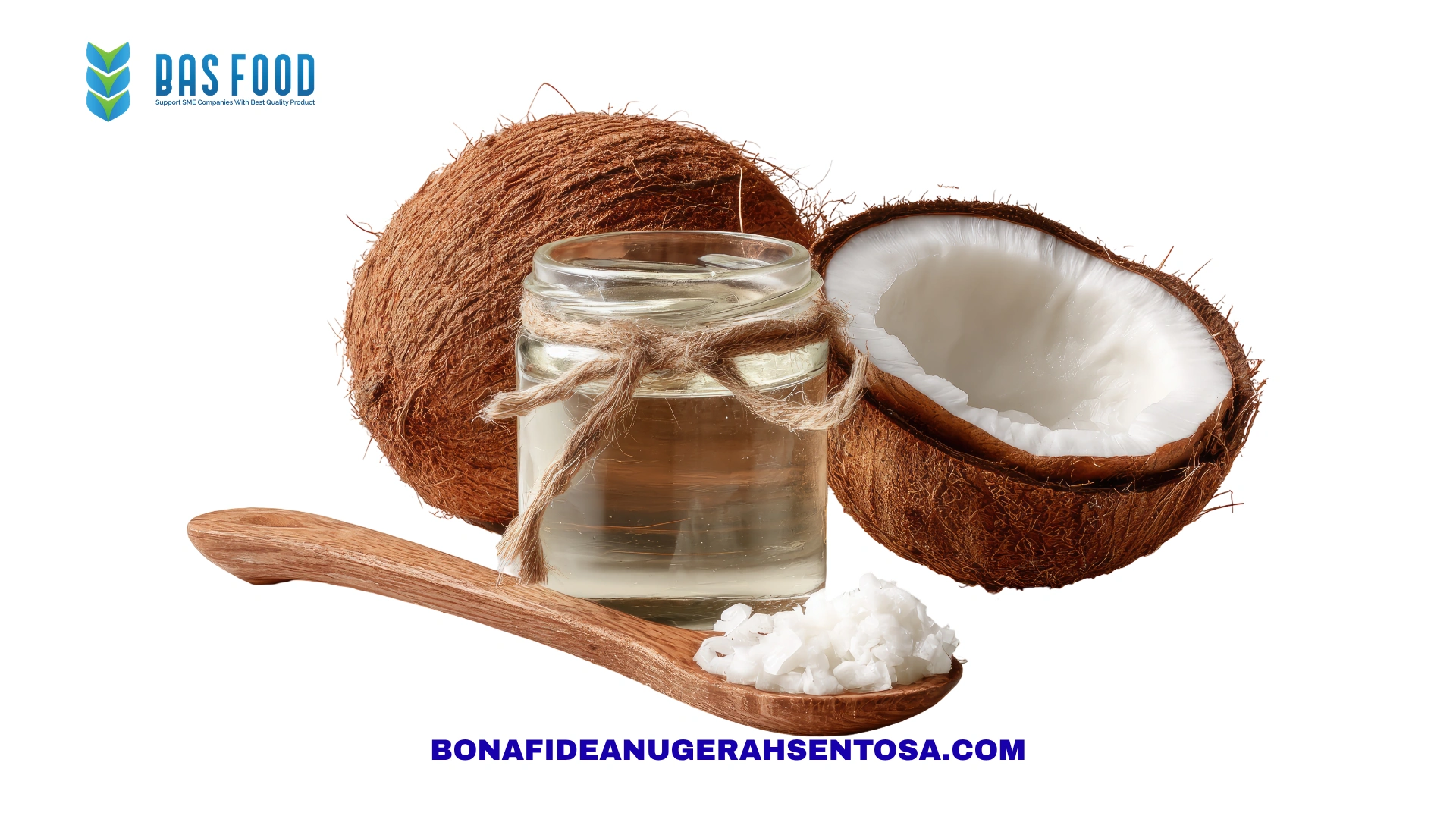
What Is Virgin Coconut Oil and How Is It Produced?
Understanding Virgin Coconut Oil
Virgin Coconut Oil is extracted directly from fresh mature coconut meat through methods designed to preserve natural characteristics.
Unlike refined coconut oil, VCO undergoes minimal processing and avoids extensive bleaching or chemical treatment.
Common production methods include:
- Cold pressing
- Fermentation
- Centrifuge extraction
- Wet processing
These methods help preserve natural compounds and maintain product purity.
As a result, VCO retains important components that contribute to its unique virgin coconut oil composition.
Processing Influences Final Composition
Production methods significantly influence oil quality.
Excessive heat exposure may alter certain characteristics and reduce product consistency.
Controlled extraction systems help maintain:
- Natural aroma
- Oil clarity
- Stable moisture levels
- Fatty acid integrity
Proper manufacturing supports preservation of valuable coconut oil nutrients.
Understanding Fatty Acids in Coconut Oil
What Are Fatty Acids?
Fatty acids are building blocks found within oils and fats.
Different oils contain different fatty acid profiles. These differences influence:
- Stability
- Texture
- Melting behavior
- Functional applications
Understanding these differences helps buyers evaluate ingredient performance.
The unique virgin coconut oil composition sets VCO apart from many vegetable oils.
Coconut Oil Contains Primarily Saturated Fatty Acids
Virgin Coconut Oil contains a high percentage of saturated fats.
However, its profile differs from many animal-derived saturated fats because it contains substantial amounts of medium-chain fatty acids.
Major components include:
- Lauric acid
- Caprylic acid
- Capric acid
- Myristic acid
- Palmitic acid
- Oleic acid
This composition contributes significantly to VCO’s distinct properties.
Lauric Acid: The Signature Compound in Virgin Coconut Oil
What Is Lauric Acid?
Among all components within VCO, lauric acid receives perhaps the greatest attention.
Lauric acid is a medium-chain fatty acid naturally present in coconut oil.
In many VCO products, it represents a substantial portion of total fat composition.
This concentration distinguishes coconut oil from many alternative oils.
As a result, lauric acid frequently appears in discussions surrounding virgin coconut oil composition.
Why Lauric Acid Attracts Scientific Interest
Researchers continue studying lauric acid because of its unique characteristics.
Scientific interest focuses on how this compound behaves during digestion and metabolism.
Food manufacturers and wellness companies increasingly explore ingredient formulations involving coconut-derived compounds.
Growing research contributes to broader conversations regarding coconut oil nutrients and product applications.
Understanding MCT Content and Why It Matters
What Are Medium-Chain Triglycerides?
Medium-chain triglycerides, commonly called MCTs, consist of fatty acids with shorter carbon chain structures than long-chain fats.
The body processes MCTs differently from many conventional fats.
Common coconut-derived MCTs include:
- Caprylic acid
- Capric acid
- Lauric acid
These compounds contribute significantly to total MCT content in Virgin Coconut Oil.
Why MCT Content Creates Commercial Interest
Manufacturers increasingly explore MCT-based ingredients across various industries.
Growing applications include:
- Functional foods
- Nutritional beverages
- Dietary products
- Wellness formulations
This trend continues strengthening discussions surrounding virgin coconut oil composition.
As consumers become more interested in ingredient transparency, awareness of MCT content also continues growing.
Breaking Down the Major Fatty Acids in Virgin Coconut Oil
Caprylic Acid and Capric Acid
Although present in smaller quantities compared with lauric acid, caprylic and capric acids contribute to overall fatty acid balance.
These medium-chain fatty acids help define the broader virgin coconut oil composition.
Product developers increasingly study these compounds within nutritional applications.
Interest surrounding these ingredients continues supporting innovation involving coconut oil nutrients.
Myristic, Palmitic, and Oleic Acids
Virgin Coconut Oil also contains smaller amounts of:
- Myristic acid
- Palmitic acid
- Oleic acid
These compounds contribute to physical characteristics such as:
- Stability
- Texture
- Melting behavior
Together, they help create the complete fatty acid profile of VCO.
Why Fatty Acid Composition Matters in Food Industry Applications
Product Performance Depends on Ingredient Structure
Ingredient functionality strongly affects food manufacturing performance.
Fatty acid profiles influence:
- Shelf stability
- Texture behavior
- Product consistency
- Formulation compatibility
Understanding virgin coconut oil composition helps manufacturers select ingredients suitable for specific products.
Growing Demand for Functional Ingredients
Modern consumers increasingly seek products with transparent ingredient profiles.
Food manufacturers now prioritize naturally sourced ingredients and cleaner formulations.
This trend supports increasing interest in MCT content and broader coconut oil nutrients research.
Virgin Coconut Oil Composition and Cosmetic Applications
Fat Composition Influences Cosmetic Performance
The cosmetic industry increasingly uses naturally sourced oils.
Ingredient characteristics influence product formulation stability and texture.
Manufacturers frequently use VCO in:
- Hair products
- Body lotions
- Lip balms
- Moisturizers
Its unique virgin coconut oil composition contributes to broad product compatibility.
Consumer Demand Supports Ingredient Growth
Modern consumers increasingly prefer products featuring recognizable ingredients.
Because coconut-derived ingredients carry strong natural positioning, demand for VCO continues expanding.
This trend strengthens interest in lauric acid and naturally sourced oils across personal care industries.
Why Indonesia Leads Global Virgin Coconut Oil Production
Abundant Coconut Resources Support Production Capacity
Indonesia remains one of the world’s largest coconut-producing countries.
Its tropical climate creates ideal growing conditions throughout the year.
Strong raw material availability supports stable VCO production.
This supply consistency benefits international buyers seeking premium coconut products.
Modern Processing Improves Product Consistency
Indonesian producers increasingly invest in:
- Food safety systems
- Laboratory testing
- Modern extraction technology
- International certifications
These improvements support reliable product quality and preserve valuable coconut oil nutrients.
Why CV Bonafide Anugerah Sentosa Is a Trusted Export Partner
Commitment to Quality and Product Consistency
CV Bonafide Anugerah Sentosa specializes in exporting coconut products, spices, coffee, and fishery products from Indonesia.
The company prioritizes sourcing quality and customer satisfaction.
Strong supplier relationships help ensure stable production quality.
Complete Export Support for Global Buyers
The company provides:
- Product customization
- Packaging solutions
- Export documentation
- Logistics coordination
- Quality assurance systems
These services help simplify sourcing for international buyers.
Future Trends: Scientific Interest and Functional Ingredient Growth
Research Continues Expanding
Scientific exploration involving coconut-derived ingredients continues increasing.
Researchers remain interested in:
- Fat metabolism
- Functional foods
- Ingredient innovation
- Natural wellness products
This research supports growing attention surrounding MCT content and coconut oil nutrients.
Ingredient Transparency Will Shape Future Markets
Consumers increasingly prioritize transparency and product education.
Future product development will likely emphasize:
- Ingredient traceability
- Natural sourcing
- Sustainable production
- Clean-label formulations
These trends may further increase interest in virgin coconut oil composition.
Conclusion: Understanding Composition Creates Better Product Knowledge
Virgin Coconut Oil contains a distinctive fatty acid structure that separates it from many conventional oils.
Its unique virgin coconut oil composition, including substantial lauric acid and notable MCT content, continues attracting scientific and commercial interest.
Understanding these components helps manufacturers, buyers, and consumers better evaluate product functionality and market potential.
As demand for premium coconut oil nutrients and naturally sourced ingredients continues expanding, Indonesia remains one of the strongest global VCO supply destinations.
Through trusted exporters such as CV Bonafide Anugerah Sentosa, international buyers can access high-quality products supported by reliable sourcing and export expertise.