
Cocoa is one of the world’s most valuable agricultural commodities, forming the backbone of the global chocolate, food, and cosmetics industries. However, terms like cocoa powder, cocoa butter, and cocoa liquor are often misunderstood—even by professionals. Understanding the nuances of cocoa powder vs cocoa butter vs cocoa liquor is important in many industries.
Although all three originate from the same cocoa bean, their processing methods, chemical composition, functionality, and applications are fundamentally different. This comprehensive guide explains each cocoa derivative clearly, accurately, and in depth.
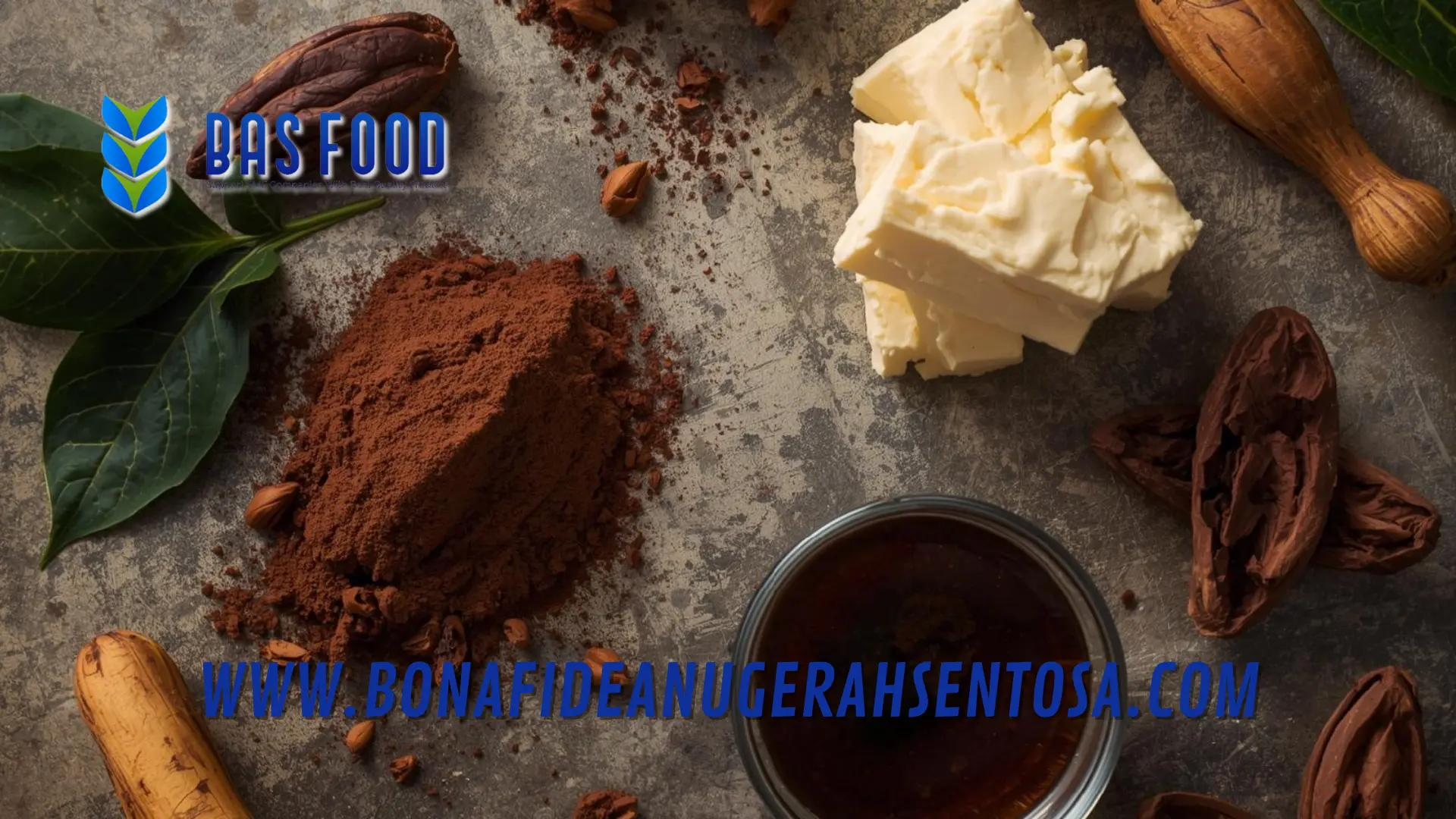
Understanding Cocoa as a Raw Material
Cocoa comes from the seeds of Theobroma cacao, a tropical tree cultivated primarily in West Africa, Latin America, and Southeast Asia. Once harvested, cocoa beans undergo fermentation, drying, and roasting—steps that define flavor quality.
After roasting, cocoa beans become a versatile raw material that can be transformed into multiple products, depending on how fat and solids are separated.
How Cocoa Beans Are Processed
The journey from bean to cocoa products follows these steps:
- Fermentation – develops flavor precursors
- Drying – reduces moisture and stabilizes beans
- Roasting – enhances aroma and flavor
- Cracking & Winnowing – removes shells
- Grinding – converts nibs into cocoa liquor
At this stage, the cocoa exists as cocoa liquor, from which cocoa butter and cocoa powder are derived.
What Is Cocoa Liquor?
Cocoa liquor (also called cocoa mass or cocoa paste) is the purest form of cocoa. It is produced by grinding roasted cocoa nibs until their natural fat melts, forming a thick, flowing paste.
Despite its name, cocoa liquor contains no alcohol.
Composition of Cocoa Liquor
- ~50–55% cocoa butter (fat)
- ~45–50% cocoa solids
- 100% cocoa, no additives
Key Characteristics
- Deep, intense chocolate flavor
- Naturally bitter and aromatic
- Solid at room temperature, liquid when heated
Cocoa liquor is the core ingredient of all chocolate products, including dark, milk, and white chocolate (white chocolate excludes cocoa solids but still uses cocoa butter).
Functional Role of Cocoa Liquor in Chocolate
In chocolate formulation, cocoa liquor provides:
- Flavor depth
- Color intensity
- Cocoa identity
High-quality dark chocolate often contains 70% or more cocoa liquor, which determines bitterness, acidity, and aroma complexity.
Chocolate manufacturers rely on cocoa liquor consistency to ensure flavor standardization across batches.
What Is Cocoa Butter?
Cocoa butter is the natural fat extracted from cocoa liquor using hydraulic or mechanical pressing. Once separated, it solidifies into pale yellow blocks.
Unique Properties of Cocoa Butter
- Melting point close to body temperature (≈34°C)
- Solid at room temperature
- Extremely stable fat
- Mild chocolate aroma
Why Cocoa Butter Is So Valuable
Cocoa butter’s crystal structure gives chocolate its:
- Glossy finish
- Clean snap
- Smooth mouthfeel
Without cocoa butter, chocolate would feel greasy or chalky.
Non-Food Applications of Cocoa Butter
Beyond chocolate, cocoa butter is widely used in:
- Cosmetics (moisturizers, lip balms)
- Pharmaceuticals (suppositories, capsules)
- Personal care products
Its stability and skin compatibility make it one of the most prized natural fats in the world.
What Is Cocoa Powder?
Cocoa powder is produced after most cocoa butter is removed from cocoa liquor. The remaining compressed solids are called cocoa press cake, which is ground into powder.
Fat Content
- Low-fat cocoa powder: ~10–12%
- High-fat cocoa powder: ~20–22%
Types of Cocoa Powder
Natural Cocoa Powder
- Acidic pH
- Light brown color
- Sharp, intense flavor
Dutch-Processed Cocoa Powder
- Alkalized to neutralize acidity
- Darker color
- Milder, smoother taste
Functional Uses of Cocoa Powder
Cocoa powder is primarily used for:
- Baking (cakes, brownies, cookies)
- Beverages (hot cocoa, chocolate drinks)
- Ice cream and desserts
- Flavoring without added fat
Because of its low fat content, cocoa powder provides strong chocolate flavor without richness.
Processing Differences That Matter
The key distinction between cocoa products lies in fat separation:
| Stage | Result |
|---|---|
| Grinding nibs | Cocoa liquor |
| Pressing liquor | Cocoa butter + press cake |
| Grinding press cake | Cocoa powder |
These differences affect:
- Texture
- Flavor release
- Shelf stability
- Application suitability
Nutritional Comparison
| Component | Cocoa Liquor | Cocoa Butter | Cocoa Powder |
|---|---|---|---|
| Fat | High | 100% fat | Low |
| Antioxidants | High | Minimal | Very high |
| Calories | High | Very high | Moderate |
| Sugar | None | None | None |
Cocoa powder and cocoa liquor are rich in flavanols, compounds linked to cardiovascular health and cognitive benefits.
Functional Roles in Chocolate Making
Each cocoa product serves a non-interchangeable role:
- Cocoa liquor → flavor foundation
- Cocoa butter → texture & melting behavior
- Cocoa powder → flavor enhancement without fat
Professional chocolatiers carefully balance these components to achieve desired results.
Industrial and Commercial Applications
Cocoa derivatives are used across industries:
- Food & beverage manufacturing
- Nutraceuticals
- Cosmetics
- Pharmaceutical coatings
Major processors supply cocoa ingredients to global brands under strict quality and traceability standards, aligned with sustainability initiatives supported by organizations like International Cocoa Organization.
Common Misconceptions About Cocoa Products
“Cocoa liquor contains alcohol”
False. The term “liquor” refers to its liquid state when warm.
“Cocoa powder is just ground chocolate”
Incorrect. Chocolate contains added cocoa butter and sugar.
“Cocoa butter is unhealthy”
In moderation, cocoa butter contains stable fats that are less prone to oxidation.
Choosing the Right Cocoa Product
Use cocoa liquor if you need:
- Authentic chocolate flavor
- Full cocoa complexity
Choose cocoa butter if you need:
- Smooth texture
- Controlled melting
- Cosmetic-grade fat
Cocoa powder if you need:
- Intense flavor
- Low fat content
- Baking or beverage applications
Conclusion: Understanding Cocoa at a Deeper Level
Although cocoa powder, cocoa butter, and cocoa liquor come from the same bean, they are chemically, functionally, and commercially distinct. Understanding these differences is essential for anyone working with chocolate, baking, food formulation, or cocoa-based products.
By choosing the right cocoa ingredient for the right purpose, you unlock better flavor, texture, and performance—whether in the kitchen or on an industrial scale.
🍫 If you found this guide useful, explore more deep-dive ingredient explanations to elevate your cocoa knowledge and product quality.
Contact CV Bonafide Anugerah Sentosa how we can provide the best solutions for you. WhatsApp: +62 8213 4505 737, Email: info@bonafideanugerahsentosa.com / bas.mdir@gmail.com.