
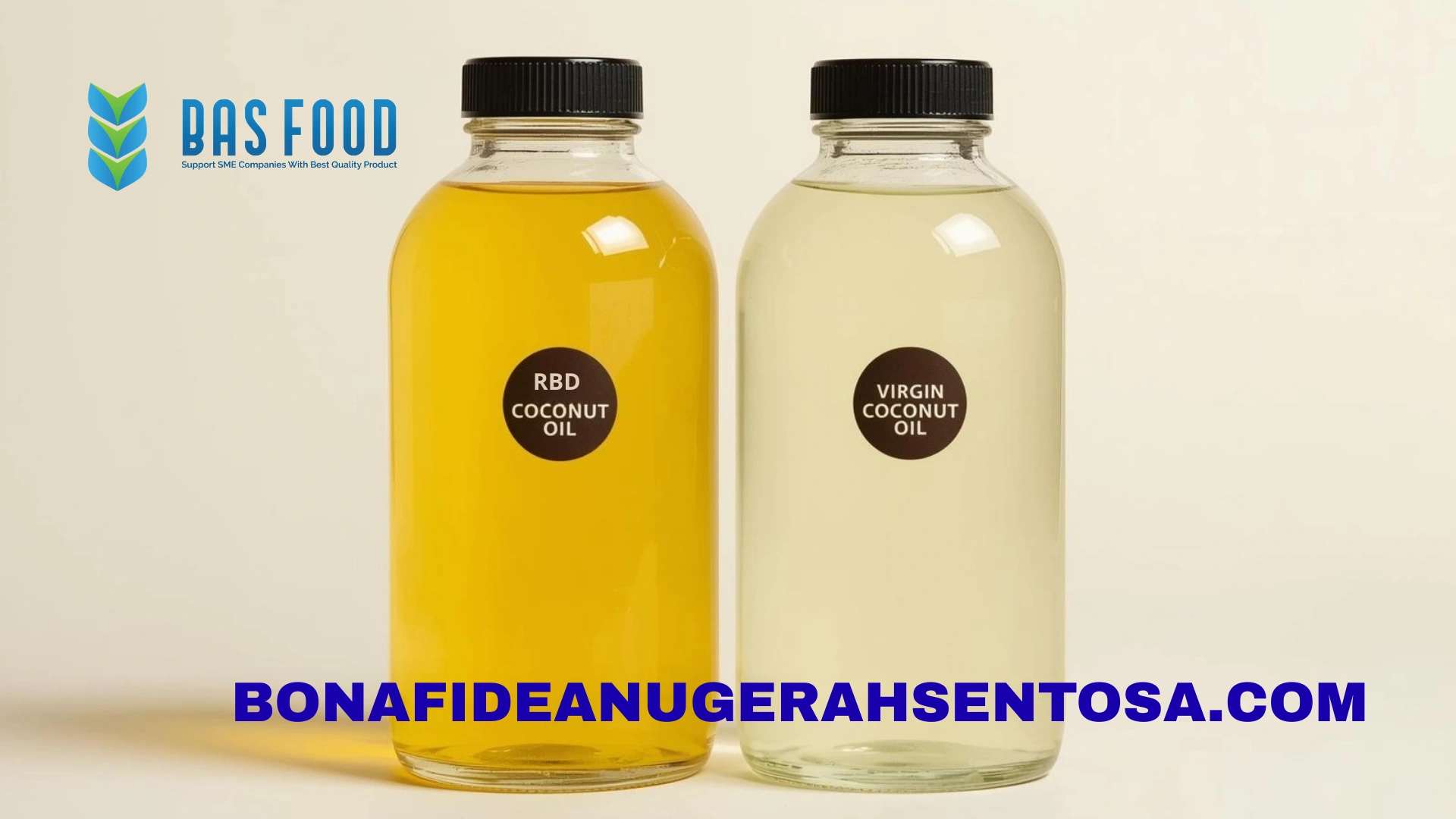
For ingredient buyers and manufacturers, understanding RBD coconut oil vs virgin coconut oil is essential when selecting the right oil for industrial use. Both oils come from coconuts, yet their processing methods, characteristics, and manufacturing applications differ significantly.
Importers and product developers often compare RBD coconut oil vs virgin coconut oil when evaluating ingredients for food production, cosmetics manufacturing, or large-scale industrial processing. Therefore, knowing how each oil behaves in formulation and processing environments helps companies make informed procurement decisions.
This guide explains the differences between the two oils, their production processes, regulatory considerations, and practical factors that influence industrial sourcing.
What Is Coconut Oil in Industrial Processing?
Coconut oil is a vegetable oil extracted from the kernel of mature coconuts. Manufacturers use it widely in food production, personal care products, and industrial formulations.
The oil contains a high proportion of saturated fatty acids. Because of this composition, coconut oil often shows good oxidative stability during processing.
However, the industry generally distinguishes between two main categories: refined coconut oil and virgin coconut oil. Each type serves different industrial needs.
Understanding RBD Coconut Oil vs Virgin Coconut Oil
The comparison between RBD coconut oil vs virgin coconut oil mainly centers on processing methods and resulting characteristics.
RBD coconut oil undergoes refining, bleaching, and deodorizing. These steps remove impurities, pigments, and strong aroma from crude oil.
Virgin coconut oil, on the other hand, comes from fresh coconut meat and usually undergoes minimal processing. Therefore, it retains its natural aroma and flavor.
As a result, manufacturers select one type or the other depending on product formulation requirements.
Production Process Differences
The production process strongly influences the final properties of coconut oil.
RBD Coconut Oil Processing
Producers typically extract crude oil from dried coconut meat known as copra. After extraction, the oil passes through refining stages to remove free fatty acids and contaminants.
Next, bleaching removes pigments. Finally, deodorization eliminates strong coconut aroma, creating a neutral oil suitable for industrial use.
Virgin Coconut Oil Processing
Virgin coconut oil comes from fresh coconut meat rather than dried copra. Producers usually use cold-pressing, centrifugation, or fermentation methods.
Because the process avoids high heat and chemical refining, the oil retains its natural scent and flavor.
Functional Differences in Industrial Applications
Manufacturers evaluate oils based on how they perform during processing and formulation.
RBD coconut oil usually has a neutral taste and odor. Therefore, it works well in food processing and cosmetics where manufacturers want minimal ingredient interference.
Virgin coconut oil contains natural aroma compounds. Consequently, it often appears in premium consumer products where natural fragrance is desired.
This functional difference often guides procurement decisions in industrial supply chains.
Stability and Shelf-Life Considerations
Industrial buyers also compare stability when evaluating RBD coconut oil vs virgin coconut oil.
Refined coconut oil typically offers predictable composition across batches. Because refining removes impurities, the oil often shows consistent stability during large-scale manufacturing.
Virgin coconut oil may contain natural compounds that vary slightly between batches. Therefore, some manufacturers must adjust formulations when using it in industrial products.
For high-volume production, consistency often becomes a key factor.
Regulatory Standards for Coconut Oil
Food and cosmetic ingredients must comply with international quality standards.
The Codex Alimentarius Commission provides widely recognized guidelines for edible oils, including coconut oil quality parameters.
In addition, cosmetic formulations must comply with regulations such as the European Union Cosmetics Regulation when sold in European markets.
Because of these frameworks, manufacturers verify ingredient specifications before importing coconut oil.
Quality Control in Coconut Oil Supply
Quality control remains critical when exporting coconut oil for industrial use.
Suppliers typically test parameters such as free fatty acid levels, peroxide value, and moisture content. These measurements help ensure consistent quality across shipments.
Moreover, many exporters operate under structured food safety systems like HACCP. Consequently, international buyers can review laboratory documentation before accepting shipments.
Export Supply Chains and Trade Compliance
Global supply chains require careful management of documentation, logistics, and product standards.
Exporters that manage multiple commodities often develop strong compliance systems. For example, companies exporting seafood species such as Bluefin Tuna must follow strict sanitary documentation and cold chain logistics rules.
Although coconut oil does not require refrigeration, the same discipline in export documentation and quality verification often applies.
Exporters such as CV Bonafide Anugerah Sentosa handle shipments of seafood, spices, cocoa products, and coconut derivatives. This experience helps maintain compliance with international trade standards.
Risks When Selecting Coconut Oil Types
Importers should evaluate several factors when choosing between refined and virgin coconut oil.
First, manufacturers must consider product formulation requirements. Some products require neutral oil, while others benefit from natural aroma.
Second, buyers should examine supply consistency. Industrial production often requires stable ingredient specifications.
Finally, companies must review documentation related to food safety, quality testing, and export compliance.
Best Practices for Industrial Procurement
Ingredient procurement becomes more efficient when buyers follow structured sourcing practices.
First, importers should request full technical specifications and laboratory analysis. These documents confirm oil quality and consistency.
Second, buyers should evaluate supplier experience in international trade. Reliable exporters maintain accurate documentation and consistent logistics.
Finally, companies benefit from long-term supplier relationships. Stable partnerships often lead to better supply continuity and predictable ingredient quality.
Conclusion
Understanding RBD coconut oil vs virgin coconut oil helps manufacturers and importers choose the right ingredient for their production processes.
Refined coconut oil offers neutral odor and consistent industrial performance. Meanwhile, virgin coconut oil retains natural aroma and minimal processing characteristics.
When buyers evaluate processing methods, stability, and regulatory compliance, they can select the most suitable coconut oil type for their specific manufacturing needs.
FAQ
What is the main difference between RBD coconut oil and virgin coconut oil?
RBD coconut oil is refined, bleached, and deodorized, while virgin coconut oil undergoes minimal processing and retains natural aroma.
Which coconut oil is better for industrial manufacturing?
Many manufacturers use refined coconut oil because it offers neutral flavor and consistent performance during large-scale production.
Why do some products use virgin coconut oil?
Virgin coconut oil retains natural coconut aroma, which some premium consumer products prefer.
Does refining change coconut oil composition?
Refining mainly removes impurities, color, and odor. However, the basic fatty acid structure remains largely the same.
How do importers verify coconut oil quality?
Importers typically review laboratory test reports, technical specifications, and regulatory documentation.
Contact CV Bonafide Anugerah Sentosa how we can provide the best solutions for you. WhatsApp: +62 8213 4505 737, Email: info@bonafideanugerahsentosa.com / bas.mdir@gmail.com.