
Coconut water has become a strategic beverage ingredient for global manufacturers. For beverage brands and product developers, coconut water offers formulation flexibility, neutral flavor, and compatibility with modern drink concepts. As international demand grows, importers now evaluate coconut water not as a trend product, but as a structured raw material within regulated supply chains.
Therefore, understanding its processing standards, export requirements, and quality parameters is essential. This article explains how coconut water functions in B2B beverage production and how global buyers can source it with confidence.
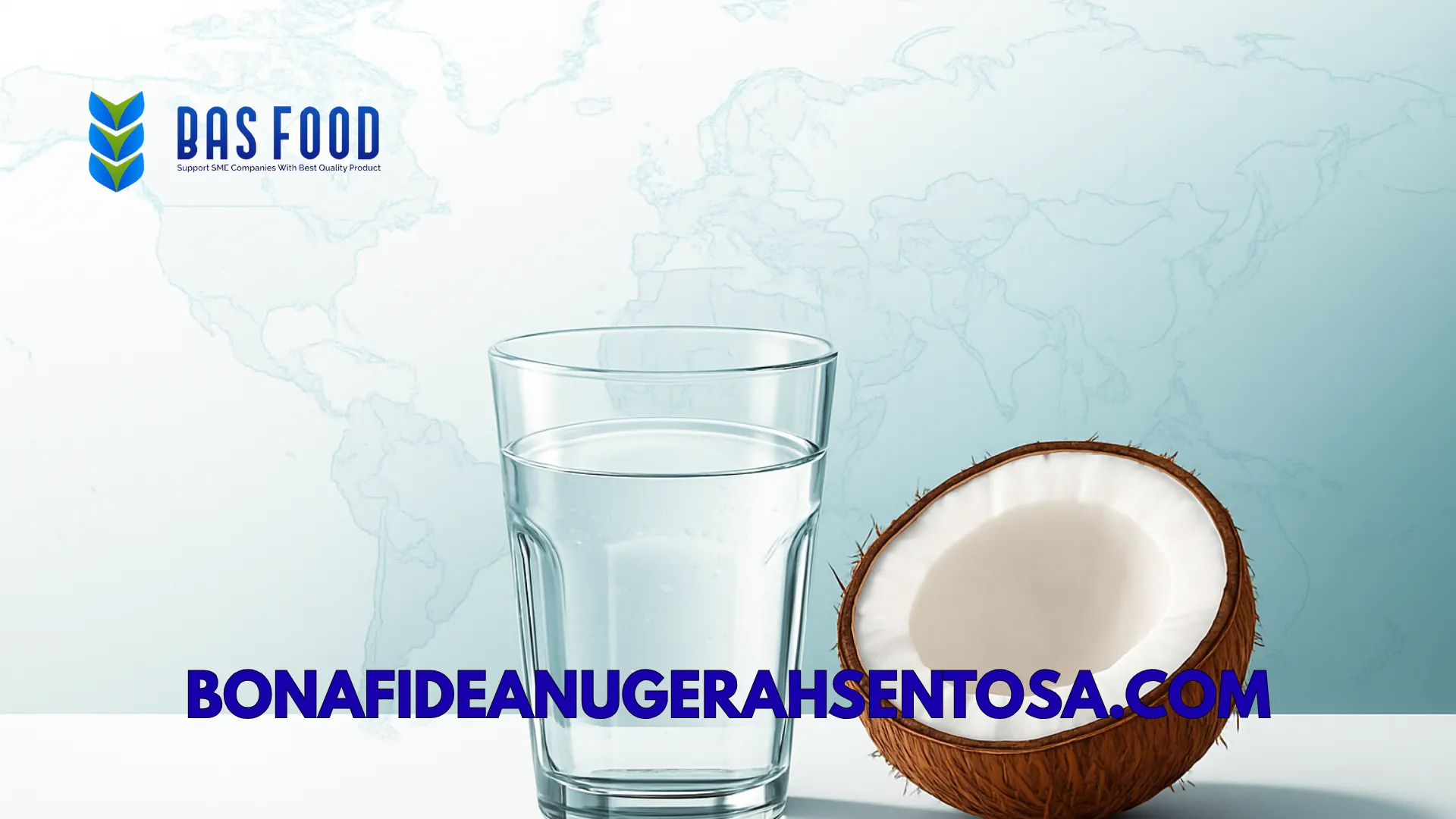
The Industrial Definition of Coconut Water
Coconut water is the clear liquid naturally present inside young green coconuts. In industrial settings, processors extract, filter, pasteurize, and pack it under controlled conditions. The result is a food-grade beverage ingredient suitable for large-scale manufacturing.
Unlike coconut milk, which contains fat from coconut meat, coconut water has a light composition. Because of this, beverage manufacturers use it as a base ingredient rather than a creamy component.
Global Market Demand and Beverage Positioning
International beverage markets increasingly use coconut water in ready-to-drink products. Brands in Europe, the United States, and the Middle East integrate it into juice blends, hydration drinks, and flavored water lines. As a result, bulk sourcing volumes have grown steadily.
Moreover, private label beverage programs often seek stable supply from Southeast Asia. Importers now prioritize traceability, documentation, and consistent sensory quality over retail-driven narratives.
Forms of Coconut Water in Export Trade
Single-Strength Aseptic Liquid
Single-strength coconut water maintains its natural concentration. Exporters pack it in aseptic bags or drums to protect microbiological integrity. This format suits beverage plants that want direct use without reconstitution.
Coconut Water Concentrate
Concentrate reduces volume and freight cost. Manufacturers reconstitute it based on target Brix levels. Therefore, it supports large production facilities that optimize storage efficiency.
Both forms require validated pasteurization and sterile filling systems.
Processing and Food Safety Standards
Industrial coconut water production follows HACCP principles. Facilities monitor microbial limits, filtration steps, and thermal treatment carefully. Additionally, export shipments include laboratory analysis and health certificates.
For EU and US markets, compliance with labeling and traceability rules is mandatory. Importers should verify batch coding, origin documents, and production records before shipment.
Regulatory Compliance in International Trade
Food ingredients entering the EU must comply with European food safety legislation. Similarly, the US market requires adherence to FDA regulations and preventive controls. Therefore, exporters must align documentation with destination market rules.
Traceability remains critical. Each lot of coconut water should link back to processing dates and source farms. This structure reduces customs delays and strengthens buyer confidence.
Functional Role in Beverage Formulation
Coconut water provides mild sweetness and a clean taste profile. Beverage developers often combine it with fruit juice, botanical extracts, or natural flavors. Because it has a neutral base, it allows innovation without dominating the formulation.
Furthermore, it supports hydration-style beverages due to its natural mineral composition. However, B2B buyers focus on stability, clarity, and compatibility rather than consumer marketing angles.
Quality Parameters Importers Should Evaluate
Professional buyers assess Brix, pH, color, turbidity, and microbiological counts. These indicators determine shelf life and formulation performance. Therefore, a detailed specification sheet is essential before confirming contracts.
Sensory consistency also matters. Even minor deviations in flavor or clarity can affect finished beverage presentation. Reliable exporters conduct routine laboratory testing to maintain uniformity.
Cold Chain and Logistics Considerations
Although aseptic products remain shelf-stable, exporters still manage temperature control during storage and shipping. Proper warehouse conditions prevent packaging stress and product degradation.
Transit time also influences planning. Therefore, importers should coordinate freight schedules, insurance, and destination storage capacity in advance.
Sustainability and Integrated Coconut Processing
Coconut water is part of a broader coconut processing ecosystem. Integrated facilities often produce coconut milk, coconut sugar, and coconut oil from the same raw material stream. This approach improves resource efficiency and reduces waste.
Sustainability documentation, including farm traceability and responsible sourcing practices, increasingly supports buyer evaluation. Transparent supply chains align with international corporate standards.
Exporter Experience and Multi-Commodity Expertise
Exporters with diversified portfolios often manage logistics more effectively. CV Bonafide Anugerah Sentosa, for example, supplies coconut-based products alongside tuna, spices, and cocoa to international buyers. This cross-commodity experience strengthens documentation control and global shipping coordination.
Because seafood exports such as tuna require strict cold chain compliance, the operational discipline also benefits coconut derivative exports. Structured export systems reduce risk for beverage importers.
Risk Management in Coconut Water Sourcing
Supply interruptions may occur due to seasonal harvest cycles or weather conditions. Therefore, long-term sourcing agreements and forecast planning help stabilize production.
In addition, buyers should evaluate contingency plans. Multiple production lines and secure raw material sourcing protect contract continuity.
Best Practices for Beverage Brands and Importers
First, request full product specifications and laboratory analysis before contract finalization. Second, verify processing standards and export documentation for your target market. Third, align forecast planning with supplier capacity.
Finally, consider sourcing coconut water from exporters who also supply other coconut derivatives. Integrated sourcing improves coordination and reduces administrative complexity.
Conclusion: Strategic Value of Coconut Water in Global Beverage Supply
Coconut water has evolved into a structured, globally traded beverage ingredient. For beverage brands and product developers, it offers formulation flexibility supported by established export systems.
However, successful sourcing requires attention to processing standards, documentation, and quality control. By understanding these operational factors, importers can build stable partnerships and maintain consistent product performance in international markets.
FAQ Section
1. What is coconut water in industrial beverage production?
Coconut water is the filtered and pasteurized liquid extracted from young coconuts. Manufacturers use it as a base ingredient in beverages.
2. Is coconut water supplied as concentrate or liquid?
Exporters provide both single-strength aseptic liquid and concentrate. The choice depends on freight efficiency and production setup.
3. What quality tests apply to coconut water shipments?
Common tests include Brix measurement, pH level, microbiological analysis, and sensory evaluation.
4. Which regions produce most global coconut water exports?
Southeast Asia remains a major production hub due to climate and coconut availability.
5. What documents are required for coconut water export?
Export shipments typically include health certificates, laboratory analysis, and traceability records aligned with destination regulations.
Contact CV Bonafide Anugerah Sentosa how we can provide the best solutions for you. WhatsApp: +62 8213 4505 737, Email: info@bonafideanugerahsentosa.com / bas.mdir@gmail.com.