
In the world of food manufacturing, the smallest details often lead to the biggest differences in product quality. When procurement managers look at a specification sheet for coconut, one number stands out above the rest: the desiccated coconut fat content. This percentage is not just a nutritional stat; it is a critical factor that dictates flavor, shelf-life, and production costs.
Understanding the distinction between high-fat and low-fat varieties is essential for any business dealing with industrial baking ingredients. Whether you are crafting artisanal biscuits or mass-producing confectionery, your choice of fat content will define the sensory experience of your consumers. This guide explores the technical and practical aspects of choosing the right coconut for your industrial needs.
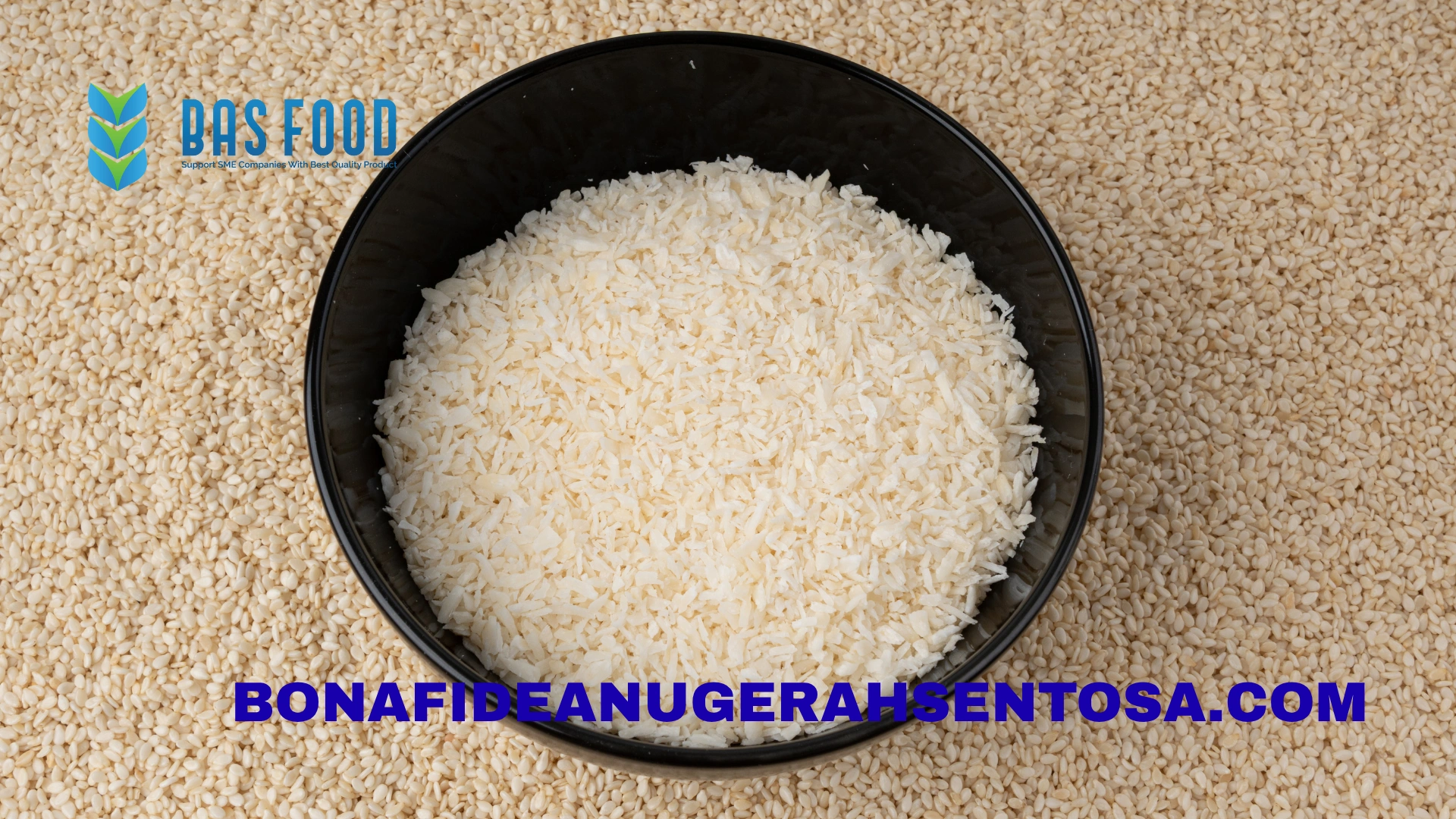
The Core Fundamentals of Desiccated Coconut Fat Content
To master your production line, you must first understand what “fat content” actually means in the context of dried coconut. In its simplest form, this represents the natural oil retained in the coconut meat after the drying process. High-fat desiccated coconut typically contains 60% to 65% oil, whereas low-fat versions usually hover between 25% and 35%.
This difference occurs during the coconut meat processing phase. Manufacturers extract a portion of the milk or oil from the meat to create low-fat versions, often resulting in a product that is lighter and more fibrous. Consequently, the fat content acts as the primary driver of both the ingredient’s price and its performance in a recipe.
The Science of Coconut Meat Processing: From Tree to Texture
The journey of the coconut begins at the plantation, but the magic happens in the processing facility. To achieve a specific desiccated coconut fat content, the fresh meat undergoes a rigorous sterilization and grating process. For high-fat products, the meat is dried quickly to preserve all the natural lipids and aromatic compounds.
In contrast, creating food grade coconut powder with low fat requires an extra step. The shredded meat is pressed to remove the “coconut cream.” What remains is then dried into a fine or medium grade. This mechanical separation is precise; if done incorrectly, it can damage the cellular structure of the coconut, leading to a loss of flavor or a gritty texture that ruins the final product.
High-Fat Desiccated Coconut: The Gold Standard for Richness
When your product requires a “premium” mouthfeel, high-fat desiccated coconut is the undisputed king. Because it retains the natural oils of the fruit, it provides an intense, creamy flavor that cannot be replicated by artificial flavorings. It is the preferred choice for high-end chocolates and traditional Asian desserts where the coconut flavor must be the star.
Beyond taste, high-fat coconut acts as a natural emollient. In industrial baking ingredients, the fat helps to tenderize doughs and batters. It creates a moist crumb in cakes and prevents cookies from becoming too brittle. If your goal is to provide a rich, indulgent experience, skipping the fat is rarely an option.
Low-Fat Desiccated Coconut: The Secret to Cost-Effective Volume
Not every application requires the richness of full-fat coconut. For many large-scale operations, low-fat desiccated coconut is a strategic choice. Since the manufacturer has already extracted valuable coconut oil or cream from the raw material, the remaining “desiccated” product is often more affordable. This makes it an ideal filler for budget-friendly snacks and cereals.
Additionally, low-fat varieties offer a different functional benefit: absorption. Because there is less oil filling the fibers, these particles are better at soaking up other liquids in a recipe. This makes them excellent for specific protein bars or breading where you want the coconut to provide bulk and texture without making the product feel “greasy” to the touch.
Industrial Baking Ingredients: How Fat Impacts the Oven
Baking is a science of chemistry and heat. When you introduce coconut into an oven, the desiccated coconut fat content reacts to the temperature. High-fat coconut will slightly “melt” its oils into the surrounding starch, creating a cohesive and flavorful bite. However, this also means it can scorch more easily if the oven temperatures are not carefully monitored.
For manufacturers using automated machinery, the choice is even more technical. Low-fat coconut is less likely to clog industrial nozzles or sticking to conveyor belts because it is drier and less “tacky.” When selecting industrial baking ingredients, you must balance the desired flavor profile against the physical limitations of your production equipment.
Food Grade Coconut Powder: Versatility in Modern Food Tech
As food technology evolves, the demand for food grade coconut powder continues to surge. This finely ground version of desiccated coconut is used as a base for instant beverage mixes, vegan creamers, and gluten-free flour blends. The fat content here is vital because it determines how well the powder dissolves or suspends in liquid.
High-fat powders provide a “cloudy” and creamy texture to drinks, mimicking the feel of dairy. Low-fat powders are often used in dry mixes where a long shelf-life is the priority. Since fats are the first component to go rancid, using a lower-fat powder can extend the expiration date of a product sitting on a retail shelf in a warm climate.
Sensory Comparison: Aroma, Flavor, and Mouthfeel
If you were to perform a blind taste test, the difference between high and low fat would be immediately obvious. High-fat desiccated coconut carries a “buttery” aroma that fills a room. When chewed, it releases a burst of sweetness. This is because the fat carries the flavor molecules to your taste buds more effectively than fiber alone.
Low-fat coconut, meanwhile, has a much more subtle flavor. It provides a “crunch” and a “chew” but lacks the lingering aftertaste of the tropical fruit. In many industrial baking ingredients, this is actually a benefit. If you are making a fruit bar where the strawberry flavor should dominate, a low-fat coconut can provide the necessary texture without overpowering the delicate fruit notes.
Nutritional Considerations for the Health-Conscious Market
Today’s consumers are reading labels more than ever. The desiccated coconut fat content allows manufacturers to target specific dietary niches. High-fat coconut is a darling of the “Keto” and “Paleo” communities because it is packed with Medium Chain Triglycerides (MCTs), which are marketed as clean energy for the brain.
Conversely, for brands focused on “Low Calorie” or “Weight Management” lines, low-fat coconut is the better fit. It offers high dietary fiber with significantly fewer calories per gram. By choosing the right fat level, you can tailor your marketing claims—whether you are selling “High Energy Keto Bites” or “Guilt-Free Fiber Macaroons.”
Storage and Shelf Life: Protecting Your Investment
Fat is sensitive to the environment. In the world of bulk desiccated coconut, storage conditions are paramount. High-fat coconut is prone to oxidative rancidity if exposed to light, heat, or oxygen for too long. This results in a “soapy” taste that can ruin an entire batch of finished goods.
Low-fat desiccated coconut is generally more stable. However, both types require a cool, dry warehouse environment. As an exporter, CV Bonafide Anugerah Sentosa ensures that food grade coconut powder is packed in multi-ply bags with oxygen barriers. This protects the desiccated coconut fat content from degrading during its long journey across the ocean to Europe, the USA, or the Middle East.
Economic Impact: Pricing Trends in the Global Market
The price of desiccated coconut is inextricably linked to the global price of coconut oil. When oil prices are high, coconut meat processing plants are incentivized to extract more oil, leading to a higher supply (and often lower price) of low-fat desiccated coconut.
When sourcing for your factory, it is wise to monitor these trends. A sudden spike in oil demand can make high-fat coconut much more expensive. Smart procurement teams often develop formulations that can utilize a blend of both high and low fat to maintain a consistent flavor profile while hedging against price volatility in the global commodity market.
Customizing Mesh Sizes for Specific Industry Needs
Beyond fat, the physical size of the coconut particle—known as the “mesh”—must be considered. Usually, fine grade coconut is associated with lower fat levels in some regions, but high-quality exporters can provide high-fat fine grade as well. The mesh size affects how the fat is released during the cooking or baking process.
In industrial baking ingredients, a “Fine” mesh is perfect for smooth fillings, while “Medium” or “Extra Medium” is better for toppings where the consumer expects to see the coconut. Always coordinate with your supplier to ensure the mesh size and the fat content work in harmony for your specific application.
Conclusion: Making the Right Choice for Your Brand
Choosing between high-fat and low-fat desiccated coconut is not about which one is “better,” but which one is “right” for your specific goals. If quality, richness, and luxury are your brand pillars, high-fat is the only choice. If cost-efficiency, fiber content, and shelf-stability are your priorities, low-fat is a powerful tool in your ingredient deck.
By understanding the nuances of desiccated coconut fat content, you empower your R&D team to create superior products. Partnering with a knowledgeable exporter like CV Bonafide Anugerah Sentosa ensures that you receive a consistent, high-quality supply that meets your exact specifications every time.