
Industrial buyers who purchase edible oils often require bulk RBD coconut oil shipments for food manufacturing, oleochemical production, or ingredient distribution. Because these shipments involve large volumes, exporters must choose packaging systems that protect product quality while ensuring efficient logistics.
Packaging plays a critical role in international trade. It helps maintain product stability during ocean transport and simplifies handling at ports and warehouses. Therefore, understanding the available packaging options for bulk RBD coconut oil helps importers select the most suitable format for their supply chain.
Why Packaging Matters for Bulk Oil Shipments
Packaging directly affects the safety and stability of edible oil during transport. Coconut oil may travel thousands of kilometers before reaching the buyer’s production facility.
During this journey, the packaging must prevent contamination, leakage, and oxidation. In addition, it must comply with international food safety and transportation standards.
Therefore, exporters design packaging systems that protect oil quality while also maximizing shipping efficiency.
Understanding Bulk RBD Coconut Oil Logistics
The global edible oil industry relies heavily on large-volume shipments. Buyers often import coconut oil in container quantities rather than small packaged units.
Consequently, logistics teams focus on packaging formats that optimize container space and reduce handling costs. These solutions allow exporters to ship thousands of liters of oil safely in a single container.
At the same time, packaging must remain compatible with standard international freight systems.
Bulk RBD Coconut Oil Packaging Options
Several packaging formats are widely used in the global edible oil trade. Each option supports different shipment sizes and operational needs.
Understanding these options helps buyers determine which format fits their production scale.
Flexitank Containers
Flexitanks are large flexible bags installed inside standard 20-foot shipping containers. These tanks can typically hold around 20,000 to 24,000 liters of liquid product.
Because flexitanks maximize container capacity, they are one of the most efficient ways to transport bulk RBD coconut oil. As a result, large industrial buyers often choose this option.
In addition, flexitanks reduce packaging waste compared with drum shipments.
Steel Drum Packaging
Steel drums remain one of the most common packaging formats in the edible oil trade.
A typical drum holds around 190–200 kilograms of oil. Exporters usually load multiple drums on pallets before placing them inside shipping containers.
This option works well for medium-scale buyers who prefer manageable shipment units.
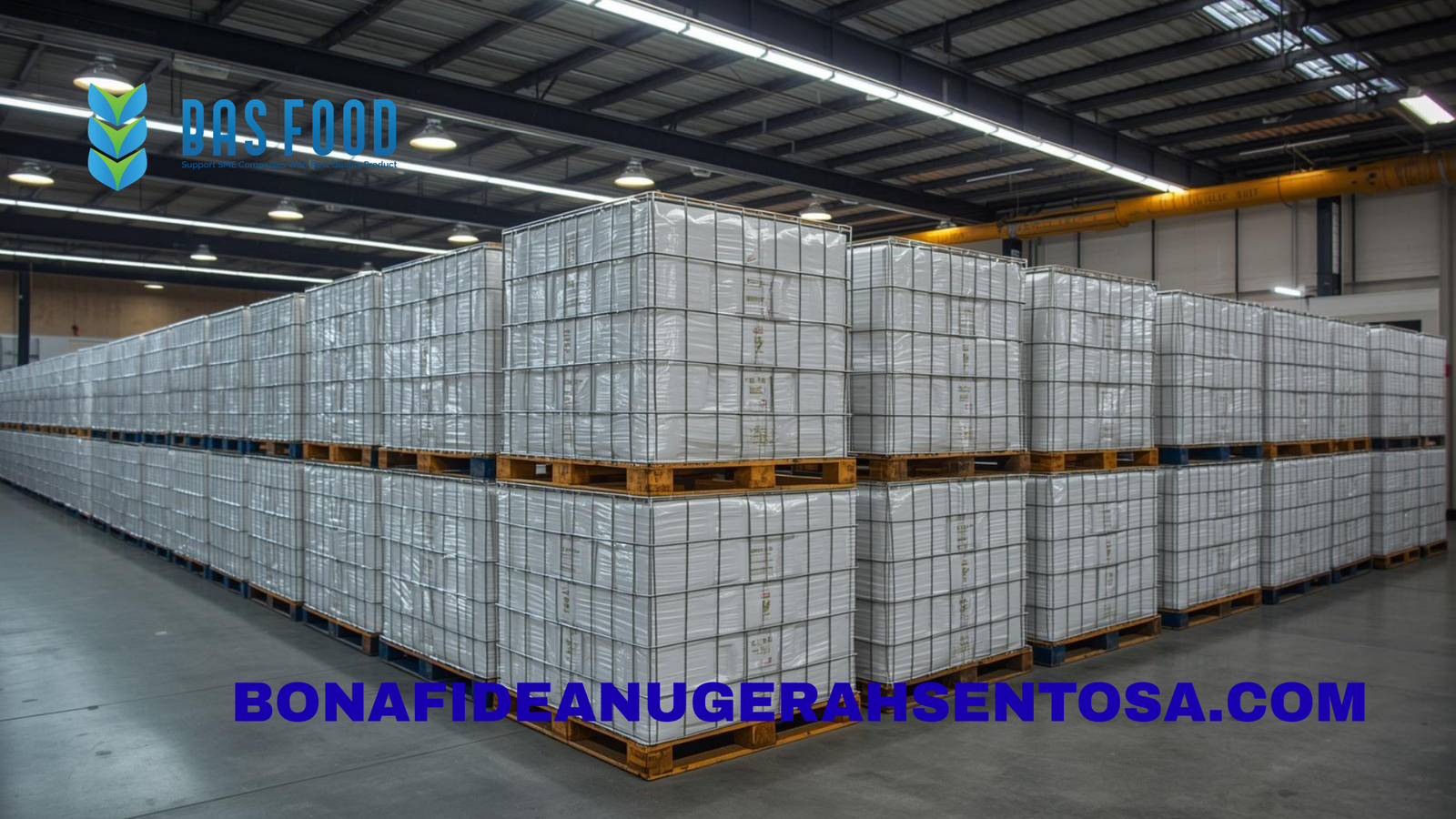
Intermediate Bulk Containers (IBC)
Intermediate Bulk Containers, often called IBC totes, provide another option for liquid shipments.
These containers typically hold around 1,000 liters of oil. Because they are reusable and stackable, they simplify warehouse handling.
Consequently, IBC packaging is often used by distributors or food manufacturers that require controlled dispensing systems.
Food Safety and Packaging Standards
Packaging for edible oils must meet strict food safety requirements. International standards help ensure that materials used for packaging do not contaminate the product.
For example, guidelines from the Codex Alimentarius Commission influence food packaging practices in many countries.
These standards emphasize hygienic handling, contamination prevention, and traceability.
Therefore, exporters must verify that packaging materials meet food-grade certification requirements.
Quality Control During Bulk Oil Packaging
Maintaining quality during packaging is essential for edible oil exports.
First, exporters store refined coconut oil in stainless steel tanks before filling containers. These tanks help prevent contamination and preserve product purity.
Next, quality control teams monitor filling procedures to ensure accurate volume and proper sealing. Because coconut oil must remain stable during shipping, exporters carefully inspect packaging integrity before loading containers.
Export Compliance and Documentation
Bulk oil shipments must also comply with international trade regulations. Exporters usually prepare documentation related to product quality, origin, and shipping details.
These documents often include certificates verifying that the oil meets international food standards. In addition, logistics records help customs authorities track shipments.
Consequently, packaging operations often integrate closely with export compliance systems.
Lessons from Other Export Industries
Companies involved in global commodity trade often apply similar logistics principles across multiple products.
For example, seafood exporters shipping species such as Bluefin Tuna must manage complex cold chain logistics to preserve product freshness.
Although bulk RBD coconut oil does not require temperature-controlled transport, the same discipline in quality control and documentation often applies.
Exporters experienced in regulated sectors tend to implement strong operational procedures.
Export Capability and Operational Experience
Export companies with diversified product portfolios often develop advanced logistics capabilities.
For instance, exporters that ship seafood, spices, cocoa products, and coconut derivatives must manage multiple supply chains simultaneously.
Companies such as CV Bonafide Anugerah Sentosa operate in these sectors. Their export operations involve strict documentation procedures and international quality standards.
Because of this experience, such exporters can support large-scale shipments of coconut products to global markets.
Risks in Bulk Oil Packaging
Despite modern logistics systems, some risks remain in bulk liquid shipments.
First, packaging failure may cause leakage during transport. Therefore, exporters must inspect containers and seals carefully.
Second, improper handling during loading may damage packaging structures. To prevent this issue, logistics teams follow standardized container loading procedures.
Finally, contamination risks may occur if packaging materials are not food-grade.
Best Practices for Industrial Buyers
Industrial buyers can reduce risks by evaluating packaging options before confirming an order.
First, buyers should match packaging formats with their unloading and storage capabilities. For example, facilities with pumping systems may prefer flexitanks.
Second, buyers should confirm that packaging materials meet food safety standards.
Finally, clear communication with exporters and freight forwarders helps ensure smooth logistics planning.
Conclusion
Packaging is a critical component of global edible oil logistics. The right packaging system helps protect product quality while ensuring efficient transport.
Exporters typically offer several solutions for bulk RBD coconut oil, including flexitanks, steel drums, and IBC containers. Each option supports different shipment volumes and operational requirements.
When buyers understand these packaging options, they can make informed decisions that support reliable supply chains and efficient international trade.
FAQ
What is the most common packaging for bulk coconut oil?
Flexitanks and steel drums are among the most common packaging formats for large coconut oil shipments.
How much oil can a flexitank hold?
A flexitank installed in a 20-foot container usually holds between 20,000 and 24,000 liters of oil.
Are IBC containers suitable for edible oils?
Yes. Food-grade IBC containers are commonly used for liquid ingredients and allow easy storage and dispensing.
Does coconut oil require refrigerated shipping?
No. Coconut oil usually ships at ambient temperature, although exporters still maintain quality control procedures.
How do exporters prevent contamination during packaging?
Exporters use food-grade containers, hygienic filling systems, and quality inspection procedures.
Contact CV Bonafide Anugerah Sentosa how we can provide the best solutions for you. WhatsApp: +62 8213 4505 737, Email: info@bonafideanugerahsentosa.com / bas.mdir@gmail.com.